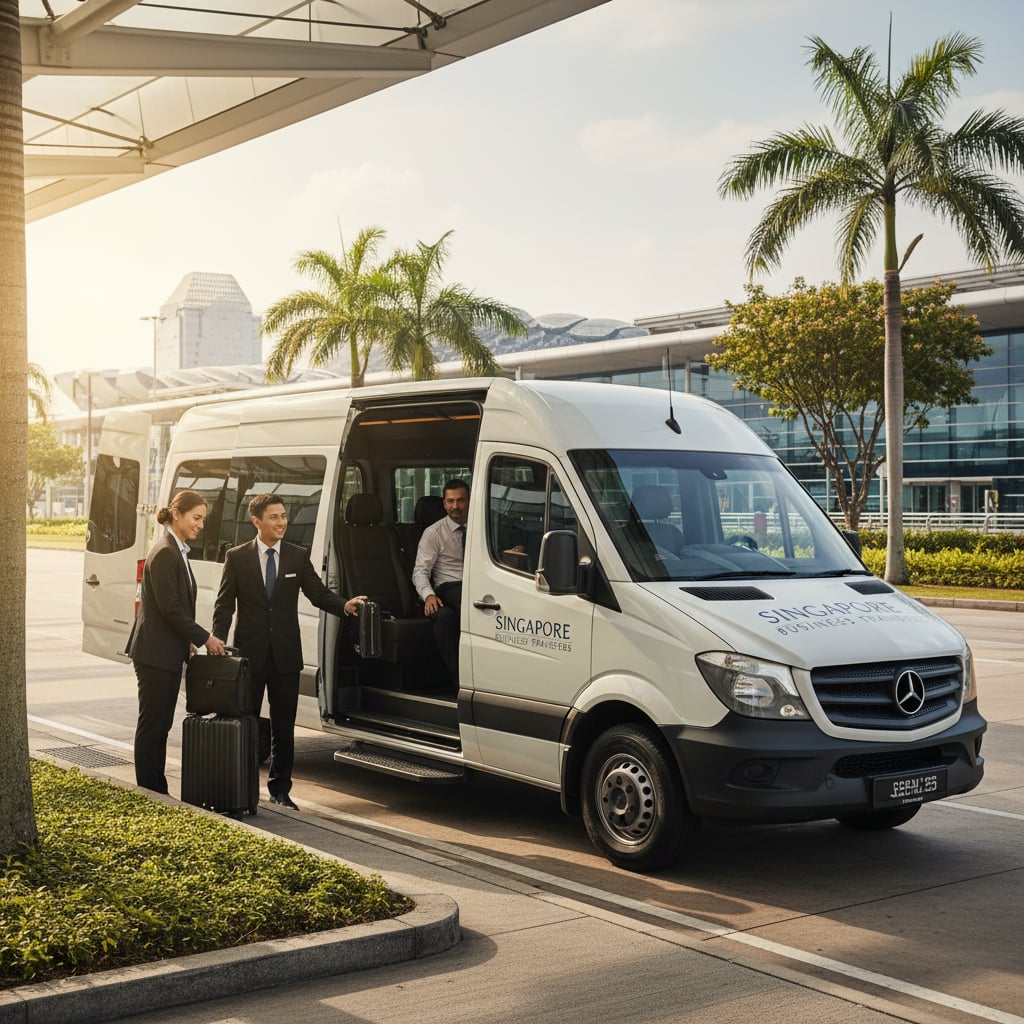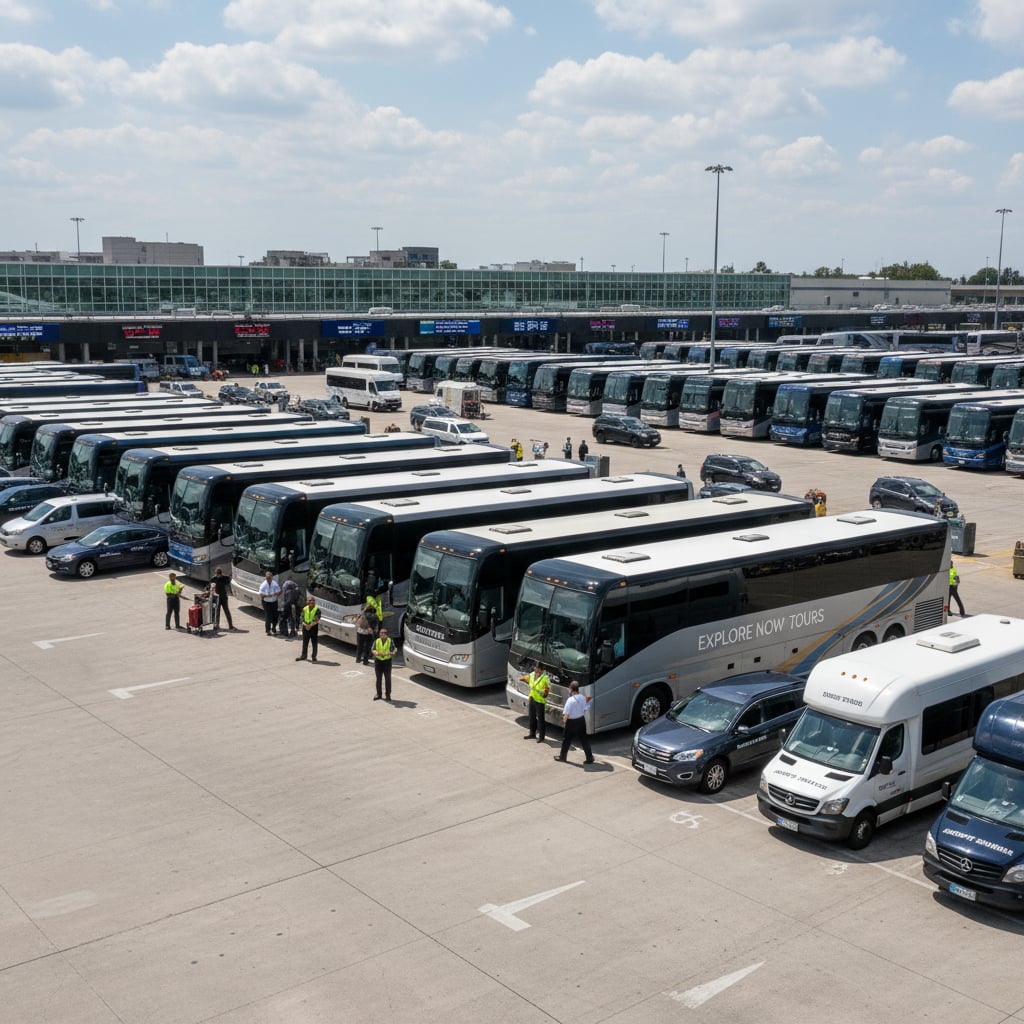
Three months ago, a tour operator called me in a panic. His regular coach company had mechanical issues and couldn't service his 42-passenger group arriving from Mumbai that afternoon. He'd been working with the same provider for five years and never had a backup plan. Cost him SGD 2,800 in emergency vehicle rentals plus hours of stress.
Booking airport transfers for clients? Our B2B airport transfer portal covers private and shared (SIC) transfers at net rates for travel agents.
Ground transportation is the backbone of tour operations, but most operators treat it like a commodity until something goes wrong. The difference between profitable tours and logistical nightmares often comes down to how you structure your ground arrangements.
Vehicle Types and When to Use Each
You can't run all tours with the same vehicle type. Group size matters, but so does tour style and destination infrastructure.
Sedans and MPVs (1-6 passengers)
Best for:
- Premium small group tours: Wine tasting, photography tours, VIP experiences
- Airport meet-and-greet services: High-value clients who book your Singapore tour packages
- Flexible city tours: Routes with multiple stops in congested areas
- Point-to-point transfers: Hotel to cruise port, hotel to hotel between cities
Typical rates in Southeast Asia:
- Standard sedan (up to 3 pax): SGD 60-80 per day
- Premium sedan (up to 3 pax): SGD 100-140 per day
- MPV/van (up to 6 pax): SGD 120-180 per day
Day rate usually covers 10 hours and 100km. Overtime is SGD 15-25 per hour, excess distance SGD 0.50-0.80 per km.
Minibuses (7-16 passengers)
This is the sweet spot for most tour operators. Big enough for decent group sizes, small enough to navigate narrow streets and access smaller hotels.
When booking Thailand tours, minibuses work better than coaches in Bangkok and Chiang Mai because:
- They can access hotel driveways that coaches can't
- Parking is easier at temples and markets
- Cost per person is competitive for 8-12 pax groups
- You're not paying for empty seats on smaller groups
Rates: SGD 180-280 per day depending on capacity (12-seater vs 16-seater) and vehicle condition.
Coaches (20-45 passengers)
Only makes financial sense when you're consistently filling 60% or more of the seats. A 45-seater coach costs SGD 350-500 per day in Malaysia. If you're running tours with 15 people, you're paying SGD 23-33 per person when a minibus would've been SGD 15-18 per person.
Coaches are ideal for:
- Incentive groups and corporate events
- School tours and large family groups
- Multi-day tours with consistent group sizes
- Routes between cities (highways where maneuverability doesn't matter)
Most Malaysia DMC partners offer coaches with these specs:
- 25-seater: SGD 280-380 per day
- 35-seater: SGD 350-450 per day
- 45-seater: SGD 400-550 per day
Cost Structure Nobody Talks About
The daily rate isn't your actual cost. Here's what trips up new operators.
Hidden Costs That Eat Margins
You quote based on the day rate, then these extras show up on the invoice:
- Driver meals: SGD 10-15 per day (expected, even if not explicitly stated)
- Driver accommodation: SGD 30-50 per night for overnight tours
- Parking fees: SGD 5-20 at attractions, could be 4-5 stops per day
- Tolls: Varies by route, can add SGD 20-40 for intercity routes
- Fuel surcharges: Some providers add 10-15% when diesel prices spike
- Waiting time: If your tour runs over the 10-hour window
Example: You booked a minibus at SGD 200 per day for a Dubai city tour. Final invoice:
- Base rate: SGD 200
- Driver meal: SGD 12
- Parking (4 stops): SGD 28
- Toll (Palm Jumeirah): SGD 8
- Overtime (1.5 hours): SGD 30
- Total: SGD 278 (39% more than quoted)
Now your margin just disappeared because you priced the tour at SGD 220 per vehicle.
Building in Buffer Without Overpricing
Add 20-25% to the base rate when calculating your costs. Don't break out every line item in the client quote – just present it as "private coach transportation including all parking, tolls, and driver expenses."
Clients don't want to see 8 different charges. They want one number they can understand.
Driver Quality Makes or Breaks Tours
You can have the newest vehicles and best itinerary, but a poor driver ruins everything. I've had agents tell me their clients complained more about the driver's attitude than about hotel issues.
What Separates Good Drivers from Great Ones
Good driver:
- Shows up on time
- Drives safely
- Knows the routes
Great driver:
- Greets passengers by name if you provided the manifest
- Offers commentary about landmarks during the drive
- Suggests photo stops at scenic viewpoints
- Knows which entrance to use at each attraction (saves walking time)
- Has cold water and tissues in the vehicle
- Handles group dynamics (knows when to chat, when to stay quiet)
When working with DMC providers, specify you want experienced tour drivers, not just regular drivers. Some companies will send their airport transfer drivers who have zero tour experience. Tour drivers should know the attractions, not just the addresses.
Route Planning That Actually Works
Google Maps says it's 6 hours between stops. Reality is 8.5 hours. Why?
Factors Most Operators Forget
- Morning pickup time spread: If you're collecting passengers from 3 hotels, that's 30-40 minutes before you even start the tour
- Photo stops: Clients will want to stop for photos. Budget 10-15 minutes per scenic viewpoint
- Bathroom breaks: Every 2-3 hours, add 15-20 minutes
- Traffic patterns: That route that takes 45 minutes at 6 AM takes 90 minutes at 8 AM
- Attraction queues: Entry time isn't visit time. Gardens by the Bay takes 2 hours including queue and walking between domes
Rule of thumb: Take Google Maps time and add 35-40% for group tours. Solo travel time doesn't translate to group time.
Sample Realistic Itinerary
Popular Singapore day tour many operators get wrong:
Ambitious operator schedule:
- 9:00 AM - Hotel pickup
- 9:30 AM - Marina Bay Sands
- 10:30 AM - Gardens by the Bay
- 12:00 PM - Lunch at hawker center
- 1:00 PM - Merlion Park
- 1:30 PM - Chinatown
- 2:30 PM - Little India
- 3:30 PM - Orchard Road shopping
- 5:00 PM - Return to hotel
Realistic operator schedule:
- 9:00 AM - Start hotel pickups
- 9:45 AM - Actually depart (3 hotels, traffic)
- 10:15 AM - Marina Bay Sands (30 min including photos)
- 10:50 AM - Gardens by the Bay (90 min including queue)
- 12:30 PM - Lunch (60 min for group dining)
- 1:40 PM - Merlion Park (20 min)
- 2:15 PM - Chinatown (45 min)
- 3:15 PM - Little India (45 min)
- 4:15 PM - Start hotel drop-offs
- 5:00 PM - Last passenger dropped
Same attractions, but one schedule sets realistic expectations. The first operator gets complaints about rushing. The second gets reviews praising the "well-paced tour."
Multi-Day Tour Vehicle Management
Day tours are simple – vehicle shows up, does the route, goes home. Multi-day tours have complexities most operators underestimate.
Should You Keep the Same Vehicle and Driver?
Depends on routing. If you're doing a 5-day Malaysia tour from Kuala Lumpur to Penang to Cameron Highlands and back, keeping the same vehicle makes sense. Driver knows the group, passengers are comfortable, and you're not coordinating handovers.
But if your itinerary goes Kuala Lumpur → Singapore → Johor Bahru → Malacca → Kuala Lumpur, you might be better with different vehicles in each city because:
- You're not paying for the vehicle to deadhead back empty
- You're not paying driver accommodation every night
- Each local provider knows their area better
- No cross-border documentation issues
The break-even point is usually 3+ consecutive days in the same region. Anything less and you're probably overpaying for vehicle retention.
Backup Plans That Actually Help
Remember that operator whose coach broke down? Here's what he should've had ready.
Three-Tier Provider System
Don't rely on one transport company. Have three levels:
- Primary provider: Your main partner who gets 70% of your business and offers best rates
- Secondary provider: Gets 20% of your business, knows your standards, available for overflow and backup
- Emergency contacts: 2-3 companies who can provide vehicles within 4-6 hours, even if rates are higher
Cost of maintaining this: Nothing. You're already booking tours. Just split them across providers instead of concentrating with one.
What to Include in Your Emergency File
Keep a digital folder with:
- Contact details for 5+ transport companies in each destination you operate
- Standard vehicle specs you require
- Your maximum emergency rates (so you can approve quickly)
- Alternative routes for common itineraries
- Backup attraction options if a site closes unexpectedly
When that coach broke down, the operator spent 2 hours calling around finding replacements. If he'd had this file ready, he'd have made 3 calls in 15 minutes and confirmed backup vehicles at known rates.
Technology That Reduces Coordination Time
Most tour operators still coordinate ground transportation via WhatsApp and email. That works until you're running 5+ tours simultaneously.
What Good Platforms Provide
Modern B2B travel platforms let you:
- See real-time vehicle availability across multiple providers
- Compare rates for different vehicle types instantly
- Send booking confirmations with passenger manifests automatically
- Track vehicle assignments and driver details
- Get automatic alerts if pickup time is approaching and driver hasn't confirmed
The time saving is massive. What used to take 8 emails and 4 phone calls now takes 2 minutes of clicking.
Seasonal Adjustments Nobody Plans For
Vehicle availability and rates aren't constant year-round.
Peak Season Reality
Chinese New Year in Southeast Asia, Diwali in India, Christmas in Europe – demand for vehicles spikes 200-300%. Your regular providers might not have capacity, and rates can increase 30-50%.
What works:
- Book 60-90 days ahead during peak seasons: Most operators think 30 days is enough. It's not.
- Consider premium providers during peak: Their base rates are higher year-round, but they don't surge as much during peak
- Offer fixed-date tours instead of custom dates: You can block-book vehicles in advance and fill them with passengers
For Hong Kong tours during Chinese New Year, I've seen operators pay 2.5x normal rates because they waited until January to book February tours. The smart operators locked in vehicles in November at 20% premium instead of 150% premium.
Cross-Border Transport Complications
Singapore to Malaysia, Thailand to Laos, UAE to Oman – cross-border tours seem appealing until you hit the documentation requirements.
What You Actually Need
Different for each border, but generally:
- Vehicle registration that permits international travel
- Driver with valid passport and work permits for border crossing
- Passenger manifests submitted 24-48 hours in advance
- Insurance valid in both countries
- Road tax/permits for the destination country
Processing time at borders can be 30-90 minutes. If you're quoting "Singapore to Kuala Lumpur in 4 hours," you need to account for the border stop.
Alternative: Use separate vehicles on each side of the border. Passengers walk across immigration, new vehicle meets them on the other side. Faster processing, less paperwork, often cheaper because you're using local rates in each country.
Insurance and Liability Issues
Most operators assume the transport provider's insurance covers everything. It doesn't.
Coverage Gaps to Address
- Passenger belongings: If luggage is stolen from the vehicle, is that covered?
- Delays due to breakdown: If mechanical failure causes clients to miss flights, who pays?
- Accidents involving passenger injury: Does coverage extend to tour passengers or just driver?
- Damage to client property: Camera gets crushed when driver closes luggage compartment
Your service agreement with transport providers should explicitly state coverage limits and liability allocation. If it doesn't, add a clause or get separate tour operator insurance.
Pricing Ground Transportation in Tour Packages
Should you break out transport as a separate line item or bundle it into the tour price?
Bundled Pricing (Recommended)
Most clients prefer seeing:
"5-Day Malaysia Heritage Tour - SGD 1,280 per person
Includes: Accommodation, daily breakfast, guided tours, all transportation, entrance fees"
vs:
"5-Day Malaysia Heritage Tour
Hotels: SGD 450
Transportation: SGD 380
Guide: SGD 180
Meals: SGD 140
Attractions: SGD 130
Total: SGD 1,280"
Second version makes clients question each line item. "Why is transportation SGD 380? Can we save money if we rent a car ourselves?" Now you're defending costs instead of selling value.
When to Separate Transport Costs
Corporate groups and incentive planners often want detailed breakdowns for accounting purposes. They're not shopping around – they need line items for approval processes.
For leisure FIT clients booking through B2B platforms, bundle everything. For B2B clients building corporate packages, provide detailed breakdowns.
Common Quality Issues and How to Prevent Them
These problems show up repeatedly in tour operator feedback:
Issue: Driver Doesn't Speak Language Clients Understand
Your group is Japanese, driver speaks only English and Malay. Communication breakdown.
Prevention: Specify language requirements when booking. If no matching language driver available, provide printed itinerary in client's language and pre-translated key phrases for driver.
Issue: Vehicle Condition Below Expected Standard
You booked "premium coach" and got a 15-year-old bus with torn seats and weak AC.
Prevention: Define vehicle age limits in your agreement (e.g., "vehicles must be less than 5 years old for premium category"). Request photos before confirming booking. Do spot checks on first tour with new providers.
Issue: Driver Takes Unscheduled Stops at Commission Shops
Tour is running behind because driver stopped at his brother's souvenir shop for 40 minutes.
Prevention: Contract clause: "No unscheduled commercial stops. Any deviation from itinerary must be pre-approved by tour operator. Violations result in 20% rate deduction for that day." Enforce it once and word gets around.
Sustainability Considerations
More clients are asking about eco-friendly tours. Ground transportation is where you can make the biggest impact.
Practical Green Options
- Right-size vehicles: Don't send a 45-seater for 12 passengers. Smaller vehicle = less fuel
- Combine groups when possible: Two groups of 8 doing the same route? Use one 16-seater instead of two 12-seaters
- Electric or hybrid vehicles: Available in Singapore, Hong Kong, parts of Thailand. Usually 15-20% premium but clients increasingly willing to pay
- Offset programs: Some Sri Lanka DMCs offer carbon offset programs – adds SGD 5-10 per day, markets well to European clients
You don't need to overhaul everything. Start with one "eco-tour" option using hybrid vehicles and right-sized transport. Test demand. Expand if clients respond.
What Successful Operators Do Differently
After reviewing hundreds of tour operations, the profitable ones share these habits:
- They pre-inspect vehicles quarterly: Don't wait for client complaints. Visit your main provider's facility, check the actual vehicles you're booking.
- They maintain detailed cost databases: Track actual costs (including all extras) for each route. Use real numbers for future quotes, not optimistic estimates.
- They build 20-30 minute schedule buffers: Tours that run slightly ahead of schedule get better reviews than tours that run slightly behind, even if the content is identical.
- They communicate driver expectations in writing: Send providers a one-page "Driver Standards" document outlining dress code, punctuality, language ability, route knowledge expected.
- They collect driver feedback from every tour: Simple 3-question form clients fill out: Driver punctuality (1-5), driving quality (1-5), service attitude (1-5). Share results with providers quarterly. Reward consistently high-rated drivers with gratuity bonuses.
When to Negotiate Better Rates
You've been using the same provider for 6 months and booking 40+ vehicle-days per month. Time to renegotiate.
What Actually Gets You Discounts
- Volume commitments: "I'll guarantee 50 vehicle-days per month for 10% reduction" works better than "Can you lower your rates?"
- Off-peak filling: "I can send you Tuesday-Thursday bookings if you offer 15% off weekday rates"
- Long-term contracts: "Lock in these rates for 12 months and I'll commit 70% of my transport to you"
- Payment terms: "I'll pay within 7 days instead of 30 days for 8% discount"
Don't negotiate on per-booking basis. That's exhausting for everyone. Negotiate tier structures: 0-20 vehicle-days = standard rate, 21-50 = 7% off, 51+ = 12% off.
Ground transportation shouldn't be your biggest headache. Set up proper systems, maintain backup providers, build realistic schedules, and specify quality standards. The operators who treat it strategically instead of as an afterthought are the ones sleeping well while their tours run smoothly. Your booking platform and provider relationships matter more than chasing the absolute lowest rate on every booking.