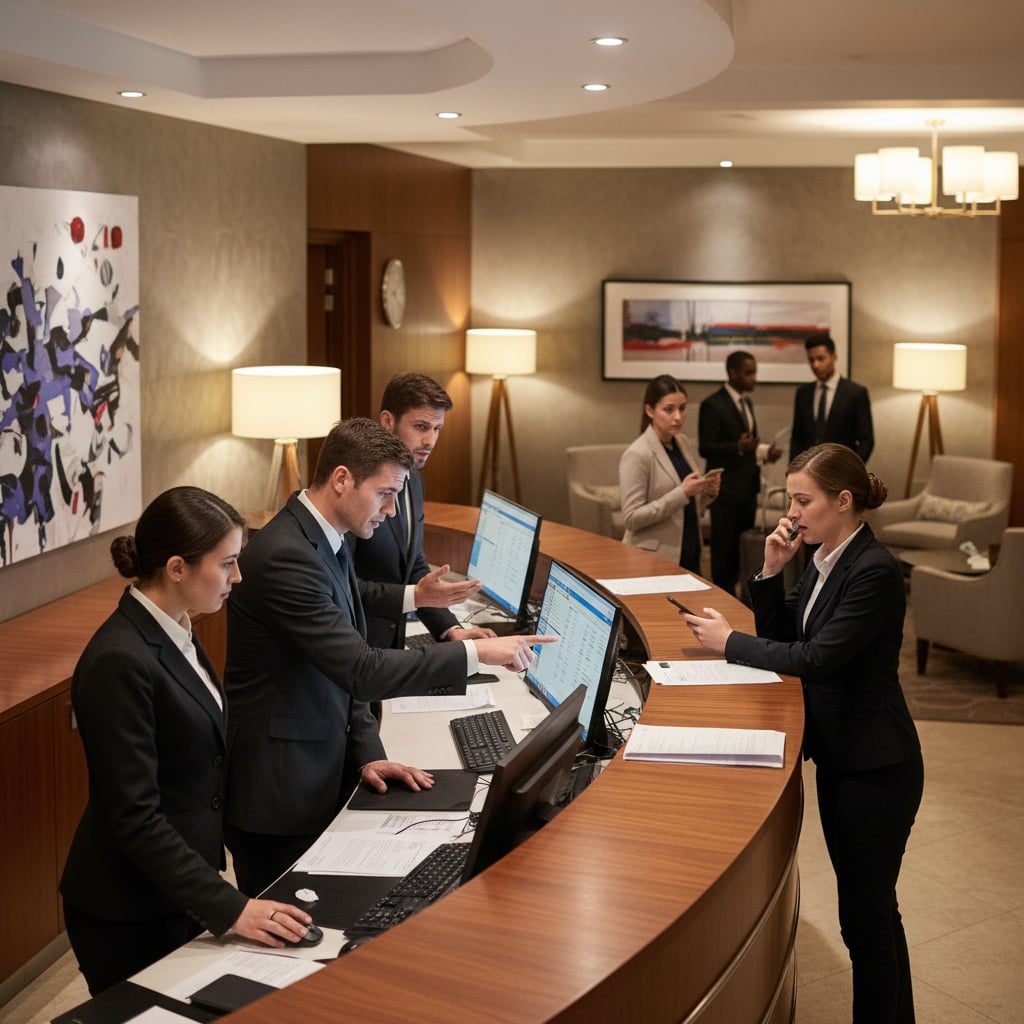
My phone rang at 11pm. An agent, panicking: "My clients just arrived at their Singapore hotel and they're being told there are no rooms. The wedding is tomorrow. What do I do?" This is every travel agent's nightmare—but it doesn't have to destroy your business if you handle it right.
If you book hotels for clients, our B2B hotel booking portal lists contracted net rates with instant confirmation.
Hotel overbooking happens more often than most agents realize. Understanding how to prevent it, respond to it, and protect your client relationships when it occurs is essential. Let's go through exactly what works when you're facing this crisis.
Why Hotels Overbook (And Why It Affects You)
Hotels deliberately overbook because they know a percentage of bookings will cancel or no-show. Their revenue management systems calculate optimal overbooking levels to maximize occupancy.
When their calculations are wrong—or when fewer people cancel than expected—they're oversold. Someone gets "walked" (relocated to another property), and if you booked through a B2B channel, your client is more likely to be walked than direct bookers.
Why? Hotels prioritize their own direct customers, then major OTAs, then B2B bookings. You're usually third in line when they're deciding who gets relocated.
This isn't fair, but it's reality. Knowing this helps you take preventive measures.
Prevention: Reducing Overbooking Risk
You can't eliminate overbooking risk entirely, but you can reduce it significantly.
Work With Suppliers Who Guarantee Inventory
When you're booking through DMCQuote or other B2B platforms, ask about their overbooking policies. Better suppliers guarantee that confirmed bookings won't be walked—they carry the risk, not you.
If a platform can't tell you their overbooking resolution protocol, that's a red flag. Reliable suppliers have clear procedures: if the hotel walks your client, the supplier immediately arranges alternative accommodation at equal or better standard at no additional cost.
Get Confirmation Numbers Directly From Hotels
When you book through B2B channels, you typically receive a booking reference from the platform. But the hotel also generates a confirmation number in their property management system.
Always request the hotel's own confirmation number, not just the platform's booking reference. This gives you direct leverage with the hotel if issues arise.
An email to your supplier: "Please provide the hotel confirmation number for this booking, not just the platform reference. We need this for direct verification with the property."
Most suppliers can provide this. If they can't or won't, you're at higher risk.
Reconfirm Critical Bookings 48 Hours Before Arrival
For important bookings—honeymoons, anniversaries, group arrivals, clients arriving late at night—reconfirm with the hotel directly 48 hours before check-in.
Call the hotel (don't just email): "I'm calling to reconfirm reservation [hotel confirmation number] for [guest name], checking in [date]. Can you verify this booking is active in your system?"
If there's any issue—missing booking, wrong dates, reservation cancelled—you discover it before your client arrives, when you can still fix it.
This takes 5 minutes per booking and prevents disasters. For destinations like Singapore or Dubai during peak season, it's essential.
Avoid High-Risk Booking Windows
Overbooking risk spikes during:
- Major holidays: Christmas, New Year, Chinese New Year
- Large events: F1 races, major conferences, festivals
- Peak summer season in leisure destinations
- Last-minute bookings when hotels are near capacity
During these periods, if you're booking through free-sale inventory (not contracted allotments), the risk of being walked increases 3-4x.
When possible, secure allotment-based inventory or direct contracted rates for high-risk periods. The locked inventory protects you.
Immediate Response Protocol When Overbooking Happens
Your client calls or texts: "The hotel says they don't have our room." You have about 30 minutes to resolve this before the situation escalates to social media complaints and angry reviews.
Step 1: Contact Your Supplier Immediately
If you booked through a B2B platform or DMC, get them on the phone NOW. Not email—phone. Most reputable suppliers have 24/7 support for exactly this situation.
What to say: "I have an active overbooking situation. Booking reference [number], client name [name], hotel [property name]. They've arrived and the hotel is saying no rooms available. I need immediate resolution—what alternative accommodation can you confirm right now?"
Good suppliers will already be working on alternatives. They maintain relationships with multiple properties specifically to handle these emergencies.
Step 2: Document Everything in Real-Time
While you're on the phone with your supplier, take notes:
- Time of issue notification
- Hotel's explanation (overbooked, system error, etc.)
- Supplier's initial response
- Alternative options provided
- Any commitments made (upgrades, compensation, etc.)
This documentation protects you if the client later claims you didn't handle it properly.
Step 3: Keep Your Client Informed Every 15 Minutes
Don't go silent while you're fixing the problem. Your client is standing in a hotel lobby, tired, possibly with children, not understanding what's happening.
Send updates: "I'm on the phone with our supplier now. They're arranging alternative accommodation at a comparable or better property. I'll update you within 15 minutes with specific options."
Even if you don't have a solution yet, the communication shows you're actively working on it. Silence creates panic.
Step 4: Evaluate Alternative Options Quickly
When your supplier (or when you're searching yourself) presents alternatives, evaluate based on:
- Category match or upgrade: If original was 4-star, alternative should be 4-star minimum, ideally better
- Location: Should be comparable to original property, or closer to client's planned activities
- Room type: Match or exceed original booking (if they booked deluxe, don't downgrade to standard)
- Amenities needed: If they need airport transfer, pool access, specific meal plan, ensure alternative provides these
Don't just accept the first available room. Your client will judge your service quality based on how well you matched their original booking.
Step 5: Negotiate Compensation
Whether the hotel or your supplier is at fault, someone needs to compensate your client for this disruption. Typical compensation:
- Room upgrade at alternative property
- Free breakfast or meal vouchers
- Transportation to new hotel covered
- Partial refund (10-20% of booking value)
- Future booking credit
If your supplier isn't offering compensation automatically, ask: "What compensation are you providing for this service failure? My client has been significantly inconvenienced and I need to maintain their trust."
Good suppliers understand this. Poor ones resist—and you should reconsider working with them.
Managing Client Relationships Through the Crisis
How you communicate during an overbooking situation matters more than the overbooking itself. Clients understand that occasionally things go wrong. They won't forgive being ignored or feeling abandoned.
Acknowledge Without Over-Apologizing
Don't grovel or act like this is your personal failure (unless you actually made a booking error—that's different). Say:
"I've been notified that the hotel is overbooked and can't accommodate your reservation. This shouldn't have happened, and I'm working with our supplier to resolve it immediately. I'll have alternative options for you within 20 minutes."
You're professional, you're taking ownership of the solution, but you're not accepting blame for a hotel's operational failure.
Offer Choices When Possible
If your supplier presents two viable alternatives, present both to the client (if time permits):
"I've secured two options: Property A is a 5-star, slightly farther from the city center but includes free breakfast and airport transfer. Property B is a 4-star plus in the same area as your original hotel. Which would you prefer?"
Giving them choice creates a sense of control during a situation where they felt powerless.
Follow Up After Resolution
Once your client is checked into alternative accommodation, call or message them 2-3 hours later:
"I wanted to check that you're settled in at [new hotel]. Is everything satisfactory? I've also arranged [compensation details]. I'm sorry this happened, and I truly appreciate your patience while I worked to resolve it."
This follow-up turns many clients from angry to loyal. They see you didn't just dump them at any available room and disappear.
Post-Crisis: Supplier Accountability
After you've handled the immediate crisis, address it with your supplier. This isn't about being confrontational—it's about ensuring it doesn't happen again.
Debrief Within 48 Hours
Send a formal email:
"Regarding booking reference [number], I want to debrief on the overbooking situation that occurred on [date]. While I appreciate your team's response in finding alternative accommodation, I need to understand: (1) What caused this overbooking? (2) What measures are you implementing to prevent recurrence? (3) How are you compensating my client beyond the immediate resolution?"
Suppliers who take this seriously will provide detailed responses and concrete prevention steps. Those who brush it off with vague "it won't happen again" responses are telling you how future incidents will be handled.
Evaluate If This Is a Pattern
One overbooking incident in 100 bookings? That's the industry reality. Five incidents in 100 bookings? That's a supplier problem.
Track overbooking rates by supplier. If any supplier is above 3-4% incident rate, reduce your bookings with them or drop them entirely.
When you're booking in high-demand destinations like Maldives or Thailand, reliable suppliers with low overbooking rates are worth their weight in gold.
Building Your Backup Network
Experienced agents maintain "emergency accommodation" relationships for exactly these situations. Here's how to build yours:
Identify Backup Properties in Key Destinations
For destinations you serve frequently (Singapore, Kuala Lumpur, Dubai, etc.), identify 3-5 properties that typically have availability even during peak periods.
These are usually:
- Larger properties with 200+ rooms
- 4-star business hotels (less glamorous than 5-star resorts, so lower occupancy)
- Aparthotels and serviced residences
- Properties slightly outside prime tourist areas
Maintain relationships with sales managers at these properties. When you need emergency inventory, you have direct contacts who can confirm availability immediately.
Multiple B2B Platform Access
Don't rely on a single platform for all your bookings. If DMCQuote is your primary source, have 1-2 additional platforms you can access for emergency rebookings.
When your primary supplier can't resolve an overbooking, you need immediate alternatives. Having backup platform access gives you options within minutes, not hours.
DMC Relationships for Regional Coverage
For destinations where you have volume, DMC partnerships give you emergency support. A Thailand DMC with strong local relationships can find inventory when platform searches show "fully booked."
During an overbooking crisis at a Phuket resort, a DMC relationship might get you a confirmed room at a comparable property within 30 minutes—something you couldn't do through anonymous platform searches.
Contract Language That Protects You
When negotiating supplier agreements or reviewing platform terms, look for specific overbooking protections:
Key Contract Clauses
Guaranteed booking clause: "Supplier guarantees that confirmed bookings will not be subject to overbooking. In the event of overbooking, Supplier will provide alternative accommodation of equal or superior category at no additional cost."
Compensation requirement: "If Supplier cannot provide confirmed accommodation, Agent will receive [specific compensation: full refund, credit, percentage compensation] plus alternative accommodation arrangement at Supplier's expense."
Response time commitment: "In the event of booking issues including overbooking, Supplier will provide resolution within [30/60 minutes] of notification."
Direct contact guarantee: "Agent will receive hotel confirmation numbers directly from properties, not just Supplier booking references."
Not all suppliers will agree to all these terms, but having them in writing for those who do gives you recourse when problems occur.
What to Do When You Can't Find Alternatives
Sometimes you're facing overbooking during an event or holiday when literally every comparable property is fully booked. Here's your fallback protocol:
Expand Geographic Scope
If nothing is available in the immediate area, look at properties 20-30 minutes away. With arranged transportation (at supplier's cost), this becomes acceptable.
Booking in Hong Kong during a major convention and everything on Hong Kong Island is sold out? Kowloon properties might have availability. Ensure your supplier covers the additional transport cost.
Consider Apartment Rentals as Emergency Option
Serviced apartments or short-term rental platforms can provide emergency accommodation when hotels are unavailable. Quality is variable, but for 1-2 nights while you find permanent alternatives, it bridges the gap.
Split Accommodation as Last Resort
If clients are traveling as a group and you can't find a single property with enough rooms, splitting them across two nearby properties might be necessary. This is terrible for group cohesion but better than leaving them without accommodation.
Ensure both properties are comparable quality and arrange transportation between them if they're doing group activities.
Learning From Every Incident
After each overbooking situation, document what worked and what didn't:
- How quickly did you learn about the problem?
- How long until you had a confirmed alternative?
- What supplier response time was?
- What communication approach worked best with the client?
- What would you do differently next time?
An agent I know maintains an "incident log" with this information. After 3 years, she's got detailed response protocols refined from real experience. When overbooking happens, she executes her protocol mechanically—no panic, just systematic problem-solving.
Client Communication Scripts That Work
Having pre-written communication templates for overbooking situations saves time and ensures you don't say something you'll regret while stressed.
Initial Notification to Client
"I've just been informed that [hotel name] has an overbooking situation and cannot accommodate your reservation for [dates]. I'm immediately working with our supplier to arrange alternative accommodation of equal or better standard. I'll update you within 20 minutes with confirmed options. Please don't accept any alternatives the hotel offers directly until we've spoken."
Resolution Confirmation
"I've confirmed alternative accommodation at [hotel name], which is a [category] property [location details]. The room type is [details], which matches/exceeds your original booking. Transportation to the new property is arranged and covered. Additionally, I've secured [compensation details] for this inconvenience. Confirmation number is [number]. I'll call you in 2 hours to ensure everything is satisfactory."
Follow-Up After Stay
"Now that you're back from your trip, I wanted to follow up on the accommodation change we had to manage. I hope the alternative property met your expectations despite the initial disruption. Your feedback helps me continue to improve our service and supplier relationships. If there's anything that could have been handled better, I genuinely want to know."
When to Consider Legal Action
Rarely, overbooking situations escalate to the point where legal considerations arise. This typically happens when:
- Client suffered significant documented losses (missed events, additional expenses)
- Supplier refused to provide alternatives or compensation
- Your contract explicitly guaranteed accommodation and supplier breached terms
Before pursuing legal action:
- Document everything thoroughly (all communications, booking confirmations, expenses)
- Attempt resolution through supplier's escalation process
- Involve any industry associations you're both members of
- Calculate if the potential recovery justifies legal costs
Most situations don't reach this point if you're working with reputable suppliers who have clear resolution protocols.
Building Resilience Into Your Business
Overbooking is a reality of the travel industry. Agents who survive and thrive don't eliminate the risk—they build systems to handle it efficiently when it occurs.
This means:
- Working with multiple suppliers so you're not dependent on any single source
- Maintaining backup accommodation options in key destinations
- Having clear communication protocols you can execute under pressure
- Tracking supplier reliability and making sourcing decisions based on data
- Setting client expectations appropriately (especially during high-risk periods)
When you're booking hotels across destinations like Sri Lanka, Europe, or anywhere else, understanding that occasional overbooking is part of the business lets you prepare instead of panic.
The agents who handle these situations best don't have fewer problems—they've just built better systems for resolving them quickly and maintaining client trust through the process.
Your goal isn't perfection. It's resilience. Build supplier relationships that support you during crises, maintain backup options for emergency situations, communicate transparently with clients, and document everything. That's how you turn what could be business-ending disasters into manageable incidents that actually demonstrate your value as a travel professional.