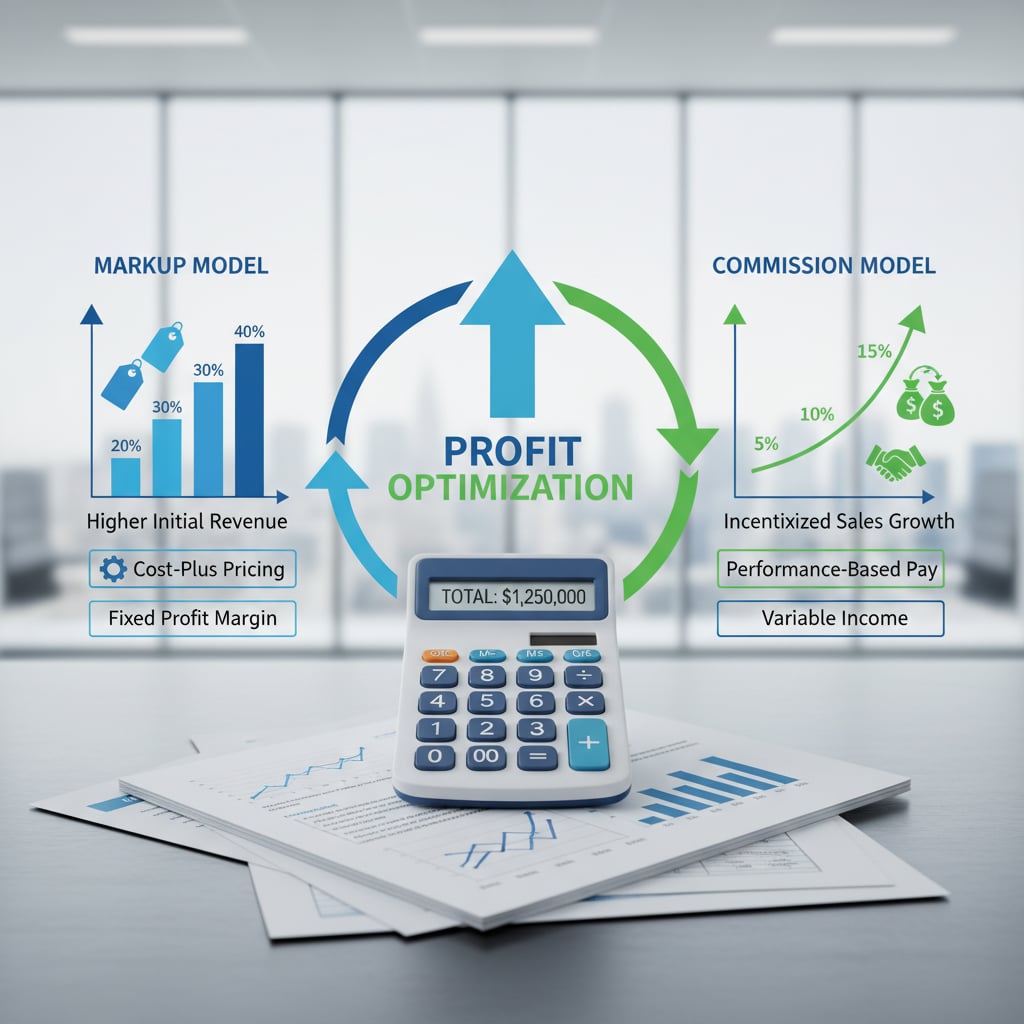
Neha made SGD 8,000 last month on the same bookings that would've earned her SGD 4,500 under her old pricing model. She didn't work harder or sell more. She just stopped using commission when she should've been using markup.
The markup model below assumes you buy at net rates through a B2B travel portal rather than earning commission on retail prices.
The travel industry loves to complicate pricing. Markup, commission, net rates, gross rates, override commissions, volume bonuses. But at its core, you've got two ways to make money: markup and commission. Understanding when to use each transforms your bottom line.
Understanding the Fundamentals
Before we get tactical, let's clear up what these terms actually mean:
Commission-Based Pricing
You sell at the supplier's retail price. They pay you a percentage back. Simple example:
- Hotel rack rate: SGD 200/night
- You sell at: SGD 200/night
- Hotel pays you: 10% commission = SGD 20
- Customer pays: SGD 200
- You earn: SGD 20
With commission, your customer sees the supplier's price. You make money from what the supplier pays you, not what you charge the customer.
Markup-Based Pricing
You buy at net rate (wholesale price without commission). You add your margin. Example:
- Hotel net rate: SGD 150/night
- Your markup: 20% (SGD 30)
- You sell at: SGD 180/night
- Customer pays: SGD 180
- You earn: SGD 30
With markup, you control the retail price. Your profit is the difference between what you buy and what you sell for.
The Math That Matters
Here's where it gets interesting. Same hotel, two pricing approaches:
Scenario 1: Commission Model
- Sell price: SGD 200
- Commission: 10%
- Your earnings: SGD 20
- Profit margin: 10%
Scenario 2: Markup Model
- Net rate: SGD 150
- Markup: 20% (SGD 30)
- Sell price: SGD 180
- Your earnings: SGD 30
- Profit margin: 16.7%
Look at that: SGD 10 more profit per night AND your customer pays SGD 20 less. This is why smart agents chase net rates on B2B platforms like DMCQuote instead of relying on commissionable rates.
When to Use Commission Pricing
Commission isn't dead. There are specific scenarios where it makes perfect sense:
1. High-Value Luxury Products
Selling a SGD 15,000/night Maldives resort? Take the 10% commission (SGD 1,500). The customer expects premium pricing, and your markup would push the price too high.
With luxury products, customers aren't price shopping as aggressively. They're buying the brand, the experience, the prestige. Commission keeps your pricing aligned with market expectations.
2. When You Lack Direct Supplier Access
Can't get net rates for a specific hotel or tour operator? Commission-based booking is better than no booking. Build your volume first, negotiate net rates later.
3. Complex Multi-Supplier Packages
Coordinating six hotels, four transfers, twelve activities across multiple European destinations? Sometimes commission keeps it simple. You're earning on planning and coordination, not product margin.
4. Override Commission Deals
If a supplier offers 15-18% commission for volume or preferred partner status, that changes the math. An 18% commission on SGD 200 = SGD 36, beating most markup scenarios.
When to Use Markup Pricing
Markup is where most agents should make most of their money. Here's when it dominates:
1. Mid-Range and Budget Products
Hotels in the SGD 80-150 range are perfect for markup. Commission of 10% on SGD 100 = SGD 10. Markup of 25% on SGD 80 net rate = SGD 20. Same customer price, double the profit.
2. When You Have B2B Access
Platforms like DMCQuote offer net rates across Singapore, Malaysia, Dubai, and more. If you have access to wholesale pricing, use it.
3. Package Pricing
When bundling hotels, transfers, and activities into packages, markup gives you flexibility. You can:
- Offer competitive package prices while maintaining margin
- Build in buffer for customer service and planning time
- Create tiered pricing (Essential, Premium, Luxury)
- Absorb small variations without affecting profit
4. Tours and Activities
Activities usually have better margin potential with markup. A tour with SGD 50 net rate sold at SGD 70 gives you SGD 20 (40% margin) versus 10% commission on SGD 75 retail = SGD 7.50.
The Hybrid Approach (What Top Performers Actually Do)
Amit doesn't choose between markup and commission. He uses both strategically within the same booking:
- Hotels: Markup on net rates (15-25% depending on category)
- Flights: Commission (margins too thin for markup)
- Tours: Markup (high margin potential)
- Transfers: Markup (easy to price competitively)
- Luxury experiences: Commission (maintains perceived value)
Result? His average package earns 18-22% total margin versus the 8-12% most agents accept.
Calculating Your Actual Profit
Here's the formula most agents forget about:
Gross profit minus operating costs equals actual profit.
That 10% commission looks great until you factor in:
- Time spent on bookings and customer service
- Payment processing fees (2-3%)
- Cancellations and modifications
- Marketing and acquisition costs
- Platform or GDS fees
A 10% commission booking that takes four hours of work and pays out in 60 days isn't as profitable as a 15% markup booking confirmed instantly with immediate payment.
Real Numbers Example
SGD 5,000 Singapore package, two scenarios:
Commission-only approach:
- Total booking value: SGD 5,000
- Average commission: 10%
- Gross profit: SGD 500
- Payment processing (2.5%): -SGD 125
- Net profit: SGD 375 (7.5%)
Markup approach:
- Net cost: SGD 4,000
- Markup: 20%
- Sell price: SGD 4,800
- Gross profit: SGD 800
- Payment processing (2.5%): -SGD 120
- Net profit: SGD 680 (14.2%)
Same package, same destination, SGD 305 more profit. Over 100 bookings per year, that's an extra SGD 30,500 in your pocket.
Pricing Psychology for Higher Conversions
Once you've decided markup or commission, you still need to price smart. Here's what works:
Anchor High, Discount Smart
Show value before discounting:
If booked separately: SGD 5,400
Package price: SGD 4,800
You save: SGD 600
The customer feels smart. You maintain your margin. Win-win.
Psychological Price Points
SGD 4,799 converts better than SGD 4,800. SGD 1,995 beats SGD 2,000. It's basic psychology, and it works.
All-Inclusive vs Itemized
For markup-based packages, all-inclusive pricing works better. Customers don't want to add up five line items. They want one clear number.
For commission-based bookings where you're showing competitive prices, itemized can build trust: "We're showing you exactly what goes where."
Common Pricing Mistakes to Avoid
Mistake #1: One-Size-Fits-All Markup
Using 20% markup on everything is lazy. Luxury products can't handle 25% markup. Budget products need 30-40% markup to be worth your time.
Mistake #2: Racing to the Bottom
Competing on price alone kills your business. Someone will always undercut you. Compete on value, service, packaging, expertise. Price is just one factor.
Mistake #3: Forgetting Service Fees
If you're doing complex custom itineraries, charge a planning fee separately. Your time has value. A SGD 200-500 planning fee for complex bookings is standard.
Mistake #4: Not Testing
Priya tests three price points for similar packages. After 50 bookings, she knows which converts best. Most agents guess and hope. Top performers test and know.
Negotiating Better Rates
Whether commission or net rates, you can negotiate better:
For Higher Commission
- Commit to volume targets
- Agree to preferred supplier status
- Bundle marketing partnerships
- Guarantee payment terms
For Lower Net Rates
- Book during shoulder/off-peak seasons
- Commit to larger room blocks
- Establish direct DMC relationships via Thailand, Maldives, or other key destinations
- Demonstrate consistent booking history
Technology and Pricing Strategy
Manual pricing calculation is dying. Smart agents use platforms that:
- Show net rates and commission rates side-by-side
- Calculate markup automatically
- Compare profitability across suppliers
- Generate professional quotations instantly
DMCQuote's B2B platform shows you both options simultaneously. You see the net rate, apply your markup, and compare it to commissionable alternatives. Make smarter decisions in seconds, not hours.
Building Your Pricing Framework
Stop deciding markup vs commission on each booking. Build a framework:
- Categorize your products: Budget, mid-range, luxury
- Set markup guidelines: Budget (35-45%), mid-range (20-30%), luxury (10-15%)
- Identify commission exceptions: High-value products, specific suppliers
- Document your rationale: So you're consistent across bookings
- Review quarterly: Adjust based on what's actually converting
The Bottom Line
Markup vs commission isn't an either-or decision. It's a strategic choice you make product by product, booking by booking. The best pricing strategy is the one that maximizes your profit while keeping your customer happy.
Most agents default to commission because it's familiar and easy. Top performers actively seek net rates, calculate markup, and make deliberate choices. That difference shows up directly in their bank account.
Start by auditing your last 20 bookings. Calculate what you earned via commission. Then calculate what you could've earned if you'd used net rates with strategic markup. The gap between those numbers is money you left on the table.
Stop leaving money on the table. Access net rates across key destinations like Singapore, Dubai, and Sri Lanka through DMCQuote's B2B platform. Your next booking should be your most profitable one yet.