Three years ago, a mid-sized agency in Bangalore started redirecting marketing spend from Thailand packages to Vietnam. Their peers thought they were crazy. Thailand was proven. Vietnam was a question mark. Why mess with what works?
New to wholesale booking? Start with our B2B travel portal overview: net rates, registration and what agents can book.
Last year, that agency's Vietnam revenue exceeded their Thailand revenue. Better margins, less competition, clients who actually listen to recommendations instead of price-shopping. They saw something in the Vietnam B2B travel market that most agents still miss.
Vietnam isn't just an alternative destination. It's a different market dynamic entirely, and the agents who understand this early are building serious competitive advantages.
Why the Vietnam B2B Market Is Different
Most Asian destinations have mature B2B markets. Thailand, Singapore, Dubai—they've been wholesale markets for decades. Everyone knows the suppliers, the margins are compressed, the differentiation is minimal.
Vietnam's B2B market is still developing. There are excellent DMCs and wholesale suppliers, but it's not commoditized yet. You can still build relationships with suppliers where you're a valued partner, not just order number 47 for the day.
Market Maturity Creates Opportunity
What does "developing B2B market" actually mean for you?
- Better supplier relationships: DMCs will actually invest time in agent training and relationship building
- Flexible negotiations: Room to negotiate rates and terms, not take-it-or-leave-it pricing
- Market education gaps: Your clients don't know what Vietnam costs, giving you pricing flexibility
- Less online competition: Fewer OTAs dominating search results compared to Thailand or Bali
This window won't last forever. As Vietnam tourism grows, the market will mature and margins will compress. But right now, there's real advantage in getting positioned early.
The Numbers Everyone Ignores
Vietnam tourism grew 65% from 2019 to 2023, even with COVID disruptions. International arrivals hit 12.6 million in 2023 and projections show 17-18 million by 2025. That's not just growth—that's explosive expansion.
But here's what matters more: Indian tourist arrivals to Vietnam grew 180% in the same period. Your market is discovering Vietnam faster than the global average. Yet most Indian travel agents are still treating Vietnam as a niche destination.
Market Growth Indicators Agents Should Track
- Flight connectivity: Direct flights from Delhi, Mumbai, expanding rapidly
- Hotel development: International brands entering Hanoi, Ho Chi Minh City, Da Nang
- Visa policies: Simplified e-visa process, extended validity periods
- Infrastructure: New airports, improved intercity connections, tourism zones development
These aren't just statistics. They're indicators that Vietnam is transitioning from emerging destination to mainstream market. The B2B infrastructure is growing to support this, creating opportunities for agents who move now.
Where the Actual Money Is
Vietnam B2B travel isn't one market. It's several distinct segments with very different economics. Most agents make the mistake of treating all Vietnam travel the same when the margin opportunities vary wildly by segment.
Budget backpacker travel to Vietnam? Low margins, high service demands, price-sensitive clients. Forget it unless that's your core market. But luxury Vietnam? Multi-city cultural tours? Honeymoon packages? Those segments have 25-35% margins and clients who value expertise over price.
High-Value Vietnam Segments
Focus your B2B efforts on these profitable niches:
- Luxury travel: Boutique hotels in Hanoi Old Quarter, premium Halong Bay cruises, high-end resorts in Hoi An
- Multi-generational family trips: 8-12 people across ages, complex logistics, value expertise and coordination
- Cultural immersion: Cooking classes, village homestays, UNESCO sites—experiences that are hard to DIY
- Honeymoons and celebrations: Special occasions justify premium pricing and customization
Your B2B suppliers should have strong offerings in these categories. If they're pushing budget tours and basic hotels, they're not aligned with where the margin opportunity actually exists.
The Regional Complexity Nobody Explains
Vietnam is a long, narrow country spanning 1,650 km north to south. Hanoi to Ho Chi Minh City is like Delhi to Chennai. The regions have completely different characteristics, and your B2B supplier needs to understand this.
Agents treating Vietnam like a single destination create terrible itineraries. "7 days covering Hanoi, Halong Bay, Hue, Hoi An, and Saigon" sounds comprehensive but is actually exhausting and superficial. Your clients will spend more time in airports and vans than experiencing anything.
Regional Specialization Strategies
Better approach: Build expertise in specific regions and create deep itineraries:
- Northern Vietnam: Hanoi, Halong Bay, Sapa—culture, cruise, mountains. 5-7 days minimum.
- Central Vietnam: Hue, Hoi An, Da Nang—history, beaches, UNESCO sites. 5-6 days.
- Southern Vietnam: Ho Chi Minh City, Mekong Delta—history, river life. 4-5 days.
- Beach extensions: Phu Quoc, Nha Trang, Con Dao—add 3-4 days to any itinerary.
Your B2B hotel suppliers should have strong regional coverage, not token representation everywhere. Better to have excellent options in 2-3 regions than mediocre coverage nationwide.
The DMC Relationship Reality
Vietnam B2B travel requires stronger DMC relationships than more developed markets. In Thailand or Singapore, you can book hotels and transfers separately and piece things together. Vietnam's infrastructure isn't there yet—you need good ground partners.
The challenge is Vietnam DMCs vary enormously in quality. Some are excellent—professional, responsive, reliable. Others promise great rates then deliver poor service that damages your reputation. You can't tell the difference from their website.
Vetting Vietnam DMC Partners
Before committing significant business to a Vietnam DMC:
- Reference checks: Talk to other agents actually using them, not just testimonials on their site
- Test bookings: Send 2-3 small bookings before any large groups or important clients
- Response testing: How fast do they respond to queries? What happens when you ask difficult questions?
- Problem resolution: How do they handle complaints and service failures? This matters more than their rates.
The best Vietnam DMCs become genuine partners. They'll educate you about regional differences, suggest itinerary improvements, give you advance notice of festivals or disruptions. This relationship value exceeds the rate differences between suppliers.
Halong Bay: The Package Element That Matters Most
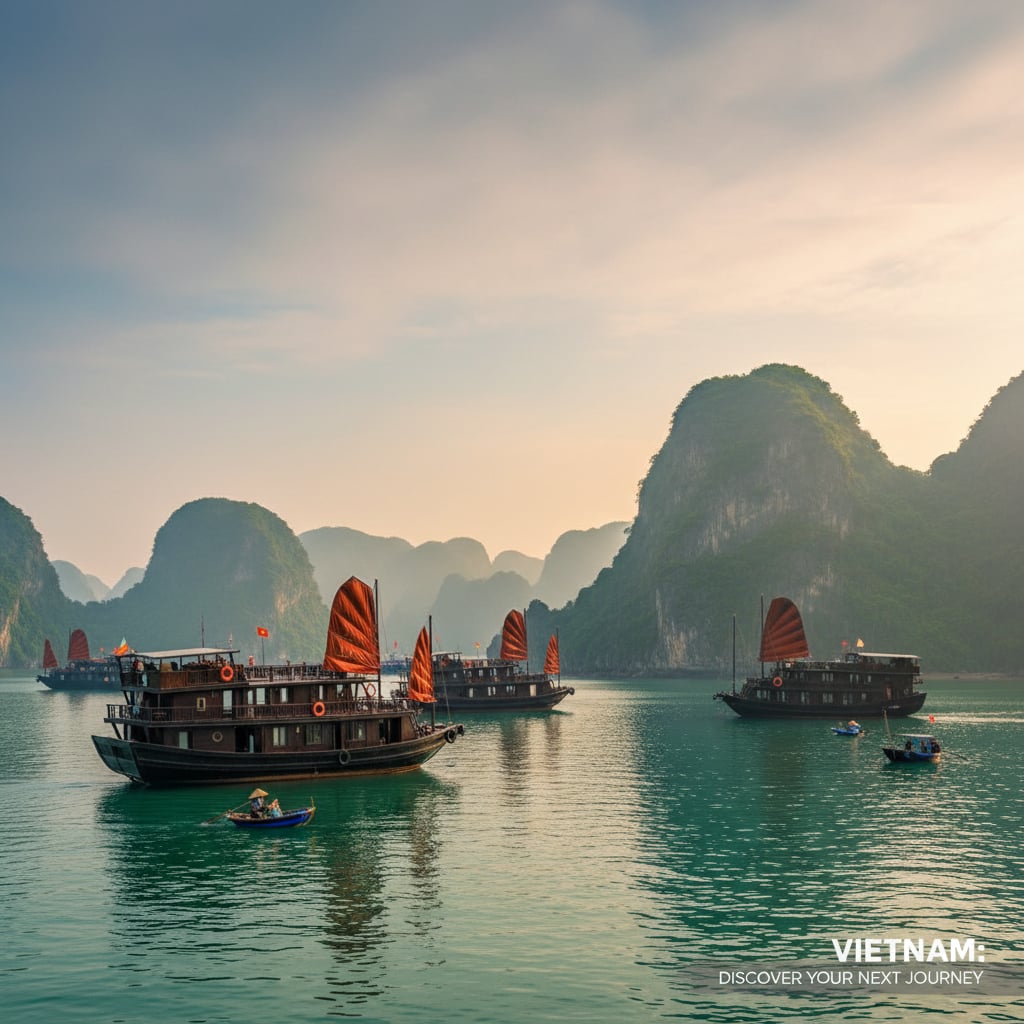
If you're selling Vietnam, you're selling Halong Bay. It's non-negotiable for most itineraries. And this is where your B2B supplier's actual capabilities become obvious.
There are hundreds of Halong Bay cruise operators. The difference between a 3-star cruise and a 5-star cruise is dramatic—not just luxury amenities but the entire experience quality. And prices vary by 400-500% between bottom and top tier.
Your B2B supplier needs to clearly categorize their Halong Bay cruise options. Budget cruises at $80/night and luxury cruises at $350/night aren't interchangeable. Most client complaints about Vietnam packages trace back to Halong Bay cruise mismatches.
Halong Bay Cruise Tiers
Work with suppliers who segment their cruise inventory clearly:
- Budget cruises: Basic cabins, standard meals, large group tours. For price-sensitive travelers.
- Mid-range cruises: Comfortable rooms, decent food, smaller groups. The sweet spot for most agents.
- Luxury cruises: Premium cabins, excellent dining, personalized service. For high-value clients.
- Ultra-luxury: Suite-level accommodation, Michelin-quality food, private experiences. Honeymoons and celebrations.
If your supplier just shows "Halong Bay cruise" without clear tiering, you're going to have problems. Insist on transparency about what they're actually offering at each price point.
The Visa Situation and What It Means
Vietnam recently simplified their e-visa system. 90-day validity, multiple entry, covers all nationalities. This matters more than most agents realize because it removed a major booking friction point.
Previously, the visa process was annoying enough that some potential clients chose Thailand or Malaysia instead just to avoid the hassle. Now that barrier is gone, making Vietnam competitive with visa-free or visa-on-arrival destinations.
Your B2B partners should help clients with visa information and application support. The best ones offer visa assistance services as part of their packages. This is valuable for your clients and differentiates your offering from DIY booking.
Pricing Vietnam Packages Strategically
This is where agents either make money or leave money on the table. Vietnam has a reputation as a budget destination, which is partly true and partly myth. Your pricing strategy needs to acknowledge both realities.
Yes, Vietnam is cheaper than Maldives or Europe. But it's not significantly cheaper than Thailand or Malaysia when you're booking quality hotels and experiences. The price advantage exists mainly in local costs—meals, local transport, shopping.
Pricing Frameworks That Work
Position Vietnam packages based on value, not cheapness:
- Luxury Vietnam: Price 15-20% below equivalent Thailand luxury. You're offering better value, not cheap travel.
- Mid-range Vietnam: Price comparable to Thailand mid-range. The differentiator is uniqueness, not cost savings.
- Cultural Vietnam: Price 20-25% premium over basic packages. You're selling expertise and experiences.
- Beach extensions: Phu Quoc pricing similar to Phuket or Bali, don't undersell it.
Clients who want the absolute cheapest Vietnam trip aren't your target market. Focus on clients who value unique experiences and are willing to pay for quality and expertise.
Multi-Country Combinations and Why They Matter
Most travelers don't go to Vietnam alone. They combine it with Cambodia (Angkor Wat), Thailand, or Singapore. These multi-country itineraries have better margins and higher total package values.
But multi-country packages are operationally complex. You need good suppliers in each country, coordinated logistics, clear responsibility handoffs at borders. This is where having a regional B2B platform beats working with individual country specialists.
Popular Vietnam Combinations
- Vietnam-Cambodia: Ho Chi Minh City → Siem Reap (Angkor Wat) → Hanoi, 10-12 days
- Vietnam-Thailand: Hanoi → Halong Bay → Bangkok → Phuket, 12-14 days
- Singapore-Vietnam: Singapore city → Ho Chi Minh City → Hoi An, 10 days, appeals to first-time Asia travelers
- Vietnam-Laos: Hanoi → Luang Prabang → Halong Bay, 10 days, for cultural immersion travelers
Your B2B supplier should either cover multiple countries or have strong partnership networks. Piecing together different suppliers for each country creates coordination nightmares.
Seasonal Dynamics and Booking Windows
Vietnam has distinct seasons that affect both pricing and experience quality. But unlike some destinations where low season is clearly worse, Vietnam's shoulder seasons are often ideal for tourism.
Peak season (November-April) has the best weather and highest rates. But it's also when Halong Bay is crowded and popular sites are packed. Shoulder seasons (April-May, September-October) have slightly less ideal weather but better value and fewer crowds.
Strategic Seasonal Positioning
Recommend different Vietnam segments by season:
- Peak (Nov-Apr): Northern Vietnam focus, best weather for Halong Bay and Sapa
- Shoulder (Apr-May, Sep-Oct): Central Vietnam emphasis, good weather in Hoi An and Hue
- Summer (Jun-Aug): Southern Vietnam and beach destinations, actually decent if you avoid peak crowds
- Fall (Sep-Nov): Best overall value, excellent weather in most regions, lower rates
Your B2B supplier should have seasonal pricing strategies that let you maximize bookings year-round, not just during peak season.
The Technology Gap and What to Do About It
Vietnam B2B suppliers generally have less sophisticated booking technology than suppliers in more mature markets. Don't expect the instant availability and automated systems you get with Hong Kong or Singapore suppliers.
This isn't necessarily bad. The trade-off is more personalized service and flexibility. But it does mean your operational workflow is different. You're doing more email communication, less automated booking.
Working Efficiently with Vietnam Suppliers
- Request templates: Develop standard inquiry formats so suppliers know exactly what you need
- Response expectations: Set clear expectations about response times and what constitutes confirmation
- Communication channels: Many Vietnam DMCs prefer WhatsApp over email for quick queries
- Documentation: Confirm everything in writing even if discussed verbally or via chat
The suppliers investing in better booking systems are gaining competitive advantages. Prioritize working with forward-thinking DMCs even if it means slightly higher rates.
The Food Tourism Opportunity
Vietnamese cuisine is having a moment globally. Your clients have probably eaten pho and banh mi locally. This creates a built-in hook for Vietnam packages—culinary experiences.
Food-focused Vietnam itineraries command premium pricing because they're experiential, not just sightseeing. Cooking classes, market tours, street food walks, regional cuisine differences—these are high-value package elements that clients can't easily replicate on their own.
Your B2B supplier should have strong culinary tourism offerings. This isn't just "dinner included"—it's curated food experiences that become trip highlights.
Where Vietnam B2B Is Headed
The Vietnam B2B travel market is going to mature rapidly over the next 3-5 years. Infrastructure improvements, international brand hotel expansion, increasing flight connectivity—all indicators point to explosive mainstream growth.
This creates a window where agents who establish themselves now as Vietnam specialists will have significant advantages. You'll have supplier relationships in place, operational expertise, client testimonials, and marketing presence before the market gets crowded.
But the window is closing. Five years from now, Vietnam will probably look like Thailand does today—mature market, compressed margins, commodity product. The opportunity is in the transition period.
Positioning for Future Growth
Smart agents are building Vietnam capabilities now:
- Supplier partnerships: Establish relationships with 2-3 strong Vietnam DMCs
- Market knowledge: Visit Vietnam if you haven't, stay current on development
- Content creation: Build SEO and social presence around Vietnam travel
- Client base: Get Vietnam bookings on your resume, collect testimonials
The agents thriving with Vietnam in five years will be the ones who started building their position today, not the ones who wait until it's "proven."
Making the Vietnam B2B Opportunity Real
Vietnam B2B travel isn't for every agent. If your business is built entirely on package tour groups to Thailand and Singapore, adding Vietnam might not make sense. But if you're looking for market differentiation, better margins, and growth potential, Vietnam deserves serious attention.
The key is approaching it strategically, not opportunistically. Don't just add "Vietnam packages" to your website. Build actual expertise, develop strong supplier relationships, and position yourself as a Vietnam specialist to your target market.
The market opportunity is real. Tourism growth is real. The margin potential is real. But it requires commitment beyond just listing some packages. The agents treating Vietnam as a strategic market are the ones building sustainable competitive advantages.
DMCQuote connects travel agents with reliable B2B partners across emerging and established Asian destinations including Vietnam. The market window is open now, but it won't stay open indefinitely.