Table of Contents
Minimum Capital Required
RM 50,000
~USD 11,000 / SGD 15,000
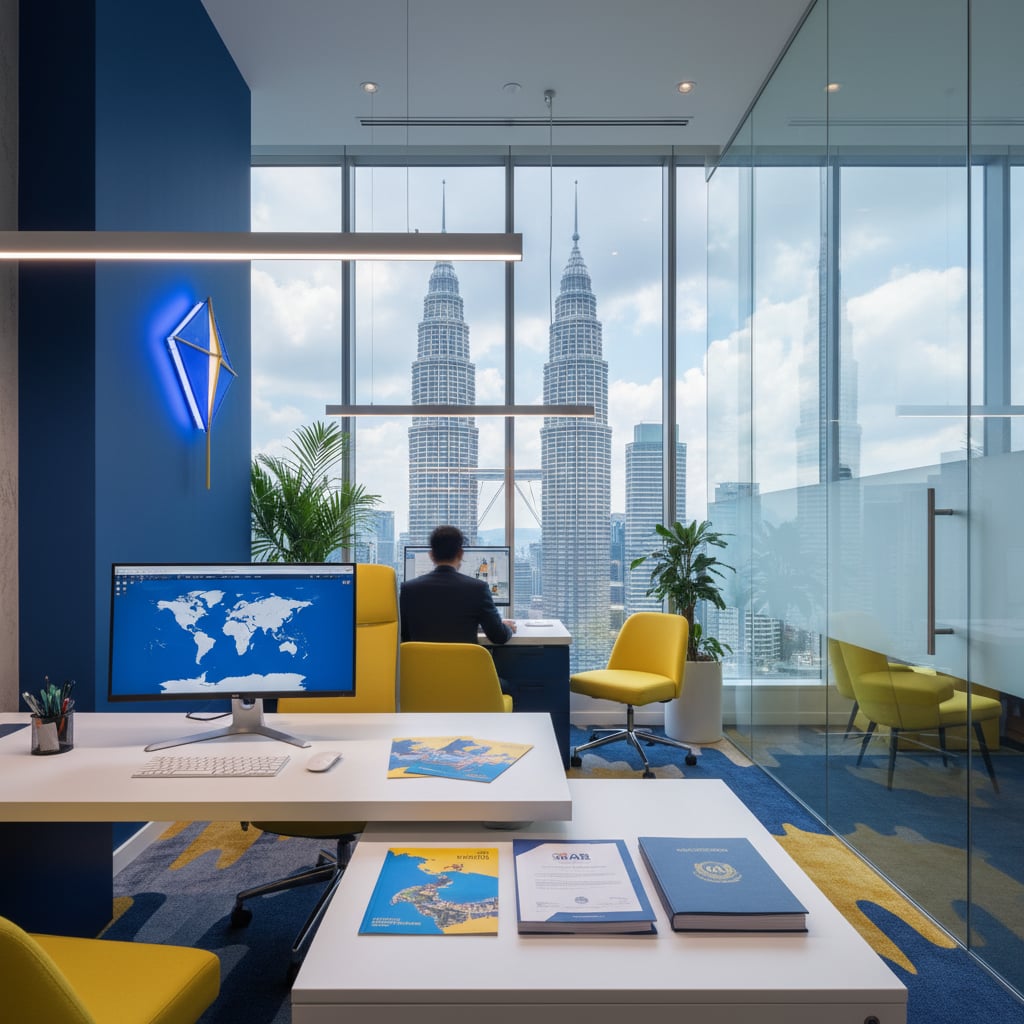
To start a travel agency in Malaysia, register a Sdn Bhd company with SSM, hold RM 50,000 paid-up capital and a physical office, obtain a MOTAC travel licence with a qualified manager, then join MATTA. Budget roughly RM 80,000–180,000 to launch.
Malaysia sits in a sweet spot for travel entrepreneurs. It's got lower costs than Singapore (by a wide margin), better infrastructure than most of Southeast Asia, and access to one of the region's most diverse tourism markets. I've worked with agents who've built successful operations here spending half what they'd need in Singapore—and serving many of the same clients.
Here's the thing though: Malaysia isn't a walk in the park. You need a proper MOTAC license, RM 50,000 in paid-up capital sitting in your company account, a physical office (no working from home with this one), and a qualified manager on your team. The bureaucracy is real, but it's navigable if you know what you're doing.
What makes Malaysia particularly interesting right now? Visit Malaysia 2026 is pushing serious government investment into tourism. The halal tourism market is exploding—Malaysia's a global leader here, and that segment's growing 20% annually. Medical tourism from Indonesia and the Middle East keeps climbing. And the Singapore-Malaysia corridor? That's bread and butter for hundreds of agencies.
What You'll Learn in This Guide
- The four types of MOTAC travel licenses and which one you need
- Step-by-step registration process with realistic timelines
- Capital requirements beyond the RM 50,000 minimum
- Complete document checklist for MOTAC application
- Why MATTA membership matters (and when to join)
- Technology stack for modern Malaysian travel agencies
- How B2B platforms like DMC Quote help new agencies compete
Malaysia Travel Industry Overview & Opportunity
Let me give you the honest picture of the Malaysian travel market. In 2024, Malaysia welcomed over 27 million international tourists—that's up from the post-pandemic recovery and trending toward pre-COVID levels. Tourism contributes roughly 12% to GDP when you count both direct and indirect impacts. The government isn't just watching from the sidelines; they're actively pushing tourism as an economic driver.
27M+
International visitors in 2024
RM 86B
Tourism receipts target 2026
5,800+
Licensed travel agencies
20%
Halal tourism growth rate
Why Malaysia Makes Strategic Sense
I hear this question constantly from entrepreneurs in Singapore: "Should I set up there or in Malaysia?" Here's my honest take after seeing both markets up close:
- Singapore proximity advantage: Johor Bahru is literally a bridge away from Singapore. Operating from JB lets you serve Singapore clients while paying Malaysian costs. Rent is 70% cheaper. Staff salaries are 50-60% lower. Many successful agencies use this exact arbitrage.
- Multi-ethnic market access: Malaysia's population is roughly 70% Malay, 23% Chinese, and 7% Indian. That diversity means natural connections to China, India, and Middle Eastern markets. Your team likely speaks Mandarin, Tamil, and English alongside Malay.
- Islamic tourism leadership: Malaysia consistently ranks in the top 3 globally for Muslim-friendly tourism. With 1.8 billion Muslims worldwide and halal tourism growing at 20%+ annually, this is a massive opportunity. Hotels understand halal requirements. Prayer facilities are everywhere. Halal food is the default.
- Medical tourism growth: Private hospitals in KL and Penang deliver excellent care at 50-70% lower costs than Singapore. Indonesia, Middle East, and even some Western travelers come specifically for medical procedures. The medical tourism segment generates RM 2+ billion annually.
- Infrastructure quality: English is widely spoken in business. Internet connectivity is solid. Payment systems work. The professional infrastructure is genuinely good—this isn't a frontier market.
The JB Strategy: Serving Singapore from Malaysia
Many successful agencies operate from Johor Bahru while serving Singapore clients. Your registered office is in JB (rent RM 2,500-4,000/month vs SGD 3,000-6,000 across the border). You price competitively for Singapore market because your cost base is Malaysian. This works especially well for B2B operations where physical location matters less than price competitiveness. Some agencies even maintain a small Singapore presence while running operations from JB.
MOTAC Travel Agency License Types
MOTAC (Ministry of Tourism, Arts and Culture) is the regulatory body you need to deal with. They issue four main categories of travel licenses, and understanding which one you need is the first real decision you'll make.
The Four License Categories
| License Type | What It Covers | Best For |
|---|---|---|
| Inbound License (Lesen Inbound) |
Bringing foreign tourists to Malaysia. Ground handling, local tours, accommodations for inbound visitors. | DMCs, incoming tour operators, agents serving foreign partners |
| Outbound License (Lesen Outbound) |
Sending Malaysian travelers abroad. International packages, overseas bookings, flight arrangements. | Agencies serving Malaysian travelers going overseas |
| Inbound & Outbound License (Comprehensive) |
Both activities—full flexibility to handle inbound and outbound travel. | Most new agencies (recommended) |
| Ticketing Agent License (Lesen Ejen Tiket) |
Specifically for airline ticket sales. More limited scope than full travel agency. | Pure flight booking operations |
Which License Should You Get?
Here's the practical advice: unless you have a very specific reason to limit yourself, apply for the Inbound & Outbound combination license. The requirements are the same—RM 50,000 paid-up capital, RM 20,000 deposit, same application process. Why limit your options?
The only scenario where a single-type license makes sense is if you're absolutely certain you'll only do one type of business. An incoming DMC that exclusively handles ground services for foreign tour operators might go inbound-only. A consumer agency selling only overseas packages to Malaysians might go outbound-only. But most agencies eventually want flexibility, and changing license types later means more paperwork.
MOTAC licensing tip: Your license specifies which activities you can legally conduct. Operating outside your license scope is a violation. If you're licensed only for inbound but start selling outbound packages to Malaysians, you're technically breaking the rules. MOTAC does conduct audits. Get the comprehensive license and avoid complications.
Step-by-Step Registration Process
Let me walk you through this from start to finish. The process isn't complicated, but it requires getting several pieces in place in the right order.
Phase 1: Company Registration with SSM (Week 1-2)
Before you can apply for a MOTAC license, you need a Sdn Bhd (Sendirian Berhad = Private Limited) company. Sole proprietorships and partnerships can't get travel agency licenses in Malaysia.
- Name search and reservation: Check availability through SSM's MyCoID portal. Reserve your chosen name for RM 50 (valid 30 days). Include "Travel" or "Tours" in the name—it helps with your MOTAC application.
- Prepare incorporation documents: Constitution (Memorandum & Articles), director and shareholder details, registered address.
- Submit incorporation via company secretary: You must use a licensed Malaysian company secretary. They handle the SSM submission.
- Receive SSM registration: Typically 3-7 working days. You'll get your company registration number and certificate.
- Open company bank account: Deposit at least RM 50,000 paid-up capital. Get bank statement showing this balance.
Cost: RM 2,500-4,000 including secretary fees and government charges
Timeline: 1-2 weeks
Phase 2: Office Setup (Week 2-4)
MOTAC requires a physical commercial office. This isn't negotiable—you can't run from home or a residential address.
- Find commercial premises: Can be small (200-400 sq ft is fine for starting). Must be in a commercial building or shop lot.
- Sign lease agreement: Minimum 1-year lease typically. Get it stamped at LHDN (tax office).
- Install signage: Your company name must be visibly displayed outside. MOTAC will check this during inspection.
- Basic setup: Reception area, desk, phone, computer. Doesn't need to be fancy—needs to be professional.
Cost: Deposit (2-3 months rent) + first month + setup = RM 10,000-25,000
Monthly rent: RM 1,500-3,000 (outside KL CBD), RM 3,000-6,000 (KL prime areas)
Phase 3: MOTAC License Application (Week 4-12)
Now you can apply for the actual travel license.
- Create MyTourismData account: MOTAC's online portal for license applications
- Prepare all documents: (See full checklist in next section)
- Submit application: Upload documents, fill application form, pay RM 500 processing fee
- Get security deposit: Prepare RM 20,000 bank draft payable to "Ketua Setiausaha Perbendaharaan"
- MOTAC review: They verify documents, may request clarifications or additional documents
- Office inspection: MOTAC officers visit your office to verify it meets requirements
- Approval and license issuance: You receive your official travel agency license
Cost: RM 500 application fee + RM 20,000 security deposit
Timeline: 6-8 weeks from complete submission
Phase 4: Post-License Setup (Week 12+)
- SST registration: If annual turnover will exceed RM 500,000, register for Sales and Service Tax
- SOCSO and EPF: Register as employer if hiring Malaysian staff
- Business insurance: Professional indemnity insurance is recommended
- MATTA membership: Apply after 6-12 months of operation
Capital Requirements Explained
The RM 50,000 number gets thrown around a lot, but let me break down exactly what the capital requirements mean and what you actually need.
Paid-Up Capital: RM 50,000 Minimum
This is money you deposit into your company's bank account. It becomes company funds—you can use it for business operations. MOTAC checks your bank statement during application to verify this capital is actually there.
- Must be in company bank account (not personal account)
- Must show as "paid-up capital" in company records
- Can be from single shareholder or split among multiple shareholders
- You can use these funds for business operations after license approval
Security Deposit: RM 20,000
This is separate from paid-up capital. It's a bank draft that MOTAC holds as security against any consumer complaints or violations. This money is:
- Held by MOTAC throughout your license period
- Refundable when you surrender your license (with proper closure)
- Can be claimed against if you fail to deliver services to customers
Total Capital Needed: Beyond the Minimums
The RM 70,000 (50K + 20K) is just the regulatory minimum. Realistically, you need more to actually operate. Here's an honest breakdown:
| Category | Amount (RM) | Notes |
|---|---|---|
| Paid-up capital (MOTAC requirement) | 50,000 | Minimum; can use for operations |
| Security deposit (MOTAC) | 20,000 | Held by government; refundable |
| Company registration | 2,500-4,000 | SSM, secretary, government fees |
| Office setup | 10,000-25,000 | Deposit, furnishing, signage |
| Working capital (6 months) | 30,000-60,000 | Rent, salaries, marketing, operations |
| Realistic Total | RM 112,500-159,000 | ~USD 25,000-35,000 |
Don't Underestimate Working Capital
Travel agencies often need to pay suppliers before collecting from clients. A hotel booking might require deposit immediately, but your client pays closer to travel date. Without adequate working capital buffer, cash flow crunches can kill your business before it gains traction. Plan for at least 4-6 months of operating costs as buffer.
Required Documents for MOTAC Application
This is where many applications get delayed—incomplete or incorrect documentation. Here's the complete checklist:
Company Documents
- SSM Registration Certificate (Form 9): Certified true copy
- Company Constitution (M&A): Certified copy
- Form 24: Return of allotment of shares (showing paid-up capital)
- Form 49: Return of particulars of directors, managers, and secretaries
- Form 44: Notification of registered office (if applicable)
- Bank statement: Showing RM 50,000+ paid-up capital balance
- Company letterhead samples: With company logo and address
Office/Premises Documents
- Office lease agreement: Stamped by LHDN (minimum 1 year recommended)
- Photographs of office: Interior and exterior, showing signage with company name
- Location map: Showing office location and accessibility
Personnel Documents
- Manager's IC copy: Must be Malaysian citizen
- Manager's resume/CV: Showing relevant experience
- Manager's qualification certificates: Tourism diploma/degree OR
- Experience letters: Proving 3+ years in travel industry (if no formal qualification)
- Passport-size photos: Of directors and manager
- Employment letter: Appointing the designated manager
Financial Documents
- RM 20,000 bank draft: Payable to "Ketua Setiausaha Perbendaharaan"
- RM 500 application fee: Usually paid online through MyTourismData
Business Plan
- Business plan document: Including company background, proposed activities, target markets, projected operations, marketing strategy
Document preparation tip: Get all documents certified by your company secretary where required. MOTAC is particular about proper certification. Use clear, high-quality photographs of your office—blurry photos can delay your application. The business plan doesn't need to be elaborate but should show you've thought through your operations.
Complete Costs Breakdown
I'm going to give you real numbers based on actual agency setups, not optimistic guesses. Costs vary significantly between lean startup and professional setup scenarios.
Scenario A: Lean Startup (Minimum Viable Setup)
| Item | One-Time (RM) | Monthly (RM) |
|---|---|---|
| Company registration (SSM, secretary, fees) | 2,500 | 300 (secretary retainer) |
| Paid-up capital (in company account) | 50,000 | - |
| MOTAC license fee | 500 | - |
| Security deposit (MOTAC) | 20,000 | - |
| Small office (outside KL CBD, ~200 sqft) | 5,000 (deposit) | 1,500-2,000 |
| Basic office setup (furniture, signage) | 3,000 | - |
| Computer, phone, internet | 3,000 | 200 |
| Basic website | 2,000 | 100 (hosting) |
| DMC platform deposits (2-3 platforms) | 5,000 | - |
| Working capital (3 months buffer) | 15,000 | - |
| TOTAL | RM 106,000 | RM 2,100-2,600 |
Scenario B: Professional Setup (Proper Office, Small Team)
| Item | One-Time (RM) | Monthly (RM) |
|---|---|---|
| Company registration (full service) | 4,000 | 500 |
| Paid-up capital | 50,000 | - |
| MOTAC licensing | 20,500 | - |
| Office in KL (~400 sqft) | 12,000 (deposit) | 4,000 |
| Office furnishing, signage, fit-out | 15,000 | - |
| Technology (computers, software) | 8,000 | 500 |
| Professional website with booking | 10,000 | 300 |
| Staff (2 people) | - | 7,000 |
| Marketing launch budget | 5,000 | 2,000 |
| DMC/supplier deposits | 10,000 | - |
| Working capital (6 months) | 50,000 | - |
| TOTAL | RM 184,500 | RM 14,300 |
The reality: Most successful new agencies land somewhere between these scenarios. They start closer to lean, prove the business model, then upgrade as revenue grows. Don't over-invest before you have clients.
MATTA Membership Benefits
MATTA (Malaysian Association of Tour and Travel Agents) isn't legally required, but it's become practically essential for serious players in the Malaysian market. Here's why it matters and when to join.
Why MATTA Membership Matters
MATTA Fair Access
Malaysia's biggest travel consumer fair happens twice yearly (March and September). MATTA members get booth access. This single event generates thousands of leads for participating agencies. Non-members can't exhibit. The fair attracts 100,000+ visitors looking to buy travel packages. For B2C agencies, this alone justifies membership.
Consumer Credibility
Malaysian consumers recognize the MATTA brand. Displaying MATTA membership signals legitimacy and builds trust. In a market where consumers worry about travel agency scams, this credibility matters. Your competitors display MATTA membership—not having it raises questions.
Industry Networking
MATTA events, chapter meetings, and annual conventions connect you with suppliers, partners, and industry players. Supplier relationships often start through MATTA connections. Tourism boards frequently work through MATTA for industry outreach. The networking value compounds over time.
Training & Development
MATTA provides courses, workshops, industry updates, and professional development. Topics range from digital marketing to destination training to regulatory updates. Keeping staff trained and updated helps agencies compete. Some supplier training programs are MATTA-exclusive.
MATTA Membership Requirements
- Valid MOTAC travel agency license
- Minimum operating period (typically 6 months to 1 year)
- Completed application with supporting documents
- Application fee + annual subscription
- Recommendation from existing MATTA member (helpful but not always required)
Cost: Approximately RM 2,000-4,000 annually depending on membership category. Entry fees may apply for new members.
When to Join MATTA
My recommendation: apply for MATTA membership after 6-12 months of operation. By then you'll have:
- Operating history that strengthens your application
- Real business to discuss at networking events
- Understanding of which MATTA benefits you'll actually use
- Budget allocated from actual revenue, not startup funds
Don't rush into MATTA on day one—focus on getting clients first. The membership value increases once you have an actual business to leverage it with.
IATA Accreditation in Malaysia
Let me save you some time: most Malaysian travel agencies don't need IATA accreditation, and you probably don't either. Here's the honest breakdown.
What IATA Gives You
- Direct ticketing access to IATA member airlines
- Use of IATA number for airline transactions
- Credibility with corporate clients who specifically require IATA agents
- Participation in airline commission programs
What IATA Costs
- Financial guarantee: Typically RM 100,000+ in bank guarantees or insurance
- Application and annual fees: Several thousand ringgit
- Compliance requirements: Ongoing audits, reporting, financial standards
- Cash flow implications: Airlines can claim against your guarantee
When IATA Makes Sense
- You're doing very high flight volumes (RM 1 million+ monthly in tickets)
- Your corporate clients specifically require IATA-accredited agents
- You want direct airline relationships for specialized routes
- Commission rates from consolidators aren't acceptable for your volumes
The Alternative: Consolidators and B2B Platforms
Most Malaysian agencies sell flights through consolidators and B2B platforms instead of IATA direct:
- TBO (TravelBoutique Online): Major B2B platform with extensive flight inventory
- Via.com: Good domestic and regional coverage
- Travelport, Amadeus partners: Various consolidator arrangements
- Airline direct B2B: AirAsia, Malaysia Airlines have agent programs
Commission rates are lower than IATA direct (typically 1-3% vs 5-7%), but you avoid the financial burden and compliance overhead. For most new agencies, flights are low-margin anyway—focus on packages where the real money is.
Bottom line: Skip IATA for your first 2-3 years. Use consolidators for flight bookings. Focus your capital and attention on building profitable package business. Revisit IATA only if you're doing substantial corporate travel with clients who specifically require it.
Technology Requirements for Malaysian Travel Agencies
Technology can make or break a travel agency's efficiency. But here's the trap I see new agencies fall into: they spend RM 50,000+ on custom software before making their first booking. Don't do that. Start lean, upgrade as you grow.
Essential Stack (Day 1)
| Tool | Purpose | Cost (RM/month) |
|---|---|---|
| B2B platform accounts (DMC Quote, TBO, etc.) | Access hotel, tour, transfer inventory | Free (deposit-based) |
| Basic CRM (HubSpot Free, Zoho Free tier) | Track leads, customers, follow-ups | Free |
| Accounting software (Wave, Zoho Books basic) | Invoicing, expense tracking, GST | Free-100 |
| WhatsApp Business | Customer communication (essential in MY market) | Free |
| Google Workspace | Email, docs, basic collaboration | 25-50/user |
| Basic website (WordPress/Wix) | Online presence, package showcase | 50-150 |
Total essential tech cost: RM 100-300/month to start. Don't overthink this.
Growth Stack (Month 6+)
Add these when you're doing consistent business:
- Paid CRM upgrade: Zoho CRM Plus, Salesforce Essentials. Better automation, pipeline management.
- Proposal/quotation tool: Canva Pro for designed proposals, or specialized travel quotation software.
- Accounting upgrade: SQL Accounting, AutoCount (popular in Malaysia for SST compliance).
- Marketing automation: Mailchimp paid, WhatsApp Business API for bulk messaging.
- Website upgrade: Custom website with package display, inquiry forms, possibly booking capability.
Scale Stack (Year 2+)
Consider these when you have substantial volume:
- White-label booking engine: TravelCarma, Trawex, or custom development (RM 30,000-100,000+ setup)
- Full travel CRM: LeadSquared, travel-specific solutions
- API integrations: Direct connections to suppliers, automated booking flows
- AI tools: ChatGPT for itinerary drafting, customer support automation
Tech investment rule: Don't build custom software until you've proven the business model. Use existing platforms and tools. Custom development makes sense at RM 3-5 million+ annual turnover when efficiency gains justify the investment. Before that, your time and money are better spent on sales and marketing.
How DMC Quote Helps Malaysian Travel Agents
Full disclosure: this is our platform, so I'll explain specifically how it helps Malaysian agencies compete. You can decide if it fits your needs.
The New Agency Challenge
When you're starting out, you face a chicken-and-egg problem. Suppliers want volume before giving good rates. But you can't build volume without competitive rates. DMC Quote solves this by aggregating demand across thousands of agents, giving everyone access to wholesale pricing.
What Malaysian Agents Get
- Singapore access: Hotels, attractions, transfers at wholesale rates. Critical for the huge Malaysia-Singapore corridor.
- Regional inventory: Thailand, Bali, Vietnam, and expanding destinations.
- No volume requirements: Same rates whether you book 5 rooms or 500. Level playing field.
- Real-time availability: Live inventory, instant confirmation for most products.
- Agent markup control: You set your selling price. Your margin, your decision.
- MYR settlement: Pay in Malaysian Ringgit, avoid currency conversion hassles.
Singapore-Malaysia Corridor Advantage
The Singapore-Malaysia combo is bread and butter for Malaysian agencies. Your clients—whether Indonesian, Indian, Middle Eastern, or Chinese tourists—almost always want both destinations in one trip. DMC Quote gives you:
- Singapore hotels at wholesale rates (Universal Studios area, Marina Bay, Orchard)
- Attraction tickets (USS, SEA Aquarium, Gardens by the Bay) with instant confirmation
- Transfers between Malaysia and Singapore
- Ability to package these with your Malaysian offerings
Instead of going through Singapore DMCs and negotiating separately (who won't give you good rates without volume), you get immediate access to competitive pricing.
Getting Started with DMC Quote
Registration is free. You'll need your MOTAC license details and company information. Deposit is wallet-based—load funds and book against your balance. No monthly fees, no minimum volumes.
Register Free AccountMarketing Your Malaysian Travel Agency
You've got the license, the office, the supplier access. Now you need customers. Here's what actually works in the Malaysian market.
Digital Marketing Essentials
- Google My Business: Claim and optimize your listing. Local searches ("travel agency near me") drive walk-in and call leads. Free and essential.
- Facebook & Instagram: Malaysians are heavily on social media. Visual content showcasing destinations performs well. Consider Facebook Groups in your niche.
- WhatsApp marketing: This is huge in Malaysia. WhatsApp Business catalog, broadcast lists, status updates. Most bookings eventually come through WhatsApp conversations.
- SEO for local searches: "Singapore tour package from Malaysia," "Bali honeymoon package KL." Long-tail keywords with location modifiers.
Offline Channels That Work
- MATTA Fair: (Once you're a member) Booth at MATTA Fair generates leads like nothing else. Budget RM 15,000-30,000 for booth and promotions.
- Corporate tie-ups: Approach HR departments, corporate admins. Company trips, incentive travel, executive travel arrangements.
- Community marketing: Religious organizations (mosque/temple/church groups), alumni associations, hobby groups. Group travel is profitable and recurring.
- Referral programs: Existing customers who refer new business. Offer travel vouchers or discounts. Word of mouth is powerful in Malaysia.
Niche Marketing Approaches
Halal/Muslim-Friendly Tourism
Partner with mosques and Islamic organizations. Highlight halal-certified hotels and restaurants. Target Middle East and Indonesian markets through Muslim travel forums and social media.
Medical Tourism Packages
Partner with private hospitals and medical tourism facilitators. Target Indonesian, Middle Eastern, and regional patients. Package medical + recovery + sightseeing.
Singapore-Malaysia Combos
Target Indian, Indonesian, Middle Eastern tourists wanting both destinations. Strong demand, relatively simple logistics, good margins when packaged well.
Corporate/MICE Travel
Target growing companies needing travel management. Company retreats, dealer incentive trips, conference attendance. Higher volume, repeat business, better margins.
Marketing Budget Allocation (Starting Out)
| Channel | Monthly Budget (RM) | Expected Outcome |
|---|---|---|
| Facebook/Instagram ads | 500-1,500 | Lead generation, brand awareness |
| Google Ads (search) | 500-1,000 | High-intent inquiry leads |
| Content/social management | 500-1,000 | Organic reach, engagement |
| Networking/events | 300-500 | Relationship building |
| Total starting budget | RM 1,800-4,000 | Adjust based on results |
Success Tips from Established Malaysian Agencies
Here's practical advice based on what works for successful Malaysian travel agencies:
Operational Excellence
- Respond fast: Malaysian market moves through WhatsApp. Customers expect responses within hours, not days. Set up business hours alerts and respond promptly even if just acknowledging the inquiry.
- Follow up systematically: Most bookings don't happen on first contact. Have a follow-up system. Use CRM reminders. The agency that follows up wins the business.
- Document everything: Confirmations, special requests, payments—all in writing. This protects you when issues arise. Malaysian consumer protection laws favor customers.
- Build supplier relationships: Don't just use B2B platforms transactionally. Visit hotels you book frequently. Attend supplier events. Personal relationships get you upgrades and priority when things go wrong.
Financial Discipline
- Collect deposits upfront: Standard practice is 30-50% deposit on booking. Don't start services without securing payment. This protects your cash flow.
- Separate personal and business finances: Use company accounts for all business transactions. Makes accounting cleaner and tax compliance easier.
- Track margins carefully: Know your actual margin on each booking, not just the theoretical markup. Factor in payment processing fees, currency fluctuations, unexpected costs.
- Build reserves: Travel is cyclical and unpredictable. Build 3-6 months operating expense reserve before expanding.
Strategic Growth
- Pick a niche and dominate: Don't try to be everything to everyone. The most successful Malaysian agencies specialize—halal tourism, medical packages, corporate travel, specific destinations. Go deep before going wide.
- Leverage the Singapore arbitrage: If you're near JB, actively market to Singapore clients. Your cost advantage is real. Many agencies build significant business serving Singapore corporates and families from Malaysian base.
- Build recurring business: Corporate accounts, group organizers, repeat leisure travelers. Acquiring new customers is expensive. Retention is where profitability compounds.
- Don't race to the bottom on price: If your only advantage is lower price, you'll always be undercut. Compete on service, expertise, reliability. Clients who choose purely on price aren't profitable long-term anyway.
The 18-Month Milestone
Most agencies that survive 18 months go on to build sustainable businesses. The first 18 months are about finding product-market fit, building supplier relationships, and developing operational systems. If you're still losing money at 18 months, something fundamental needs to change. If you're breaking even or profitable, you've likely found a model that works—now scale it.
Frequently Asked Questions
Total realistic startup cost ranges from RM 80,000 to RM 180,000 (approximately USD 17,000-40,000). This includes RM 50,000 minimum paid-up capital required by MOTAC, RM 20,000 security deposit, office setup costs of RM 10,000-25,000, company registration of RM 2,500-4,000, technology and website of RM 5,000-15,000, and working capital of RM 30,000-60,000. Lean startups can launch around RM 80,000-100,000 by minimizing office size and staff initially, then scaling up as revenue grows.
MOTAC issues four main license categories: 1) Inbound License for bringing foreign tourists to Malaysia, 2) Outbound License for sending Malaysians abroad, 3) Inbound & Outbound License which covers both activities with full flexibility, and 4) Ticketing Agent License specifically for airline ticket sales. Most new agencies apply for the Inbound & Outbound combination license since requirements are identical but it provides maximum business flexibility. Each license requires the same RM 50,000 paid-up capital and RM 20,000 deposit.
Yes, foreigners can own 100% of a travel agency company in Malaysia for most operations. However, 30% Bumiputera shareholding is required or advantageous for accessing certain government tourism programs, grants, and contracts. For pure outbound operations serving foreign clients, full foreign ownership works fine. Many foreign entrepreneurs partner strategically with Malaysian nationals. You will need at least one director who is ordinarily resident in Malaysia, and your designated manager must be a Malaysian citizen with relevant qualifications.
MOTAC license processing typically takes 6-8 weeks from complete application submission. Before applying, you need company registration (1-2 weeks) and office setup. The process involves document verification at MOTAC, possible requests for additional information, and a physical office inspection by MOTAC officers. Total timeline from starting the process to licensed operation is approximately 2-3 months. Having all documents properly prepared and a compliant office ready significantly speeds up approval—incomplete applications are the main cause of delays.
MOTAC requires your designated travel agency manager to have either: 1) A diploma or degree in tourism, hospitality, or travel management from a recognized institution, OR 2) Minimum 3 years of documented experience working in the travel industry with supporting employment letters. If you're a foreign owner without these qualifications, you must hire a qualified Malaysian as your designated manager. The manager must be a Malaysian citizen and will be officially listed on your license. This person takes responsibility for the agency's professional standards.
No, MATTA (Malaysian Association of Tour and Travel Agents) membership is not legally required to operate. However, it's practically essential for serious operators because it provides access to MATTA Fair (Malaysia's biggest consumer travel fair with 100,000+ visitors), industry credibility that Malaysian consumers recognize, training programs, networking with suppliers and partners, and government liaison. Annual membership costs RM 2,000-4,000. Most agencies join after 6-12 months of operation once they have established business to leverage at networking events.
No, IATA accreditation is not required to sell flights in Malaysia. Most travel agencies operate without IATA by using consolidators and B2B platforms that provide access to airline inventory. IATA accreditation requires substantial financial guarantees (typically RM 100,000+) and strict compliance requirements that don't make economic sense for most startups. Consider IATA only if you're doing very high flight volumes (RM 1 million+ monthly in tickets) or serving corporate clients who specifically require IATA-accredited agents. Until then, consolidators work fine.
The minimum paid-up capital requirement for a MOTAC-licensed travel agency in Malaysia is RM 50,000. This capital must be deposited in your company's bank account and reflected in financial statements before applying for the MOTAC license. This is separate from the RM 20,000 security deposit—you need both. The paid-up capital can be used for business operations, while the security deposit is held by MOTAC and refundable when you properly close your business. In total, expect to have RM 70,000 tied up in regulatory requirements alone.
No, MOTAC requires a physical commercial office premises for travel agency licensing in Malaysia. The office must have proper signage displaying your company name and license number, be accessible to customers, and meet basic commercial standards. This is one area where Malaysia is stricter than some other countries. MOTAC officers inspect your office during the licensing process. However, once licensed, you can have some staff work remotely while maintaining the registered office. Some agencies use small serviced office spaces initially to minimize costs while meeting requirements.
Profit margins for Malaysian travel agencies typically range from 8-15% on package sales, 15-25% on customized tours, and 2-5% on flight bookings. First-year revenue targets of RM 500,000-1,500,000 are realistic for new agencies with proper niche focus. Break-even typically takes 6-12 months depending on overhead structure. The most profitable niches in Malaysia include Islamic/halal tourism (Malaysia is a global leader), medical tourism packages, Singapore-Malaysia combo packages for regional tourists, and corporate MICE travel. Agencies with niche specialization generally outperform generalists.
Required documents include: SSM company registration certificate (Form 9), company constitution (M&A), Forms 24 and 49 showing directors and shareholders, bank statement proving RM 50,000+ paid-up capital, office lease agreement (stamped by LHDN), photographs of office premises with signage, manager's qualification certificates or experience letters, manager's IC and resume, business plan with projected operations, RM 20,000 bank draft for security deposit, passport photos of directors, and company letterhead samples. Incomplete documentation is the main cause of application delays.
Yes, Malaysia offers significant advantages over Singapore for travel agency startups. Operating costs are 60-70% lower while you can still serve Singapore clients from nearby Johor Bahru (1 hour from Singapore CBD). Capital requirements are RM 50,000 versus SGD 100,000 in Singapore. Office rent in KL or JB is RM 2,000-5,000/month versus SGD 3,000-8,000 in Singapore. Staff salaries are 50-60% lower. The "JB strategy" of operating from Johor Bahru to serve Singapore market with Malaysian cost structure is used by many successful agencies. Professional infrastructure and English proficiency are comparable.
Ready to Start Your Travel Agency in Malaysia?
Register free on DMC Quote to access wholesale rates for Singapore, Thailand, Bali, and more. No minimum volume requirements. Start competing from day one.
Related Guides
Start Travel Agency in Singapore
STB license, SGD 100K capital, and what it takes to operate in Singapore.
How to Get DMC Rates
Access wholesale pricing without volume requirements. Level the playing field.
Global Startup Guide 2026
Compare requirements across Malaysia, Singapore, Thailand, India, and more.