In This Guide
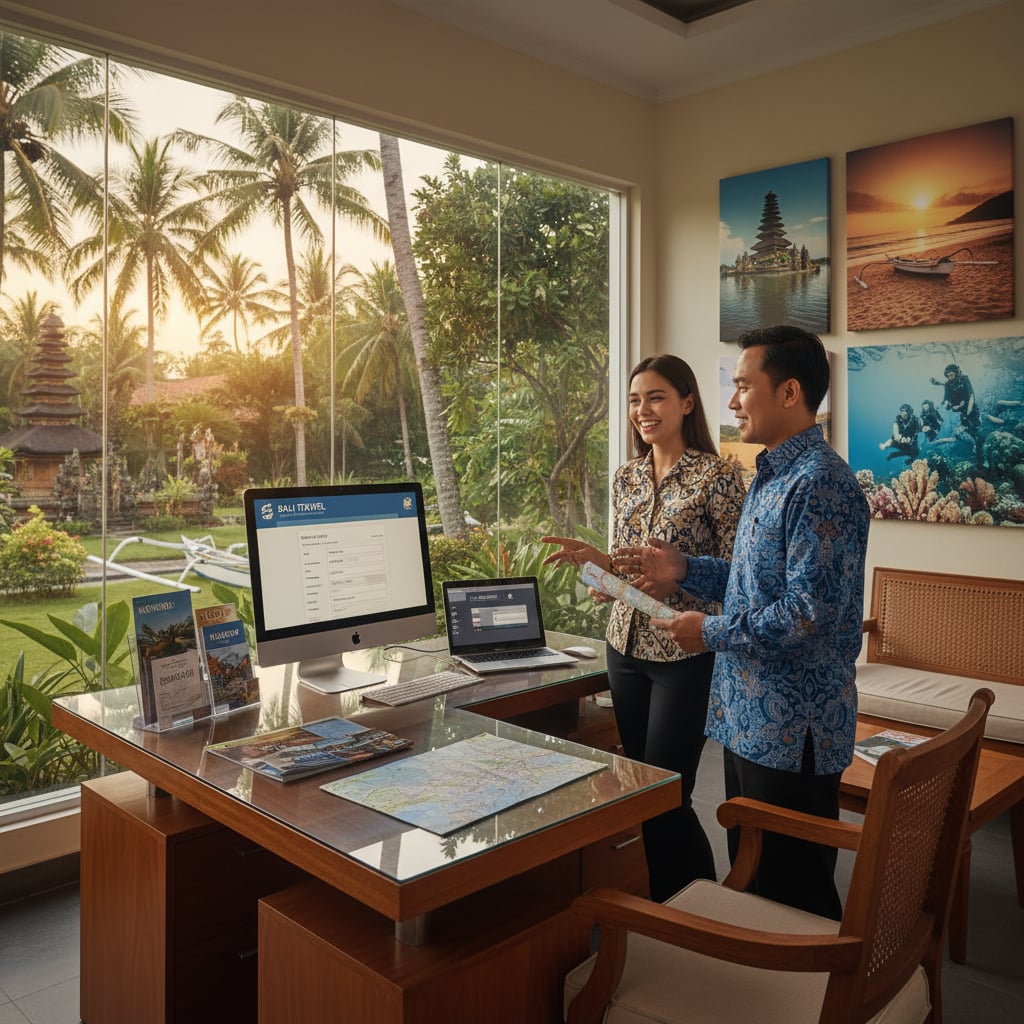
To start a travel agency in Indonesia, register a PT PMA (foreign-owned company), obtain a TDUP tourism business license via the OSS system, secure office premises and minimum capital, then connect to wholesale suppliers. Budget roughly USD 8,000–35,000 to launch.
Indonesia is a tourism paradox. Everyone knows Bali—it's arguably the most famous island destination on Earth. But beyond Bali? The country has 17,000 islands, most still unexplored by mainstream tourism. The domestic market alone, with 280 million Indonesians, is staggering. Yet starting a business here as a foreigner requires navigating one of Asia's more complex regulatory environments.
Here's the reality check: Indonesia's bureaucracy is improving but still frustrating. The Omnibus Law of 2020 simplified things, and the OSS (Online Single Submission) system actually works reasonably well. But you'll still encounter delays, changing requirements, and the need for local connections. The agencies thriving here either have deep local partnerships or have invested significant capital through the formal PT PMA route.
The opportunity is real though. Bali alone sees 6+ million foreign tourists yearly. Komodo, Raja Ampat, Lombok, Yogyakarta—all growing. And the domestic middle class is traveling like never before. If you can crack the bureaucracy puzzle, Indonesia rewards you with incredible product and hungry markets.
The Indonesia Tourism Landscape
16M+
International arrivals
$55B
Tourism revenue
280M
Domestic population
22%
Corporate tax rate
What makes Indonesia unique:
- Bali concentration: Most foreign tourism concentrates in Bali. This is both opportunity (proven demand) and challenge (intense competition). The smart play is using Bali as gateway while developing other destinations.
- Domestic market explosion: Indonesia's growing middle class travels domestically in massive numbers. They're price-sensitive but loyal to agencies that deliver good experiences.
- Diving paradise: Raja Ampat, Komodo, Bunaken—world-class dive sites. Specialized diving tourism commands premium prices and attracts dedicated travelers.
- Cultural depth: Yogyakarta's temples, Toraja funerals, Dayak longhouses. Cultural tourism is growing as travelers seek authentic experiences beyond beaches.
Company Structures for Foreign Investors
Indonesia's rules for foreign business ownership have evolved significantly. Here are your options:
PT PMA (Foreign Investment)
Allows up to 67% foreign ownership in travel/tourism sector. Requires minimum USD 150,000 in paid-up capital.
- Full legal control up to 67%
- Can sponsor your own work visa
- Capital stays in your company account
- Longer setup: 4-6 weeks
Best for: Serious investors, long-term businesses
Local PT with Partner
Partner with Indonesian nationals who legally own the company. You operate with management agreements.
- Much lower capital: IDR 50M minimum
- Faster setup: 2-3 weeks
- You work as employee/consultant
- Requires trusted local partner
Best for: Testing market, lower risk entry
The USD 150,000 Capital Requirement
This sounds like a dealbreaker for many, but understand it correctly: this is paid-up capital, not money you spend. It stays in your company bank account as working capital. You can use it for operations. It's not a fee paid to the government. If you're serious about Indonesia, you'll need working capital anyway—the regulation just formalizes the minimum.
The OSS Registration Process
Indonesia uses OSS (Online Single Submission) for business licensing. It's actually quite modern:
- Create OSS account at oss.go.id
- Register company with AHU (legal entity registration)
- Apply for NIB (Business Identification Number) through OSS
- Get KBLI classification for travel agency (79110)
- Obtain sector licenses through OSS workflow
TDUP Tourism License
TDUP (Tanda Daftar Usaha Pariwisata) is your tourism business registration. It's obtained through the OSS system after company registration.
Requirements
- Registered PT or PT PMA with tourism as business activity
- Physical office address in Indonesia
- NPWP (tax registration number)
- NIB (business identification number)
- Commitment letter for standards compliance
Categories
- Tour Operator (Biro Perjalanan Wisata): Full service—can arrange complete packages
- Travel Agent (Agen Perjalanan Wisata): More limited—typically resells existing products
Most agencies register as Tour Operators for maximum flexibility. The requirements are similar.
Timeline
TDUP through OSS typically takes 2-4 weeks after company registration is complete. The entire process from start to licensed operation:
- PT PMA route: 8-12 weeks total
- Local PT route: 4-6 weeks total
Pro tip: Local consultants/lawyers familiar with OSS can dramatically speed up the process. Budget IDR 20-40 million for professional assistance—it's worth it.
Realistic Startup Costs
| Item | PT PMA (Foreign) | Local PT (Partner) |
|---|---|---|
| Company registration | USD 3,000-5,000 | USD 1,000-2,000 |
| Paid-up capital | USD 150,000* | USD 3,500 |
| TDUP license fees | USD 500-1,000 | USD 500-1,000 |
| Office setup (Bali) | USD 2,000-5,000 | USD 2,000-5,000 |
| Work permit (KITAS) | USD 2,000-3,000 | N/A (partner handles) |
| Technology & website | USD 2,000-5,000 | USD 2,000-5,000 |
| Working capital (3-6 months) | Included in paid-up | USD 10,000-20,000 |
| TOTAL | USD 160,000-170,000** | USD 20,000-40,000 |
* Paid-up capital stays in your company account as working capital—not a fee.
** Most of this is your own operating capital, not lost money.
Monthly Operating Costs (Bali Base)
- Office rent: IDR 5-15M ($300-900)
- Staff (2-3 local): IDR 15-30M ($900-1,800)
- Utilities & internet: IDR 2-4M ($120-240)
- Software & tools: IDR 3-5M ($180-300)
- Marketing: IDR 5-15M ($300-900)
Monthly Total
IDR 30-70M
USD 1,800 - 4,200
Bali-Specific Considerations
Most travel agencies in Indonesia operate from Bali, for good reason. Here's what you need to know:
Advantages
- Concentrated tourism infrastructure
- International airport with global connections
- Established supplier network
- English widely spoken
- Familiar environment for foreign operators
- Strong WiFi and tech infrastructure
Challenges
- Intense competition—thousands of agencies
- Overtourism concerns affecting reputation
- Thin margins on standard products
- Traffic and infrastructure strain
- Higher operating costs than other islands
- Seasonal fluctuations
Location Strategy
- Seminyak/Kuta: High traffic but expensive. Good for retail walk-ins.
- Ubud: Wellness and cultural focus. Growing digital nomad community.
- Sanur: More relaxed, family-oriented. Good balance of access and cost.
- Canggu: Digital nomad central. Remote work audience.
Beyond Bali strategy: Base in Bali but develop packages for Lombok, Komodo, Raja Ampat, Yogyakarta. Use Bali's connectivity as your hub while differentiating with multi-destination expertise.
Profitable Niches in Indonesia
Diving & Liveaboards
Indonesia has some of the world's best diving. Raja Ampat, Komodo, Sulawesi. Liveaboard packages command USD 300-500/day. Requires diving knowledge or partnerships with operators.
Wellness & Retreats
Ubud is the spiritual capital of Asia. Yoga retreats, healing programs, detox. Premium pricing accepted. Growing segment—especially post-pandemic mental health focus.
Digital Nomad Packages
Bali is digital nomad capital. Coworking + villa + scooter + experiences. Monthly packages for remote workers. Canggu and Ubud hotspots.
Destination Weddings
Bali weddings are a massive industry. Full planning services, venue coordination, vendor management. High-value, high-margin but competitive.
Emerging opportunities:
- Komodo packages: Dragon viewing, island hopping, diving. Less crowded than Bali.
- Surf tourism: Mentawai, Sumbawa, Nias. Dedicated surf travelers pay premium.
- Cultural immersion: Toraja funerals, Dayak villages, Javanese courts. Unique experiences for cultural travelers.
- Domestic corporate: Indonesian companies doing team building, incentives. Growing segment.
Frequently Asked Questions
Yes, through a PT PMA (foreign investment company), foreigners can own up to 67% of a travel agency. This requires minimum USD 150,000 in paid-up capital (which stays in your company). Alternatively, many foreigners partner with trusted Indonesian nationals who own a local PT, with the foreigner operating as manager or consultant.
Via PT PMA: USD 160,000-170,000 total, but USD 150,000 of that is your working capital that stays in the company. Actual setup costs are around USD 10,000-20,000. Via local PT with Indonesian partner: USD 20,000-40,000 total including working capital. Monthly operations: USD 1,800-4,200 depending on scale.
Total timeline from scratch: 8-12 weeks for PT PMA, 4-6 weeks for local PT. TDUP license itself through OSS takes 2-4 weeks once company registration is complete. Working with an experienced local consultant speeds things up considerably. Budget 3-4 months from decision to full operation.
No, but it's the most practical for foreign operators. Jakarta offers corporate market access, Yogyakarta for cultural tourism, Labuan Bajo for Komodo packages. However, Bali has the best infrastructure, English speakers, and established supplier networks. Many agencies base in Bali but operate packages across Indonesia.
You need KITAS (temporary stay permit) with work permit. If you own a PT PMA, your company sponsors your work permit directly. If working with local PT, the company must sponsor you as an employee (director or consultant role). Tourist visas don't allow you to work. KITAS costs USD 2,000-3,000 and must be renewed annually.
Ready to Start Your Indonesia Travel Agency?
Register with DMC Quote to access wholesale rates for Bali, Indonesia, and all of Southeast Asia.