In This Guide
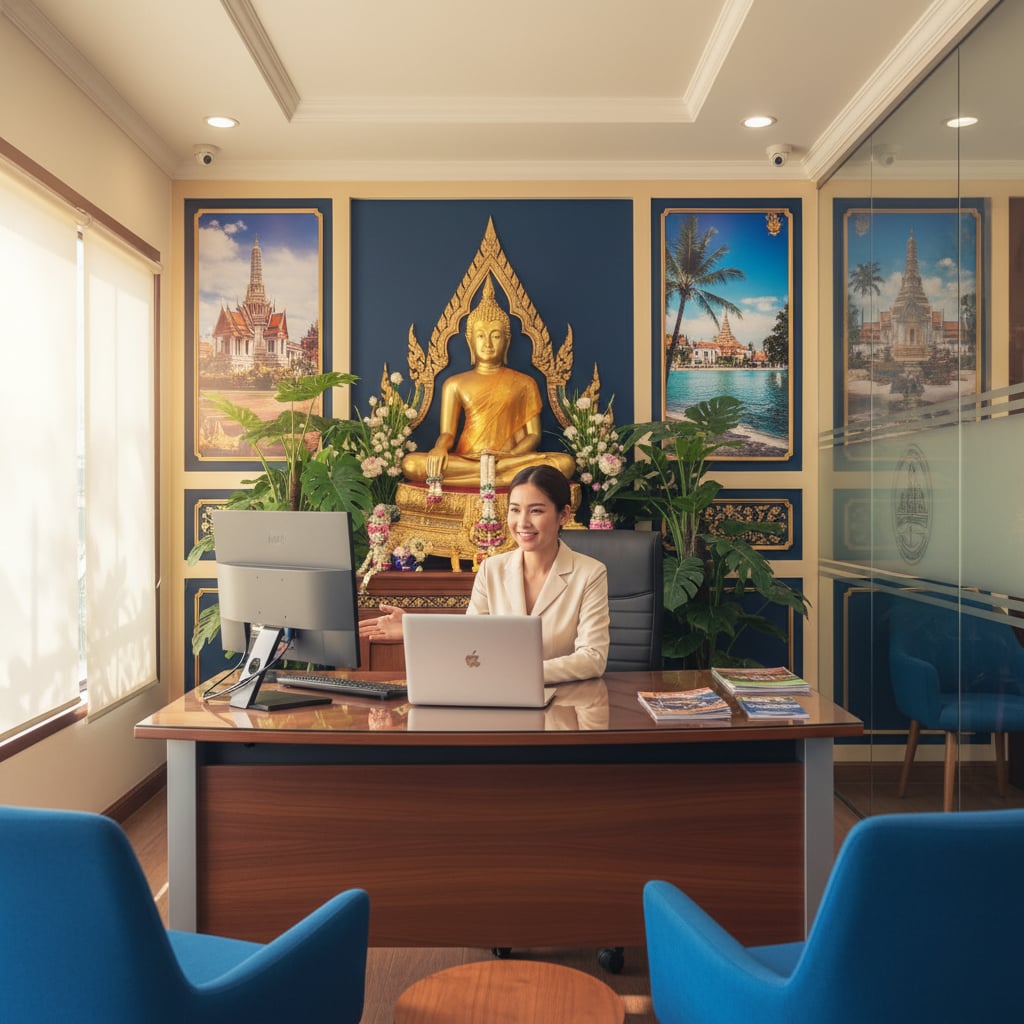
To start a travel agency in Thailand in 2026, register a Thai limited company (foreigners need a Thai majority partner or BOI promotion), obtain a TAT tourism business license, post the security bond, then connect to a wholesale DMC for instant inventory. Budget THB 500K-1M.
Thailand is a beast of a tourism market. Forty million visitors a year—that's not a typo. From backpackers in Khao San Road to billionaires in Phuket villas, everyone comes to Thailand. And the domestic tourism market? Even bigger. Thai people love to travel within their own country.
Here's the thing though—Thailand's tourism infrastructure is incredibly mature. That's good and bad. Good because suppliers, systems, and customers are sophisticated. Bad because competition is fierce and margins on standard products are thin. The agencies making real money here are either doing massive volume or have found smart niches where they're not competing head-to-head with thousands of others.
The foreign ownership question is the elephant in the room. Thailand doesn't allow majority foreign ownership of travel agencies without special permission. You'll need a Thai partner or some creative structuring. I'll cover the options honestly, including the legally questionable ones that many foreigners actually use.
Thailand's Tourism Scale
40M+
International visitors/year
$85B
Tourism revenue annually
12%
Of GDP from tourism
20%
Corporate tax rate
Where Thailand really shines:
- Inbound tourism: Endless demand from China, India, Europe, Middle East, and everywhere else. Beach resorts, cultural tours, nightlife, medical tourism—Thailand has it all.
- Medical tourism: Bangkok's hospitals are world-class. Combine medical procedures with recovery holidays. Growing 15-20% annually.
- MICE: Bangkok is a major conference destination. Regional headquarters, international events, corporate retreats.
- Wellness & retreats: Yoga retreats, detox programs, meditation centers. Especially popular with Western markets.
The Foreign Ownership Situation
Let's address this head-on because it's the biggest consideration for foreign entrepreneurs.
Thai law restricts foreign ownership of companies in most service sectors to 49%. Tourism/travel is on that restricted list. You cannot, as a foreigner, simply register a company with yourself as 100% owner and get a travel agency license.
Legal Options
Option 1: Thai Partnership
Partner with Thai nationals who own 51%. You own 49%. The Thai partners have majority control on paper.
Reality: This works if you actually trust your partners. Many successful foreign operators use this model with genuine business partners who add value.
Risk level: Low if partner is trustworthy
Option 2: BOI Promotion
Board of Investment offers incentives for qualifying businesses including permission for majority foreign ownership. Requires minimum investment and job creation.
Reality: Works for larger operations. Minimum investment typically THB 1-3 million. Takes 3-6 months to get approval.
Risk level: Low, but requires substantial capital
The Nominee Structure (Gray Area)
Many foreigners use "nominee" Thai shareholders who hold shares on paper but sign undated share transfers or side agreements. This is technically illegal under Thai law and has led to prosecutions. However, it remains common practice. If you go this route, understand you have no legal recourse if things go wrong. I can't recommend it, but I'd be lying if I said people don't do it.
My honest advice: If you're serious about Thailand long-term, find a genuine Thai partner who brings something to the table—local knowledge, connections, or capital. Or plan for BOI if you have the resources. The nominee route works until it doesn't.
Registering Your Thai Company
Assuming you've sorted the ownership structure, company registration is fairly straightforward:
Thai Company Limited (บริษัทจำกัด)
- Reserve company name: At Department of Business Development. Takes 1-3 days.
- Prepare memorandum of association: Includes objectives, registered capital, shareholder details.
- Hold statutory meeting: Shareholders approve articles of association.
- File registration: Submit to DBD with registration fee.
- Register for tax: Get tax ID, VAT registration if applicable.
Capital requirements:
- Minimum 3 shareholders (can be 2 Thai nationals + 1 foreigner)
- For work permit: THB 2 million registered capital per foreign employee
- For TAT license: minimum THB 50,000 registered capital (but more is better for credibility)
Cost: THB 20,000-50,000 total including government fees and legal assistance.
Timeline: 2-3 weeks for straightforward registration.
TAT Travel Agency License
The Tourism Authority of Thailand (TAT) regulates travel agencies. You need their license to operate legally.
License Categories
- Inbound (รับนักท่องเที่ยวต่างชาติ): For bringing foreign tourists to Thailand
- Outbound (ส่งคนไทยไปต่างประเทศ): For sending Thais abroad
- Domestic (ในประเทศ): For domestic Thai tourism only
- General: All of the above
Requirements
- Registered Thai company with travel/tourism as stated objective
- THB 200,000 guarantee: Bank guarantee or insurance bond (refunded if you close properly)
- Physical office: Must be in Thailand with proper signage
- Qualified manager: Thai national with tourism qualifications or experience
- Application fee: Around THB 2,000
Process
- Gather all documents (company registration, office lease, guarantee letter, manager credentials)
- Submit application at TAT regional office or Bangkok headquarters
- Office inspection by TAT officials
- Wait for approval (6-10 weeks typically)
- Receive license certificate
The guarantee: THB 200,000 sounds like a lot but it's held as security, not spent. You get it back if you ever close the business properly. Most agencies use insurance bonds (premium around THB 10,000-15,000/year) rather than tying up cash in bank guarantee.
Thailand Travel Agency License Types
The Department of Tourism (DOT), operating under the Ministry of Tourism and Sports, handles travel agency licensing in Thailand. While people still refer to "TAT licenses," the licensing function actually sits with DOT—TAT focuses on promotion and marketing. Understanding the license categories is your first decision.
The Three License Categories
| License Type | What It Covers | Best For |
|---|---|---|
| Inbound License (TAT Inbound) |
Bringing foreign tourists to Thailand. Ground handling, local tours, accommodations, and transfers for inbound visitors. Cannot sell outbound travel to Thai nationals. | DMCs, incoming tour operators, agents serving foreign partners exclusively |
| Outbound License (TAT Outbound) |
Sending Thai travelers abroad. International packages, overseas bookings, flight arrangements for Thai citizens traveling overseas. Cannot handle inbound tourism. | Agencies serving Thai travelers going abroad |
| Inbound & Outbound License (Combined) |
Full flexibility to handle both inbound and outbound travel. Most comprehensive license covering all travel agency activities. | Most new agencies (recommended) |
Which License Should You Get?
Let me be direct: unless you have a specific strategic reason to limit yourself, apply for the Inbound & Outbound combined license. The guarantee requirement is the same THB 200,000 either way. The application process is identical. Why box yourself in?
The only scenario for a single-type license is if you're absolutely certain about your focus. A pure incoming DMC that will never touch outbound might go inbound-only. A consumer agency exclusively serving Thais going abroad might go outbound-only. But even then, flexibility has value. What if an opportunity arises outside your current scope?
Practical note: Your license specifies which activities you can legally conduct. Operating outside your license scope is a violation that can result in fines and license suspension. Thailand's Department of Tourism does conduct inspections and responds to complaints. Get the combined license and keep your options open.
Step-by-Step Registration Process
Let me walk you through the complete process from company formation to licensed operation. This assumes you're going the Thai partner route—add 2-4 months if you're pursuing an FBL.
Phase 1: Company Registration with DBD (Week 1-3)
Before you can apply for a travel license, you need a Thai Limited Company (Co. Ltd). This is non-negotiable—partnerships and sole proprietorships cannot get travel agency licenses.
- Name reservation: Reserve your company name through the Department of Business Development (DBD) online system. Fee is THB 50. Include "Travel" or "Tours" in the name—it clarifies your business purpose for the DOT application.
- Prepare incorporation documents: Memorandum of Association, shareholder details, director appointments, registered capital structure.
- Promoter meeting and registration: Hold the statutory promoter meeting, file incorporation documents with DBD. Minimum 3 shareholders required for Thai Co. Ltd.
- Receive company registration: Typically 3-5 working days after complete submission. You get your corporate identification number.
- Tax registration: Register for corporate income tax with the Revenue Department. VAT registration if turnover will exceed THB 1.8 million.
Cost: THB 30,000-80,000 including legal fees and government charges
Timeline: 2-3 weeks
Phase 2: Office Setup (Week 2-4)
The Department of Tourism requires a physical commercial office. Virtual offices won't work for the initial license application.
- Find commercial premises: Must be in a commercial zone. Size isn't specified—a small office works fine for startups. Bangkok, Chiang Mai, Phuket, and Pattaya are common locations.
- Sign lease agreement: Minimum 1-year lease. The lease must be in the company's name (not individual).
- Install signage: Your company name must be visibly displayed. DOT inspectors check this.
- Basic setup: Reception area, desks, computers, phones. Professional appearance matters for the inspection.
Cost: Deposit (2-3 months) + first month + setup = THB 50,000-150,000
Monthly rent: THB 8,000-20,000 (outside central Bangkok), THB 20,000-50,000 (prime Bangkok)
Phase 3: DOT License Application (Week 4-10)
- Prepare guarantee bond: THB 200,000 bank guarantee from a Thai bank, or cash deposit
- Gather all documents: (See complete checklist in next section)
- Submit application: File at the Department of Tourism office (Bangkok) or provincial tourism office
- DOT review: Document verification, may request clarifications
- Office inspection: DOT officers visit to verify premises
- Approval and license issuance: Receive your official travel agency license
Cost: THB 2,000 application fee + THB 200,000 guarantee bond
Timeline: 30-45 working days from complete submission
Phase 4: Post-License Setup (Week 10+)
- VAT registration: If not already done and turnover will exceed THB 1.8 million
- Social Security: Register as employer and enroll employees
- Business insurance: Professional liability insurance recommended
- ATTA membership: Apply after establishing operations
- B2B platform registration: Sign up with DMC Quote and other B2B suppliers
Capital Requirements Explained
Let's break down exactly what capital you need and why. The headline numbers don't tell the full story.
Registered Capital Requirements
Thai company registered capital requirements depend on your ownership structure:
- Thai majority ownership (51%+): No minimum specified by law, but THB 1-2 million is typical for credibility
- Foreign Business License route: THB 3 million minimum registered capital required
- Practical recommendation: THB 2 million registered capital looks professional and provides operational buffer
TAT Guarantee Bond: THB 200,000
This is separate from registered capital. The guarantee protects consumers and can be provided as:
- Bank guarantee: Most common. Your bank issues a guarantee letter to the Department of Tourism. The bank may require collateral or credit line.
- Cash deposit: Alternative option. Money is held by the Department and refundable upon proper license surrender.
The guarantee is:
- Held throughout your license period
- Claimable if you fail to deliver services or face consumer complaints
- Refundable when you surrender your license with no outstanding claims
Total Capital Needed: The Real Numbers
| Category | Amount (THB) | Notes |
|---|---|---|
| Company registration & legal | 50,000-100,000 | DBD fees, lawyer, accountant setup |
| Registered capital (contributed) | 500,000-2,000,000 | Actual money in company account |
| TAT guarantee bond | 200,000 | Refundable upon license surrender |
| Office setup | 50,000-150,000 | Deposit, furnishing, signage, equipment |
| Technology & systems | 30,000-80,000 | Website, booking systems, accounting software |
| Working capital (6 months) | 200,000-500,000 | Rent, salaries, marketing, operations |
| Realistic Total (Thai majority) | THB 1,030,000-2,830,000 | ~USD 29,000-81,000 |
Working Capital Is Critical
Travel agencies often need to pay suppliers upfront while waiting for client payments. A hotel might require deposit immediately, but your client pays closer to the travel date. Without adequate working capital, cash flow crunches kill businesses. Budget for at least 4-6 months of operating expenses as buffer. This is where many new agencies fail—they're capitalized enough to launch but not enough to survive the early months.
Required Documents for DOT License Application
Incomplete documentation is the main cause of application delays. Here's the complete checklist:
Company Documents
- Company Registration Certificate: Certified copy from DBD
- Company Objectives: Must include travel agency activities
- List of Shareholders: With shareholding percentages and ID copies
- List of Directors: With ID copies and director resolutions
- VAT Registration: Por Por 20 form (if applicable)
- Company Bank Account: Account opening confirmation
Office & Location Documents
- Office Lease Agreement: In company name, minimum 1 year
- Building Use Permit: Ror Gor 4 showing commercial use is permitted
- Office Photographs: Exterior with signage, interior, reception area
- Location Map: Showing office location clearly
Personnel Documents
- Managing Director ID: Thai ID card copy (for Thai) or passport (for foreigner)
- Manager Qualifications: Tourism degree OR 5+ years experience documentation
- Manager Resume: Detailed work history in travel industry
- Work Permit: If manager is foreigner (applied separately)
Financial Documents
- Bank Guarantee: THB 200,000 guarantee letter from Thai bank, OR
- Cash Deposit Receipt: If depositing cash instead of bank guarantee
- Paid-up Capital Evidence: Bank statement showing capital contribution
Application Forms
- DOT Application Form: Official travel agency license application
- Application Fee: THB 2,000 payment receipt
- Director Authorization: Resolution authorizing license application
Pro tip: Have all documents prepared and reviewed by your lawyer BEFORE starting the application. DOT returns incomplete applications, and resubmission means going back in the queue. Getting it right the first time saves weeks.
ATTA Membership: Should You Join?
The Association of Thai Travel Agents (ATTA) is Thailand's primary travel industry association. Membership isn't mandatory, but it carries practical benefits worth considering.
What ATTA Membership Provides
- Industry credibility: ATTA membership signals legitimacy to international partners. Foreign tour operators checking your credentials see ATTA membership as validation.
- Trade fair access: ATTA organizes Thailand Travel Mart (TTM) and participates in major international shows. Member rates for booth space and attendance.
- Training programs: Regular seminars on industry trends, regulations, technology. Useful for staff development.
- Networking events: Monthly gatherings connecting members with suppliers, DMCs, hotels, airlines.
- Government liaison: ATTA represents industry interests to DOT, TAT, and other agencies. Your voice in policy discussions.
- Insurance access: Group rates on professional liability and travel insurance.
Membership Costs
| Membership Type | Annual Fee | Notes |
|---|---|---|
| Ordinary Member | THB 15,000-20,000 | Standard licensed travel agencies |
| Associate Member | THB 10,000-15,000 | Related businesses, suppliers |
| Joining Fee | THB 5,000-10,000 | One-time, first year only |
When to Join
Most agencies wait 6-12 months after launching to join ATTA. Reasons:
- You need an established business to get full value from networking
- Better to have operational experience before attending industry events
- Annual fee is better spent on marketing in the first months
- You'll know which ATTA programs are relevant to your niche by then
That said, if you're building a B2B inbound operation that needs international partnerships immediately, early ATTA membership makes sense. The credibility signal matters more when you're approaching foreign partners.
Realistic Startup Costs
| Item | One-Time | Monthly |
|---|---|---|
| Company registration | THB 30,000-50,000 | - |
| TAT license application | THB 2,000 | - |
| Guarantee bond premium | - | THB 10,000-15,000/year |
| Office setup (Bangkok, modest) | THB 50,000-100,000 | THB 20,000-40,000 rent |
| Work permit (for foreigner) | THB 5,000-10,000 | - |
| Technology & website | THB 30,000-80,000 | THB 5,000-10,000 |
| Staff (2-3 people) | - | THB 60,000-100,000 |
| Working capital (6 months) | THB 200,000-400,000 | - |
| TOTAL | THB 350,000-700,000 | THB 95,000-165,000 |
In USD terms: roughly $10,000-20,000 one-time plus $2,500-4,500 monthly. Thailand sits in the middle ground—not as cheap as India, not as expensive as Singapore.
Where to Focus
Medical Tourism
Package hospital appointments with recovery holidays. Bangkok and Phuket hospitals are excellent. High-value customers, good margins, repeat business from satisfied patients.
Diving & Adventure
Thailand has world-class dive sites. Combine liveaboards, dive courses, island hopping. Specialized knowledge creates barriers competitors can't easily cross.
Wellness Retreats
Yoga, detox, meditation, spa packages. Growing demand from stressed Western professionals. Premium pricing accepted for genuine wellness experiences.
Golf Tourism
Thailand has 250+ golf courses. Package tee times, accommodation, transport for golf groups. Loyal customer base that travels repeatedly.
Avoid unless you have massive volume: Generic beach packages to Phuket/Pattaya, standard Bangkok city tours, backpacker hostels. Too competitive, too thin margins.
Frequently Asked Questions
Foreigners can own up to 49% of a Thai travel agency. The majority 51% must be Thai-owned. Exceptions: BOI-promoted companies can have higher foreign ownership. Many foreigners partner with trusted Thai business partners or apply for BOI promotion if they have sufficient capital.
THB 500,000-1,000,000 (USD 15,000-30,000) is realistic for a proper setup including company registration, TAT license, office, basic staff, and working capital. You could do barebones for THB 300,000 but that leaves little margin for error. The THB 200,000 guarantee is held as security, not spent.
TAT license takes 6-10 weeks from complete application. Add 2-3 weeks for company registration before you can apply. Total timeline: about 3-4 months from start to licensed operation. Having all documents properly prepared accelerates the process significantly.
Yes, TAT requires a physical office address with proper signage. Virtual offices don't qualify. The office will be inspected during the license application process. This adds to costs but is non-negotiable. Some operators rent small spaces in commercial buildings to meet requirements while actually working from elsewhere day-to-day.
Ready to Start Your Thailand Travel Agency?
Register with DMC Quote to access wholesale rates for Thailand, Southeast Asia, and beyond.