Three years ago, Vikram was working a corporate job he hated. He'd always loved travel and had connections with a few travel agents through friends. One weekend, he helped a friend's agency book hotels for a group tour. The agent paid him a small commission. That moment changed everything.
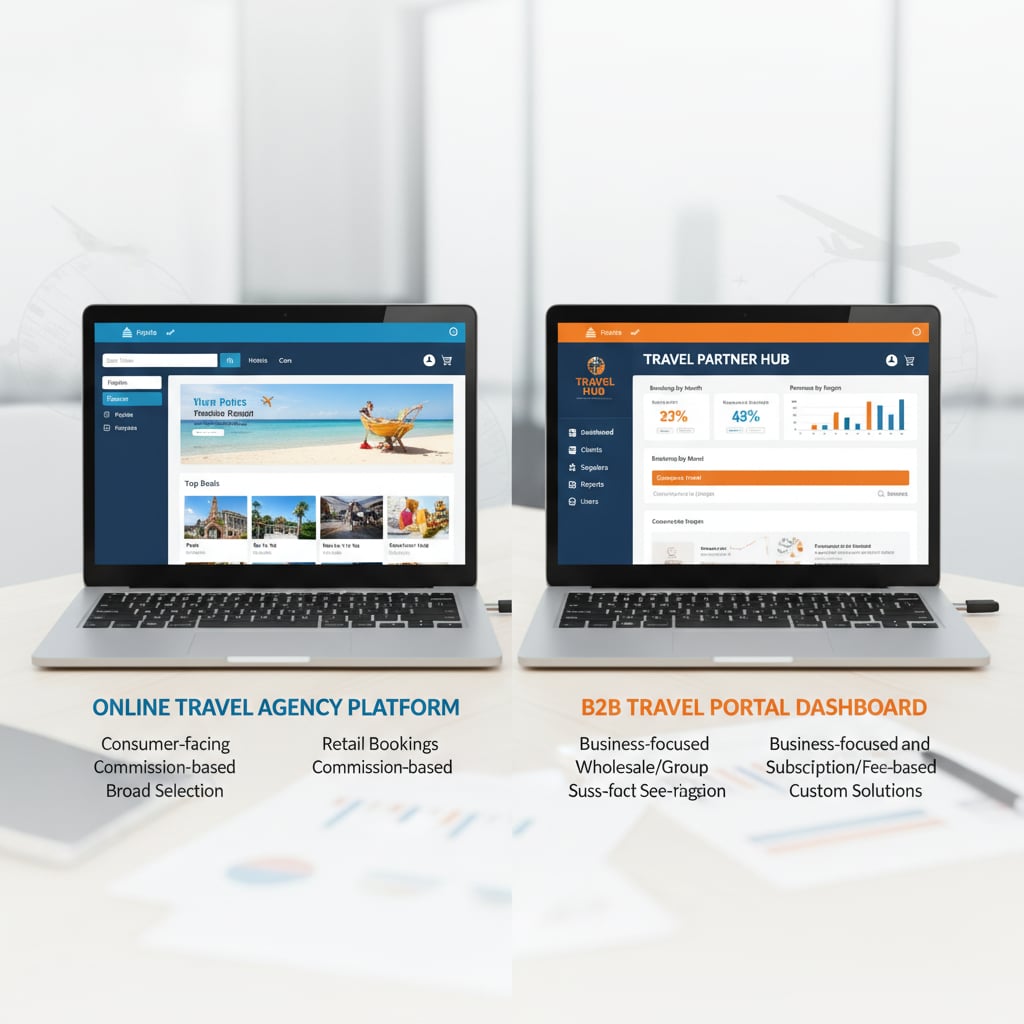
New to wholesale booking? Start with our B2B travel portal overview: net rates, registration and what agents can book.
Today, Vikram runs a successful B2B travel business serving 40+ travel agencies across India. His first year revenue was modest, but he was profitable from month three. No massive loans. No fancy office. Just smart decisions and consistent execution.
Here's exactly how to build what Vikram built.
Understanding What You're Actually Building
A B2B travel business sits between suppliers (hotels, tour operators, transfer companies) and retail travel agents. You're not selling to tourists. You're selling to other travel professionals who need inventory they can resell to their customers.
Your value comes from three things: access to good rates, reliable service, and saving agents time. That's it. You don't need a beautiful website or viral marketing. You need strong supplier relationships and a reputation for delivering what you promise.
Most people overcomplicate this. They think they need agreements with hundreds of hotels before starting. Wrong. Vikram started with access to inventory in just Singapore and Dubai. He proved his model worked, then expanded to Thailand, Malaysia, and beyond.
Legal Setup and Registration
You need a legitimate business entity. In India, most people register as a Private Limited Company or LLP. The cost is around 15,000-25,000 rupees including government fees and CA charges. Takes about 2-3 weeks.
Get your GST registration sorted immediately. Travel services require GST compliance, and registered agents won't work with you without a proper GST number. This is non-negotiable.
You'll also need IATA accreditation if you plan to book flights. However, many successful B2B agents start without IATA by focusing on hotels, tours, and transfers first. IATA registration costs roughly 4-6 lakhs and takes 3-6 months. Don't let this stop you from starting.
Open a current account at a reputable bank. You'll need this for receiving payments from agents and paying suppliers. Keep business and personal finances completely separate from day one—it makes accounting and taxes infinitely easier.
Getting Access to Inventory
This is where most beginners get stuck. How do you get wholesale hotel rates without existing volume?
The traditional path was approaching DMCs and hotels directly, negotiating contracts, and building relationships over years. That still works, but it's slow and capital-intensive.
The faster path is using B2B travel platforms like DMCQuote. These platforms aggregate inventory from multiple suppliers and give you instant access to wholesale rates. You sign up, get approved, and you can start quoting hotels, transfers, and tours the same day.
Vikram used both approaches. He joined a B2B platform to get started quickly, which gave him inventory across multiple destinations. Simultaneously, he started building direct relationships with a few DMCs. After six months, he had a good mix of platform inventory and direct contracts.
Focus on 2-3 destinations initially. Pick popular destinations where you already have some knowledge. If you've traveled to Maldives or lived in Hong Kong, start there. Local knowledge gives you credibility with agents.
Technology and Tools
You don't need expensive custom software when starting. Here's what you actually need:
- Email: Get a professional email address with your domain name. Gmail is fine for personal use, but [email protected] looks more professional.
- Quotation system: Start with Excel templates. As you grow, move to a proper B2B travel management system. Don't overspend on tech before proving your model.
- Accounting software: Use Zoho Books or Tally. You need to track invoices, payments, and GST from the beginning.
- Communication: WhatsApp Business works great for staying in touch with agent clients. Most travel agents prefer WhatsApp over email for quick queries.
- Payment processing: Set up online payment collection. Instamojo or Razorpay work well for small businesses. Make it easy for agents to pay you.
The hotel search tools provided by B2B platforms handle the complex parts like availability checks and booking management. Use what's already built rather than reinventing everything.
Finding Your First Clients
This is where relationship skills matter more than anything else. You're not running Facebook ads to consumers. You're building business relationships with travel agents.
Start with your existing network. Tell everyone you know that you're in the B2B travel business. Your friend who runs a small travel agency? Reach out. Your cousin who books corporate travel? Call them. Your former colleague who started a tour company? Send them your rates.
Vikram's first three clients came from personal connections. He didn't hide that he was new—he was honest about it. He compensated by being incredibly responsive and offering slightly better rates than established players.
Join travel industry groups on Facebook and LinkedIn. Many cities have local travel agent associations. Attend their meetings. Network genuinely without being pushy. People do business with people they trust.
Cold outreach works too, but it's harder. If you call 100 travel agencies, maybe 5 will give you a chance. That's normal. Focus on small and medium agencies—they're more open to new suppliers than large ones.
Pricing and Margins
Here's the math you need to understand. If you're getting a hotel room at wholesale for 8,000 rupees, you might sell it to an agent for 9,500 rupees. That's roughly 18% margin.
Don't be greedy with margins when starting. It's better to make 12-15% margin and win the business than to quote high and get ignored. Build volume first. Margins can improve later when you have negotiating power with suppliers.
For tours and transfers, margins are often lower—around 8-12%. The advantage is that once an agent books a package with hotels through you, they often book the entire package including tours and transfers. Cross-selling is where you make good money.
Be transparent about your pricing structure with serious agents. Some B2B businesses share their margin openly and position themselves as true partners rather than just suppliers.
Operations and Service Delivery
The first time an agent sends you a booking, everything needs to work perfectly. One screwup and they might never use you again. B2B is built on reliability.
Respond to queries fast. If an agent emails you at 11 AM asking for a hotel quote for Europe, send it by 2 PM the same day. Speed matters in this business. Agents are often dealing with customers who want answers quickly.
Confirm bookings immediately. When you receive a booking, send a confirmation within 30 minutes. Include all details—voucher numbers, contact information, cancellation policies. Agents should never have to chase you for confirmations.
Handle problems proactively. If there's an issue with a hotel booking, contact the agent before they contact you. Own mistakes, fix them quickly, and compensate if necessary. Your reputation is everything.
Vikram told me his principle is simple: "Treat the agent's booking like it's my own family traveling." That mindset creates loyal clients.
Managing Cash Flow
This is where many B2B travel businesses fail. You often need to pay suppliers before you receive payment from agents. Without proper cash flow management, you run out of money even while making sales.
Start with payment terms that protect you. For new agents, take 100% advance. Once you trust them after 3-5 successful bookings, you can offer credit terms like 50% advance, balance before travel.
Maintain a cash buffer equal to at least one month of your typical payables. This gives you breathing room if an agent delays payment.
Use credit periods with suppliers wisely. If a supplier gives you 15-day credit and your agent pays you in 7 days, you have 8 days of float. That helps cash flow significantly.
Track every rupee. Know exactly what you've committed to pay suppliers and what agents owe you. Vikram updates his cash flow spreadsheet every single day. Sounds tedious, but it's kept him out of trouble.
Scaling Your Business
After you have 5-10 regular agent clients, it's time to think about growth. Don't scale too fast—that's risky. But don't stay stagnant either.
Add destinations gradually. If you started with Singapore and Dubai, maybe add Sri Lanka next. Make sure you understand the destination before offering it to agents. Visit if possible.
Expand your service offerings. If you've been doing only hotels, add tours and activities. If you have strong relationships in certain destinations, consider offering custom packages.
Hire help when you're overwhelmed, not after. If you're working 12-hour days just to keep up with bookings, hire an operations person. If you can't follow up with new leads because you're busy with existing clients, hire a sales person.
Most B2B travel businesses stay small and profitable. Vikram has a team of four people after three years. That's enough to handle his current volume comfortably. Not every business needs to become huge—profitable and sustainable is a great outcome.
Common Mistakes to Avoid
Don't promise what you can't deliver. If you're not sure about a hotel's quality, say so. Agents will respect honesty more than a failed booking.
Don't underestimate the importance of documentation. Keep records of every quote, booking, payment, and communication. When disputes happen (and they will), documentation saves you.
Don't ignore technology completely. Yes, you can start with Excel, but plan to upgrade within a year. Manual processes don't scale and lead to errors.
Don't compete only on price. There's always someone willing to work for lower margins. Compete on service, reliability, and expertise instead.
Don't burn bridges with agents who stop using you. Maybe they found better rates elsewhere—that's business. Stay professional. They might come back later.
Your First 90 Days
Here's a realistic timeline for someone starting seriously:
Days 1-30: Complete business registration. Set up bank account and GST. Join a B2B platform like DMCQuote. Create basic quotation templates. Reach out to 20 potential agent clients from your network.
Days 31-60: Follow up aggressively with warm leads. Send sample quotations to agents who showed interest. Make your first few bookings. Learn the booking process thoroughly. Set up accounting system.
Days 61-90: Aim for at least 5 regular clients who book monthly. Calculate your actual margins. Identify which services are most profitable. Plan your next destination or service addition.
If you can execute this 90-day plan, you have the foundation of a real business. Everything afterward is about consistency and gradual improvement.
Starting a B2B travel business isn't easy, but it's doable with modest capital and the right approach. You don't need everything perfect from day one. You need to start, deliver good service, and build from there.
The travel industry needs good B2B operators who understand both the supplier side and the agent side. If you can bridge that gap reliably, you'll build a business that grows steadily and generates solid profits.