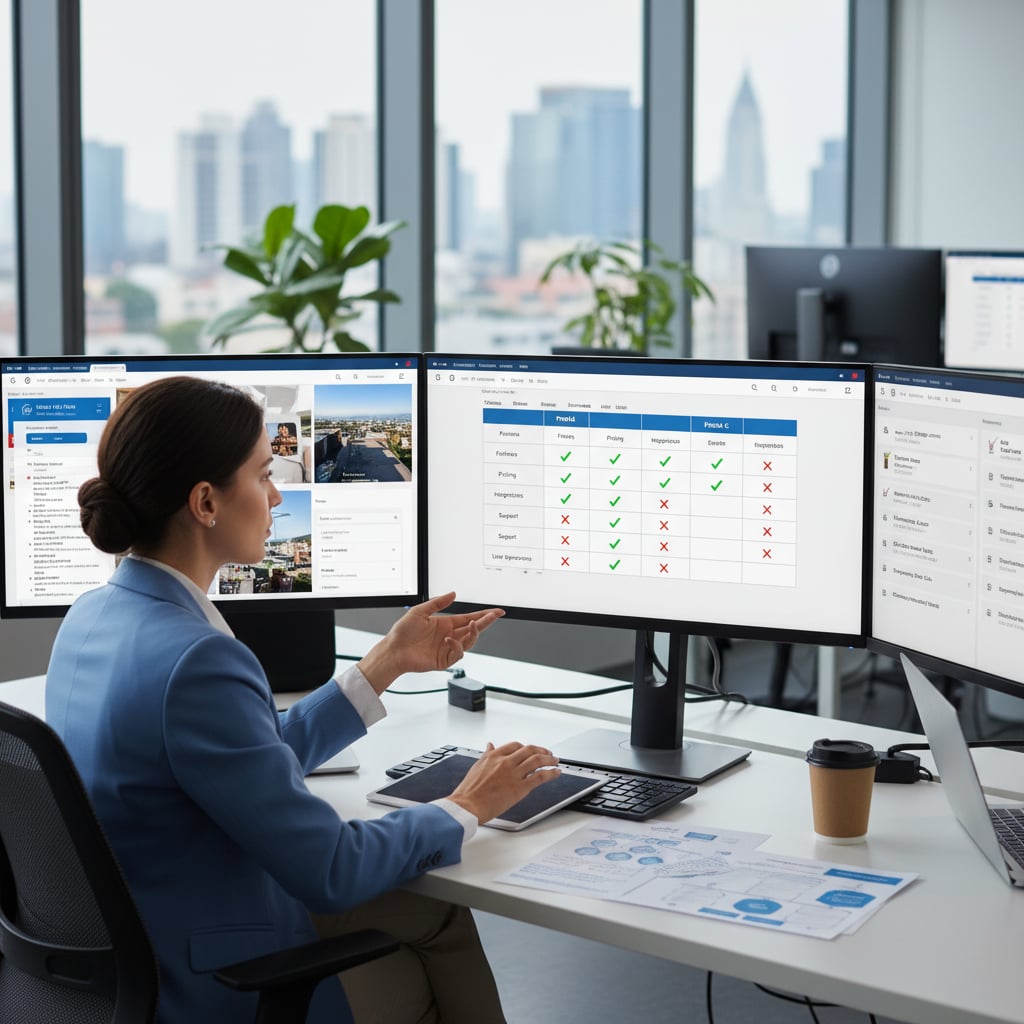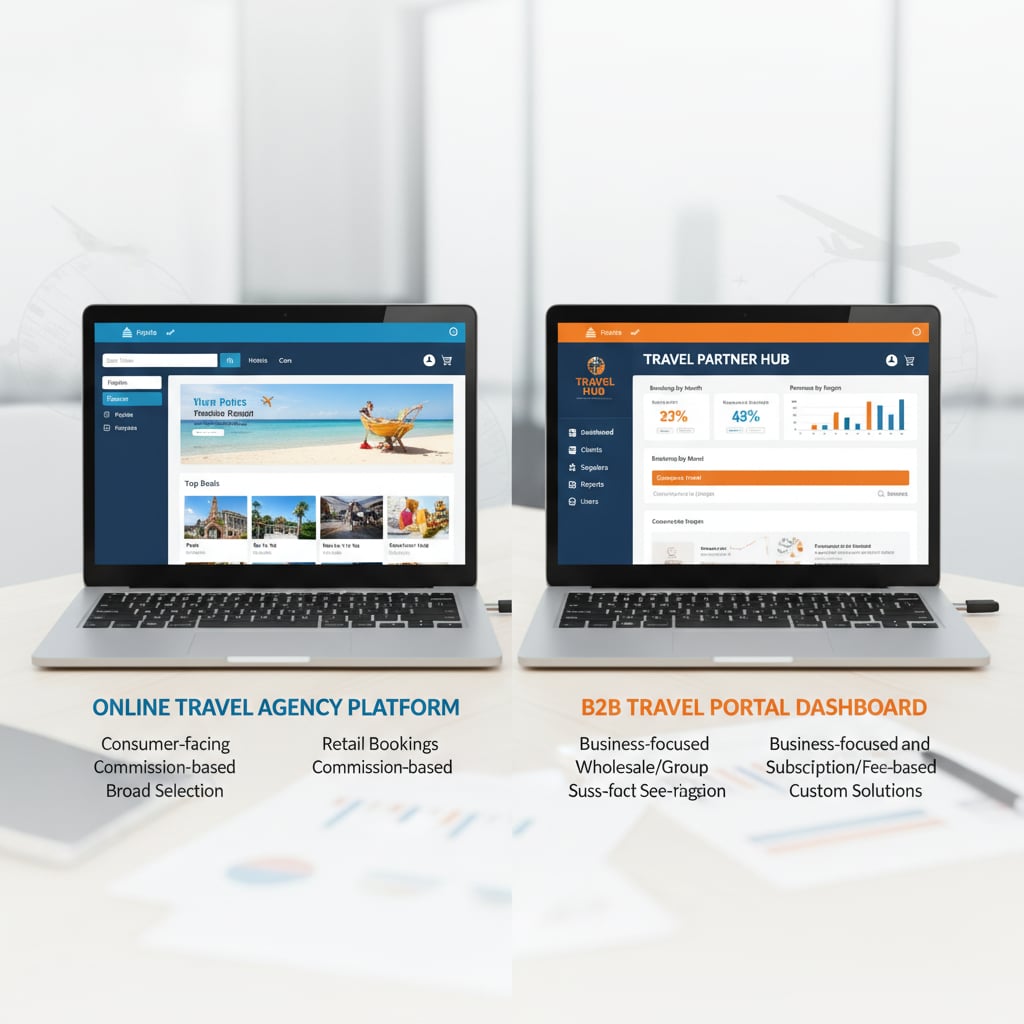
Last month, I spoke with two travel agency owners who started their businesses around the same time. Rahul runs a traditional online travel agency serving retail customers. Meena operates as a B2B agent using wholesale platforms. After three years, Meena's profit margins are nearly double Rahul's, despite having fewer transactions.
New to wholesale booking? Start with our B2B travel portal overview: net rates, registration and what agents can book.
This isn't a coincidence. The business model you choose shapes everything from your daily operations to your bottom line.
What Makes These Models Different
When you run an online travel agency, you're essentially operating like a retail shop. Customers find you through Google, social media, or referrals. They browse your offerings, ask questions, and book directly with you. You handle everything from marketing to customer service to post-booking support.
A B2B travel portal works differently. Instead of chasing individual travelers, you're partnering with other travel businesses. You get access to wholesale rates on hotels, transfers, and tours across destinations like Singapore, Dubai, and Maldives. Your clients aren't tourists—they're other travel agents, tour operators, or corporate travel managers.
Think of it this way: an OTA is like running a boutique where you sell directly to shoppers. A B2B portal is like being a distributor who supplies multiple boutiques.
The Money Question
Here's where things get interesting. Most online travel agencies work with 8-12% margins on hotel bookings. You might book a hotel room for $150 and mark it up to $165. After paying for Google Ads, customer support, and payment processing fees, you're left with maybe $8-10 per booking.
B2B agents typically work with 15-25% margins because they're getting wholesale rates. That same hotel room might cost you $120 at wholesale prices. Sell it to another agent at $145, and you've made $25 with far less marketing expense.
The numbers change your entire business strategy. With smaller margins, OTAs need high volume. You're chasing hundreds of bookings to make decent money. B2B agents can be profitable with fewer transactions because each one brings better returns.
What Your Day Actually Looks Like
Running an OTA means you're constantly juggling multiple roles. Monday morning you're tweaking Facebook ads. Tuesday afternoon you're on the phone explaining visa requirements to a confused customer. Wednesday evening you're dealing with a complaint about a hotel room that wasn't what someone expected.
My friend Rahul told me he spends about 60% of his time on marketing and customer service, and only 40% on actual booking and operations. That's normal for retail travel.
B2B operations look different. You're not explaining basic travel questions to first-time tourists. Your clients are professionals who know what they need. They want quick quotes, reliable service, and competitive rates on Thailand packages or European tours. Less hand-holding, more efficiency.
Meena spends most of her time building relationships with other agencies and managing her supplier network. She rarely deals with end travelers directly. When I asked about her typical day, she said it's mostly email communication, rate updates, and processing bookings through platforms like DMCQuote.
The Marketing Reality
If you launch an OTA tomorrow, nobody knows you exist. You'll need to invest heavily in marketing. Google Ads for travel keywords are expensive—sometimes $3-8 per click. Building an organic social media following takes months or years.
Then there's the trust issue. Would you book your family holiday with an unknown website? Probably not. You'd go with Booking.com or Agoda or another brand you recognize. New OTAs face this perception battle constantly.
B2B portals sidestep much of this. You're not trying to convince consumers to trust you. You're approaching other businesses with a value proposition: better rates, reliable service, good inventory. That's a much easier conversation than consumer marketing.
Your networking happens at travel industry events, through trade groups, and via direct outreach. It's relationship-based rather than advertising-based. The customer acquisition cost is significantly lower.
Technology and Systems
OTAs need sophisticated consumer-facing technology. Your website must look professional, load fast on mobile, integrate with payment gateways, send automated confirmation emails, handle bookings in multiple currencies, and compete with billion-dollar companies on user experience.
That's a tall order if you're starting with limited capital. You could use white-label solutions, but they often come with monthly fees and transaction charges that eat into those already-thin margins.
B2B platforms have simpler technical requirements. Your clients are agents who care more about functionality than flashy design. They need accurate inventory, quick availability checks, and reliable booking confirmations. A straightforward hotel search interface works better than a fancy consumer website.
Many B2B agents start with basic tools and email communication. As they grow, they adopt proper B2B travel management systems. The barrier to entry is much lower.
Risk and Seasonality
OTAs face direct exposure to market fluctuations. When there's a pandemic, political unrest, or economic downturn, consumer bookings drop immediately. You have no buffer. If tourists stop traveling, your revenue stops.
Seasonal swings hit hard too. You might do great business during December holidays and summer vacations, then struggle during off-peak months. Managing cash flow becomes challenging.
B2B agents have more stability because they're serving multiple markets. While leisure travel to Hong Kong might be down, corporate travel or group tours could be steady. Your clients are diversified across different customer types and destinations.
You're also one step removed from the end consumer. If a booking cancels, you're dealing with another professional who understands the industry, not an emotional customer who wants to argue about refund policies.
Growth Paths
Scaling an OTA is expensive. To double your revenue, you typically need to double your marketing spend. You need more customer service staff. Your technology costs increase. It's a linear growth model that requires constant investment.
Some OTAs break through by focusing on niches—adventure travel, luxury honeymoons, religious tours. But even then, you're competing with specialized giants in each niche.
B2B growth works differently. Once you establish yourself as a reliable supplier, agents keep coming back. They refer other agents. You build a reputation in the industry. That creates a compounding effect where your marketing costs don't need to increase proportionally with revenue.
Adding new suppliers or destinations to your portfolio (like expanding from Malaysia packages to Sri Lanka tours) doesn't require new customer acquisition. Your existing agent network will use the new inventory.
Which Model Fits You
OTAs make sense if you love marketing and have capital to invest in customer acquisition. If you're great at social media, content creation, and building consumer brands, the retail model can work. You need patience though—it typically takes 2-3 years to become profitable.
The OTA model also works if you have a unique angle. Maybe you specialize in travel for people with disabilities. Or you focus on sustainable, eco-friendly tourism. Something that differentiates you from the massive players.
B2B portals suit people who prefer relationship-based business. If you're comfortable networking with other travel professionals and you understand the wholesale side of the industry, this model offers faster profitability with less capital.
Starting a B2B operation with access to platforms like DMCQuote means you can be operational in weeks rather than months. You don't need a huge website, massive inventory, or expensive marketing campaigns.
The Hybrid Approach
Here's something interesting: you don't have to choose just one model. Several agents I know started B2B to build steady cash flow, then gradually added retail services. They use their B2B profits to fund OTA marketing without taking on debt.
This approach reduces risk. Your B2B business pays the bills while you experiment with retail channels. If the OTA side doesn't work out, you haven't bet everything on it.
Some agents go the other direction—they start as OTAs and add B2B services to improve margins. They realize they can make more money selling to other agents than to consumers.
Making Your Decision
Look at your current situation honestly. How much capital can you invest in marketing? How long can you operate before reaching profitability? Do you have industry relationships already, or would you be starting from scratch in both models?
Consider your skills and preferences too. Do you energize from talking to consumers and solving their travel dreams? Or do you prefer the straightforward, transactional nature of B2B relationships?
Talk to people running both types of businesses. Ask about their actual profit margins, not just revenue. Ask how much they spend on customer acquisition. Ask how long it took to become profitable.
The travel industry has room for both models. The question isn't which is better in absolute terms—it's which fits your specific goals, resources, and working style.
If you're leaning toward B2B, platforms like DMCQuote give you access to competitive rates and reliable inventory without needing to negotiate individual supplier contracts. That removes one of the biggest barriers to entry.
Whatever you choose, commit to it fully. Half-hearted efforts in either model won't generate the results you want. Pick the path that makes strategic sense for you, then execute it well.