When Neha joined the travel industry five years ago, she thought consolidators and wholesalers were the same thing. Everyone seemed to use the terms interchangeably. She signed up with what was marketed as a "wholesaler," only to discover she was getting rates that were sometimes higher than what she could find through a proper consolidator.
New to wholesale booking? Start with our B2B travel portal overview: net rates, registration and what agents can book.
That confusion cost her business thousands of rupees in lost margins before she figured out the difference. Don't make the same mistake.
What a Travel Consolidator Actually Does
A consolidator is essentially a bulk buyer of travel inventory. Think airlines selling blocks of seats at discounted rates to consolidators, who then distribute those seats to travel agents and agencies.
The consolidator's business model is simple: buy in huge volume, get deep discounts, distribute at margins that are still competitive for smaller agents. They're focusing on volume over individual margins.
Flight consolidators are the most common type. They might purchase 50,000 airline seats across multiple routes in one contract. Because of that volume, they get rates significantly below what's publicly available. They sell those seats to agents at a markup, but still well below retail prices.
Hotel consolidators work similarly. They commit to buying hundreds or thousands of room nights from hotel chains. Hotels love this because it's guaranteed volume. In exchange, consolidators get rates that individual hotels wouldn't offer to smaller operators.
The key characteristic: consolidators have committed buying arrangements with suppliers. They've already paid for or committed to large inventory blocks. Their financial risk is significant.
How Wholesalers Operate Differently
Wholesalers typically don't buy inventory upfront. Instead, they have negotiated rates with multiple suppliers and act as a distribution layer between suppliers and retail agents.
A wholesale travel company might have contracts with 500 hotels across destinations like Singapore, Thailand, and Maldives. When an agent books through them, they confirm availability with the actual hotel, make the booking, and handle the transaction.
Wholesalers carry less financial risk than consolidators because they're not committing to inventory purchases. They're basically intermediaries with pre-negotiated rates.
DMCs (Destination Management Companies) often operate as wholesalers. They have relationships with ground suppliers in specific destinations—hotels, tour operators, transfer companies—and they package those services for travel agents abroad.
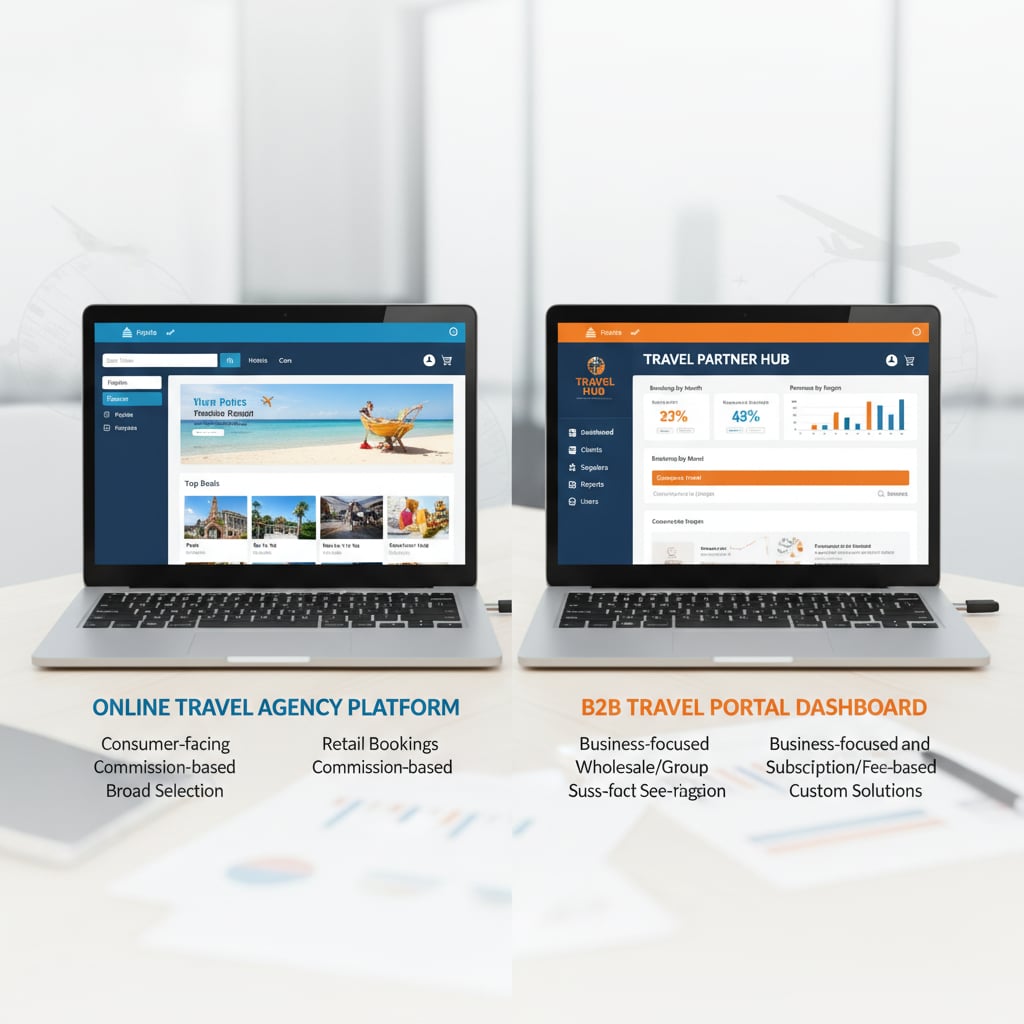
Platforms like DMCQuote function as tech-enabled wholesalers, giving agents access to inventory from multiple DMCs and suppliers through a single interface. The platform itself isn't buying blocks of inventory; it's aggregating supplier offerings.
The Pricing Reality
Here's where things get interesting for your business. Consolidators usually offer better rates on what they've consolidated. If a flight consolidator has bought seats on the Singapore-Dubai route, their rates on that specific route will beat almost anyone else.
But consolidators are limited to what they've actually purchased. If you need a hotel in Hong Kong and they don't have contracted inventory there, they can't help you.
Wholesalers offer more flexibility. You can typically book a much wider range of inventory because they're not limited to pre-purchased blocks. However, their rates might not be quite as aggressive as a consolidator's on the same specific inventory.
Neha learned this the hard way. She was working with a consolidator that had great rates for certain hotels in Dubai. When her customer wanted a different hotel, she had to go elsewhere. The consolidator's limited inventory meant she needed relationships with multiple suppliers, which became operationally complex.
Risk and Commitment
From a consolidator's perspective, the business is high-risk, high-reward. They've committed capital to purchase inventory. If they don't sell it, they lose money. That's why consolidators often run aggressive promotions as travel dates approach—they need to move inventory.
This creates opportunities for agents. If you're flexible with your customers and can book last-minute, consolidators sometimes offer exceptional rates to clear inventory. But if you need specific dates and specific hotels, you're dependent on what they have available.
Wholesalers don't typically have this inventory pressure because they're not holding inventory. They confirm bookings as they come in. This means their pricing is usually more stable—they're not discounting heavily at the last minute.
From an agent's perspective, this affects your planning. Working with consolidators requires you to check their current inventory frequently. Their offerings change based on what they've purchased. Wholesalers provide more consistency in what's available.
Service and Support Differences
Consolidators typically operate with lean teams focused on distribution. Their support might be less personalized because they're processing high volumes. You're often one of hundreds or thousands of agents using their inventory.
Good wholesalers, especially DMCs, often provide better service and destination expertise. Because they're focused on specific regions (like Malaysia or Sri Lanka), they can offer recommendations, handle special requests, and provide ground support if issues arise.
When a customer's hotel booking goes wrong, a DMC-style wholesaler can often send someone to the hotel to resolve it. A consolidator dealing in pure volume typically can't provide that level of service.
The trade-off is price versus service. Consolidators win on price for what they have. Wholesalers win on service breadth and support.
Technology and Booking Systems
Modern consolidators have invested heavily in technology because they process enormous volumes. Their booking systems are usually slick—instant confirmation, automated vouchers, real-time availability.
You can check availability, book, and get confirmation within minutes. Everything is automated because they can't manually process thousands of daily transactions.
Wholesaler technology varies wildly. Large wholesale platforms have sophisticated systems. Smaller DMCs might still operate via email and phone. Some use hybrid approaches—you search online through platforms like DMCQuote's hotel search, but complex requests still go through human confirmation.
This affects your workflow. If you need speed and your customers are booking standard services, consolidator systems are efficient. If you're handling custom packages or complex itineraries, you might prefer working with a wholesaler who can handle special requests manually.
Which One Should You Work With?
The smart answer is both, but strategically.
Use consolidators for popular routes and inventory where they have strong volume positions. If you're booking flights on major routes or hotels in destinations where certain consolidators are strong, take advantage of their better rates.
Use wholesalers for breadth, customization, and service-intensive bookings. When you're putting together a multi-destination package combining Europe hotels, Singapore tours, and transfers, working with a full-service wholesaler makes more sense.
Neha eventually built a network of three consolidators (each strong in different areas) and four wholesalers covering her main destinations. She checks consolidators first for standard bookings, then goes to wholesalers for everything else.
The key is understanding who offers what, rather than assuming one provider can handle everything.
The DMC Question
People often ask where DMCs fit in this consolidator-vs-wholesaler framework. DMCs are typically wholesalers, but specialized ones.
A DMC focuses on ground services in specific destinations. They're not buying bulk flight seats like consolidators. They're curating local experiences, managing hotel allocations, operating tours, and providing destination expertise.
If you need airport transfers, day tours, and local guides in a destination, you're almost always working with a DMC functioning as a wholesaler. They've contracted rates with local suppliers and they're packaging those for agents elsewhere.
The advantage of DMCs is destination knowledge. A good DMC knows the best hotels in different price categories, can recommend restaurants, knows which tour operators are reliable, and has established relationships that help when problems arise.
You won't get that from a flight consolidator who's just moving seats.
Contract Terms and Relationships
Consolidators usually have straightforward, transactional relationships with agents. You register, get approved for credit terms if applicable, and start booking. It's mostly automated.
Wholesalers often want to build deeper relationships. They might offer training on destinations, invite you to familiarization trips, provide marketing support, and work with you on custom packages.
This reflects their different business models. Consolidators need volume across thousands of agents. Wholesalers often prefer working closely with a smaller number of productive agents.
Payment terms also differ. Consolidators might require faster payment because they're covering their own purchase commitments. Wholesalers might offer more flexible credit terms since they're not holding inventory.
Neither is better—they're just different. Know what you're agreeing to.
Industry Evolution and Blurred Lines
The lines between consolidators and wholesalers are blurring as the industry evolves. Some traditional consolidators now offer wider inventory beyond their consolidated blocks. Some wholesalers have started consolidating certain high-demand inventory to offer better rates.
Large travel technology platforms aggregate both consolidators and wholesalers, giving you access to multiple inventory sources through one system. This is convenient, though it sometimes obscures which source you're actually booking through.
Platforms like DMCQuote are examples of this evolution—aggregating wholesaler inventory while also negotiating direct contracts on high-volume services, creating a hybrid model.
For agents, this evolution is mostly positive. You get more options and better rates. Just be aware of the underlying source when booking, especially for understanding what service level to expect.
Making the Right Choice for Your Business
Consider your business model. If you specialize in high-volume, low-margin business (like corporate travel on standard routes), consolidators are probably your primary partners. Speed and price matter most.
If you focus on custom leisure travel, complex FIT packages, or luxury travel, wholesalers and DMCs make more sense. You need flexibility and service over rock-bottom pricing.
Most successful B2B agents use a mix. They have go-to consolidators for bread-and-butter bookings and trusted wholesalers for complex requirements.
Pay attention to which consolidators are strong in which markets. One might dominate hotel inventory in Southeast Asia. Another might have the best flight consolidation to Europe. Don't expect any single consolidator to be best at everything.
Similarly, identify good DMC partners for your most popular destinations. If you send many customers to Thailand, find 2-3 Thailand DMCs you trust. Compare their rates and service, then use whoever is best for each specific booking.
Common Misconceptions
Don't assume consolidators always have better rates. On certain inventory, yes. But wholesalers with strong supplier relationships sometimes offer very competitive rates too, especially when you factor in service value.
Don't think wholesalers are just middlemen adding cost. Good wholesalers add value through curation, reliability, and service. That value often justifies their margins.
Don't believe that working directly with hotels is always cheaper. Hotels offer different rates to different channels. A consolidator with volume commitments or a wholesaler with strategic partnerships often gets rates you couldn't negotiate individually.
Don't assume consolidation only applies to flights. Hotels, tours, and even transfers can be consolidated. Understand what each partner has actually consolidated versus what they're wholesaling.
Building Your Supplier Network
Start with 2-3 strong suppliers in each category. Maybe two flight consolidators, three hotel wholesalers covering different regions, and a couple of DMCs in your top destinations.
Test them with real bookings before committing to large volumes. See how they handle confirmations, changes, and problems. Service quality matters as much as price.
Don't spread yourself too thin. Working with 20 different suppliers means 20 different booking processes, payment terms, and points of contact. That's operationally exhausting. Quality over quantity.
Negotiate better terms as your volume grows. Once you're sending consistent business to a consolidator or wholesaler, ask for better net rates or extended credit terms. Volume gives you negotiating power.
The travel industry runs on relationships. Suppliers reward loyal, high-volume agents. Pick partners you want to grow with, then invest in those relationships.
Understanding the consolidator versus wholesaler distinction isn't academic—it directly affects your margins, operations, and customer satisfaction. Get this right and you'll build a more profitable, efficient business.