An agent called me frustrated last week. She'd quoted a client on Tuesday using rates from her B2B portal. Client confirmed on Wednesday—but the room was gone. Not sold out; just unavailable through her portal.
"The hotel has rooms!" she said. "I checked their website. Why can't I book through the portal?"
The answer lies in how B2B hotel portal inventory actually works. Understanding allotment vs free sale isn't just academic—it directly affects your ability to close bookings.
Hotel Inventory Distribution Basics
Hotels don't give everyone the same access to their rooms. They distribute inventory across channels strategically:
- Direct channels: Hotel website, call center, walk-ins
- OTAs: Booking.com, Expedia, Agoda, etc.
- B2B channels: Wholesalers, bed banks, B2B portals
- Tour operators: Pre-contracted blocks for group series
Each channel type receives inventory through different mechanisms. For B2B travel agents, two primary models apply: allotment and free sale.
Allotment Inventory Explained
Allotment is pre-negotiated inventory that wholesalers or portals receive from hotels in advance.
How It Works
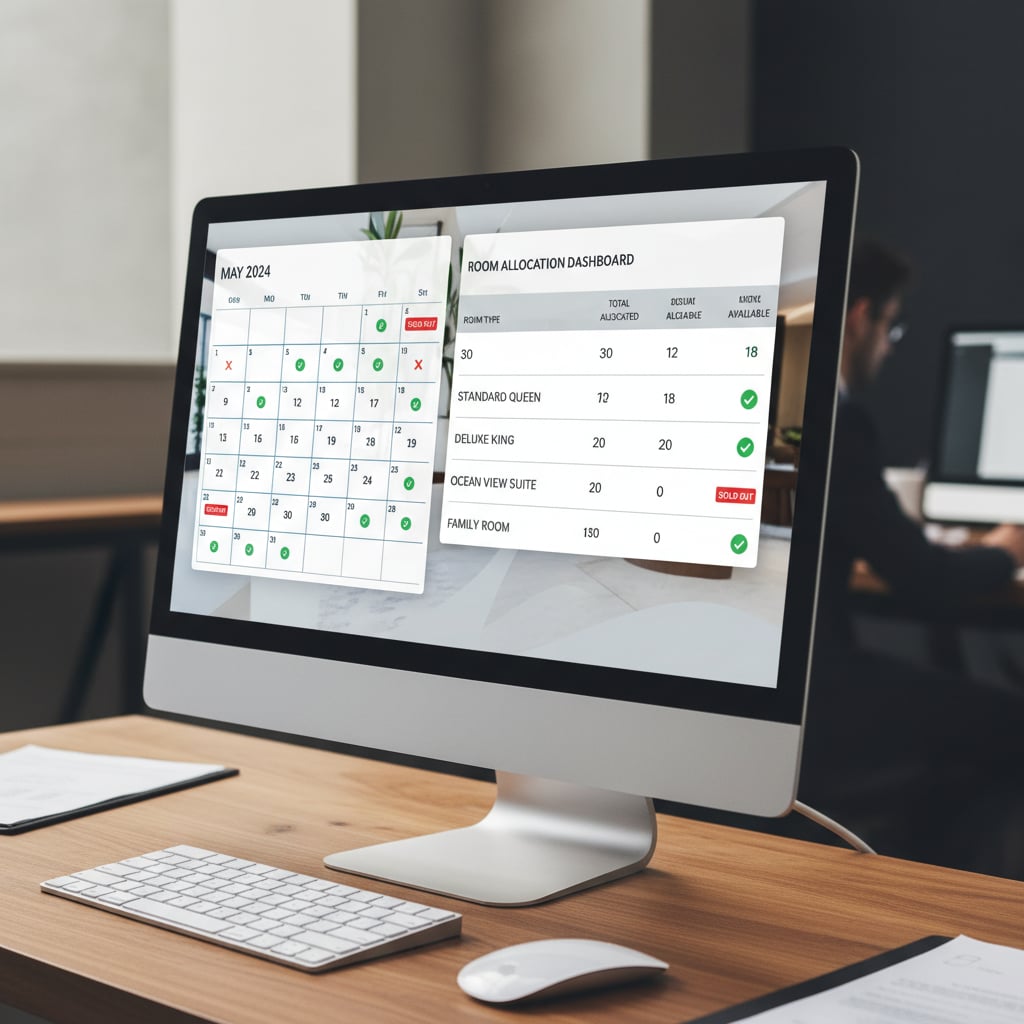
A wholesaler negotiates with a hotel: "Give me 10 rooms per night from January through March at a net rate of SGD 80." The hotel agrees, blocking those 10 rooms for that wholesaler exclusively.
When you search through a portal with allotment access, you're seeing those pre-blocked rooms. They're reserved specifically for bookings through that channel.
Allotment Characteristics
- Guaranteed availability: Within allotment limits, rooms are available regardless of hotel occupancy
- Fixed rates: Negotiated in advance, typically stable through the contract period
- Limited quantity: Once allotment sells out, no more availability through that channel
- Release dates: Hotels may reclaim unsold allotment before certain deadlines
When Allotment Disappears
That agent's missing room? Her portal's allotment was exhausted. All 10 rooms (or however many they had) were booked by other agents through the same portal. The hotel still has rooms—just not through her channel.
This explains why the hotel's own website showed availability while her portal showed none. Different inventory pools.
Free Sale Inventory Explained
Free sale connects your portal directly to the hotel's live inventory system. You're seeing and booking the same rooms as other distribution channels, in real-time.
How It Works
Through API connections, your B2B portal queries the hotel's property management system directly. Available rooms appear for booking; sold rooms disappear instantly.
Free Sale Characteristics
- Real-time availability: What you see is what exists right now
- Dynamic pricing: Rates fluctuate based on demand, seasonality, and hotel strategy
- No inventory limits: Access continues as long as the hotel has rooms
- Instant confirmation: Bookings confirm immediately in hotel system
Free Sale Volatility
The downside of real-time access: rates change constantly. That SGD 120 rate you quoted this morning might be SGD 145 this afternoon if demand increased.
Similarly, availability can evaporate quickly during high-demand periods. Free sale is first-come-first-served across all connected channels.
How Portals Combine Both Models
Most B2B hotel portals display inventory from multiple sources simultaneously. When you search, you might see:
- Rooms from allotment contracts (flagged as "contract rates" or "wholesale")
- Rooms from free sale connections (often labeled "dynamic" or "best available")
- Rooms from aggregated sources (other wholesalers passing inventory through)
The same property might appear multiple times at different rates depending on source. Understanding this helps you choose wisely.
Strategic Implications for Agents
When to Prioritize Allotment
- Peak periods: Allotment rates don't spike with demand like dynamic pricing
- Price stability: Quote clients confidently knowing rates won't change
- High-demand properties: Secure inventory before public channels sell out
When to Prioritize Free Sale
- Off-peak periods: Dynamic pricing often drops below contracted allotment rates
- Last-minute bookings: Free sale may have availability when allotment is depleted
- Unusual properties: Hotels without allotment contracts still accessible via free sale
Practical Decision Framework
For bookings in Singapore, Malaysia, or other primary markets:
- Check allotment availability first—if available at acceptable rates, book there for stability
- Compare with free sale rates—if significantly lower and cancellation terms acceptable, consider dynamic
- For high-value or complex bookings, prefer allotment reliability over dynamic savings
Release Dates and Cut-Off Policies
Allotment contracts include release dates—deadlines by which unsold rooms return to hotel general inventory. Understanding these protects your bookings:
Typical Release Structures
- 30/21/14/7 day releases: Hotel reclaims portions of unsold allotment at each deadline
- Full release: All unsold allotment returns to hotel at specified cutoff
- Peak period releases: Earlier cutoffs during high-demand dates
What This Means for You
A room available in allotment today might not be available tomorrow if release dates pass. For clients who delay confirmation, be aware that inventory you quoted might evaporate—not from selling, but from release.
When clients say "I'll confirm next week," check whether release dates fall within that timeframe. If so, advise them of the risk.
Stop-Sale and Inventory Closures
Hotels can close inventory to specific channels at any time. Common scenarios:
- High occupancy: Hotel closes B2B channels to maximize direct/OTA revenue
- Group blocks: Large groups consume rooms, reducing channel availability
- Renovations: Partial closures during property updates
- Seasonal patterns: Some properties close entirely during low seasons
Stop-sale can happen instantly with free sale, or per-contract terms with allotment. Neither model guarantees perpetual availability.
Maximizing Inventory Access
Work with Multiple Sources
Different portals have different allotment contracts and free sale connections. When one source shows unavailability, another might have access. Maintain relationships with multiple B2B platforms for maximum coverage.
Book Early for Peak Periods
Allotment depletes quickly during high-demand periods. For peak-season bookings, confirm as early as possible to secure contracted inventory before it exhausts.
Understand Your Portal's Inventory Mix
Ask your portal provider what proportion of inventory comes from allotment vs free sale. Heavily allotment-based portals offer more rate stability; free sale-heavy portals offer broader access but more volatility.
Monitor Rate Trends
Free sale rates fluctuate predictably with occupancy. Tracking patterns helps you advise clients on optimal booking timing—"rates for that property tend to increase about three weeks before date" becomes valuable guidance.
When Inventory Issues Arise
Despite best practices, you'll occasionally face unavailability at inconvenient times. Handling it professionally:
- Acknowledge promptly: Contact client immediately if quoted inventory becomes unavailable
- Offer alternatives: Have backup properties identified before presenting the problem
- Explain briefly: Clients don't need a distribution lecture, but simple explanations help—"The hotel received a large group booking that affected availability"
- Learn for next time: If a property frequently has inventory issues, adjust how you quote it
The Informed Advantage
Understanding B2B hotel portal inventory dynamics won't eliminate availability issues—but it will help you navigate them more effectively. You'll quote smarter, set appropriate client expectations, and troubleshoot problems with proper context.
That frustrated agent I mentioned? Once she understood why her portal showed unavailable while the hotel had rooms, she stopped taking it personally. She expanded her portal relationships, started booking faster during peak periods, and managed client expectations better.
Inventory knowledge is competitive advantage. Use it.
Ready to access extensive hotel inventory across Asia? Explore our B2B portal with both allotment and free sale options, or contact us to discuss our inventory access.