I can't tell you how many times I've been on a call with a new agency and they say, "So you're a tour operator, right?" Not quite. While DMCs and tour operators both exist in the B2B travel ecosystem, they serve very different purposes.
Understanding this distinction isn't just semantics – it directly impacts which partners you choose and how you structure your offerings. Let me break down exactly what sets these two business models apart.
The Fundamental Difference
Here's the core distinction in one sentence:
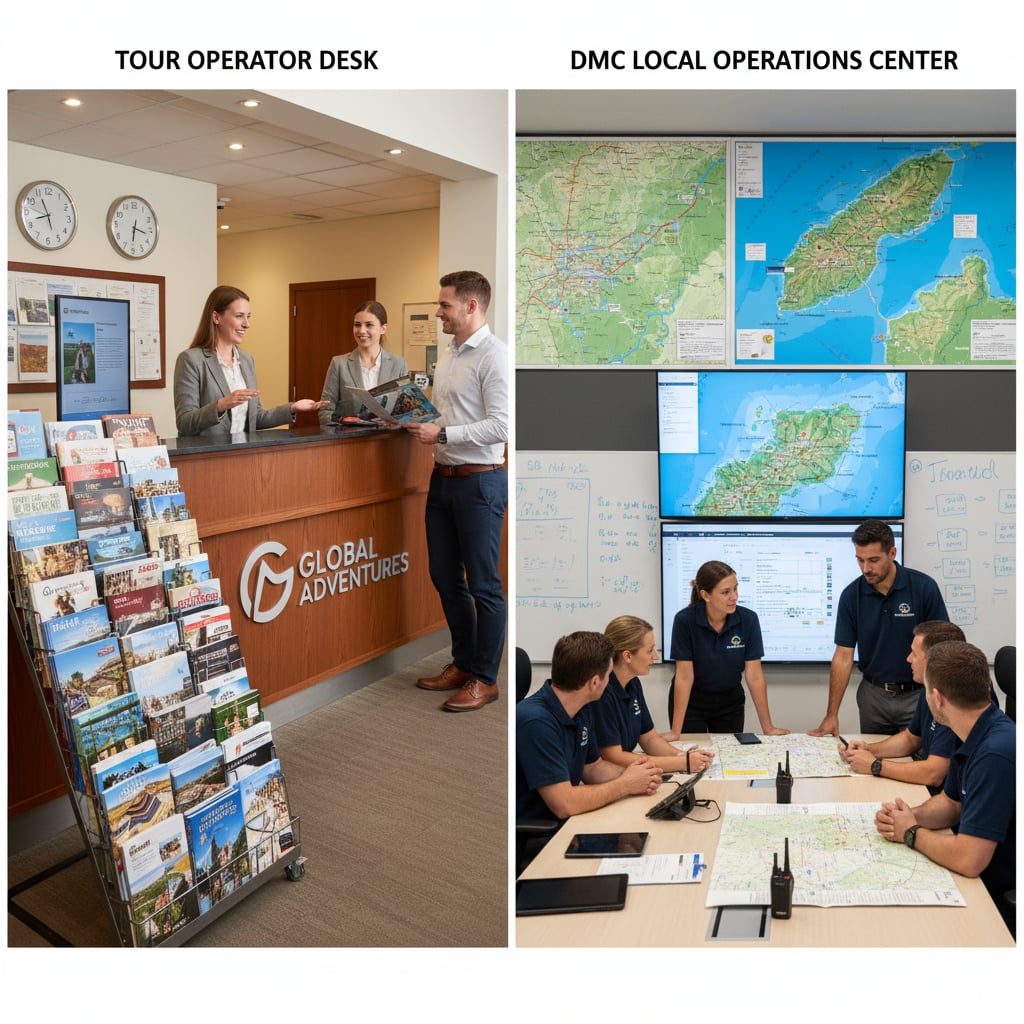
Tour Operators create and sell packaged travel products from the source market. DMCs provide ground services and local expertise in the destination.
Still abstract? Let's get concrete.
Tour Operator Model
Imagine a tour operator based in New York. They:
- Design a "Highlights of Thailand" 10-day package
- Contract hotels, tours, and transfers in Thailand
- Add flights from New York
- Market this package to travel agents and consumers
- Handle booking, payment, and customer service from New York
- May never have staff actually in Thailand
DMC Model
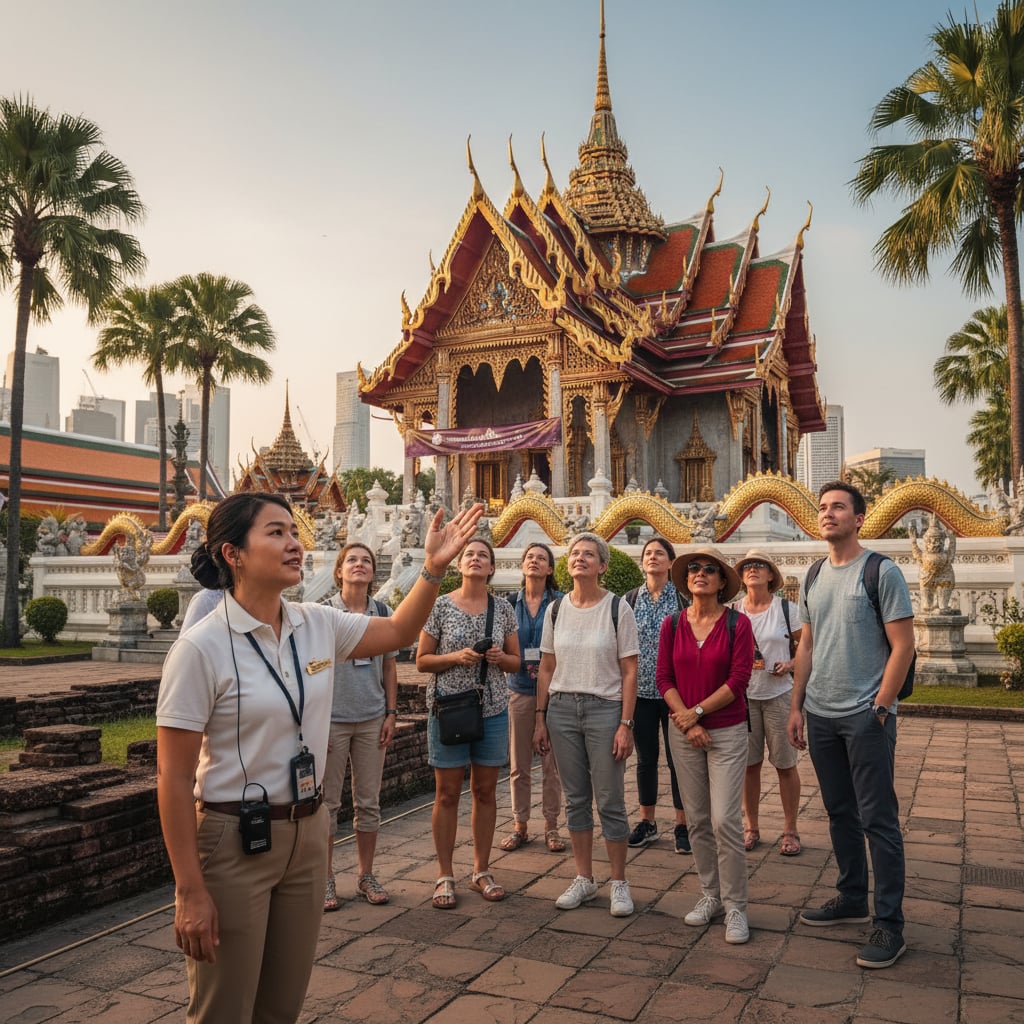
Now imagine a DMC based in Bangkok. They:
- Have offices and staff physically in Thailand
- Maintain direct relationships with hotels, transport companies, guides
- Provide à la carte services (hotels, transfers, tours) to travel agents and tour operators
- Customize itineraries based on client specifications
- Handle all ground operations and emergency support in Thailand
- Don't typically arrange flights or market directly to consumers
See the difference? The tour operator is packaging and distributing from the source market. The DMC is executing and operating in the destination.
Side-by-Side Comparison
Let's break this down across key dimensions:
| Aspect | Tour Operator | DMC |
|---|---|---|
| Physical Location | Source market (where travelers originate) | Destination (where travelers visit) |
| Primary Function | Package creation & distribution | Ground services & operations |
| Customer Type | B2B (agents) & B2C (consumers) | B2B only (agents, operators, corporates) |
| Product Type | Fixed or semi-fixed packages | À la carte services |
| Flight Inclusion | Usually yes | Usually no (ground only) |
| Marketing Focus | Consumer appeal, branding | Agent/operator relationships |
| Local Presence | May have reps, often outsourced | Full operational presence |
| Flexibility | Limited (based on package parameters) | High (custom tailoring) |
| Expertise | Package design, market trends | Destination knowledge, supplier relations |
| Risk Handling | Insurance, consumer protection schemes | Local problem-solving, backup suppliers |
Business Model Differences
Revenue Structure
Tour Operators make money by:
- Marking up all components (flights, hotels, ground services)
- Volume-based commissions from suppliers
- Service fees for customization
- Dynamic pricing based on demand
DMCs make money by:
- Markup on net supplier rates
- Service fees for handling bookings
- Commissions from hotels/attractions
- Management fees for complex programs
Cost Structure
Tour Operators invest heavily in:
- Marketing and brand building
- Sales teams and agent networks
- Brochure production and distribution
- Consumer-facing technology (booking engines)
- Customer service for end travelers
DMCs invest heavily in:
- Local office infrastructure
- Operations and logistics staff
- Supplier relationships and contracting
- Ground transportation assets
- B2B booking technology
When Travel Agents Use Each
This is where it gets practical. As a travel agent, when do you use a tour operator vs. a DMC?
Use a Tour Operator When:
1. You need turnkey packages
Client wants a standard "European Highlights" tour? Tour operator packages are ready-made. Book it, add your markup, done.
2. You're new to a destination
Don't know Thailand well? Tour operators have pre-vetted combinations of services that work. Less risk of creating a logistical mess.
3. Flight inclusion is important
Tour operators typically bundle flights, which simplifies booking for distant international destinations.
4. Price shopping matters
For popular routes, tour operators compete heavily on price. You can shop around and find competitive deals.
5. Client wants group departures
Many tour operators run scheduled group tours with fixed dates. Great for solo travelers or small groups wanting company.
Use a DMC When:
1. You need customization
Client wants Singapore for 4 nights but NOT the standard hotel in the tour operator's package? DMCs build exactly what you specify.
2. You're creating complex itineraries
Multi-city trips across Malaysia and Thailand with specific hotels, private tours, and special requirements? That's DMC territory.
3. You want better margins
DMCs give you net rates. You add your own markup with transparency. Tour operator packages have their markup already baked in, limiting your margin potential.
4. You're booking ground-only
Client already has flights or award tickets? DMCs provide just the ground portion.
5. You need local expertise and support
High-end clients, complex logistics, or clients who might need on-ground assistance? DMC's local presence is invaluable.
6. You're building your own brand
Serious agencies building their own reputation use DMCs to create proprietary itineraries. You become the brand, not just a reseller.
The Hybrid Reality
Here's where it gets interesting: Many companies operate as both.
A large tour operator might have DMC divisions in popular destinations. They package tours for their source market while also providing ground services to other operators.
Some DMCs create signature packages that start looking like tour operator products. The lines blur.
The question isn't always "Is this company a DMC or tour operator?" but rather "Which service model am I accessing from this partner?"
Quality & Service Considerations
Service Level Differences
Tour Operators typically offer:
- Standardized service levels across products
- Consumer-focused customer service
- 24/7 emergency hotlines
- Clear cancellation and refund policies
- Financial protection schemes (in regulated markets)
DMCs typically offer:
- Variable service levels (from budget to luxury)
- B2B-focused support (assumes agent handles end client)
- Local emergency support and problem-solving
- More flexible modification policies
- Direct supplier relationships for quick fixes
Quality Control
Tour Operators maintain quality by:
- Product inspections and familiarization trips
- Customer feedback and review monitoring
- Supplier performance tracking
- Brand reputation management
DMCs maintain quality by:
- Daily operational presence and oversight
- Direct supplier relationships and regular communication
- On-ground staff monitoring services
- Quick response to issues as they occur
Neither is inherently better – they're different approaches to quality management.
Technology Platform Differences
Tour Operator Systems
Focus on:
- Consumer-friendly booking interfaces
- Package inventory and departure management
- Integrated flight booking
- Payment processing for consumers
- Marketing and promotional tools
DMC Systems
Focus on:
- B2B quoting and booking platforms
- Supplier inventory management
- Dynamic packaging engines
- Voucher generation and distribution
- Operations and logistics management
At DMC Quote, our platform is built specifically for the DMC model – giving agents direct access to book hotels, tours, and transfers with real-time availability and instant confirmation.
Pricing Transparency
This is a big one for agents.
Tour Operator Pricing
- Packaged pricing (you see a total per person)
- Their markup is invisible to you
- Your margin is usually a fixed commission (10-15%)
- Limited ability to increase your margin
- Seasonal pricing adjustments controlled by them
DMC Pricing
- Component-based pricing (you see each service cost)
- You see their net rates clearly
- You control your own markup
- Margin potential is much higher (20-40%+)
- You can create your own pricing strategy
For agents serious about margins, DMCs offer more control and profit potential.
Geographic Coverage
Tour Operator Coverage
- Often multi-destination or global
- Coverage depth varies by market popularity
- May use local DMCs behind the scenes
- Standardized product offerings across regions
DMC Coverage
- Usually regional or country-specific
- Deep coverage in their core markets
- Limited or no presence outside their region
- Highly customized to local market conditions
This is why many agencies work with multiple DMCs (one for Asia, one for Europe, etc.) but might use one or two tour operators for simplified global coverage.
Client Communication
Who Talks to the Traveler?
Tour Operator Model:
- Tour operator often communicates directly with traveler
- Agent may be cut out of the communication loop
- This can weaken your client relationship
- But reduces your service burden
DMC Model:
- DMC communicates with agent, not end traveler
- Agent maintains client relationship
- Strengthens your value to the client
- But requires you to handle more communication
For agencies building long-term client relationships, the DMC model keeps you central to the travel experience.
Risk & Responsibility
Tour Operator Model
- Operator typically assumes more liability
- Consumer protection schemes often apply
- Clearer recourse if services fail
- But less flexibility for customization
DMC Model
- Agent assumes more responsibility to client
- DMC responsible for ground services only
- You need your own insurance and protections
- But more control over client experience
Practical Scenarios
Let's walk through real booking scenarios to see which makes sense:
Scenario 1: Honeymoon Couple to Maldives
Client needs: 7 nights luxury resort, private transfers, romantic amenities, specific resort preference
Best choice: DMC
Why? Specific resort requirement means tour operator packages won't work. A Maldives DMC can book the exact resort, arrange seaplane transfers, and add romantic extras like private dinners.
Scenario 2: Retired Couple, First Time to Europe
Client needs: Guided tour, don't want to plan, want to meet other travelers, 14 days, moderate budget
Best choice: Tour Operator
Why? Perfect for a scheduled group tour. Tour operator has vetted itineraries, escorts, and the all-inclusive simplicity these clients want.
Scenario 3: Corporate Incentive Group to Dubai
Client needs: 40 people, specific hotels, custom activities, gala dinner, ground transportation, 4 days
Best choice: DMC
Why? Complex MICE (meetings, incentives, conferences, events) requirements need local expertise and customization. A Dubai DMC can coordinate all elements with flexibility.
Scenario 4: Solo Traveler, Budget Trip to Thailand
Client needs: Affordable package, doesn't mind group tour, wants ease of booking
Best choice: Tour Operator
Why? Budget group tours are tour operator bread and butter. Pre-packaged, economical, ready to book.
Scenario 5: Family of Five, Multi-City Asia Trip
Client needs: Singapore 3 nights, Kuala Lumpur 2 nights, Penang 3 nights, specific hotels, private tours, unique experiences
Best choice: DMC
Why? Multi-city customization with specific requirements. A regional DMC like DMC Quote can seamlessly coordinate across destinations with consistent service standards.
Evolution of the DMC Model
The DMC industry is changing. Here's what's happening:
Traditional DMC Model (Legacy)
- Email-based quoting
- Manual booking processes
- Limited visibility
- Slow confirmation times
Modern DMC Model (Current)
- Online booking platforms
- Real-time availability
- Instant confirmation
- Transparent pricing
- Automated vouchers
This is narrowing the gap with tour operators in terms of booking ease while maintaining DMC flexibility and local expertise.
Can You Use Both?
Absolutely. Most successful agencies do.
A typical agency setup might be:
- Tour operators for: Standard European tours, river cruises, escorted packages, budget-conscious clients
- DMCs for: Custom FIT bookings, luxury travel, corporate groups, multi-destination trips, clients wanting unique experiences
Use the right tool for each job.
Choosing Your Partner Strategy
Here's how to decide your mix:
New Agency Strategy
- Start with 2-3 reliable tour operators for main markets
- Learn the destinations through their packages
- Add 1-2 DMCs as you build custom business
- Gradually shift more to DMCs as expertise grows
Established Agency Strategy
- Maintain tour operator relationships for volume/scheduled tours
- Build DMC partnerships for your core destinations
- Use DMCs to differentiate and increase margins
- Potentially drop tour operators as you scale DMC bookings
Luxury/Custom Agency Strategy
- Primarily DMC-focused
- Develop deep relationships with 3-5 key DMCs
- Tour operators only for specific niche products (river cruises, etc.)
- Build your brand around custom experiences
Red Flags for Each Model
Tour Operator Red Flags
- Can't explain what's actually included in packages
- No presence in destinations they sell
- Poor online reviews from travelers
- Unclear cancellation terms
- Pressure to book immediately
DMC Red Flags
- No physical office address in destination
- Can't provide supplier reference letters
- Rates that seem too good to be true
- No 24/7 emergency support
- Requests full payment far in advance
The Future: Convergence or Divergence?
Interesting question. I see both happening:
Convergence Trends
- Tour operators opening DMC divisions in key markets
- DMCs creating signature packages that look like tour operator products
- Technology making both models more similar in booking experience
- Consolidation creating hybrid mega-companies
Divergence Trends
- Specialist DMCs doubling down on local expertise
- Tour operators focusing on marketing and distribution channels
- DMCs avoiding consumer-facing business to maintain B2B focus
- Niche operators in both categories becoming more specialized
My prediction? Both models survive because they serve different needs. But the boundary between them will get blurrier.
Bottom Line Guidance
If you take nothing else from this, remember:
Choose Tour Operators when you want:
- Simplicity and turnkey solutions
- Packaged products with less customization
- Lower service burden on your team
- Consumer protection and financial security
Choose DMCs when you want:
- Complete customization and flexibility
- Higher profit margins and pricing control
- Local expertise and on-ground support
- To build your own brand and client relationships
Neither is universally "better" – they're different tools for different jobs.
Making the Model Work for You
Successful agencies understand both models and use each strategically. They don't limit themselves to one approach.
Start by assessing:
- What destinations do you sell most?
- What's your typical client profile?
- How much customization do your clients expect?
- What margins do you need to be profitable?
- How much operational capacity does your team have?
Your answers will guide whether you lean more toward tour operators or DMCs in your supplier mix.
Want to experience how a modern DMC platform works? Register with DMC Quote and explore our comprehensive ground services across Singapore, Malaysia, Thailand, and beyond. See firsthand how DMC partnerships can transform your business.