Why Italy Captivates Asian Travelers
Italy ranks among the top three European destinations for Asian outbound travelers, offering an intoxicating combination of ancient history, Renaissance art, romantic ambiance, fashion luxury, and culinary excellence. The classic Rome-Florence-Venice circuit provides the perfect introduction to Italian culture and scenery, delivering varied experiences across three distinct cities while following a logical geographic flow that minimizes travel time and maximizes sightseeing opportunities.
Asian travelers particularly appreciate Italy's visual drama, from Rome's Colosseum to Florence's Duomo to Venice's gondolas—each city offers instantly recognizable landmarks that fulfill romantic European travel aspirations. The concentration of UNESCO World Heritage Sites, the accessibility of major attractions, and the extensive tourism infrastructure make Italy ideal for first-time European visitors while offering sufficient depth to engage more experienced travelers.
Successfully designing Italian multi-city packages for Asian markets requires understanding optimal routing, timing allocations per city, cultural attraction priorities, dining strategies that accommodate Asian palates, shopping opportunities that drive sales, and pricing structures that balance value with quality experiences. This comprehensive guide provides the strategic framework for creating Italy packages that convert inquiries into bookings and generate enthusiastic referrals.
Rome: The Eternal City Foundation
Rome typically serves as the entry point for Italy tours given its international airport connections, allowing direct flights from major Asian hubs including Beijing, Shanghai, Delhi, Singapore, and Tokyo. The city requires minimum 2-3 days to cover essential attractions adequately, though 4 days allows more relaxed pacing and reduces the rushed feeling that undermines enjoyment.
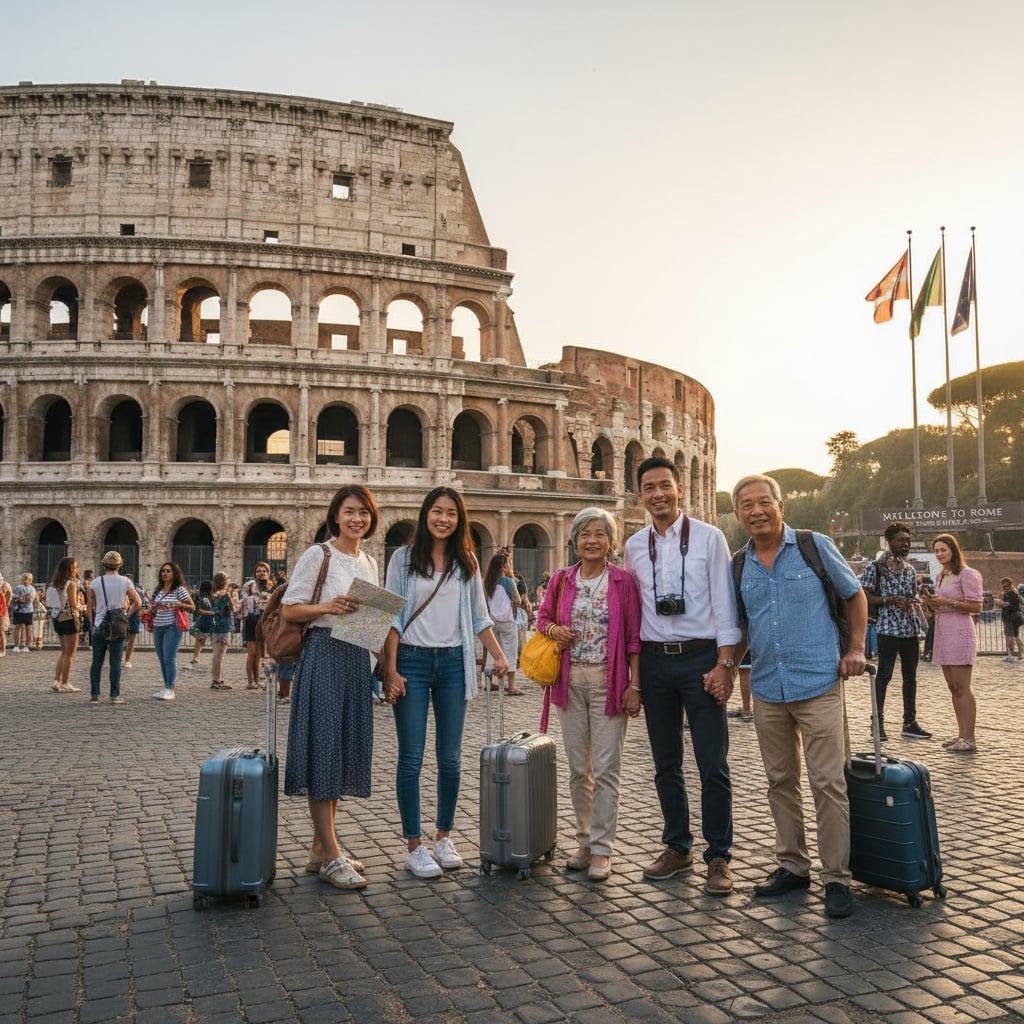
The Colosseum represents Italy's most iconic landmark and demands inclusion in every Rome itinerary. Book skip-the-line tickets with timed entry to avoid devastating 2-3 hour waits during peak seasons. Combination tickets including the Roman Forum and Palatine Hill provide excellent value and complete the ancient Rome experience. Asian travelers particularly appreciate guided tours with Mandarin or other Asian-language options that bring historical context alive.
Vatican City requires a full half-day minimum, with Vatican Museums, Sistine Chapel, and St. Peter's Basilica forming an exhausting but essential Rome experience. Book early morning or late afternoon timed entries to reduce crowd stress. The Sistine Chapel's overwhelming beauty justifies the museum marathon required to reach it, though the constant crowds and no-photography rules frustrate some Asian visitors accustomed to capturing every moment.
The Trevi Fountain, Spanish Steps, Pantheon, and Piazza Navona cluster in central Rome's walkable historic zone, allowing efficient combined touring during morning or evening sessions. These attractions photograph beautifully and provide the romantic Roman atmosphere Asian travelers expect. Schedule Trevi Fountain visits for early morning or late evening to avoid the daytime masses that prevent quality photos.
Dining in Rome should balance traditional Italian cuisine with Asian meal options that prevent food fatigue. Include at least one authentic Roman trattoria serving cacio e pepe, carbonara, or amatriciana pasta, but acknowledge that multiple consecutive Italian meals challenge some Asian palates. Rome's Esquilino neighborhood offers excellent Chinese restaurants where homesick travelers can recharge with familiar flavors.
Shopping in Rome centers on luxury brands along Via dei Condotti and Via del Corso, with Spanish Steps serving as the high-fashion epicenter. Castel Romano Designer Outlet, located 30 minutes from central Rome, offers luxury brand discounts that appeal to budget-conscious Asian shoppers. Allocate sufficient shopping time, as purchases often rank among travelers' most valued Italy experiences.
Florence: Renaissance Art and Tuscan Charm
Florence serves as the cultural and artistic heart of the Italy experience, showcasing Renaissance masterpieces, stunning architecture, and Tuscan charm in a compact, walkable historic center. The city requires 1.5-2 days for essential attractions, making it perfect as the middle segment between Rome and Venice.
The journey from Rome to Florence via high-speed rail takes approximately 1.5 hours, making morning departures practical for afternoon Florence arrival and orientation. Book second-class seats for economy packages or premium first-class for luxury programs—both classes provide comfortable travel on Italy's excellent Frecciarossa trains.
The Duomo (Cathedral of Santa Maria del Fiore) dominates Florence's skyline and provides the city's signature visual landmark. The exterior photo opportunities from various piazzas satisfy Asian travelers' documentation needs even if they skip the dome climb. However, the panoramic Florence views from atop Brunelleschi's Dome reward the 463-step effort and justify including this activity for physically capable travelers.
Uffizi Gallery houses the world's finest Renaissance art collection including Botticelli's Birth of Venus, Leonardo da Vinci works, and masterpieces by Michelangelo, Raphael, and Caravaggio. Pre-book timed entry tickets to avoid multihour waits. Asian tour groups typically allocate 2-3 hours for highlights tours, though art enthusiasts could spend full days exploring the collections.
Ponte Vecchio, Palazzo Vecchio, and Piazza della Signoria cluster in central Florence within easy walking distance. The Ponte Vecchio's jewelry shops appeal to Asian shoppers, though prices run high in this tourist-heavy location. The leather market at San Lorenzo offers more accessible shopping with bags, jackets, and accessories at negotiable prices that Asian travelers enjoy bargaining for.
Pisa makes an excellent half-day excursion from Florence, located just 1 hour by train. The Leaning Tower photograph session typically requires only 1-2 hours on-site, making this a practical addition that adds iconic imagery to Italy packages without excessive time investment. Many Asian tour groups schedule Pisa en route from Rome to Florence or Florence to Venice, maximizing efficiency.
Tuscan countryside wine tours appeal to some Asian demographics but require careful positioning. While wine culture has grown in China and Southeast Asia, many Asian travelers prioritize sightseeing over wine tasting. Consider offering wine tours as optional excursions rather than base package inclusions, allowing interested travelers to opt in while others pursue alternative activities.
Venice: The Floating City Finale
Venice provides the perfect Italy tour finale, offering utterly unique canal scenery, romantic gondola experiences, and distinctive character that creates lasting memories. The city requires 1.5-2 days for essential experiences, with overnight stays allowing evening exploration after day-trippers depart and the city regains its magical atmosphere.
The journey from Florence to Venice takes approximately 2 hours via high-speed rail, making morning departures practical for midday Venice arrival. Venice Santa Lucia station sits directly on the Grand Canal, providing instant atmospheric immersion as travelers exit to water buses and gondola traffic.
St. Mark's Square (Piazza San Marco) serves as Venice's tourism epicenter, featuring St. Mark's Basilica, Doge's Palace, the Campanile bell tower, and atmospheric cafés. Asian travelers particularly enjoy the square's romantic ambiance, historic architecture, and photo opportunities. However, crowds during midday peak hours become oppressive, making early morning or evening visits far more pleasant.
St. Mark's Basilica requires modest dress codes (covered shoulders and knees) that Asian travelers generally respect without issue, though clear advance communication prevents embarrassing entry denials. The interior's golden mosaics and Byzantine splendor justify the sometimes lengthy entry waits. Book skip-the-line tickets when possible to reduce frustration.
Doge's Palace offers fascinating Venetian history and impressive architecture, though it appeals more to history enthusiasts than general tourists. Many Asian tour packages make this an optional activity, prioritizing limited Venice time for more universally appealing experiences like gondola rides and canal exploration.
Gondola rides represent quintessential Venice experiences that Asian travelers specifically request and expect. Standard gondola rates run approximately EUR 80-100 for 30-minute rides, though prices vary by route, timing, and negotiation. Include shared gondola rides in mid-range packages or private gondolas in premium programs. The experience delivers romantic ambiance and unique perspectives on Venetian architecture that justify the expense.
Murano and Burano island excursions offer half-day diversions featuring glass-blowing demonstrations and colorful fishing village scenery. These trips appeal particularly to photography-focused Asian travelers seeking Instagram-worthy backdrops. However, they consume significant time and may not warrant priority in limited Venice stays focused on the main island's attractions.
Shopping in Venice centers on Murano glass, Venetian masks, leather goods, and luxury brands along the Mercerie shopping streets connecting St. Mark's Square to Rialto Bridge. Prices generally run higher than Florence or Rome due to Venice's tourism intensity and limited competition. Guide Asian shoppers toward quality glass pieces from reputable Murano workshops rather than cheap imports sold at tourist traps.
Optimal Routing and Timing Allocations
The standard Rome-Florence-Venice routing flows logically north through Italy, following efficient rail connections and building from ancient Rome through Renaissance Florence to romantic Venice. This progression creates natural thematic variety while minimizing backtracking and wasted travel time.
A basic 7-day/6-night Italy tour allocates 3 days Rome, 2 days Florence (with half-day Pisa), and 2 days Venice. This timing covers essential attractions adequately while maintaining comfortable pacing for average travelers. Nine to ten-day programs allow 3 days per city plus a Tuscan countryside day or Cinque Terre excursion, creating a more relaxed experience with buffer time for weather delays or extended shopping.
Five-day rushed programs allocating 2 days Rome, 1.5 days Florence, 1.5 days Venice prove feasible but demanding, appealing primarily to budget-conscious Asian tour groups prioritizing highlights over depth. These compressed itineraries require military precision timing and sacrifice leisure exploration for efficient attraction consumption. Position these as "Italy highlights" rather than comprehensive cultural immersion.
Starting in Venice and flowing south to Florence and Rome provides an alternative routing that some agents prefer, though the Rome-north progression feels more natural given most Asian travelers fly into Rome Leonardo da Vinci Airport. Southern routing works well when continuing to Amalfi Coast or Sicily after Rome, or when combining Italy with Greece ferry crossings from Venice.
Transportation Between Cities
Italy's high-speed rail network provides the optimal transportation method between Rome, Florence, and Venice, offering comfort, efficiency, and scenic journey experiences that Asian travelers enjoy. Trains depart frequently throughout the day, with journey times of approximately 1.5 hours Rome to Florence and 2 hours Florence to Venice.
Book train tickets in advance for the best pricing, with second-class seats perfectly adequate for economy and mid-range packages. First-class upgrades provide more spacious seating, complimentary snacks and beverages, and quieter atmospheres that justify modest premium pricing for luxury packages. Reserved seats eliminate boarding chaos and guarantee adjacent seating for group travel.
Private coach transfers between cities cost significantly more than rail travel but offer advantages for larger groups, allowing flexible departure timing, direct hotel-to-hotel service, and en-route sightseeing stops. Consider coaches for premium packages or when group sizes exceed 15-20 people where collective coach costs approach rail pricing while providing superior convenience.
Domestic flights between Rome and Venice exist but rarely make sense given airport transfer times, security processes, and baggage handling that consume similar time to direct rail travel. Trains depart from city centers and deliver directly to destination centers, proving far more efficient for point-to-point intercity travel.
Accommodation Strategies for Multi-City Programs
Hotel selection in each city should prioritize location near major attractions and rail stations, allowing walking access to sightseeing and easy departure logistics. Asian travelers value convenient locations that minimize daily transportation and maximize available sightseeing time.
In Rome, hotels near Termini station provide convenient arrival access and excellent public transportation connections to all major attractions. The area lacks historic charm but offers abundant Asian restaurants and practical amenities. Alternatively, hotels in the Centro Storico (historic center) place travelers within walking distance of Trevi Fountain, Pantheon, and Spanish Steps, though at premium pricing.
Florence's compact historic center allows excellent walkability from nearly any central hotel. Properties near Santa Maria Novella train station provide convenient arrival logistics and reasonable pricing, while hotels nearer the Duomo command premiums for proximity to top attractions. Given Florence's small size, location matters less than in sprawling Rome or complex Venice.
Venice accommodation requires careful consideration given the city's unique geography. Hotels near Santa Lucia train station (Cannaregio district) provide convenient arrival logistics and more affordable pricing, though they feel less atmospheric than properties in San Marco area. Budget-conscious packages can utilize Mestre mainland hotels with short train connections to Venice island, though this arrangement feels unsatisfying for the romantic Venice experience Asian travelers anticipate.
Dining Strategies and Asian Food Considerations
Italian cuisine appeals to many Asian palates with its pasta, pizza, and familiar flavor profiles, though consecutive Italian meals can create fatigue by day 4-5 of Italy tours. Your dining strategy should balance authentic Italian culinary experiences with occasional Asian meal options that provide comfort and variety.
Include signature Italian dining experiences in each city: Roman carbonara in traditional trattoria, Florentine bistecca alla fiorentina steak, and Venetian seafood risotto. These meals create cultural experiences and dining memories while introducing travelers to regional Italian specialties. Provide menu translations and ordering guidance to reduce anxiety and ensure travelers make informed choices.
All three cities offer Chinese, Japanese, and other Asian restaurants where travelers can recharge with familiar flavors. Rome's Esquilino neighborhood, Florence's areas near the train station, and Venice's streets behind San Marco all host Asian dining options. Including 1-2 Asian meals in 7-day packages acknowledges comfort needs without abandoning authentic Italian cuisine completely.
Halal food availability matters for Muslim travelers from Malaysia, Indonesia, and some Indian markets. Rome and Florence offer multiple halal-certified restaurants, while Venice has fewer options requiring more careful planning. Provide clear halal restaurant lists and advance booking assistance to ensure Muslim travelers can enjoy Italian tours without dietary stress.
Vegetarian options are readily available throughout Italy given the cuisine's vegetable-forward components, though communicating dietary requirements clearly prevents meat-stock-based sauces or hidden ingredients in seemingly vegetarian dishes. Indian vegetarian travelers generally find Italy more accommodating than many European destinations.
Pricing Benchmarks and Package Positioning
Italy multi-city package pricing varies significantly based on duration, accommodation standards, inclusions, and group versus independent travel. A standard 7-day/6-night Rome-Florence-Venice package with 3-star hotels, rail transportation, daily breakfast, some dinners, and essential attraction entries typically ranges USD 1,200-1,800 per person based on group tour economies.
Mid-range 8-9 day packages featuring 4-star hotels, skip-the-line entries, some guided tours, gondola rides, and enhanced meals run USD 2,000-3,000 per person. Premium programs with 5-star hotels, private guided tours, gourmet dining, first-class rail, and personal drivers command USD 3,500-5,500+ per person and appeal to high-net-worth Chinese and Southeast Asian luxury travelers.
Independent traveler packages cost more per person than group tours due to lost economies of scale but appeal to honeymooners and sophisticated travelers preferring flexibility over group constraints. Position these as "private Italy experiences" emphasizing customization, intimate exploration, and romantic atmosphere.
Commission structures on Italy packages typically range 12-18% depending on supplier relationships and package components. Hotels generally offer 10-15% commissions, rail tickets provide minimal margins, and attraction entries offer no agent commission. However, the overall high package values make absolute profit dollars attractive even at moderate percentage margins.
Seasonal Considerations and Optimal Timing
Spring (April-May) and autumn (September-October) provide ideal Italy touring conditions with pleasant temperatures, manageable crowds, and beautiful seasonal scenery. Spring brings blooming flowers and Easter celebrations, while autumn offers harvest festivals and fewer tourists after summer peaks. Both seasons justify premium pricing while delivering superior experiences compared to shoulder periods.
Summer (June-August) brings intense heat, massive crowds, and premium pricing across accommodation and attractions. However, Asian family travel demand driven by school holidays makes summer the peak booking season despite challenging conditions. Position summer packages around long daylight hours, festival seasons, and prime Mediterranean weather while setting appropriate expectations about crowds and heat.
Winter (November-March excluding Christmas/New Year) offers the lowest pricing and smallest crowds but comes with shorter days, cold temperatures, and occasional rain. Venice suffers particularly from winter flooding (acqua alta) that can disrupt sightseeing. Position winter packages around Christmas market atmosphere, off-season values, and Rome's museums and indoor attractions that shine regardless of weather.
Christmas and New Year weeks bring special holiday atmosphere with decorations, special events, and festive dining, though pricing spikes significantly and some attractions close or operate reduced schedules. Easter week similarly combines special celebrations with peak pricing and crowds, particularly in Rome given Vatican celebrations.
Ready to create unforgettable Italian multi-city experiences for your Asian clients? Visit DMC Quote to partner with experienced Italian DMCs, access premium hotel inventories, and design comprehensive guided tour programs. Contact us today for exclusive agent rates and expert Italy destination support.