Why Spain and Portugal Appeal to Asian First-Time Visitors
Spain and Portugal offer Asian travelers an accessible introduction to Mediterranean European culture, featuring warm climates, dramatic architecture, rich history, vibrant cities, beautiful coastlines, and more affordable pricing than Northern and Western Europe. The Iberian Peninsula provides sufficient cultural distinctiveness to feel authentically European while offering comfortable temperatures, friendly atmospheres, and visual drama that resonates particularly well with Asian sensibilities shaped by colorful festivals, ornate architecture, and warm hospitality cultures.
The combination of major cities (Barcelona, Madrid, Lisbon, Seville) offering world-class attractions, cultural experiences, and shopping alongside charming smaller towns, coastal beauty, and countryside scenery creates programming diversity appealing to varied traveler interests and demographics. First-time European visitors appreciate Spain and Portugal's relatively straightforward logistics, manageable geographic distances, excellent tourism infrastructure, and value pricing that makes European travel accessible to middle-class Asian families.
For travel agents, Spain-Portugal packages offer differentiation from the heavily saturated France-Switzerland-Italy circuit while maintaining strong appeal based on recognizable attractions (Sagrada Familia, Alhambra, Belém Tower), cultural familiarity through football (soccer) fandom, and growing destination awareness driven by Korean dramas, Chinese travel shows, and social media content featuring Iberian experiences.
Barcelona: Gaudí and Mediterranean Magic
Barcelona serves as the primary entry point for Asian visitors to Spain, offering direct flights from major Asian hubs, spectacular Gaudí architecture, Mediterranean beach culture, excellent shopping, and vibrant urban atmosphere that balances culture with leisure. The city requires minimum 2-3 days to cover essential attractions adequately, though 4 days allows more relaxed exploration including beach time and day trips.
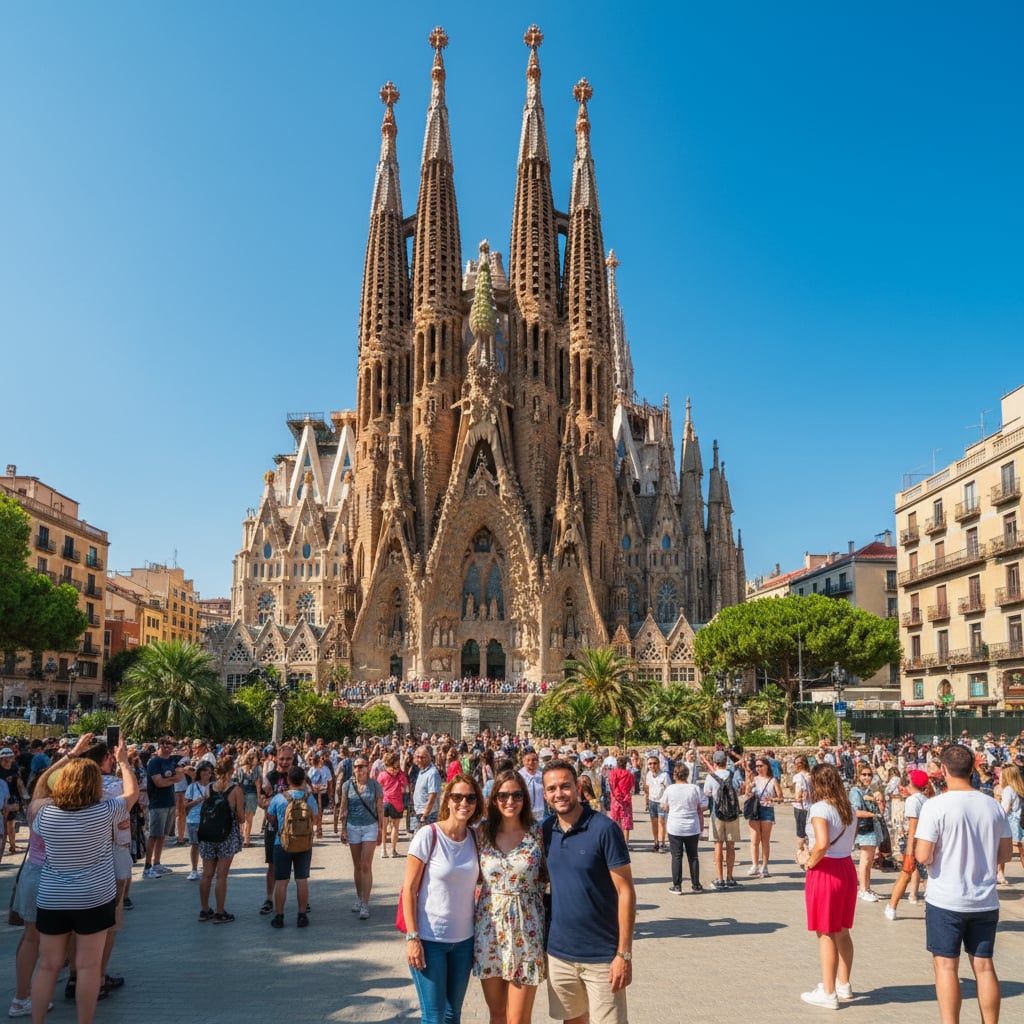
Sagrada Familia represents Barcelona's most iconic attraction—Gaudí's unfinished masterpiece basilica combining Gothic and Art Nouveau styles in spectacular fashion. This UNESCO World Heritage Site ranks among Europe's most photographed buildings and appears on nearly every Asian traveler's Barcelona must-see list. Book timed entry tickets weeks or months in advance during peak seasons, as daily visitor quotas sell out quickly. Allow 1.5-2 hours including tower access providing panoramic Barcelona views.
Park Güell showcases Gaudí's whimsical architecture integrated with hillside park offering mosaic-covered structures, serpentine benches, and Barcelona panoramas. The park's colorful designs photograph beautifully, making it tremendously popular with Asian visitors seeking Instagram-worthy backdrops. Timed entry requirements for the monumental zone require advance booking, though surrounding park areas remain free to explore.
La Rambla pedestrian boulevard, Gothic Quarter medieval streets, and La Boqueria market create atmospheric walking tours through Barcelona's historic heart. While La Rambla has become extremely touristy with pickpocket problems requiring caution warnings for Asian visitors, it remains a Barcelona institution providing vibrant street atmosphere and access to adjacent Gothic Quarter explorations. Schedule morning market visits when produce displays look freshest and crowds remain manageable.
Casa Batlló and La Pedrera (Casa Milà) represent Gaudí's residential architecture masterpieces on Passeig de Gràcia, Barcelona's elegant shopping boulevard. Both buildings offer interior tours showcasing Gaudí's organic design philosophy, though entrance fees (EUR 25-35 per attraction) add up quickly. Consider including one building tour in packages while viewing others from the exterior to balance budget and time constraints.
Mediterranean beaches stretching along Barcelona's waterfront provide leisure time opportunities particularly appreciated by Southeast Asian visitors accustomed to beach culture. Barceloneta Beach offers convenient access from the city center, though summer crowds can be overwhelming. Beach time provides excellent free-time activities allowing travelers to relax, shop, or pursue individual interests after structured sightseeing.
Shopping in Barcelona spans luxury brands on Passeig de Gràcia, regional boutiques in the Gothic Quarter, and La Roca Village outlet mall (40 minutes from the city) offering 30-60% discounts on international brands. Asian travelers particularly enjoy shopping for Spanish leather goods, local fashion brands (Zara, Mango, Desigual), and European luxury goods at better prices than Asian markets.
Madrid: Art, Culture, and Royal Heritage
Madrid offers art museums, royal palace, vibrant neighborhoods, and authentic Spanish culture in Spain's capital city. While perhaps less visually dramatic than Barcelona's Gaudí architecture, Madrid provides deeper cultural immersion and serves as an excellent transportation hub for day trips to Toledo, Segovia, and central Spain attractions. Allow 2-3 days for comprehensive Madrid exploration as part of broader Spain itineraries.
Prado Museum houses one of the world's finest art collections featuring Spanish masters Velázquez, Goya, and El Greco alongside European masters. Art enthusiasts could spend days in the Prado, though most Asian tour groups allocate 2-3 hours for highlights tours focusing on most famous works. Audio guides in Mandarin, Japanese, and Korean enhance accessibility for Asian visitors. The nearby Reina Sofía Museum housing Picasso's Guernica appeals to modern art enthusiasts.
Royal Palace (Palacio Real) showcases Spanish royal history through opulent state rooms, throne room, armory, and magnificent architecture rivaling Versailles. Allow 2 hours for comprehensive tours including the palace gardens. The building's exterior and Plaza de Oriente provide excellent photo opportunities even for those skipping interior tours.
Retiro Park offers peaceful green space in central Madrid, with rowing boats on the park lake, Crystal Palace exhibition hall, and the monumental Alfonso XII monument providing leisurely afternoon activities. The park provides excellent respite from museum intensity and urban density, particularly appreciated by travelers with children or those seeking slower-paced balance to structured touring.
Gran Vía shopping street, Puerta del Sol plaza, and Plaza Mayor create Madrid's commercial and social heart where shopping, dining, and people-watching combine. Evening paseo (stroll) culture reflecting Spanish social traditions provides authentic cultural experiences, though late Spanish dining hours (9-11 PM typical for dinner) sometimes challenge Asian travelers accustomed to earlier meal times.
Day Trips from Madrid
Toledo, located 30 minutes from Madrid by high-speed rail, offers spectacular medieval hilltop city scenery, El Greco artwork, Gothic cathedral, and historic synagogue and mosque reflecting Spain's multicultural heritage. Half-day Toledo excursions provide excellent value by adding significant cultural and visual variety to Madrid programs without requiring overnight stays. The city's dramatic hilltop position surrounded by Tagus River creates stunning panoramic photography opportunities from surrounding viewpoints.
Segovia combines Roman aqueduct, fairy-tale Alcázar castle, and charming old town in another excellent Madrid day trip option. The aqueduct's engineering marvel impresses Asian visitors, while the Alcázar supposedly inspired Disney's castle designs—a fact that delights families. Segovia's famous roast suckling pig (cochinillo) provides culinary experience for adventurous eaters, though offering optional dining allows non-pork-eating Muslim travelers to select alternative meals.
Seville: Flamenco and Moorish Splendor
Seville delivers quintessential Spanish experiences through passionate flamenco culture, stunning Moorish architecture, vibrant festivals, and authentic Andalusian atmosphere. The city's warm climate, relaxed pace, and manageable size create comfortable exploration environments, while the dramatic cultural distinctiveness provides strong contrast to Madrid and Barcelona. Include 1-2 days for Seville in comprehensive Spain itineraries, or feature as a primary focus of Andalusia regional programs.
The Alcázar palace represents Spain's finest Moorish architecture with intricate tilework, peaceful courtyards, lush gardens, and stunning craftsmanship that fascinates Asian visitors familiar with Islamic architectural traditions. The palace served as a filming location for Game of Thrones, adding contemporary cultural relevance for younger travelers. Book timed entry tickets in advance and allow minimum 2 hours for unhurried exploration of this UNESCO World Heritage Site.
Seville Cathedral ranks among the world's largest Gothic cathedrals, housing Christopher Columbus's tomb and the Giralda bell tower providing panoramic city views after climbing 34 ramps (no stairs, making ascent manageable for average fitness levels). The cathedral's scale impresses visitors while the tower climb rewards effort with spectacular Seville panoramas photographing beautifully.
Flamenco performances represent essential Seville cultural experiences, showcasing passionate dance, guitar, and singing expressing Spanish soul. Numerous venues offer shows ranging from tourist-oriented tablao performances with dinner to more intimate authentic settings. Include flamenco in Seville programs rather than positioning as optional excursion—it provides cultural understanding and memorable experiences justifying Seville visits beyond the architectural attractions.
Plaza de España, built for the 1929 Ibero-American Exposition, features spectacular semicircular building with ornate tilework representing Spanish provinces, surrounded by canal where visitors can rent rowboats. The plaza's architectural drama and colorful designs photograph exceptionally well, making it tremendously popular with Asian visitors seeking beautiful backdrops for photos. Early morning or evening visits provide better lighting and smaller crowds than midday.
Lisbon: Hills, Tiles, and Portuguese Charm
Lisbon has emerged as one of Europe's trendiest destinations over the past decade, offering colorful architecture, historic neighborhoods, stunning tilework, excellent seafood, charming tram rides, and value pricing below Spain's major cities. The Portuguese capital provides cultural variety when combined with Spain in broader Iberian programs while offering sufficient attractions to anchor Portugal-focused itineraries. Allow 2-3 days for comprehensive Lisbon exploration including Sintra and Belém excursions.
Belém district houses several UNESCO World Heritage Sites including Jerónimos Monastery showcasing Manueline architecture, Belém Tower defending Lisbon's harbor, and the Monument to the Discoveries celebrating Portuguese Age of Exploration. These waterfront attractions combine historical significance with beautiful architecture and interesting maritime heritage that appeals to diverse traveler interests. Don't miss pastéis de Belém—famous custard tarts from the original bakery that Asian visitors particularly enjoy and frequently purchase as souvenirs.
Alfama neighborhood represents Lisbon's oldest district with narrow medieval streets, stunning viewpoints (miradouros), traditional fado music venues, and authentic Portuguese character. The neighborhood's hilly terrain challenges mobility-impaired travelers but rewards those who explore on foot with atmospheric experiences and spectacular Tagus River views. The famous Number 28 tram rattles through Alfama providing scenic transportation and tourist attraction simultaneously, though pickpockets target crowded trams requiring vigilance warnings for Asian visitors.
Sintra, located 30 minutes from central Lisbon, offers fairy-tale palaces, lush gardens, and dramatic coastal scenery in a UNESCO-protected cultural landscape. Pena Palace with its colorful romantic architecture photographs spectacularly and ranks among Portugal's most iconic images. Half-day or full-day Sintra excursions represent essential Lisbon program additions, providing the visual wow-factor and natural beauty that balance urban Lisbon experiences. However, summer crowds can be oppressive with palace entry waits exceeding 2 hours—consider early morning departures or shoulder season timing when practical.
Porto: Port Wine and Riverside Beauty
Porto in northern Portugal provides excellent contrast to Lisbon with its riverside Ribeira district, port wine cellars, dramatic bridge views, and baroque architecture. The city merits 1-2 days as an extension to Lisbon-focused Portugal programs or as a starting point for northern Spain connections through Santiago de Compostela and into Galicia. The Douro Valley wine region extending inland from Porto offers spectacular terraced vineyard scenery for extended programs targeting wine enthusiasts.
Optimal Routing and Package Design
The classic Spain-Portugal circuit follows Barcelona-Madrid-Seville-Lisbon routing flowing west across the peninsula. This 9-12 day itinerary provides comprehensive Iberian exposure while following logical geographic progression minimizing backtracking. High-speed rail connections between Barcelona-Madrid (2.5 hours) and Madrid-Seville (2.5 hours) make train transportation efficient and comfortable, while Madrid-Lisbon requires bus (7 hours), flight (1.5 hours), or overnight train options.
Reverse routing (Lisbon-Seville-Madrid-Barcelona) works equally well depending on flight availability and pricing. Many Asian travelers fly into Barcelona and out of Lisbon (or vice versa) using open-jaw ticketing that eliminates the need to return to origin cities. This approach saves time and provides better routing flexibility though sometimes costs slightly more than round-trip tickets.
Spain-focused programs concentrating on Barcelona-Madrid-Seville (with possible Toledo/Segovia day trips) allow 7-9 day itineraries providing satisfying Spanish exposure without Portugal. This focused approach suits travelers with limited time or those planning separate Portugal trips later. Southern Spain extensions to Granada (Alhambra palace) or Málaga (Costa del Sol beaches) provide additional variety for extended programs.
Portugal-focused packages featuring Lisbon-Sintra-Porto create excellent 5-7 day programs for travelers specifically interested in Portuguese culture, seeking quieter alternatives to heavily touristed Spanish cities, or pursuing value pricing as Portugal generally costs 10-20% less than Spain for comparable services. Douro Valley wine tours and Algarve beach extensions expand Portugal programming options.
Cultural Considerations and Dining Strategies
Spanish and Portuguese dining hours run significantly later than Asian meal times—lunch typically 2-4 PM, dinner 9-11 PM—potentially challenging Asian travelers accustomed to earlier schedules. Adjust group dining times to 1 PM lunch and 7-8 PM dinner as compromise between local customs and Asian preferences, or choose tourist-friendly restaurants accommodating earlier hours. Communicate timing expectations in pre-departure materials to prevent confusion and hunger.
Tapas culture provides excellent social dining experiences though portion sizes and sharing etiquette may confuse Asian travelers expecting individual plated meals. Provide clear explanations of tapas ordering strategy—selecting multiple small dishes for table sharing—and recommend combinations ensuring everyone receives adequate food. Alternatively, choose restaurants offering both tapas and full entrées accommodating varied dining preference within groups.
Pork features prominently in Spanish cuisine (jamón ibérico, chorizo, pork dishes) requiring careful restaurant selection and menu guidance for Muslim travelers from Malaysia, Indonesia, and Muslim Indian communities. Both Spain and Portugal offer excellent seafood providing halal-friendly dining options, while major cities host halal-certified restaurants serving Mediterranean and international cuisines. Research and communicate halal dining availability during booking discussions to ensure Muslim travelers feel comfortable with food options.
Asian restaurant availability in Barcelona, Madrid, and Lisbon allows occasional Asian meal options for travelers experiencing Mediterranean food fatigue after several consecutive days. Chinese, Japanese, and Thai restaurants provide familiar flavors when needed, though quality and authenticity vary dramatically. Position European dining as cultural exploration while acknowledging that occasional familiar meals help maintain comfort through extended trips.
Seasonal Timing and Weather Considerations
Spring (April-May) and autumn (September-October) provide ideal Iberian touring conditions with pleasant temperatures (18-25°C), manageable crowds, reasonable accommodation pricing, and beautiful seasonal scenery. Spring brings blooming flowers and Easter celebrations, while autumn offers harvest festivals and still-warm Mediterranean weather perfect for beach time in Barcelona or Algarve.
Summer (June-August) brings intense heat particularly in inland cities (Madrid and Seville regularly exceed 35-40°C), massive tourist crowds, and premium accommodation pricing. However, Asian school holidays drive peak family travel demand during these months despite challenging conditions. Emphasize coastal destinations with sea breezes, schedule outdoor activities for early morning or evening, and set realistic expectations about heat and crowds to prevent disappointment.
Winter (November-March) offers the lowest prices and smallest crowds but comes with cooler temperatures (10-15°C), shorter days, and occasional rain particularly in northern regions. Seville and southern Spain maintain relatively mild winter weather making them attractive cold-season destinations. Christmas season provides festive atmosphere and special events though some attractions operate reduced hours. Position winter as value season for budget-conscious travelers willing to accept weather trade-offs.
Pricing and Positioning Strategies
Spain-Portugal packages offer attractive pricing compared to Western European destinations, with costs typically 20-30% below France-Switzerland-Italy equivalents for comparable quality. A standard 10-day Spain-Portugal package (Barcelona-Madrid-Seville-Lisbon) with 3-star hotels, rail transportation, daily breakfast, some dinners, and major attraction entries typically ranges USD 1,600-2,400 per person based on group tour economics.
Mid-range programs featuring 4-star hotels, high-speed rail, comprehensive tours, flamenco and fado performances, and enhanced dining run USD 2,400-3,500 per person for 10-12 days. Premium packages with 5-star hotels, private guided tours, gourmet dining, and exclusive experiences command USD 4,000-6,000+ per person and appeal to affluent Asian travelers seeking luxury Iberian experiences.
Position Spain-Portugal as accessible European culture providing excellent value while delivering authentic Mediterranean experiences, dramatic architecture, vibrant culture, and diverse scenery. Frame as ideal for first-time European visitors wanting comprehensive exposure to Southern European culture without the premium pricing of traditional Western European destinations. The combination of value pricing and strong visual appeal makes Iberian programs particularly attractive to budget-conscious Asian families and young professionals.
Ready to add compelling Iberian Peninsula programs to your European portfolio? Visit DMC Quote to connect with experienced Spain and Portugal DMCs, access excellent hotel inventories across Iberian cities, and discover comprehensive guided tour options. Register today for competitive agent rates and expert destination support for your Spanish and Portuguese programs.