Table of Contents
Need help growing your travel business?
Chat with Us
Key Takeaways
- Referrals are your #1 growth engine—80% of established agents get most clients through word-of-mouth
- Niche specialization attracts better clients willing to pay premium prices
- Social media consistency beats frequency—post 3-4 times weekly, not daily burnout
- Partnerships with wedding planners, HR departments, and realtors generate qualified leads
- Client retention costs 5x less than acquisition—invest in loyalty programs
- B2B platforms give pricing advantages that help win and keep clients
Here's the uncomfortable truth nobody tells new travel agents: getting your license is the easy part. Building a client base that actually pays your bills? That's where most agents struggle—and many fail within two years.
I've watched talented agents with encyclopedic destination knowledge sit at empty desks because they never learned how to attract clients. Meanwhile, agents with half their product knowledge thrive because they mastered one thing: marketing themselves.
The good news? Client acquisition isn't mysterious. It's systematic. And once you understand the proven strategies that work, you can build a sustainable client base faster than you'd expect. Most successful agents reach profitability within 12-18 months—not because they got lucky, but because they followed a deliberate plan.
This guide covers everything: online strategies (social media, SEO, content marketing), offline tactics (networking, partnerships, community events), referral systems, retention programs, and how to leverage B2B platforms for competitive pricing. Let's build your client base.
The Client Acquisition Challenge for New Agents
Before diving into tactics, let's understand what you're up against. The travel industry has fundamentally changed, and client acquisition looks nothing like it did even 10 years ago.
Why Finding Clients Feels So Hard
New agents face a perfect storm of challenges:
- OTA competition: Expedia, Booking.com, and dozens of others spend billions on advertising. You can't outspend them—you need to out-serve them.
- "I can do it myself" mindset: Clients who've booked simple trips online think they don't need agents. Until something goes wrong.
- Trust deficit: New agents have no track record. Why should a stranger trust you with their $5,000 vacation?
- Crowded market: Host agencies have made it easy to become an agent. More competition means more noise to cut through.
- No marketing budget: Unlike established agencies, new agents often start with shoestring budgets.
The Math That Matters
Let's get real about numbers. A sustainable travel agency business typically needs:
50-100
Active clients for full-time income
2-3
Bookings per client yearly
12-24
Months to build that base
80%
Revenue from repeat/referral
The goal isn't to find thousands of one-time clients. It's to build a core group of 50-100 loyal clients who book repeatedly and refer others. That's a very achievable target—about 4-8 new clients per month for your first year.
The Lifetime Value Perspective
One happy client isn't worth one booking. They're worth 10+ years of bookings PLUS the 3-5 people they'll refer. A single client who books $4,000/year in travel and refers two friends is worth $150,000+ in lifetime revenue. This changes everything about how you should invest in acquisition.
Online Marketing Strategies That Actually Work

Digital marketing is where most new agents focus—and where most waste time on tactics that don't convert. Here's what actually generates clients:
1. Google My Business (Free & Essential)
This is the single most underrated marketing channel for local agents. When someone searches "travel agent near me" or "travel agent [your city]," Google My Business results appear first.
- Claim your listing even if you work from home—you can hide your address
- Add professional photos: Your headshot, office, and destination photos you've taken
- Collect reviews aggressively: Ask every happy client. 10+ reviews with 4.5+ stars dominates local search
- Post weekly updates: Travel tips, destination spotlights, special offers
- Enable messaging: Let prospects contact you directly through Google
Cost: $0. Impact: High for local clients. Priority: Do this today if you haven't.
2. Social Media Marketing (Instagram & Facebook)
Social media success isn't about posting daily. It's about posting strategically and engaging authentically.
| Platform | Best For | Content Type | Posting Frequency |
|---|---|---|---|
| Millennials, Gen X (25-45) | Stunning destination photos, reels, stories | 4-5 feed posts/week, daily stories | |
| Families, Boomers (40-65) | Group engagement, videos, articles | 3-4 posts/week, active in groups | |
| Trip planners, honeymoons | Destination boards, itinerary pins | 10-15 pins/week (can schedule) | |
| TikTok | Gen Z, young millennials | Quick tips, behind-scenes, trends | 3-5 videos/week if targeting youth |
| Corporate travel, business | Industry insights, professional tips | 2-3 posts/week for B2B leads |
The Content That Converts:
- Client success stories (with permission)—"Just got the Smiths back from Bali. They said it was their best trip ever!"
- Behind-the-scenes planning—Show your expertise without giving away all the details
- Destination tips that prove your knowledge—"Most tourists miss this secret beach in Phuket..."
- Travel news commentary—Position yourself as the expert on what matters
- Personal travel experiences—Authenticity builds trust more than polished stock photos
3. Content Marketing & SEO
If you have patience (6-12 months), content marketing generates leads while you sleep. But it requires consistent effort.
- Start a blog on your website. Write about destinations you specialize in.
- Target long-tail keywords: "Best time to visit Japan with kids" beats "Japan travel" (less competition)
- Create destination guides: Comprehensive resources people bookmark and share
- Answer real questions: Check TripAdvisor forums and Quora for what people actually ask
- Repurpose content: One blog post becomes 5 social posts, a newsletter, and a video
4. Paid Advertising (When You're Ready)
Don't start with paid ads. But once you've validated your niche with organic marketing, ads can accelerate growth.
Paid Ads Benchmarks for Travel Agents
- Facebook/Instagram ads: $50-150 per qualified lead, best for awareness and retargeting
- Google Search ads: $80-200 per lead, best for high-intent "travel agent near me" searches
- Start budget: $500-1,000/month minimum to generate enough data
- Target ROAS: 5:1 (spend $1,000, generate $5,000 in bookings)
5. Email Marketing (Your Most Valuable Asset)
Your email list is the one marketing asset you actually own. Social media algorithms change. Google rankings fluctuate. But your email list is yours forever.
- Build your list: Lead magnets (destination guide PDFs, packing checklists, planning timelines)
- Segment aggressively: Honeymoons, families, adventure, luxury—send relevant content
- Newsletter frequency: Bi-weekly or monthly is enough. Don't overwhelm.
- Include deals: Flash sales, limited-time offers, exclusive discounts for subscribers
- Automate sequences: Welcome series, post-trip follow-up, anniversary reminders
Offline Strategies: Where Real Relationships Happen
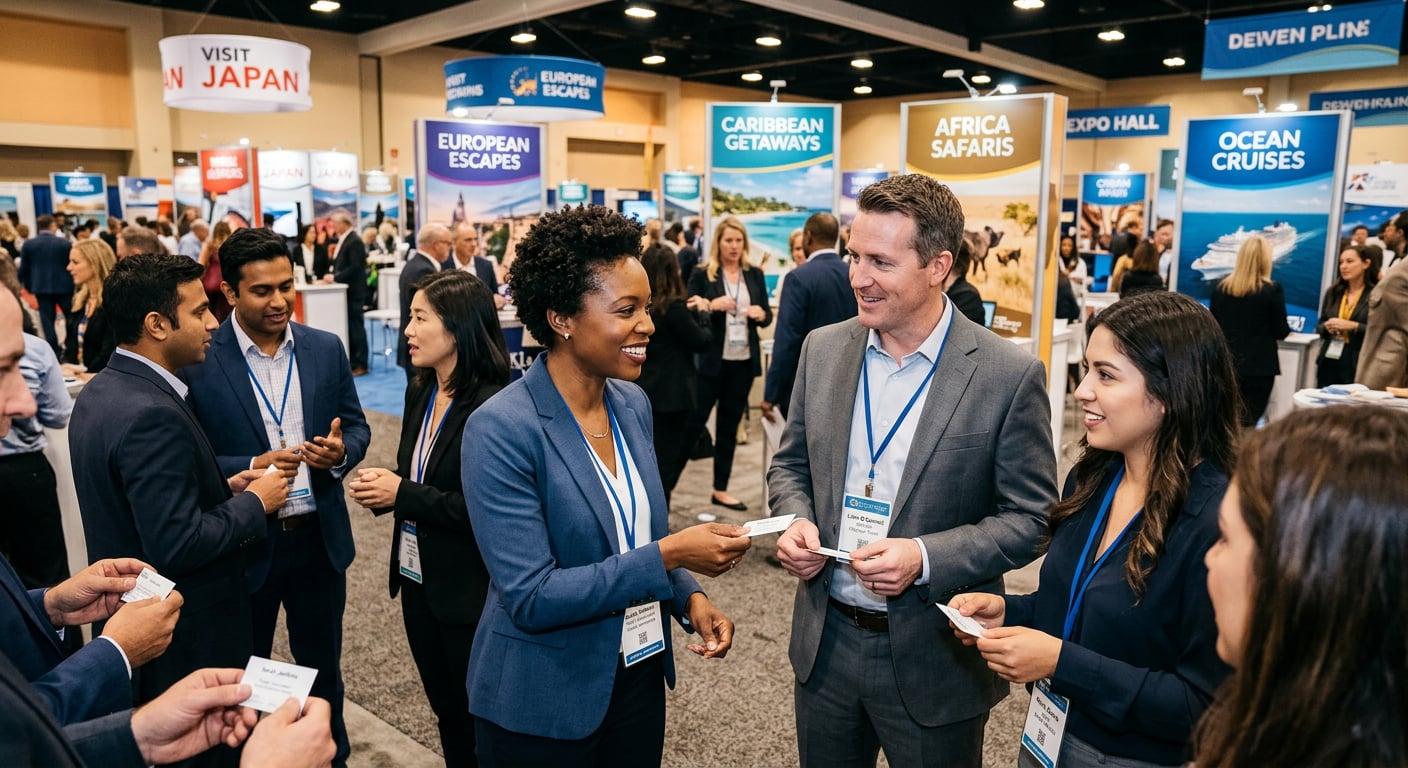
Despite the digital age, offline strategies often convert better than online ones. Face-to-face connections build trust faster than any Instagram post.
1. Strategic Networking
Networking isn't about collecting business cards at travel shows. It's about building genuine relationships in places where your ideal clients gather.
- Chamber of Commerce: Local business owners need travel for themselves and have corporate travel needs
- Industry trade shows: Not for clients, but for supplier relationships that give you competitive advantages
- Country clubs/golf courses: Affluent clientele with travel budgets
- Rotary, Lions, BNI groups: Built-in referral networks with business owners
- School PTA/community boards: Meet parents planning family travel
2. Strategic Partnerships
The fastest way to get clients? Tap into someone else's client base. Here are partnerships that generate qualified referrals:
Wedding Planners
Why it works: Every couple needs honeymoon travel. Destination weddings need full-service planning.
The deal: Offer 10-15% referral fee or reciprocal referrals for your clients planning events.
Corporate HR Departments
Why it works: Companies need travel management, incentive trips, team retreats.
The deal: Offer corporate rate programs, consolidated billing, 24/7 support.
Real Estate Agents
Why it works: New homeowners often celebrate with vacations. Relocators need travel during moves.
The deal: "New homeowner welcome package" with travel voucher as closing gift.
Financial Advisors
Why it works: High-net-worth clients with travel budgets who value trusted recommendations.
The deal: Offer "retirement travel planning" consultations for their clients.
3. Community Events & Speaking
Position yourself as the local travel expert by getting in front of groups who need your knowledge:
- Library travel series: Many libraries host free community events. Offer to present on destinations.
- Senior centers: Older travelers love group presentations and often book in groups.
- Corporate lunch-and-learns: Offer free "Travel Smarter" presentations to local businesses.
- School career days: Inspire future travelers and meet parents.
- Wine clubs, book clubs, hobby groups: Anywhere people gather with disposable income.
4. Local Media & PR
Local newspapers, TV stations, and radio shows constantly need travel content—especially before holidays and school breaks.
- Pitch yourself as a "travel expert" for holiday travel tips
- Write guest columns for local publications
- Offer to be the go-to source when travel news breaks
- Send press releases about your travels and unique offerings
Why Niche Specialization Attracts Better Clients
Here's counterintuitive advice that most new agents resist: the narrower your focus, the faster you'll grow. Trying to serve everyone means you serve no one particularly well.
The Specialist Advantage
| Factor | Generalist Agent | Niche Specialist |
|---|---|---|
| Pricing power | Competes on price | Commands premium fees |
| Client trust | Must prove expertise each time | Assumed expert status |
| Marketing message | "I can book anything" | "I'm THE expert in X" |
| Referral quality | Random referrals | Pre-qualified ideal clients |
| Competition | Competing with everyone | Limited competition |
| Supplier relationships | Generic rates | Preferred partner status |
Profitable Niches to Consider
- Destination specialists: Disney, Hawaii, Caribbean, Africa, Japan, Italy
- Travel type specialists: Luxury cruises, adventure travel, river cruises, expedition travel
- Life stage specialists: Honeymoons, multi-generational family trips, retirement travel
- Interest-based: Golf travel, culinary tours, wine tourism, religious pilgrimages
- Special needs: Accessible travel, LGBTQ+ travel, solo female travel
- Group types: Destination weddings, corporate incentives, school groups
How to Choose Your Niche
Ask yourself: (1) What do I genuinely love and can talk about endlessly? (2) What have I personally experienced that gives me authentic knowledge? (3) Is there a profitable market willing to pay for expertise? The sweet spot is where passion, experience, and profitability intersect.
Building a Referral Program That Works

Referrals are the lifeblood of every successful travel agency. They cost almost nothing to acquire, convert at higher rates, and become loyal clients themselves. But most agents leave referrals to chance. Don't.
The Psychology of Referrals
People refer for three reasons:
- They had an exceptional experience and genuinely want to help friends have the same
- They get something in return (discount, upgrade, gift)
- It makes them look good for recommending a trusted resource
Your referral program should hit all three motivations.
When and How to Ask
Timing is everything:
- Best time: 24-48 hours after they return from a successful trip (they're still glowing)
- Good time: When they express genuine gratitude during the trip
- OK time: In your post-trip follow-up email (include it naturally)
- Bad time: Right after booking (they haven't experienced your value yet)
The script that works:
"I'm so glad you had an incredible trip! If you know anyone else planning a vacation—maybe friends, family, or colleagues—I'd love to help them have the same experience. I also offer [incentive] for referrals as a thank-you."
Referral Incentive Ideas
Discount on Next Trip
$50-100 off their next booking per successful referral. Simple and effective.
Amazon/Restaurant Gift Card
$25-50 gift card when referral books. Tangible reward they can use immediately.
Upgrade on Their Trip
Room upgrade, airport lounge access, or special amenity. Feels premium.
Make It Easy to Refer
- Give them shareable content: A link to your website, your digital business card, or a pre-written message they can forward
- Create referral cards: Physical cards they can hand to friends with your contact info and the referral offer
- Social media assets: Graphics they can share tagging you
- Make introductions easy: "Just CC me on an email to your friend, and I'll take it from there"
Track and Acknowledge
- Track who referred whom in your CRM
- Thank referrers immediately (even before the referral books)
- Send the reward promptly when the referral converts
- Share updates: "Your friend Sarah just booked their Greece trip—thank you so much!"
Client Retention: Keep Them Coming Back
Here's the math that changes everything: acquiring a new client costs 5-7 times more than retaining an existing one. And repeat clients book faster, spend more, and refer more. Retention isn't an afterthought—it's your profit center.
The Touchpoint Strategy
Stay top-of-mind without being annoying. Here's a 12-month client touchpoint calendar:
| When | Touchpoint | Purpose |
|---|---|---|
| Post-trip (24-48 hrs) | Welcome home call/email | Gather feedback, ask for review |
| Post-trip (1 week) | Photo follow-up | "Share your favorite photos!" Social proof |
| Monthly | Newsletter | Travel tips, deals, destination spotlights |
| Trip anniversary | Memory email | "One year ago you were in Bali..." |
| Birthday/Anniversary | Personal note | Relationship building |
| 6 months post-trip | "Where to next?" check-in | Prompt next booking conversation |
| Relevant deal | Personalized offer | "This deal made me think of you" |
Loyalty Program Ideas
- Tiered benefits: Bronze (1-2 trips), Silver (3-5 trips), Gold (6+ trips) with escalating perks
- Anniversary discounts: 5% off for every year they've been a client
- Early access: VIP clients get first dibs on limited deals
- Waived fees: No planning fees for repeat clients
- Surprise upgrades: Occasionally arrange upgrades for loyal clients (builds stories they tell friends)
Personalization That Matters
Keep detailed notes on every client:
- Travel preferences (window vs aisle, dietary restrictions, hotel preferences)
- Family details (kids' ages, anniversary date, who travels together)
- Past trips (so you don't recommend repeat destinations unless asked)
- Bucket list items (so you can proactively suggest when deals appear)
- Communication preferences (email vs phone vs text)
Leveraging B2B Platforms for Competitive Pricing
Here's something new agents often miss: your ability to win and retain clients depends heavily on your pricing competitiveness. If clients can find better rates on Booking.com, they will. B2B platforms like DMC Quote solve this problem.
How B2B Platforms Help You Win Clients
The DMC Quote Advantage
- Wholesale rates: Access to net rates 15-30% below retail, allowing you to offer better value while maintaining margins
- Instant quotes: Respond to inquiries faster than competitors still waiting for supplier responses
- Professional proposals: Branded quotations that build client trust
- Real-time availability: No more "I'll check and get back to you"—book on the spot
- Wide inventory: Hotels, tours, transfers across Southeast Asia in one platform
- Support when things go wrong: 24/7 assistance that makes you look good to clients
The Pricing Advantage in Action
Here's a real scenario:
Client inquiry: "4 nights in Singapore, Marina Bay Sands, family of 4"
OTA rate: SGD 2,400 (what client found on Booking.com)
DMC Quote net rate: SGD 1,920
Your sell price: SGD 2,300 (still below OTA)
Your margin: SGD 380 (16.5%)
Result: Client saves $100 vs booking themselves AND gets your expertise, support, and service. Easy win.
Without B2B platform access, you're either quoting higher than OTAs (losing clients) or working on razor-thin margins (unsustainable). Wholesale access changes the equation.
Measuring Client Acquisition Cost (CAC)
You can't improve what you don't measure. Understanding your cost to acquire each client helps you invest marketing dollars wisely.
The CAC Formula
CAC = Total Marketing Costs / Number of New Clients Acquired
Example: If you spend $500/month on marketing (ads, networking events, content creation time) and acquire 5 new clients, your CAC is $100.
Benchmark CAC by Channel
| Channel | Typical CAC | Notes |
|---|---|---|
| Referrals | $0-20 | Lowest cost, highest quality |
| Organic social media | $30-75 | Time investment, but scalable |
| Content/SEO | $40-100 | High upfront, low ongoing |
| Networking | $50-100 | Time + event costs |
| Facebook/Instagram ads | $75-150 | Good for awareness |
| Google Ads | $100-200+ | High intent, high cost |
The Real Metric: CAC vs LTV
CAC only matters in context of Lifetime Value (LTV). If a client books $4,000/year for 5 years and refers 2 clients worth $10,000 each, their LTV is $40,000. Spending $200 to acquire them? Bargain.
Healthy ratio: LTV should be at least 3x CAC. If you're spending $150 to acquire clients worth $5,000+, you're doing great.
Frequently Asked Questions
Start with your warm network: friends, family, colleagues, and their contacts. Announce your new business on personal social media, offer a "friends and family" discount for first bookings, and ask for referrals. Join local community groups (Facebook, Nextdoor) and position yourself as a travel resource. Most new agents get their first 10-15 clients entirely from warm connections before expanding to cold marketing.
Instagram and Facebook are the most effective for travel agents. Instagram works best for visual storytelling and reaching younger travelers (25-45), while Facebook excels at reaching families and older demographics (40-65) through groups and targeted advertising. Pinterest is excellent for passive lead generation through destination boards. TikTok is emerging for younger agents targeting Gen Z and millennial travelers.
Client acquisition cost (CAC) varies widely: referrals cost essentially $0-20, social media organic marketing costs $30-75 per client, paid advertising on Facebook/Instagram typically runs $50-150 per qualified lead, and Google Ads can cost $80-200+ per lead depending on competition. The most efficient agencies keep CAC under 5% of first-booking revenue and focus on lifetime value through repeat bookings.
Specialization almost always wins for building a client base. Niche agents (luxury cruises, adventure travel, destination weddings, honeymoons, Disney specialists) command higher prices, face less competition, and attract better-quality referrals. Clients trust specialists more and willingly pay premium prices. The "generalist" approach makes marketing harder because you're competing with everyone for everything.
Ask at the right moment—immediately after they return from a successful trip when they're happiest. Frame it naturally: "I'm so glad you had an amazing trip! If you know anyone else planning a vacation, I'd love to help them too." Offer a referral incentive (discount on their next trip, gift card, or upgrade) and make it easy by providing shareable content or referral cards. Follow up with a thank-you gift when referrals convert.
Most agents need 12-24 months to build a sustainable client base of 50-100 active clients. The first 6 months are typically slow (10-20 bookings), months 6-12 see faster growth through referrals and marketing, and by year 2, repeat clients and referrals should generate 50%+ of your business. Agents who specialize in niches and actively market often reach profitability faster—some within 8-12 months.
Strategic partnerships that generate quality referrals include: wedding planners (destination weddings and honeymoons), corporate HR departments (business travel and incentive trips), real estate agents (relocation and vacation home buyers), financial advisors (high-net-worth clients), photographers (destination wedding shoots), and event planners (group travel). Offer reciprocal referrals and consider revenue sharing arrangements.
B2B platforms like DMC Quote give agents competitive pricing advantages that help win and retain clients. Access to wholesale rates (often 15-30% below retail) allows agents to offer better value while maintaining margins. Instant quotes and booking capabilities let you respond to inquiries faster than competitors. The professional proposals and confirmations build client trust and encourage referrals. Better pricing equals more repeat clients.
Licensed Platform
STB Registered
5,000+ Hotels
Southeast Asia
10,000+ Agents
Registered
24/7 Support
Ready to Grow Your Travel Business?
Access wholesale rates on 5,000+ hotels, tours, and transfers across Southeast Asia. Give yourself the pricing advantage you need to win and keep clients.
Questions? Call us: +65 8948 0242
Related Guides
How to Access DMC Wholesale Rates
Complete guide to securing net rates from Destination Management Companies for hotels, tours, and transfers.
FIT vs GIT Packages Guide
Understand the difference between FIT and GIT packages and when to sell each type for maximum profit.
How to Start a Travel Agency
Step-by-step guide to launching your travel business, from licensing to building your first client base.
Travel Agent Commission Rates 2026
Updated commission structures across hotels, tours, transfers, and insurance for the current year.