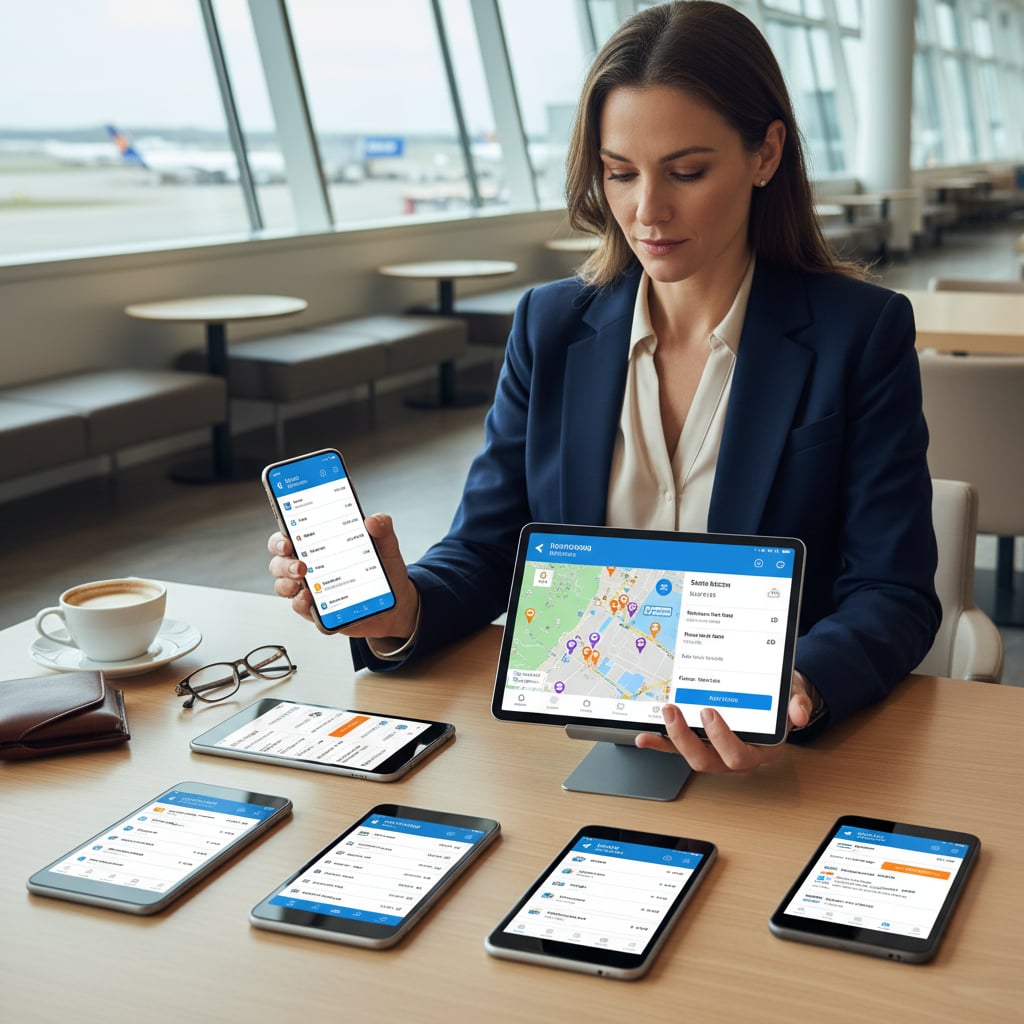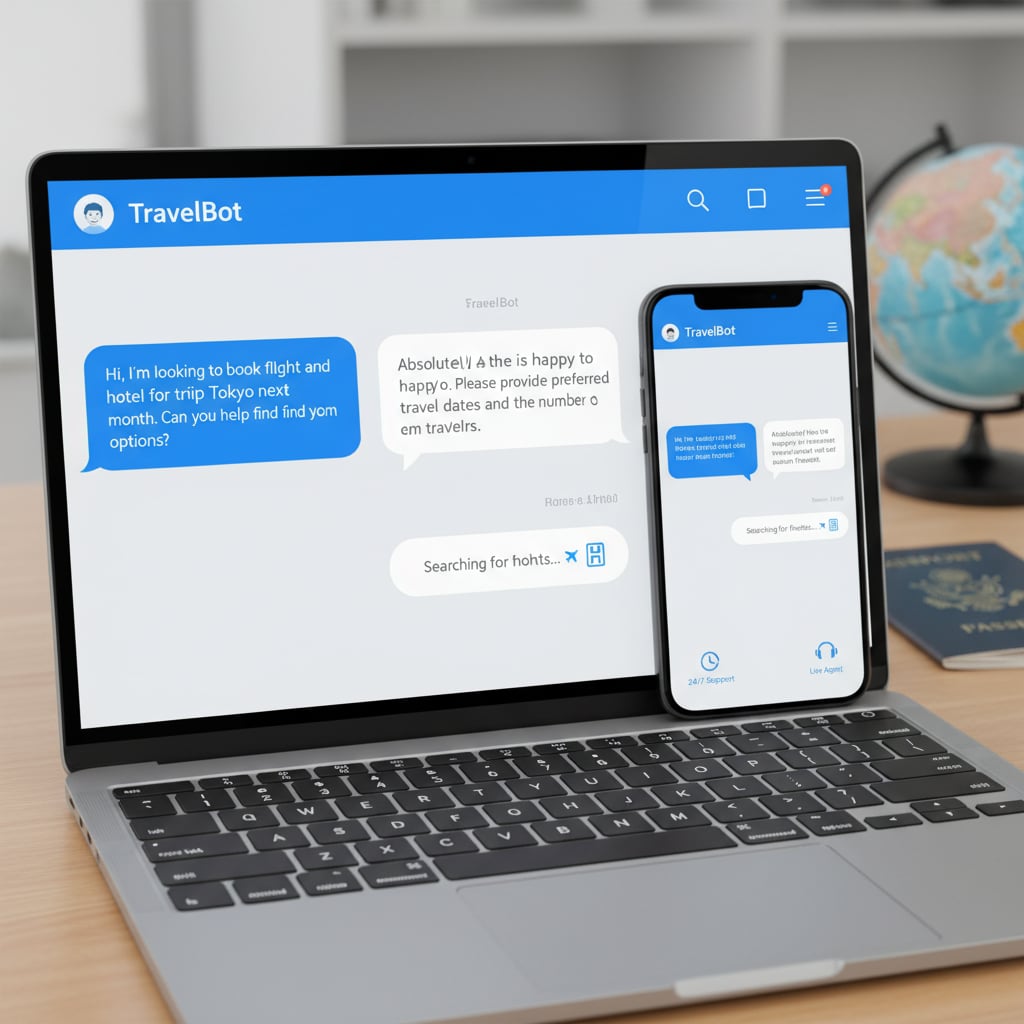
Artificial intelligence chatbots are revolutionizing customer service in the travel industry, enabling agencies to provide instant responses to client inquiries around the clock without proportional staffing increases. Modern AI chatbots handle routine questions, qualify leads, and even assist with booking tasks, freeing human agents to focus on complex itinerary planning and high-value client relationships.
Understanding AI Chatbots in Travel
AI chatbots are software applications using natural language processing to understand client questions and provide relevant responses through text or voice interfaces. Unlike simple rule-based chatbots following predetermined scripts, AI-powered solutions learn from interactions, improving response quality over time.
Travel-specific chatbots understand industry terminology, handle common booking questions, and integrate with reservation systems to provide personalized information about specific bookings. The technology has matured significantly, with modern solutions offering surprisingly human-like interactions.
For travel agencies managing high inquiry volumes, particularly during peak booking seasons, chatbots provide scalable first-line support ensuring no inquiry goes unanswered due to limited staff availability.
Key Chatbot Capabilities for Travel Agencies
Frequently Asked Questions
The majority of client inquiries revolve around predictable topics: visa requirements, baggage allowances, cancellation policies, payment options, and destination information. Chatbots excel at handling these repetitive questions with instant, accurate responses.
By deflecting routine inquiries to chatbots, human agents gain time for complex questions requiring expertise and judgment. This efficiency improves overall service quality while reducing response time for all inquiry types.
Lead Qualification
AI chatbots can engage website visitors, understand their travel interests, and collect qualification information before routing to human agents. This pre-qualification ensures agents receive well-contextualized leads more likely to convert.
Chatbots ask qualifying questions about destinations, travel dates, budget, and group size, information necessary for creating relevant proposals. The collected data integrates with CRM systems, creating lead records automatically.
Booking Assistance
Advanced chatbots integrated with booking platforms can help clients search availability, compare options, and even complete simple bookings. While complex itineraries still require human expertise, chatbots handle straightforward bookings efficiently.
For agencies using platforms like DMCQuote, chatbot integration could enable clients to initiate package searches, view availability for standard tours, and request customized quotations through conversational interfaces.
Booking Management
Existing clients frequently need booking confirmations, itinerary details, or modification assistance. Chatbots integrated with booking systems can retrieve reservation information, send confirmations, and handle simple changes like meal preferences or transfer times.
This self-service capability improves client satisfaction through instant information access while reducing workload on customer service teams.
Implementation Approaches
Platform Selection
Numerous chatbot platforms serve travel agencies with varying sophistication levels and pricing models. Entry-level options include:
ManyChat and Chatfuel: User-friendly platforms primarily for Facebook Messenger and Instagram, suitable for social media customer service. Limited AI capabilities but easy implementation for basic automation.
Intercom and Drift: More sophisticated platforms combining chatbots with human live chat. Strong for lead qualification and sales support with smooth handoff to human agents.
Dialogflow and IBM Watson: Enterprise-grade AI platforms offering advanced natural language understanding. Require more technical expertise but provide maximum customization and intelligence.
Evaluate platforms based on integration capabilities with your existing systems, natural language understanding quality, customization flexibility, and pricing aligned with your inquiry volume.
Conversation Design
Effective chatbots require thoughtful conversation design mapping common inquiry paths and appropriate responses. Start by analyzing your most frequent client questions, identifying patterns amenable to automated responses.
Design conversation flows balancing efficiency with natural interaction. Overly formal or obviously scripted responses frustrate users, while excessive chattiness delays getting to needed information.
Implement graceful fallback to human agents when chatbots encounter questions beyond their capabilities. Clear handoff maintains service quality and prevents client frustration.
Integration with Business Systems
Chatbot effectiveness multiplies when integrated with booking platforms, CRM systems, and knowledge bases. Integration enables providing personalized responses based on client booking history and account status.
API connections allow chatbots to query real-time availability, retrieve booking details, and update CRM records with conversation information. This integration creates seamless experiences where chatbot interactions feel like natural extensions of your agency's service.
Best Practices for Travel Chatbots
Set Clear Expectations
Immediately identify chatbot interactions as automated assistance, avoiding client frustration from expecting human-level understanding. Clear identification doesn't diminish effectiveness; clients appreciate knowing they'll receive instant responses even if from AI.
Provide easy access to human agents for clients preferring personal interaction or encountering chatbot limitations. Options like "Speak to a person" should be readily available.
Focus on Common Scenarios
Rather than attempting comprehensive coverage of every possible inquiry, focus chatbot capabilities on the most frequent scenarios. The Pareto principle applies: 80% of inquiries typically fall into 20% of topic categories.
As chatbots accumulate conversation data, identify gaps where human intervention frequently becomes necessary. Continuously enhance chatbot knowledge in these areas to expand automated coverage.
Maintain Brand Voice
Configure chatbot personality and language aligned with your agency's brand voice. Luxury travel agencies might employ more formal, sophisticated language while adventure travel operators could adopt casual, enthusiastic tones.
Consistent brand voice across all touchpoints, including chatbot interactions, reinforces brand identity and creates cohesive client experiences.
Provide Value Beyond Answers
Chatbots can proactively offer relevant information beyond directly answering questions. If clients inquire about Singapore hotels, chatbots might suggest popular tours or dining recommendations enhancing their trip.
This consultative approach transforms chatbots from simple question-answering tools into virtual travel assistants adding genuine value to client interactions.
Measuring Chatbot Performance
Resolution Rate
Track the percentage of conversations chatbots successfully resolve without human intervention. High resolution rates indicate effective conversation design and comprehensive knowledge coverage.
Analyze conversations requiring human handoff to identify improvement opportunities. Common escalation topics represent prime candidates for enhanced chatbot training.
User Satisfaction
Implement post-conversation ratings allowing clients to evaluate chatbot helpfulness. Negative ratings highlight specific interactions requiring review and improvement.
Qualitative feedback reveals client perceptions of chatbot usefulness and identifies friction points in conversation flows.
Response Time Impact
Compare average response times before and after chatbot implementation. Significant reductions demonstrate chatbot value in improving service responsiveness.
Track after-hours inquiry handling, where chatbots provide maximum value by offering instant responses when human agents are unavailable.
Conversion Metrics
For lead generation chatbots, measure conversation-to-lead conversion rates and lead quality scores. High-quality lead generation justifies chatbot investment through improved sales efficiency.
Track booking conversion rates for chatbot-assisted clients compared to other channels, identifying chatbot impact on revenue generation.
Common Implementation Challenges
Language Understanding Limitations
Even advanced AI chatbots occasionally misunderstand questions, particularly with unusual phrasing or industry-specific terminology. Continuous training using real conversation data improves understanding over time.
Implement clarifying questions when chatbots have low confidence in understanding, preventing incorrect responses from misinterpreted inquiries.
Complex Query Handling
Multi-faceted questions or requests requiring judgment exceed current chatbot capabilities. Design clear escalation paths to human agents for complex scenarios.
Educate clients about chatbot capabilities and limitations, setting appropriate expectations about which inquiries chatbots can effectively handle.
Integration Complexity
Connecting chatbots with booking platforms, CRMs, and other business systems can prove technically challenging. Evaluate platform integration capabilities during selection, prioritizing solutions with pre-built connectors for your existing systems.
Consider phased implementation, starting with standalone chatbots for FAQs before advancing to integrated solutions accessing booking data.
Advanced Chatbot Applications
Personalized Recommendations
AI chatbots analyzing client preferences, past bookings, and conversation context can provide personalized destination and activity recommendations. This intelligence creates concierge-like experiences at scale.
Machine learning algorithms identify patterns in successful bookings, suggesting options statistically likely to appeal to specific client profiles.
Multilingual Support
AI translation enables chatbots to serve clients in multiple languages, expanding market reach without multilingual staff. While translation quality varies by language pair, major languages achieve impressive accuracy.
Multilingual chatbots particularly benefit agencies serving international markets or destinations with diverse visitor demographics.
Voice Assistants
Voice-enabled chatbots accessible through smart speakers or phone systems provide hands-free information access. Clients can check flight times, verify hotel addresses, or get destination tips through simple voice commands.
While less common than text chatbots, voice interfaces represent an emerging opportunity for differentiation and convenience.
The Future of AI in Travel Customer Service
Chatbot technology continues rapid advancement with increasingly sophisticated natural language understanding, emotional intelligence, and contextual awareness. Future chatbots will handle progressively complex interactions, further expanding automated service coverage.
Integration with emerging technologies like augmented reality could enable chatbots to provide visual destination information or demonstrate booking processes through interactive guides.
Conclusion
AI chatbots empower travel agencies to deliver responsive, efficient customer service at scale. By automating routine inquiries and lead qualification, chatbots free human agents for high-value activities requiring expertise and personal touch.
Successful implementation requires thoughtful platform selection, conversation design focused on common scenarios, and integration with existing business systems. Start with limited scope proving value before expanding chatbot capabilities.
The agencies embracing AI chatbots today position themselves to deliver superior service efficiency while controlling costs in competitive markets. Combined with human expertise where it matters most, chatbots create powerful hybrid service models optimizing both client satisfaction and operational efficiency.
Discover how modern technology enhances travel agency operations at DMCQuote. Learn about our innovative approach to travel technology on our about page, and explore comprehensive booking tools through our agent portal.