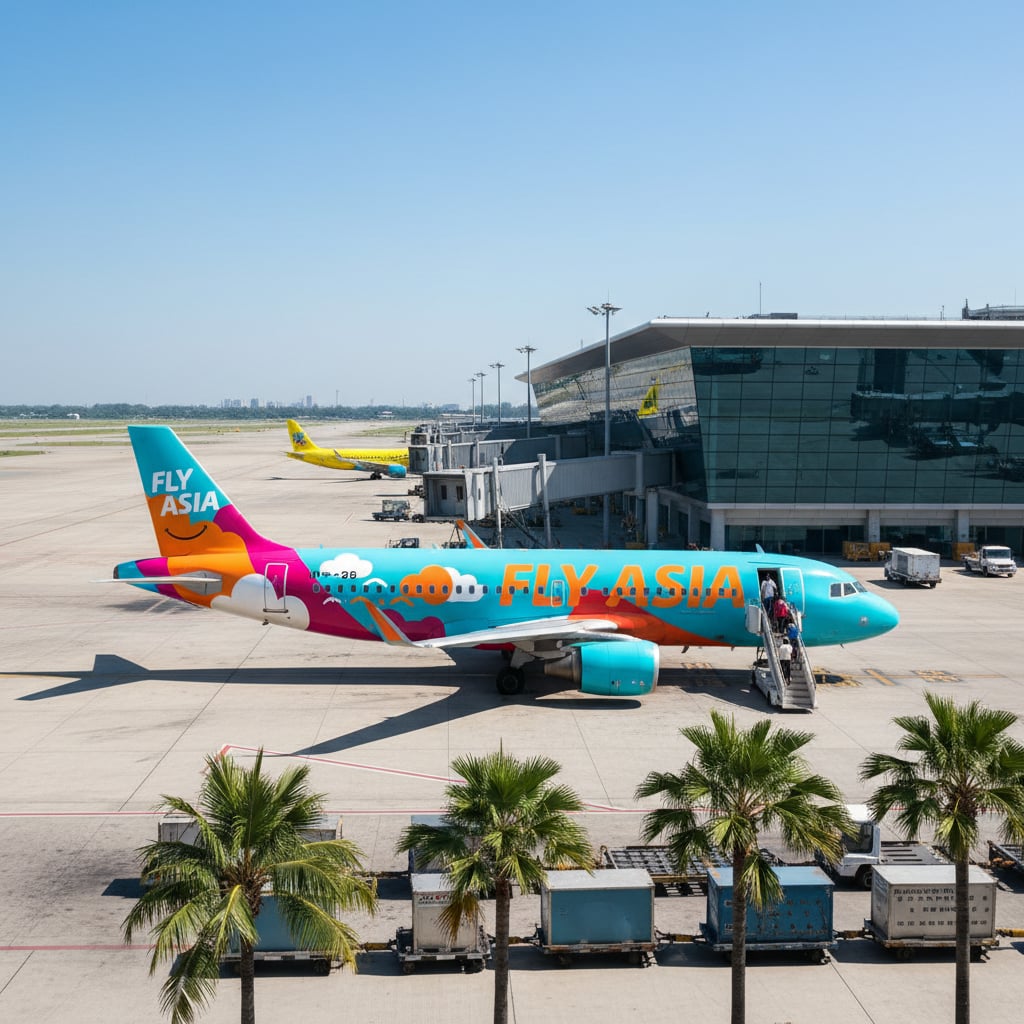
The low-cost carrier revolution has transformed Asian aviation, with budget airlines now commanding over 60% market share on some routes. For travel agents, this presents both challenges and opportunities. While LCCs typically offer zero commissions, understanding how to profitably incorporate them into your service offerings is essential for remaining competitive in the Asian market.
The Asian LCC Landscape
Asia hosts the world's most dynamic budget airline market, with carriers like AirAsia Group, IndiGo, Lion Air Group, Scoot, Jetstar Asia, and Cebu Pacific operating extensive networks. Unlike European and American budget carriers that focus primarily on short-haul routes, Asian LCCs operate both regional and medium-haul international flights, with some routes exceeding six hours.
Each carrier has distinct characteristics. AirAsia offers the most extensive network across ASEAN with competitive pricing but strict policies. IndiGo dominates the Indian market with reliable operations. Scoot provides long-haul budget options to Australia and Europe. Understanding these differences helps match clients with appropriate carriers.
Commission Reality and Fee Structures
The harsh reality is that Asian LCCs offer virtually no commission to travel agents. AirAsia, the region's largest budget carrier, pays zero commission and actively encourages direct booking through its website and mobile app. This creates a fundamental challenge: how do agents justify their value when customers can book directly?
Successful agents implement clear service fee structures for LCC bookings. Common approaches include flat fees per passenger ($30-75 depending on market), percentage-based fees on total booking value (10-15%), or tiered pricing based on complexity. The key is transparent communication about what these fees cover.
At DMC Quote, we recommend positioning LCC bookings as part of comprehensive packages rather than standalone transactions. When bundled with hotels, transfers, and activities, the overall package margin can absorb lower flight revenue while still providing competitive total pricing.
Ancillary Revenue Opportunities
While base fares generate no commission, some LCCs offer small margins on ancillary products like baggage, seat selection, and meals. These typically range from 2-5% and require specific agency agreements. More significant opportunities exist in adjacent services.
Travel insurance represents a major revenue opportunity with LCC bookings. Budget airline passengers often skip insurance when booking directly, but agents can emphasize its importance given LCC's strict change and cancellation policies. Insurance commissions typically range from 20-40% and can add $15-60 per booking to agent revenue.
Airport transfers, hotel packages, and activity bookings provide additional margin opportunities. A customer booking a $100 LCC flight might generate only a $40 service fee, but adding a $50 airport transfer (with 20% markup) and $200 hotel package (15% margin) transforms the booking into a profitable transaction.
Technology Solutions for LCC Bookings
Most LCCs don't participate in traditional GDS systems, requiring agents to book directly through airline websites or specialized aggregator platforms. This creates operational challenges but also opportunities for tech-savvy agencies.
Several technology solutions have emerged to streamline LCC bookings. Platforms like Mystifly, TravelFusion, and TravelPort LCC content aggregators consolidate multiple budget carriers into single interfaces, reducing the time required to comparison shop and book. These platforms typically charge per-transaction fees ($2-5) but dramatically improve efficiency.
Some agencies develop custom API integrations with high-volume carriers like AirAsia or IndiGo, enabling automated booking processes and real-time inventory access. This approach requires technical investment but pays dividends for agencies processing hundreds of LCC bookings monthly.
Managing Customer Expectations
A critical aspect of LCC bookings is education. Many travelers don't understand the fundamental differences between full-service and low-cost carriers, leading to complaints about missing meals, baggage fees, or lack of flexibility. Proactive education prevents future service issues.
Create clear booking confirmations that highlight LCC policies: baggage allowances, change/cancellation fees, lack of meals and entertainment, separate check-in requirements, and terminal differences. Some budget carriers use different terminals than full-service airlines, which can confuse connecting passengers.
Document these explanations in writing. When a customer later complains about a $50 checked bag fee, being able to reference the original disclosure protects your agency from liability and reinforces your professional approach.
Strategic Route Planning
LCCs excel on certain routes while being poor choices for others. Point-to-point direct flights on popular routes (Bangkok-Singapore, Delhi-Dubai, Kuala Lumpur-Bali) often represent excellent value and reliable service. Complex connections or less-traveled routes may prove problematic.
Most Asian LCCs operate hub-and-spoke models but don't offer protected connections. If a customer books separate legs of a journey (for example, Delhi-Bangkok-Singapore on IndiGo and Scoot), there's zero protection if the first flight delays. Always build substantial connection buffers for self-connected LCC itineraries, typically 4-6 hours minimum.
For complex multi-city itineraries, sometimes mixing full-service and budget carriers optimizes both price and reliability. Use full-service carriers for long-haul or complex connection segments where schedule protection matters, and LCCs for simple point-to-point sectors.
Corporate and Group Opportunities
While LCCs seem leisure-focused, opportunities exist in corporate and group markets. Some budget carriers offer negotiated corporate rates for companies with consistent volume, though these programs are less developed than full-service airline corporate deals.
Group bookings (10+ passengers) can be particularly profitable if properly managed. Most LCCs offer group booking departments with slightly better terms than public fares, and the coordination service itself justifies substantial fees. A group of 30 passengers might generate $1,200-1,800 in service fees while solving the corporate client's logistical challenges.
Peak Season Strategies
During Asian peak travel seasons (Chinese New Year, Diwali, school holidays), LCC fares often approach or exceed full-service carrier prices while offering inferior product. Smart agents pivot recommendations during these periods, highlighting the poor value proposition of expensive LCC tickets.
Conversely, shoulder seasons and off-peak periods offer exceptional LCC deals. Proactive agents monitor LCC promotional sales and alert clients to extraordinary values, positioning themselves as valuable advisors rather than simple booking processors.
Risk Management
LCC disruptions can create significant agent headaches. Budget carriers typically offer minimal rebooking assistance during irregular operations, potentially leaving passengers stranded. Always recommend travel insurance for LCC bookings, particularly for international travel or tight connections.
Some agents refuse to book certain LCCs with poor operational records, protecting their reputation even if it means losing some business. Maintaining a blacklist of problematic carriers and explaining why you don't recommend them demonstrates professional judgment.
Building Sustainable LCC Business Models
The most successful agencies treat LCC bookings as volume businesses with lower per-transaction margins but higher efficiency. They streamline processes, automate where possible, and focus on ancillary revenue to create acceptable overall profitability.
Others avoid LCC bookings entirely, positioning themselves as premium service providers who book only full-service carriers where they can deliver superior value through better commission structures and enhanced service. Both approaches can work if consistently executed.
At DMC Quote, we help agents develop profitable approaches to the Asian LCC market while maintaining service quality. Our comprehensive ground services complement flight bookings, creating complete packages with healthy margins. Register today to access our platform or contact us to discuss partnership opportunities.