Understanding the differences between codeshare and interline agreements is essential for travel agents who want to provide optimal routing options and manage customer expectations effectively. These partnership structures fundamentally affect everything from pricing to baggage handling to liability, yet many agents struggle to explain the distinctions to clients.
Codeshare Agreements Explained
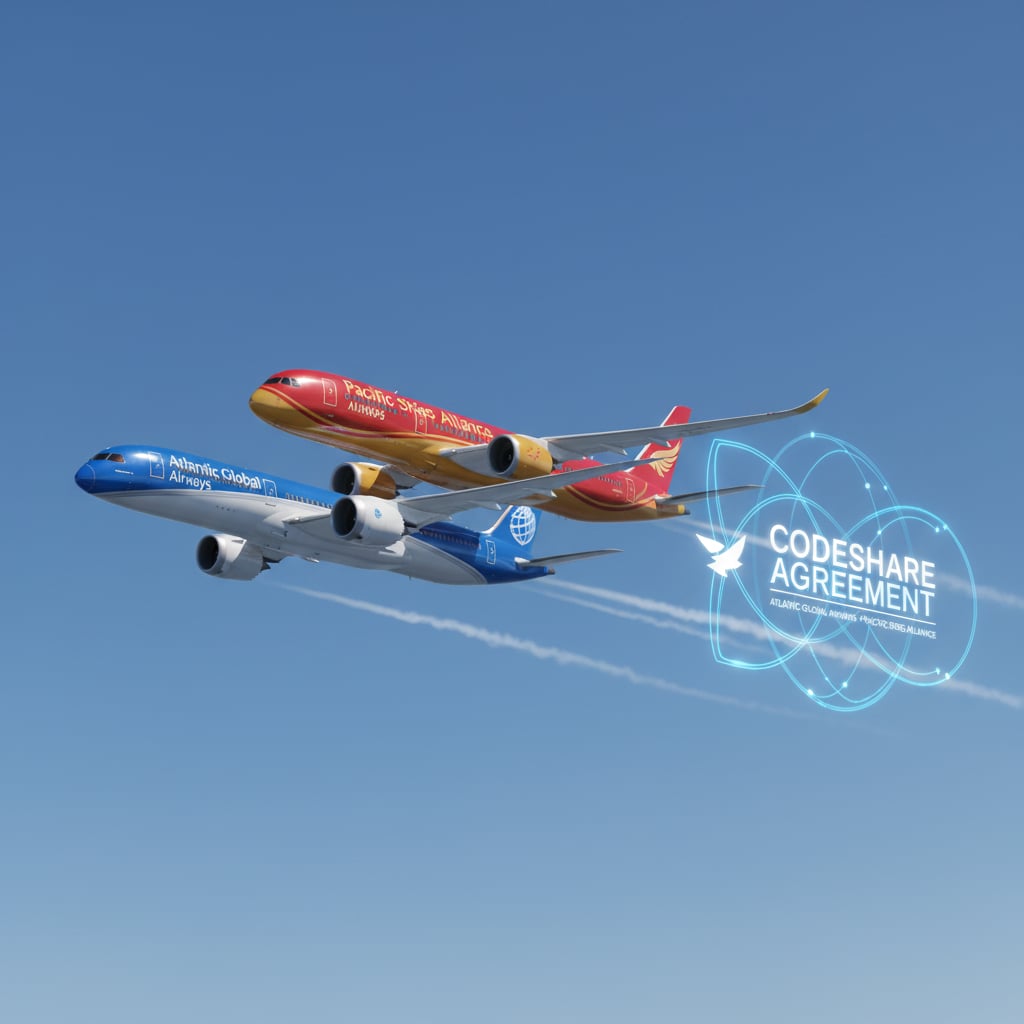
A codeshare agreement allows one airline to sell seats on another airline's flight using its own flight number. For example, Singapore Airlines flight SQ7822 might actually operate as Thai Airways flight TG406, with the aircraft, crew, and service standards all provided by Thai Airways. The "marketing carrier" (Singapore Airlines) sells the ticket while the "operating carrier" (Thai Airways) flies the plane.
From a customer perspective, codeshares often provide seamless experiences with coordinated schedules, through-checked baggage, and unified customer service. When booking a codeshare, passengers typically earn frequent flyer miles with the marketing carrier, even though they're flying on a partner airline.
For travel agents, codeshares offer several advantages. They expand routing options without requiring customers to book separate tickets, simplify complex itineraries, and often provide better connection protection since airlines coordinate schedules and share responsibility for delays.
Interline Agreements Fundamentals
Interline agreements are broader commercial arrangements that allow airlines to issue tickets and check baggage on each other's flights, but without the marketing relationship of codeshares. Two airlines with an interline agreement can appear as separate flights on a single ticket (called an interline ticket), but each flight operates under its own flight number.
The key difference is passenger experience. With interline connections, travelers might need to collect and recheck baggage at connection points, face separate check-in procedures, and deal with different customer service standards. There's also less coordination between carriers regarding delays and missed connections.
However, interline agreements provide flexibility for complex routing that codeshares don't cover. They're particularly valuable for reaching secondary cities or using regional carriers that don't have formal codeshare relationships with major airlines.
Critical Operational Differences
Baggage Handling: Codeshare agreements almost always include through-baggage arrangements, meaning bags are checked all the way to the final destination. Interline agreements may or may not include this benefit, depending on the specific contract between carriers. Always verify baggage policies when booking interline tickets to avoid customer complaints.
Schedule Changes: When a flight schedule changes on a codeshare, the marketing carrier typically takes responsibility for re-accommodation, even if the operating carrier made the change. With interline tickets, each carrier only handles its own segments, potentially leaving passengers stranded if connections no longer work.
Customer Service: For codeshare passengers, the marketing carrier usually provides end-to-end support. If there's a problem on any segment, passengers can contact their original airline. Interline passengers must often contact different airlines for different segments, creating confusion during disruptions.
Commission and Pricing Implications
Codeshare flights typically generate commissions based on the marketing carrier's policies, regardless of which airline operates the flight. This can work to an agent's advantage when the marketing carrier offers better commission rates than the operating carrier.
Pricing can also differ significantly. A codeshare flight might price differently depending on which carrier's code is booked, even though it's the exact same seat on the same aircraft. Experienced agents comparison shop different carrier codes to find the best combination of price and commission.
Interline tickets follow more traditional pricing rules, with each segment priced according to the operating carrier's fare structure. This sometimes results in higher total fares but can also uncover pricing opportunities, particularly for complex international routing.
Alliance Considerations
Airline alliances (Star Alliance, Oneworld, SkyTeam) complicate the codeshare/interline landscape. Alliance members typically have extensive codeshare agreements with each other but also maintain interline capabilities. Understanding these relationships helps agents optimize routing.
For example, within Star Alliance, Singapore Airlines and United Airlines have deep codeshare partnerships on trans-Pacific routes but might only have interline agreements for certain regional segments. Knowing which routes have codeshare coverage versus basic interline access affects both customer experience and booking strategy.
At DMC Quote, we help agents navigate these complex alliance relationships to create seamless itineraries that maximize customer satisfaction while optimizing commission potential.
Technology and Display Considerations
GDS displays differentiate between codeshare and interline flights, but the notation can be subtle. Codeshares typically show with an asterisk and note like "Operated by Thai Airways," while interline connections show as separate flight numbers without operational notes.
Modern NDC (New Distribution Capability) technology is changing how codeshares are displayed and sold. Some airlines use NDC to offer enhanced content for their codeshare flights, including more detailed seat information and ancillary options for the operating carrier.
Managing Customer Expectations
One of an agent's most important roles is setting proper expectations. When selling codeshares, explain that the flight operates under a partner airline, which might have different cabin configurations, meal service, or entertainment options than expected. Show customers the operating carrier before purchase to avoid disappointment.
For interline tickets, clearly communicate any baggage reclaim requirements, different check-in procedures, or potential complications during disruptions. Document these explanations in the booking confirmation to avoid future disputes.
Liability and Legal Considerations
Liability for accidents or incidents on codeshare flights typically falls to the operating carrier under international aviation law (Montreal Convention). However, the marketing carrier may also bear responsibility for certain service failures. This complexity is why travel insurance becomes even more critical for complex international itineraries.
Interline tickets create clearer liability boundaries, with each carrier responsible for its own segments. This separation can sometimes complicate compensation claims for missed connections or baggage delays.
Strategic Booking Recommendations
For premium clients or complex international itineraries, prioritize codeshare routing when available. The enhanced coordination and service consistency justify any minor price premium. Reserve interline ticketing for situations where codeshares don't provide the required routing or where significant price advantages exist.
Always verify the specific codeshare or interline agreement details before finalizing bookings. Not all partnerships are created equal, and policies can change. Our team at DMC Quote maintains current information on partnership details to help you make informed decisions.
Understanding these nuances separates professional travel agents from simple ticket issuers. Combined with comprehensive ground services like our airport transfers, you can create truly seamless travel experiences that build customer loyalty. Contact our team to discuss partnership opportunities.