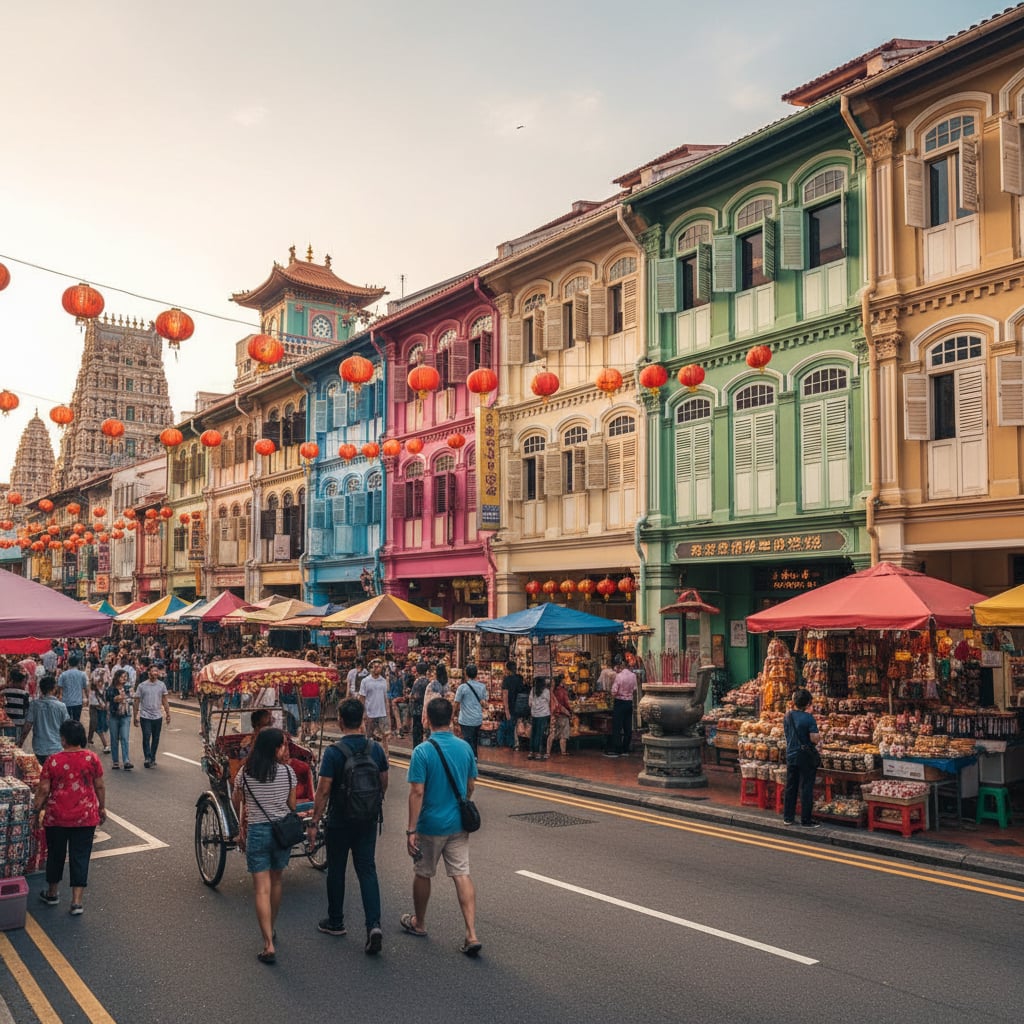
Singapore's ethnic enclaves tell the story of how this city-state became what it is today. Little India and Chinatown aren't sanitized tourist attractions—they're living neighborhoods where authentic culture persists alongside heritage tourism. For agents who package these areas effectively, they represent differentiation from competitors offering only Marina Bay and Sentosa.
Little India: Sensory Overload in the Best Way
Step off the MRT at Little India station and the transformation is immediate: jasmine garlands, Tamil music, spice-laden air, vibrant saris in shop windows. This is Southeast Asia's most concentrated Indian neighborhood outside the subcontinent.
Essential Little India Experiences
Sri Veeramakaliamman Temple
Dedicated to the goddess Kali, this temple has served Singapore's Hindu community since 1881. The gopuram (entrance tower) covered in colorful deities makes for spectacular photography. Free entry, but modest dress required.
Tekka Centre
The wet market and hawker centre at Little India's heart. Downstairs: fresh produce, fish, meat in traditional market style. Upstairs: some of Singapore's best Indian food at hawker prices. This is where locals actually eat.
Mustafa Centre
24-hour shopping complex that defies description—six floors of everything from gold jewelry to electronics to groceries. It's overwhelming, chaotic, and utterly unique. Clients either love it or flee within minutes; know your audience.
Heritage Walking Routes
The streets between Serangoon Road and Race Course Road contain preserved shophouses, traditional businesses, and historic sites. Self-guided walks are possible, but guided tours add crucial context.
Little India Food Experiences
This neighborhood offers Singapore's most diverse Indian food:
- South Indian breakfast: Dosa, idli, vadai with sambar and chutneys (best before 11 AM)
- Banana leaf meals: Rice with multiple curries served on banana leaf (lunch specialty)
- Fish head curry: Singapore specialty—Indian-influenced but locally evolved
- Tandoori and North Indian: Evening specialty at various restaurants
- Street snacks: Murukku, vadai, Indian sweets from traditional shops
Chinatown: Heritage Meets Modernity
Singapore's Chinatown was the original Chinese settlement when Raffles planned the colonial city. Today it balances preservation with evolution—historic temples beside trendy bars, traditional medicine shops near boutique hotels.
Essential Chinatown Experiences
Buddha Tooth Relic Temple
Opened in 2007, this temple houses what is believed to be a tooth relic of Buddha. The architecture, museum, and rooftop garden make it far more than typical temple visit. Allow 60-90 minutes.
Sri Mariamman Temple
Singapore's oldest Hindu temple, located in Chinatown due to the historical mixing of immigrant communities. The annual fire-walking festival draws crowds.
Chinatown Heritage Centre
Recreated shophouse interiors showing how early Chinese immigrants lived—multiple families in cramped subdivided spaces. Excellent for understanding Singapore's development. Ticketed attraction.
Pagoda Street and Trengganu Street
The touristy heart of Chinatown—souvenir shops, traditional crafts, and yes, some kitsch. But also traditional calligraphy shops, tea merchants, and Chinese medicine halls worth exploring.
Chinatown Food Scene
- Maxwell Food Centre: Famous for Tian Tian Chicken Rice (featured in Crazy Rich Asians)
- Chinatown Complex: Largest hawker centre in Singapore, overwhelming variety
- Traditional bakeries: Egg tarts, wife cakes, pineapple tarts
- Kopi culture: Traditional coffee shops with local coffee preparation
- Ann Siang Hill: Upscale dining and rooftop bars (evening scene)
Packaging Cultural Walking Tours
The Heritage Half-Day
Ideal for clients wanting cultural immersion without full-day commitment:
- Start in Little India (morning, less crowded)
- Temple visit with guide explaining Hindu traditions
- Market walk through Tekka Centre
- Traditional South Indian breakfast/brunch
- Transfer to Chinatown (MRT or private)
- Buddha Tooth Relic Temple
- Heritage Centre visit
- Traditional tea tasting
Duration: 4-5 hours. Price: SGD 80-120 per person including guide and tastings. Your margin: SGD 20-35.
The Food-Focused Cultural Walk
For clients where eating is the priority:
- Little India breakfast (dosa, chai)
- Spice shopping with guide explaining ingredients
- Transfer to Chinatown
- Hawker centre lunch with multiple tastings
- Traditional dessert and tea
- Local snack purchases to take back
Duration: 4 hours. Price: SGD 95-130 per person. Your margin: SGD 25-40.
Evening Cultural Experience
Different atmosphere after dark:
- Little India during evening puja (temple prayers)—more vibrant atmosphere
- Dinner at local restaurant (not hawker—sit-down experience)
- Walk through illuminated streets
- Optional: Transfer to Ann Siang Hill for nightcap in heritage shophouse bar
Duration: 3-4 hours. Price: SGD 120-150 per person including dinner. Your margin: SGD 35-50.
Guide Quality Matters Enormously
Cultural walking tours live or die by guide quality. The difference between a guide who points at buildings versus one who brings history alive is the difference between forgettable tours and client referrals.
When selecting tour partners through your B2B platform, prioritize:
- Guides with genuine cultural knowledge (not script readers)
- Local guides from the communities they're explaining
- Flexibility to adjust pace and content to group interests
- Language capabilities matching your client base
Practical Considerations
Timing
- Little India is most vibrant Sunday evenings (worker day off)
- Chinatown evening atmosphere best after 6 PM when lights come on
- Major festivals (Deepavali, Chinese New Year) transform both areas—spectacular but crowded
Dress Code
Temples require covered shoulders and knees. Remind clients in pre-trip briefings.
Walking Requirements
Both neighborhoods involve significant walking on uneven surfaces. Not suitable for mobility-impaired clients without specific accessibility arrangements.
Why These Tours Convert
Clients who book cultural walking tours tend to:
- Be more engaged travelers seeking authentic experiences
- Leave positive reviews and referrals
- Book additional specialty tours
- Return to Singapore for deeper exploration
These aren't your highest-margin products, but they build client relationships that generate lifetime value.
Explore cultural tour options through our agent portal or contact our Singapore team for specialized heritage tour partnerships.