Why Property Type Determines Strategy
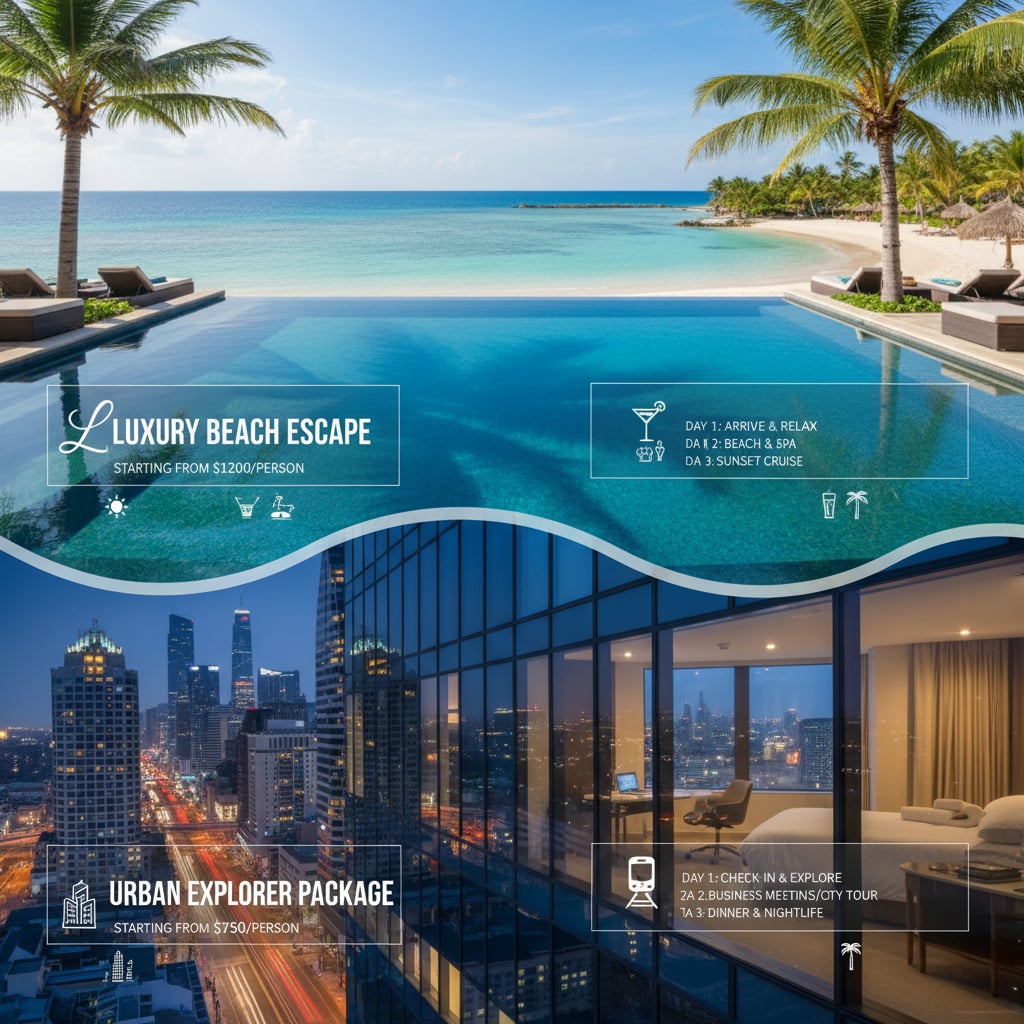
A beach resort in Bali and a business hotel in Singapore require fundamentally different packaging approaches. Client motivations, length of stay, additional services, and profitability drivers vary dramatically. Understanding these differences is key to building packages that sell well and earn strong margins.
If you book hotels for clients, our B2B hotel booking portal lists contracted net rates with instant confirmation.
Resort Hotels: The All-Inclusive Mindset
Client Expectations
Resort guests typically want:
- Relaxation: Minimal planning, maximum ease
- On-property amenities: Pools, beaches, spas, dining
- Complete packages: Transfers, meals, activities bundled
- Extended stays: 4-7+ nights common
- Value perception: "Everything included" feels like better deal
Resort Package Structure
Base components:
- Accommodation (4-7 nights): Longer stays are normal
- Meal plan: Half-board or full-board (resort dining is expensive if not included)
- Airport transfers: Round-trip private or shared
- Welcome amenity: Fruit basket, bottle of wine, etc.
Add-on components:
- Spa packages (1-3 treatments)
- Romantic additions (champagne, room decoration for honeymoons)
- Excursions (day trips, water sports, cultural tours)
- Activity packages (diving certification, yoga retreats)
Sample Resort Package: Bali Beach Getaway
| Component | Details | Supplier Cost | Sell Price | Markup % |
|---|---|---|---|---|
| 5 nights resort | Deluxe room, ocean view | $750 | $900 | 20% |
| Half-board meals | Breakfast + dinner | $200 | $240 | 20% |
| Airport transfers | Private car, round-trip | $40 | $60 | 50% |
| Spa package | 2 treatments (massage, facial) | $120 | $150 | 25% |
| Day tour | Ubud culture tour | $45 | $65 | 44% |
| TOTAL | $1,155 | $1,415 | 22.5% |
Your profit: $260 per person | $520 per couple
Resort Package Pricing Strategy
Bundle aggressively: Resorts allow higher markups when bundled because clients can't easily price-check individual components.
Markup guidelines:
- Accommodation: 15-25% (higher for honeymoon suites)
- Meal plans: 20-30% (clients don't know resort restaurant pricing)
- Transfers: 40-60% (high markup on low-cost item)
- Spa/activities: 25-40% (perceived premium value)
- Overall package: 20-30% total markup achievable
Selling Points for Resort Packages
- "All-inclusive pricing": "Know your total cost upfront—no surprises"
- "Hassle-free experience": "We've handled every detail"
- "Value bundling": "Booking separately would cost $1,600; our package is $1,415"
- "Exclusive additions": "Complimentary room upgrade based on our partnership"
City Hotels: The Activity-Centric Approach
Client Expectations
City hotel guests typically want:
- Exploration: Out seeing sights, not in hotel all day
- Location: Central access to attractions, transportation
- Shorter stays: 2-4 nights common
- Flexibility: Pick and choose activities, not everything bundled
- Lower accommodation spend: Budget more for experiences than rooms
City Package Structure
Base components:
- Accommodation (2-4 nights): Shorter stays typical
- Breakfast only: Clients eat out to experience local food
- Airport transfers: Arrival transfer minimum (optional departure)
- City orientation: Half-day tour or hop-on-hop-off pass
Add-on components (modular approach):
- Popular attraction tickets (Universal Studios, museums)
- Day tours (full-day or half-day excursions)
- Evening experiences (night safari, dinner cruises)
- Multi-city extensions (Singapore + Kuala Lumpur)
Sample City Package: Singapore Discovery
| Component | Details | Supplier Cost | Sell Price | Markup % |
|---|---|---|---|---|
| 3 nights city hotel | 4-star, Orchard Road area | $420 | $480 | 14% |
| Breakfast | Included at hotel | $45 | $55 | 22% |
| Airport transfer | Private arrival only | $25 | $40 | 60% |
| City tour | Half-day SIC tour | $35 | $50 | 43% |
| Universal Studios | 1-day ticket | $65 | $85 | 31% |
| Gardens by the Bay | OCBC Skyway + domes | $28 | $38 | 36% |
| TOTAL | $618 | $748 | 21% |
Your profit: $130 per person | $260 per couple
City Package Pricing Strategy
Modular pricing works better: City travelers research attraction prices online, so transparency builds trust.
Markup guidelines:
- Accommodation: 10-18% (easier to compare online)
- Breakfast: 15-25% (moderate markup)
- Transfers: 40-70% (small absolute cost, high percentage works)
- Attraction tickets: 25-35% (convenience fee justified)
- Tours: 30-50% (guide quality and service matter)
- Overall package: 15-25% total markup realistic
Selling Points for City Packages
- "Skip the lines": "Pre-booked tickets mean no waiting at attractions"
- "Local expertise": "Our guides show you hidden gems tourists miss"
- "Flexible options": "Choose activities that interest you; skip what doesn't"
- "Time-saving": "We handle logistics so you maximize your limited time"
Profitability Comparison
Per-Package Profit
| Metric | Resort Package | City Package |
|---|---|---|
| Average Package Value | $1,415 per person | $748 per person |
| Profit Margin | 22.5% | 21% |
| Profit per Person | $260 | $130 |
| Profit per Couple | $520 | $260 |
| Labor Hours | 2-3 hours (comprehensive planning) | 1.5-2 hours (shorter itinerary) |
| Profit per Hour | $173-260 | $130-173 |
Conclusion: Resorts generate higher absolute profit but require more planning. City packages have lower margin but faster turnover.
Volume Considerations
Resort packages:
- Seasonal demand (peak: holidays, honeymoons)
- Longer booking window (clients plan 3-6 months ahead)
- Higher cancellation risk (long lead times)
- Ideal for: Luxury-focused agencies, honeymoon specialists
City packages:
- Year-round demand (business + leisure)
- Shorter booking window (1-8 weeks typical)
- Lower cancellation rates
- Ideal for: High-volume agencies, corporate travel
Multi-Destination Strategies
Combining Resorts and Cities
The most profitable packages often blend both:
Example: Singapore + Bali (9 nights total)
| Segment | Duration | Type | Cost | Sell Price | Profit |
|---|---|---|---|---|---|
| Singapore city | 3 nights | Exploration | $620 | $750 | $130 |
| Flight SIN-DPS | - | Inter-destination | $120 | $165 | $45 |
| Bali resort | 5 nights | Relaxation | $1,155 | $1,415 | $260 |
| Return flight DPS-home | - | Included | $450 | $550 | $100 |
| TOTAL PACKAGE | 9 nights | $2,345 | $2,880 | $535 |
Per couple: $1,070 profit | 22.8% margin
Positioning Multi-Destination Packages
- "Best of both worlds": "Experience Singapore's excitement, then unwind in Bali's tranquility"
- "Value narrative": "Since you're flying to Asia, maximizing the trip with two destinations is smart"
- "Honeymoon perfection": "Sightseeing first, then pure relaxation—perfect honeymoon pacing"
Meal Plan Strategies
Resort Meal Plans
| Plan Type | What's Included | When to Recommend | Typical Markup |
|---|---|---|---|
| Room Only | No meals | Resorts near towns with dining options | N/A |
| Breakfast (BB) | Breakfast only | Active travelers who explore all day | 15-20% |
| Half-Board (HB) | Breakfast + dinner | MOST POPULAR for resorts | 20-30% |
| Full-Board (FB) | All 3 meals | Remote resorts, families with kids | 25-35% |
| All-Inclusive (AI) | Meals + drinks + activities | Clients wanting zero additional costs | 30-40% |
Resort recommendation: Push half-board or full-board. Resort dining is expensive; meal plans save clients money while increasing your package value and markup.
City Hotel Meal Plans
| Plan Type | Recommendation | Rationale |
|---|---|---|
| Room Only | Rarely recommend | Breakfast is standard expectation |
| Breakfast (BB) | DEFAULT for city hotels | Clients want to explore local food scene |
| Half-Board | Only for specific requests | Limits dining exploration in cities |
City recommendation: Breakfast only. Clients want to experience local restaurants, hawker centers, etc. Over-packaging meals hurts value perception.
Transfer and Transportation Strategies
Resort Transfers
Always include round-trip:
- Resorts often remote (client needs transport arranged)
- High markup opportunity (40-60% typical)
- Convenience factor: "Greeted with name sign at airport"
Pricing:
| Transfer Type | Cost | Sell Price | Markup |
|---|---|---|---|
| Shared shuttle (basic resort) | $15 | $25 | 67% |
| Private car (mid-range resort) | $35 | $55 | 57% |
| Luxury vehicle (5-star resort) | $60 | $95 | 58% |
City Transfers
Modular approach works better:
- Arrival transfer: Include in package (clients tired after flight, don't want hassle)
- Departure transfer: Optional add-on (many clients comfortable with taxi/Grab by end of trip)
Alternative offering:
- "Add airport transfer for $40, or we can provide instructions for $12 train option"
- Gives choice, shows you're looking out for their budget
Seasonal Packaging Strategies
Resorts: Strong Seasonality
Peak season (Nov-Mar for most Asia destinations):
- Higher base rates, lower markup % needed
- Focus on securing inventory, not competing on price
- Premium positioning: "Peak season = best weather guaranteed"
Shoulder season (Apr-Jun, Sep-Oct):
- Better supplier rates, room for higher markups
- Position value: "Same resort, 30% less, great weather still"
- Ideal for budget-conscious honeymooners
Low season (Jul-Aug monsoons):
- Deep supplier discounts, but weather risk
- Position honestly: "Occasional rain possible, but amazing value"
- Families with school holiday constraints are your market
Cities: Less Seasonality, More Events
Event-driven pricing:
- F1 Singapore: Rates spike 200-300%
- Chinese New Year: Premium pricing in regional cities
- Conference seasons: Business hotel demand high
Strategy: Build packages around events or avoid them entirely depending on client budget.
Technology and Packaging Tools
Modern B2B platforms streamline packaging:
- Dynamic packaging systems: Build custom packages from inventory databases
- Real-time pricing: Instant cost calculations as you add components
- Client-facing portals: Professional package presentations
- Margin tracking: See profitability as you build packages
DMC Quote offers integrated packaging tools that combine hotels, tours, transfers, and activities with transparent markup management.
Common Packaging Mistakes
Resort Package Mistakes
- ❌ Room-only packages: Missing meal plan upsell opportunity
- ❌ Too short stays: 2-3 nights at beach resort feels rushed
- ❌ Under-bundling: Selling room separately from spa/activities
- ❌ Ignoring occasions: Not asking about honeymoon/anniversary (missed romance package opportunity)
City Package Mistakes
- ❌ Over-bundling meals: Half-board/full-board in cities limits flexibility
- ❌ Too many activities: Exhausting itinerary with no free time
- ❌ Poor location: Cheap hotel far from attractions = client frustration
- ❌ Ignoring transport: Not explaining how clients get between attractions
Client Communication Scripts
Positioning Resort Packages
"For your Bali honeymoon, I recommend our 5-night resort package. It includes your oceanview room, daily breakfast and dinner at the resort (so you're not worrying about where to eat), round-trip airport transfers with welcome cold towel service, a couples' spa package, and one full-day Ubud cultural tour. Everything is arranged—you just relax and enjoy. Total investment is $2,830 for both of you, which includes everything I mentioned. Booking these items separately would run about $3,200, plus the hassle of coordinating each piece."
Positioning City Packages
"For your Singapore trip, here's what I've put together: 3 nights at a 4-star hotel in the Orchard Road shopping district (breakfast included), private airport transfer on arrival, a half-day city orientation tour, tickets to Universal Studios and Gardens by the Bay with skip-the-line access, and a night safari experience. This package is $1,496 for two people. What makes this valuable is you're getting into attractions without waiting in ticket lines, plus our guides provide insights you'd miss exploring alone. If there are any activities you'd prefer to skip or add, we can customize it—the package is flexible."
Action Plan
- Categorize your destinations: Which are resort-focused vs city-focused?
- Create package templates: Standard 3/4/5/7-night packages for each destination
- Price competitively: Research what similar packages sell for, price 10-15% below high-end competitors
- Build supplier relationships: Negotiate net rates for package components
- Train your team: Ensure everyone understands resort vs city packaging differences
- Track profitability: Monitor which package types generate best margins
Conclusion
Resort and city hotels serve different client needs and require tailored packaging strategies. Resorts thrive with comprehensive, all-inclusive approaches where bundling drives profitability. Cities perform better with modular, activity-focused packages that emphasize flexibility and local experiences.
The most successful agencies master both approaches, positioning each package type to the right client at the right time. Understanding these strategic differences allows you to maximize both client satisfaction and profitability.
Ready to build profitable resort and city packages with access to competitive hotel rates and local experiences? Start creating packages with DMC Quote today.