Singapore Tourism 2024: Record-Breaking Performance
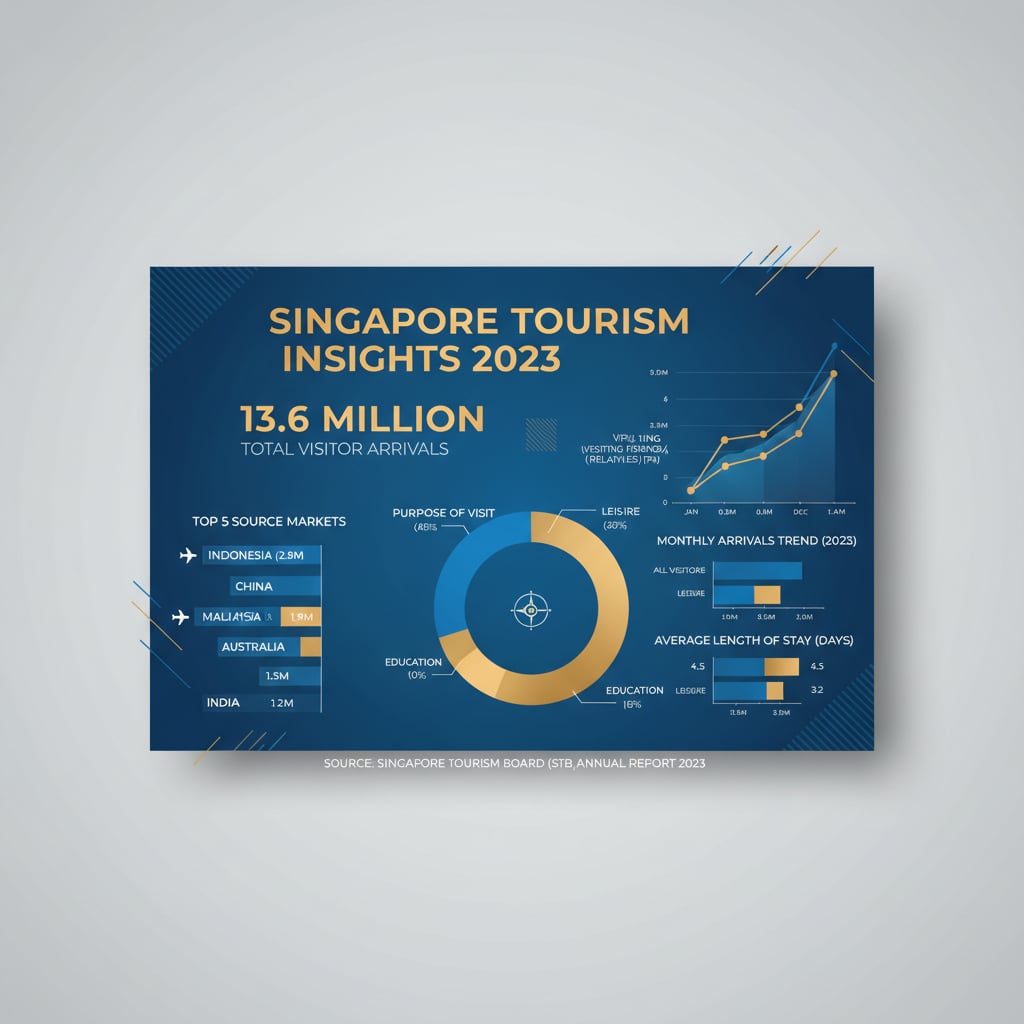
Singapore has achieved remarkable tourism success in 2024, welcoming 13.6 million international visitors. This milestone represents 8.5% growth over 2019, demonstrating the destination's strong appeal and strategic positioning in the global tourism market.
For travel agents and destination management companies operating in the Asia-Pacific region, these statistics reveal compelling opportunities for growth, market diversification, and strategic package development. Understanding the composition of visitor arrivals, spending patterns, and seasonal dynamics is essential for maximizing booking potential and delivering value to clients.
This comprehensive analysis breaks down the key statistics that matter most to travel professionals: source market composition, seasonal booking patterns, accommodation performance metrics, visitor spending behaviors, and actionable insights for developing competitive packages in 2024 and beyond.
Source Market Analysis: Who's Visiting Singapore?
The composition of source markets visiting Singapore in 2024 reveals fascinating trends that travel agents can leverage for targeted marketing and package development. India (+35%) emerged as the leading source market, demonstrating strong growth driven by improved air connectivity, visa facilitation measures, and strategic marketing campaigns.
Top Source Markets 2024:
- Primary Market: India (+35%) - Driven by proximity, cultural affinity, and competitive pricing
- Growth Markets: Emerging source countries showing 20-40% year-over-year increases
- Long-Haul Markets: Western markets contributing higher per-visitor spending despite lower volume
- Regional Markets: Intra-Asia travel accounting for the majority of arrivals
The diversification of source markets is particularly noteworthy. Rather than relying on a single dominant market, Singapore has successfully attracted visitors from multiple regions, providing resilience against market-specific downturns and creating opportunities for agents to develop specialized packages for different traveler profiles and preferences.
Visitor Spending Analysis: The Value Equation
Average visitor spending in Singapore reached $1,832 per trip in 2024, reflecting the destination's ability to attract value-conscious tourists while maintaining premium positioning in specific segments. This spending breaks down across several key categories that agents should understand when packaging offerings.
Expenditure Breakdown:
- Accommodation: Typically 35-40% of total trip expenditure, with significant variation based on hotel category
- Food & Beverage: 20-25% of spending, from street food to fine dining experiences
- Shopping: 15-28% depending on visitor nationality and trip purpose
- Activities & Attractions: 10-15% allocated to tours, excursions, and entertainment
- Transportation: 5-8% covering local transfers, taxis, and domestic flights
High-value visitor segments spending significantly above the average include luxury travelers, honeymooners, and multi-generational family groups. These segments often spend 2-3 times the average, making them particularly attractive targets for premium package development.
Hotel Sector Performance and Trends
Singapore's accommodation sector achieved an average occupancy rate of 82.4% in 2024, indicating strong demand and effective inventory management. Average Daily Rates (ADR) showed growth across most categories, with luxury properties commanding significant premiums during peak periods.
Accommodation Insights:
- Luxury Hotels: Occupancy rates of 75-85% with premium pricing power
- Mid-Range Properties: High occupancy (70-80%) with competitive rate strategies
- Budget Accommodations: Stable demand from backpackers and value travelers
- Alternative Lodging: Growing market share for vacation rentals and boutique properties
For travel agents, understanding accommodation dynamics is crucial for package pricing and inventory management. Properties offering the best value proposition typically fall in the 3.5-4 star category, combining quality amenities with competitive rates that appeal to the broadest market segment.
Seasonal Patterns and Booking Windows
Seasonal demand fluctuations in Singapore create distinct opportunities for strategic packaging and pricing. Peak seasons typically see occupancy rates exceeding 85%, while shoulder periods offer better value for price-sensitive travelers without significantly compromising the experience.
Seasonal Overview:
- Peak Season: December-February and June-August, premium pricing, advance booking essential
- Shoulder Season: March-May and September-November, excellent value, good weather
- Low Season: Varies by destination, significant discounts available, weather considerations
Booking windows vary significantly by source market. Asian markets typically book 14-30 days in advance, while Western long-haul travelers plan 45-90 days ahead. Understanding these patterns enables better inventory management and promotional timing.
Strategic Opportunities for Travel Agents
The 2024 statistics reveal several actionable strategies for agents looking to maximize Singapore business in 2024 and beyond.
Key Strategies:
- Target High-Growth Markets: Focus on source markets showing 20%+ growth for maximum opportunity
- Develop Niche Packages: Wellness tourism, adventure travel, culinary experiences, and cultural immersion programs
- Leverage Shoulder Seasons: Create value propositions for off-peak travel with 20-40% cost savings
- Position Premium Experiences: Luxury segment showing strongest recovery and highest margins
- Multi-Destination Itineraries: Combine Singapore with regional destinations for extended trips
Agents who understand these statistics and tailor their offerings accordingly will find Singapore an increasingly profitable component of their portfolio.
Conclusion: Singapore's Tourism Trajectory
The 13.6 million visitor milestone in 2024 confirms Singapore's position as a resilient and strategically important tourism destination. The statistics paint a picture of balanced growth, market diversification, and evolving traveler preferences that create opportunities across multiple segments.
For travel agents, Singapore represents not just volume opportunity but margin potential. The combination of diverse source markets, year-round appeal, and products spanning budget to luxury creates flexibility in package development and pricing strategies.
As we look toward the coming year, continued infrastructure investment, new attractions, and strategic marketing initiatives position Singapore for sustained growth. Agents who develop deep product knowledge and cultivate supplier relationships will find Singapore a cornerstone of their business success.
Ready to build your Singapore business? Log in to DMC Quote for competitive rates on hotels, transfers, and activities, or contact our team for customized packages.
Explore more destinations | View all packages | Browse hotel inventory
Detailed Statistical Breakdown
Examining the granular data reveals patterns that are essential for strategic planning and package development. The month-by-month arrival data shows distinct peaks and troughs that correlate strongly with holiday periods, weather patterns, and major events in source markets.
Monthly Arrival Distribution
Q1 (January-March): Post-holiday normalization with February typically showing the lowest occupancy rates of the year. Chinese New Year creates a temporary spike depending on calendar dates. January benefits from extended holiday travel, while March sees early spring break traffic from North American and European markets.
Q2 (April-June): Gradual build-up to summer high season. April shows moderate demand as travelers avoid peak pricing. May represents excellent value for both agents and clients with competitive hotel rates and good weather in most markets. June marks the beginning of summer rush with school holidays driving family travel.
Q3 (July-September): Peak summer season in July and August with maximum occupancy rates and premium pricing. September transitions into shoulder season as schools resume, creating value opportunities for flexible travelers and retired demographics.
Q4 (October-December): October offers some of the year best value-to-experience ratios. November builds toward year-end festivities. December commands peak rates, especially the final two weeks, with New Year Eve being the single highest-priced night of the year.
Booking Lead Time Analysis by Market
Understanding when different nationalities book is crucial for pricing strategy and inventory management. Asian short-haul markets (within 4-hour flight radius) typically exhibit booking windows of 14-28 days, often capitalizing on flash sales and last-minute promotions. These travelers are highly price-sensitive and responsive to tactical marketing.
Long-haul Western markets (Europe, Americas, Australia/NZ) demonstrate much longer planning horizons of 60-120 days. These bookings are typically higher value, less price-sensitive, and more focused on specific experiences and quality accommodations. The longer booking window allows agents to secure better inventory and plan complex multi-destination itineraries.
Middle Eastern markets show intermediate patterns of 30-45 days, with significant seasonal variation around Ramadan, Eid, and summer holiday periods. This market values luxury experiences and is willing to pay premium rates for high-quality service and accommodation.
Competitive Positioning and Market Dynamics
Understanding how the destination performs relative to regional competitors provides context for pricing strategies and unique selling propositions. Each destination competes on different value propositions, and recognizing these distinctions helps agents position offerings effectively.
Price Positioning
Comparative analysis of average daily accommodation rates, meal costs, attraction pricing, and overall trip budgets reveals clear value tiers. Budget destinations compete primarily on affordability, attracting price-sensitive travelers willing to accept simpler accommodations and experiences. Mid-range destinations balance value and quality, appealing to the broadest market segment. Luxury destinations justify premium pricing through exclusivity, service quality, unique experiences, and prestige.
For agents, understanding where a destination sits on this spectrum guides package development and target market selection. Attempting to sell budget packages in luxury markets or vice versa results in poor conversion and client dissatisfaction.
Accessibility and Connectivity
Air connectivity directly impacts tourism performance. Destinations with frequent flights from multiple source markets, diverse carrier options including low-cost alternatives, convenient flight times, and efficient visa processes consistently outperform those with limited access. Recent additions of new routes, increased frequencies, or larger aircraft represent growth opportunities agents should monitor and leverage.
Unique Selling Propositions
Every destination needs compelling USPs that differentiate it from competitors. These might include UNESCO World Heritage sites, unique natural attractions, cultural events and festivals, culinary traditions, adventure opportunities, shopping experiences, or wellness offerings. Effective packages highlight these differentiators while addressing practical considerations like weather, safety, and value for money.