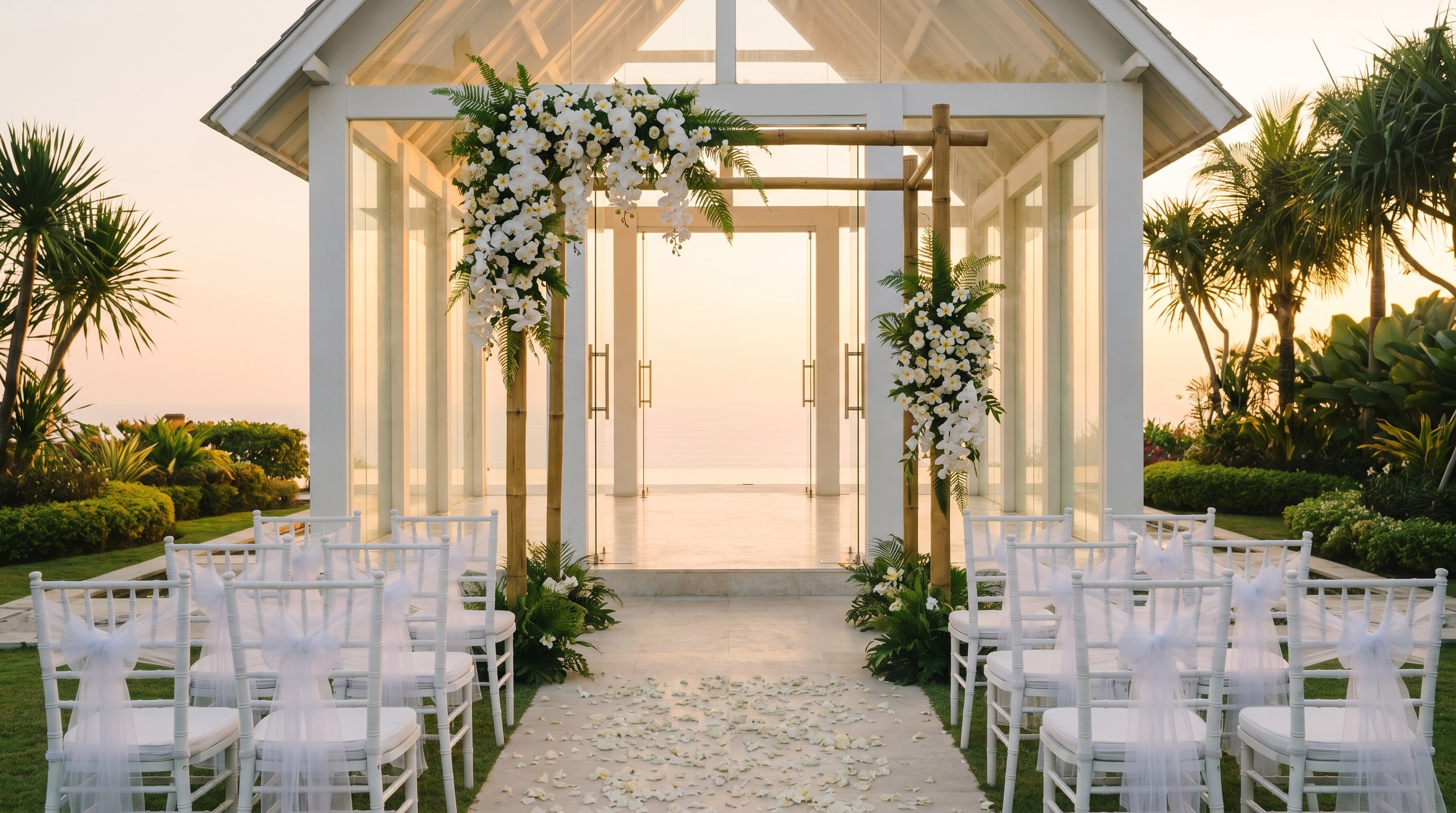
Bali should be a top-three destination on the priority list of every Indian travel agent in 2026. The combination of record Indian outbound demand, currency tailwind, regulatory changes affecting OTA competitors, and structural margin advantages over commoditised destinations like Singapore make Bali one of the highest-leverage markets to sell this year. This piece lays out the case.
The Demand Picture — Bali in 2025 and 2026
Bali recorded approximately 7 million international tourist arrivals in 2025, the highest in the island's history and well above pre-pandemic levels. India is now in the top five source markets for Bali, alongside Australia, China, the US, and the UK. Indian arrivals to Bali grew at double-digit rates through 2024 and 2025, a trend that early 2026 data continues.
Three structural forces drive this:
- Direct flight expansion — IndiGo, Air India and partner carriers have expanded one-stop and seasonal direct connections from Mumbai, Delhi, Bangalore, Chennai, Kolkata to Denpasar via Singapore and Kuala Lumpur
- Visa-on-arrival simplicity — USD 35 VOA for Indian passport holders, no embassy paperwork, no e-Visa wait time. The lowest friction visa in Southeast Asia for Indian travelers
- Honeymoon and wedding momentum — Bali is the volume leader in Indian destination weddings outside India, and a top-three honeymoon destination behind Maldives and Goa
The Currency Tailwind — INR vs IDR
The Indonesian Rupiah has remained relatively soft against major currencies, including the Indian Rupee. For Indian travelers spending in Bali, this means strong purchasing power on ground costs (food, transport, shopping, spa, activities). For travel agents, it means:
- Client comfort with package pricing — Bali feels affordable on a per-day basis
- Less price resistance on F&B and add-on activities once on the ground
- Strong vacation experience for the rupee, which drives word-of-mouth and repeat bookings
This favourable currency dynamic has held through 2024–2026 and structurally supports the destination's value proposition for Indian outbound.
The OTA Disruption — March 2026 Indonesian Licensing Deadline
Indonesian regulatory authorities have introduced licensing requirements for online travel platforms operating in the country. The 31 March 2026 deadline requires foreign OTAs to register as Indonesian PT entities, comply with local data residency rules, and meet tax obligations on transactions. Some global OTAs have moved fast; others are still navigating compliance.
What does this mean for travel agents? A short window of OTA-side disruption — confirmation delays, voucher issues, customer service backlogs as the OTA platforms restructure their Indonesian operations. B2B DMCs that operate as Indonesian-registered entities (or through partner Indonesian DMCs) are unaffected. Indian agents who pivot client bookings from OTA-link affiliate to B2B DMC during this window capture both higher margin AND a more reliable booking channel.
The licensing deadline creates a real B2B advantage in Q2 2026.
Seasonal Demand Patterns — When to Sell What
Peak Indian Outbound Months for Bali
- April–June — summer school break (mid-May to early July) drives families. Post-summer wedding honeymoon volume in April–May. The single highest demand window of the year
- October–December — Diwali break (late Oct/early Nov) drives families. Winter wedding honeymoons (Nov–Jan). Year-end Christmas/New Year peak
- January–February — winter wedding aftermath honeymoons. Strong demand carries through
Off-Peak Windows (Best Margin)
- February–March (excluding Holi week) — strong margin window, fewer crowds, hotels offer 15–25 percent better B2B rates
- September — shoulder season, just before Diwali rush, similar margin opportunity
Smart agents push off-peak Bali to clients with date flexibility — better margins, better experience, less crowded resorts.
Average Margin Per Booking
For an Indian travel agent selling Bali through a B2B DMC, the average margin per booking varies by package type. Indicative figures:
- Honeymoon 5N package: USD 250–450 net to agent
- Family 6N package (2A+2C): USD 280–500 net
- Friend group 5N (8 pax): USD 600–1,100 net (USD 75–140 per pax × 8)
- Villa booking (4BR, 5N): USD 800–1,800 net
- Wedding package: USD 18,000–35,000 net per event
- MICE event (50 pax): USD 12,000–25,000 net
The leverage compounds across categories. An agent processing 12 honeymoon bookings, 8 family bookings, 1 wedding, and 2 small MICE events in a peak month earns more from Bali alone than from most domestic destinations combined.
The Structural Competitive Advantage of Bali for Indian Agents
Wide Pricing Range
Bali serves USD 60-per-night budget travelers and USD 2,000-per-night ultra-luxe couples in the same destination. Few competing destinations have this range. The agent can build a Bali client base across budget tiers and deepen that book over time.
Repeat Booking Potential
Honeymoon clients return for anniversary trips. Family clients return when kids are older. Friend groups return for wedding events. The destination supports repeat travel because the experiences are layered — a Seminyak-and-Ubud honeymoon trip leaves Uluwatu and the Gili Islands and Nusa Penida unexplored. The repeat business compounds.
Add-On Margin Density
Bali is one of the few destinations where add-ons (private dinners, photographers, Hindu blessings, helicopter scenic, sunset cruises, spa experiences) carry 25–40 percent agent margin. Singapore and Phuket have thinner add-on inventory. The base hotel margin is similar across destinations; the add-on layer is where Bali wins.
Indian Cultural Compatibility
Hindu-majority Bali offers cultural familiarity — temple visits resonate with Indian travelers, vegetarian and Jain meal handling is mature at major resorts, Hindu wedding rituals are supported in venues, and the broader cultural exchange feels less foreign than secular Singapore or Buddhist Thailand. This reduces the soft objection at the quote stage.
The Risks Worth Naming
- Rainy season (Oct–April afternoon showers) — flag this at booking, recommend trip insurance, suggest alternative indoor activities
- Currency volatility (IDR) — book agent rates in SGD or USD to lock pricing, not IDR
- Crowd density at peak December — Seminyak gets congested. Push Ubud or Sanur for crowd-averse clients
- Bali tourism tax (IDR 150,000 per visitor) — implemented February 2024. Build into client cost expectation, paid on arrival
- Air pollution from agricultural burning (occasional) — rare but possible during certain months. Not a deal-breaker
The Action List for Indian Agents in 2026
- Establish a Bali B2B DMC relationship — multi-supplier platform with deep inventory, instant confirmation, ground support
- Build 4 standard packages — Honeymoon 5N, Family 6N, Friend Group 5N, Wedding/Wedding-eve villa
- Stock the photography — invest in client-facing visual assets for Seminyak, Ubud, Uluwatu, Nusa Penida
- Train front-line staff — destination knowledge, season patterns, hotel positioning
- Lead-source from honeymoon and wedding intermediaries — wedding planners, jewellery store networks, post-wedding gift partnerships
- Run targeted Diwali and Lunar New Year promotions — early-bird Bali offers tied to wedding season
- Convert OTA-shopping clients — show them the wholesale gap during the Q2 2026 OTA disruption window
Frequently Asked Questions
Is Bali demand sustainable into 2027?
Indications are yes. Indonesian government tourism strategy emphasises Bali volume management, infrastructure expansion (new airport on Bali's north coast in planning), and continued international flight expansion. Indian outbound to Southeast Asia is structurally rising due to demographic and income growth.
How much volume should an agent expect from Bali in year one?
For a 1-2 person travel agency starting fresh on Bali in 2026, realistic year-one volume: 30–80 bookings, USD 800–1,500 average margin per booking, total annual margin USD 25,000–110,000. The variance depends on lead generation efforts and destination expertise.
What is the single highest-leverage Bali product to focus on?
Honeymoon 5N packages. Highest volume, repeatable format, strong margin, predictable client persona, leverages photography for marketing.
Is Bali competition saturated for Indian agents?
No. The Indian outbound market grows faster than agent capacity adds. New agents can build a Bali book quickly with structured B2B DMC support and consistent client servicing.
Start Selling Bali in 2026 With DMC Quote
DMC Quote operates a multi-supplier B2B platform purpose-built for Indian agents selling Bali — instant confirmation, ground support, deep inventory, INR-friendly currency handling, and packaged product across honeymoon, family, group, MICE and wedding categories.
Read our complete guides: Bali B2B hotel booking guide, Bali online DMC selection, top 20 Bali hotels, Bali vs Singapore vs Phuket.
Explore the full Bali B2B platform or register as an agent to access wholesale rates today.