Table of Contents
Minimum Capital Required
PHP 500,000
~USD 8,800 / SGD 12,000
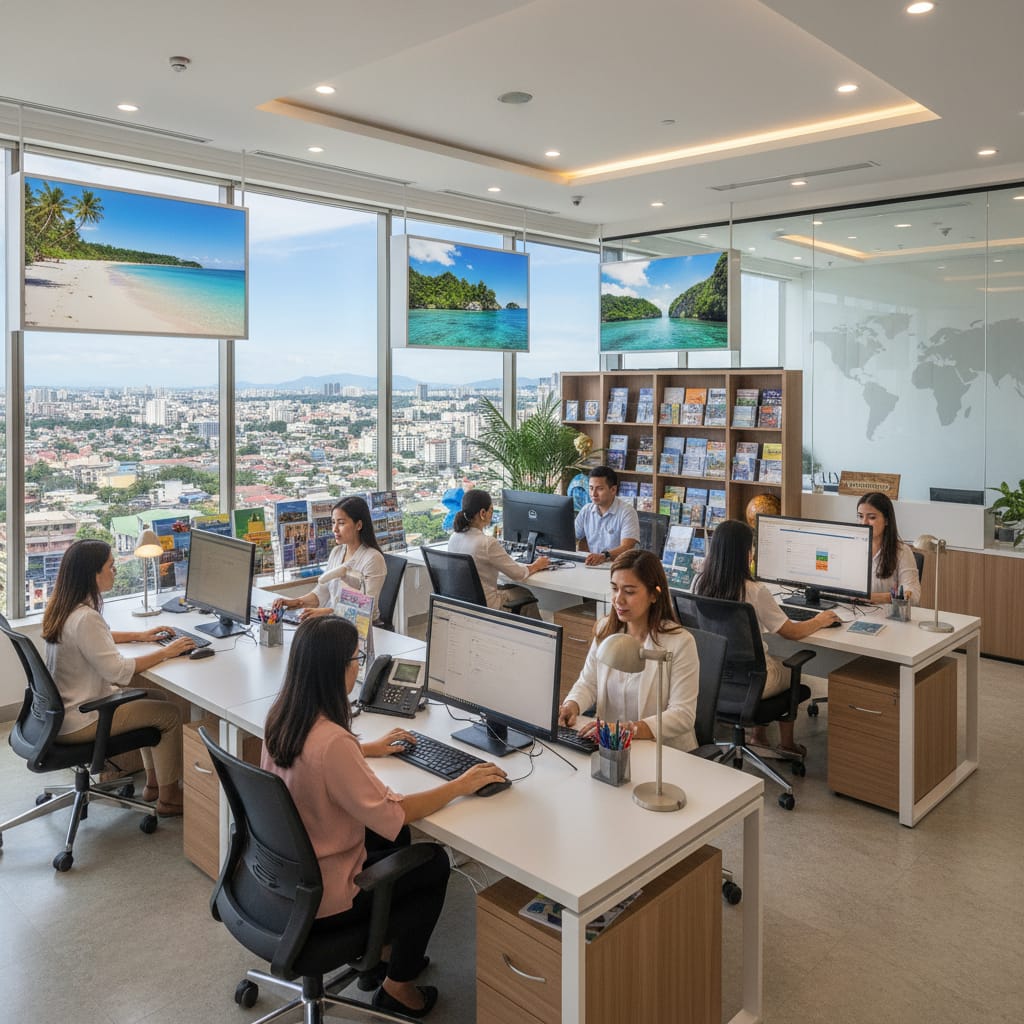
To start a travel agency in the Philippines, register your company with the SEC, secure the required paid-up capital, obtain barangay, Mayor's and BIR permits, then apply for DOT accreditation and PTAA membership. Budget roughly PHP 1.2M–3M to launch.
The Philippines sits at an interesting crossroads for travel entrepreneurs. It's Southeast Asia's second-largest archipelago with 7,641 islands, a population of 115+ million people who love to travel (OFWs alone represent a massive market), and growing inbound tourism that hit 5.5 million visitors in 2024. The opportunity is real. But so are the regulatory requirements.
Here's what I'll tell you upfront: starting a travel agency in the Philippines involves more bureaucracy than some neighboring countries. You'll deal with SEC registration, DOT accreditation, barangay permits, Mayor's permits, BIR registration, and potentially PTAA membership. It sounds like a lot because it is. But thousands of agencies have navigated this path successfully, and the process is actually quite systematic once you understand it.
What makes the Philippines particularly attractive? First, the domestic market is enormous. Filipinos travel constantly—balikbayan visits, family reunions, religious pilgrimages, beach vacations. Second, the OFW (Overseas Filipino Worker) market of 10+ million people represents a captive audience for travel services. Third, inbound tourism from Korea, Japan, China, and the US keeps growing. And fourth, operating costs are significantly lower than Singapore, Hong Kong, or even Malaysia.
What You'll Learn in This Guide
- Complete DOT accreditation process with realistic timelines
- SEC registration steps and capital deposit requirements
- Full document checklist for all permits and licenses
- Startup costs breakdown in Philippine Pesos
- PTAA membership benefits and when to apply
- Most profitable niches in the Philippine market
- How B2B platforms like DMC Quote help compete with established agencies
Philippine Travel Industry Overview
Let me paint the picture with real numbers. The Philippine tourism industry generated PHP 2.4 trillion in 2024, accounting for roughly 12% of GDP. That's not a niche—that's a major economic pillar. And unlike some markets that are mature and saturated, the Philippines still has significant growth runway, especially in the inbound segment.
5.5M+
International visitors in 2024
10M+
OFWs worldwide
4,500+
DOT-accredited agencies
PHP 2.4T
Tourism contribution 2024
Why the Philippines Market Makes Sense
I've analyzed travel markets across Southeast Asia, and the Philippines offers some unique structural advantages:
- Massive domestic travel culture: Filipinos are among the most travel-enthusiastic people in Asia. Family reunions, fiestas, Holy Week travels, summer vacations—there's always a reason to travel. The domestic flight market alone moves 30+ million passengers annually.
- OFW market is underserved: With 10+ million overseas workers, there's constant demand for flights home, family visits, and vacation packages. Many OFWs have disposable income but limited time—they want packaged solutions. This segment is often overlooked by agencies focused on inbound tourism.
- Korean and Japanese inbound growth: Korea sends 2+ million tourists to the Philippines annually. Japan, China, and the US follow. These markets want Boracay, Palawan, Cebu, and increasingly, off-the-beaten-path destinations.
- English proficiency: The Philippines is one of the largest English-speaking countries in Asia. This makes it natural for serving American, Australian, and other English-speaking markets. It also means easier communication with international suppliers.
- Lower operating costs: Compared to Singapore (where office rent alone can exceed PHP 150,000/month), the Philippines offers dramatically lower costs. You can set up a professional operation in Metro Manila for a fraction of Singapore or Hong Kong costs.
- Island diversity: 7,641 islands means infinite product possibilities. Beaches, diving, heritage sites, adventure tourism, eco-tourism—you can specialize in niches that don't exist in single-destination countries.
The OFW Opportunity
OFWs (Overseas Filipino Workers) represent perhaps the most underserved segment in Philippine travel. There are 10+ million OFWs in the Middle East, Hong Kong, Singapore, Europe, and North America. They need flights home during holidays, vacation packages when they return, and travel arrangements for family visits. They often have higher budgets but less time for research. An agency that builds OFW community connections can capture significant recurring business. Consider targeting specific OFW concentrations—Dubai, Hong Kong, Singapore, Saudi Arabia.
DOT Accreditation Process Explained
Department of Tourism (DOT) accreditation is the core requirement. Without it, you can't legally operate a travel agency in the Philippines. This isn't optional—it's the law under the Tourism Act of 2009 (Republic Act 9593). Operating without accreditation can result in fines from PHP 10,000 to PHP 50,000, or even imprisonment for repeat offenders.
What DOT Accreditation Gives You
- Legal authority to operate: The fundamental license to conduct travel agency business
- Access to DOT programs: Government tourism initiatives, promotional campaigns, familiarization tours
- PTAA eligibility: You need DOT accreditation before applying for PTAA membership
- Consumer trust: DOT accreditation number displayed in your materials signals legitimacy
- Supplier access: Many hotels and airlines require DOT accreditation for agent partnerships
- Airport counter possibility: If you want airport presence, DOT accreditation is prerequisite
Types of Travel Agency Accreditation
| Category | Scope of Operations | Typical For |
|---|---|---|
| General Travel Agent | Full travel services including ticketing, tours, packages. Can handle both inbound and outbound. | Most new agencies |
| Tour Operator | Creates and operates tour packages. May or may not include ticketing. | Package-focused businesses |
| Travel Agent (Ticketing) | Primarily airline ticket sales and reservations. | Flight-focused operations |
| MICE Operator | Meetings, Incentives, Conferences, Events specialty. | Corporate event specialists |
For most startups, apply for General Travel Agent accreditation. This gives you maximum flexibility to handle all types of travel services—packages, tickets, tours, transfers. You can always specialize in practice while maintaining broad licensing.
DOT Accreditation Steps
- Complete SEC registration first: You need a registered company before applying to DOT
- Secure business permits: Barangay clearance, Mayor's permit must be in place
- Prepare office premises: DOT inspects your physical location
- Obtain surety bond: From DOT-accredited insurance company
- Compile required documents: (See complete list in documents section)
- Submit application: Through DOT regional office (Region IV-A for Metro Manila)
- Attend DOT orientation seminar: Usually scheduled monthly
- Pass DOT inspection: Officers visit your office to verify compliance
- Receive Certificate of Accreditation: Valid for 3 years
Regional DOT offices: Applications are processed through regional offices, not DOT Central. For Metro Manila and CALABARZON, submit to DOT Region IV-A. Processing times and officer availability vary by region. Provincial offices are often faster but may have less frequent orientation seminars. Check with your regional DOT office for their specific schedule and requirements.
SEC Registration: Step-by-Step
Before DOT will even look at your application, you need a registered business entity. For travel agencies, you'll typically register with SEC (Securities and Exchange Commission) as a corporation. Sole proprietorships register with DTI instead, but they have lower capital limits and less credibility with suppliers.
Corporation vs. Sole Proprietorship
| Factor | Corporation (SEC) | Sole Proprietorship (DTI) |
|---|---|---|
| Minimum Capital | PHP 500,000 paid-up for DOT | PHP 200,000 for DOT |
| Liability | Limited to corporate assets | Personal assets at risk |
| Credibility | Higher with banks, suppliers | Lower perceived stability |
| Investors | Can bring in shareholders | Cannot have investors |
| Complexity | More paperwork, annual reports | Simpler compliance |
| Recommendation | Corporation (SEC) for serious agencies—liability protection and credibility worth the extra complexity | |
SEC Registration Process
- Reserve company name: Through SEC Company Registration System (CRS). Check availability and reserve for 30 days. Fee: PHP 40
- Prepare incorporation documents:
- Articles of Incorporation
- By-Laws
- Treasurer's Affidavit (proving paid-up capital deposit)
- Deposit paid-up capital: Open corporate bank account, deposit minimum PHP 500,000, get bank certificate
- Submit documents to SEC: Either online through CRS or at SEC offices
- Pay registration fees: Based on authorized capital stock (typically PHP 15,000-30,000 for PHP 1M authorized)
- Receive Certificate of Registration: Usually 5-10 working days after complete submission
After SEC Registration
SEC registration is just the corporate shell. You still need:
- Barangay clearance: From your office location's barangay. Required before Mayor's permit.
- Mayor's permit (Business permit): From the city/municipality where you operate. Annual renewal.
- BIR registration: Register with Bureau of Internal Revenue. Get TIN, register books of accounts, get authority to print receipts/invoices.
- SSS, PhilHealth, Pag-IBIG: Employer registration if you'll have employees.
Capital Must Be Deposited—Not Just Pledged
A common mistake: the paid-up capital must actually be in your bank account, not just listed in your Articles of Incorporation. DOT will require a bank certificate proving the capital deposit. Some entrepreneurs try to "park" money briefly then withdraw—this creates problems during DOT inspection. Keep the capital working in your business; it's meant to provide operational buffer and consumer protection.
Capital Requirements Explained
Let's break down exactly what capital you need and why. The PHP 500,000 figure is minimum—realistically, you'll need more to actually operate.
Regulatory Capital Requirements
| Requirement | Amount (PHP) | Purpose |
|---|---|---|
| Paid-up Capital (Corporation) | 500,000 minimum | DOT requirement; operational capital |
| Paid-up Capital (Sole Prop) | 200,000 minimum | DTI/DOT requirement |
| Surety Bond | 50,000-200,000 | Consumer protection guarantee |
Understanding the Surety Bond
The surety bond is separate from your paid-up capital. It's a guarantee from an insurance company that protects consumers if your agency fails to deliver services. Key points:
- Minimum PHP 50,000 for new agencies, but higher is better for credibility
- Must be from a DOT-accredited insurance company—not just any insurer
- Annual premium typically 1-3% of bond amount (PHP 500-3,000/year for PHP 50,000 bond)
- Bond is held as consumer protection—can be claimed if you fail clients
- Larger agencies maintain PHP 200,000-500,000 bonds for credibility with corporate clients
Realistic Total Capital Needed
| Category | Amount (PHP) | Notes |
|---|---|---|
| Paid-up capital (SEC) | 500,000 | Minimum; stays in company |
| Surety bond | 50,000-200,000 | Annual premium is separate cost |
| SEC registration fees | 15,000-30,000 | Based on authorized capital |
| Permits and licenses | 30,000-50,000 | Barangay, Mayor's, BIR, DOT fees |
| Office setup | 150,000-400,000 | Deposit, furnishing, equipment |
| Technology | 50,000-150,000 | Computers, software, website |
| Working capital (6 months) | 300,000-800,000 | Rent, salaries, marketing, operations |
| Realistic Total | PHP 1,095,000-2,130,000 | ~USD 19,000-37,000 |
The PHP 500,000 minimum is just the regulatory floor. To actually operate for 6-12 months while building the business, budget PHP 1.5-2.5 million for Metro Manila, slightly less for provincial locations.
Complete Document Checklist
Document preparation is where applications get delayed or rejected. Here's the complete list for each stage:
For SEC Registration
- Name Reservation Confirmation: From SEC Company Registration System
- Articles of Incorporation: Signed by all incorporators
- By-Laws: Corporate governance rules
- Treasurer's Affidavit: Certifying paid-up capital deposit
- Bank Certificate: Confirming capital deposit
- Incorporator/Director IDs: Government-issued IDs
- Cover sheet and SEC forms: Downloaded from SEC website
For Business Permits
- SEC Certificate of Registration: Certified copy
- Barangay Clearance: From office location barangay
- Community Tax Certificate (Cedula): For owners/officers
- Lease Contract: If renting; or proof of ownership
- Locational Clearance: If required by municipality
- Fire Safety Inspection Certificate: From Bureau of Fire Protection
- Sanitary Permit: From city health office (if applicable)
For DOT Accreditation
- Accomplished DOT Application Form: Downloadable from DOT website
- SEC Certificate of Registration: Authenticated copy
- Articles of Incorporation and By-Laws: Authenticated copies
- Mayor's Permit: Current year, authenticated
- BIR Certificate of Registration: Form 2303
- Bank Certificate of Deposit: Showing paid-up capital
- Surety Bond: From DOT-accredited insurance company
- Office Lease Contract: Authenticated; or proof of ownership
- Office Photographs: Interior and exterior showing signage
- Company Organizational Chart: With positions and names
- General Manager credentials:
- Resume/CV
- Diploma/TOR if tourism graduate
- Certificate of Employment if experience-based qualification
- Training certificates
- List of Services Offered: Tours, packages, destinations
- Processing fee: PHP 1,500-3,000
Document authentication tip: "Authenticated" means notarized or certified true copies. DOT requires authenticated documents—plain photocopies won't work. Get multiple authenticated copies of key documents (SEC registration, Mayor's permit) since you'll need them for various applications. Authentication costs add up (typically PHP 50-200 per document), so budget accordingly.
Complete Startup Costs Breakdown
Let me give you real numbers based on actual agency startups. Costs vary significantly between Metro Manila and provincial locations, and between lean and professional setups.
Scenario A: Lean Startup (Provincial Location)
| Item | One-Time (PHP) | Monthly (PHP) |
|---|---|---|
| SEC registration and legal fees | 25,000 | - |
| Paid-up capital (in company account) | 500,000 | - |
| Surety bond (PHP 50,000) | 50,000 | 1,500 (annual premium) |
| DOT accreditation fees | 3,000 | - |
| Business permits (barangay, Mayor's, BIR) | 25,000 | - |
| Small office setup (~30 sqm) | 80,000 | 12,000 |
| Basic equipment (computers, printer) | 50,000 | - |
| Basic website | 25,000 | 1,500 |
| B2B platform deposits | 50,000 | - |
| Staff (1 person + owner) | - | 20,000 |
| Working capital buffer | 200,000 | - |
| TOTAL | PHP 1,008,000 | PHP 35,000 |
Scenario B: Professional Setup (Metro Manila)
| Item | One-Time (PHP) | Monthly (PHP) |
|---|---|---|
| SEC registration and legal fees | 40,000 | 5,000 (retainer) |
| Paid-up capital | 1,000,000 | - |
| Surety bond (PHP 200,000) | 200,000 | 4,000 (annual) |
| DOT accreditation | 5,000 | - |
| Business permits | 50,000 | - |
| Office in Makati/BGC (~60 sqm) | 200,000 | 45,000 |
| Professional fit-out and furniture | 250,000 | - |
| Technology (computers, software, systems) | 150,000 | 8,000 |
| Professional website with booking | 100,000 | 5,000 |
| Staff (3 people) | - | 90,000 |
| Marketing launch | 100,000 | 30,000 |
| B2B platform deposits | 100,000 | - |
| Working capital (6 months) | 600,000 | - |
| TOTAL | PHP 2,795,000 | PHP 187,000 |
Reality check: Most successful new agencies fall between these scenarios. They start closer to lean, prove the model, then upgrade. Don't build the premium office before you have clients to fill it.
PTAA Membership: Benefits and Process
PTAA (Philippine Travel Agencies Association) is the primary industry association. Membership isn't legally required, but it's practically essential for serious players who want access to industry events, supplier networks, and credibility.
Why PTAA Matters
Philippine Travel Mart
PTAA organizes the Philippine Travel Mart (PTM), the country's largest B2B travel trade show. This event connects you with hotels, airlines, tourism boards, and potential partners. Non-members can attend but cannot exhibit. For agencies targeting inbound tourism, PTM is essential networking.
Travel Fairs
PTAA members get booth allocations at major consumer travel fairs including Travel Tour Expo. These fairs generate thousands of leads. Walk-in customers looking to book packages—exactly what new agencies need. Non-members face higher costs or exclusion.
Industry Network
Regular chapter meetings, conventions, and events connect you with established players. Many supplier relationships start through PTAA connections. Tourism boards frequently work through PTAA for familiarization trips and promotional programs.
Credibility Signal
PTAA membership signals legitimacy to consumers worried about fly-by-night agencies. Displaying PTAA membership in your marketing materials builds trust. Corporate clients often prefer PTAA members for reliability assurance.
PTAA Membership Requirements
- DOT accreditation: Required before PTAA application
- Operating history: Typically 1 year minimum
- Application form: With supporting documents
- Membership fees: Approximately PHP 15,000-25,000 annually
- Endorsement: Recommendation from existing member helpful
When to Join PTAA
My recommendation: apply after 1-2 years of operation when you have:
- Established business with proven revenue
- Clear target market to leverage at networking events
- Budget allocated from profits, not startup capital
- Capacity to actually follow up on fair leads
Don't rush into PTAA dues on day one. Focus first on getting DOT accredited, building initial client base, and proving your business model. PTAA membership value multiplies once you have an established operation.
IATA Accreditation in the Philippines
Let me save you considerable time and money: most Philippine travel agencies don't need IATA accreditation, and you probably don't either—at least not initially.
What IATA Gives You
- Direct ticketing access to IATA member airlines
- IATA numeric code for airline transactions
- Potentially better commission rates on international tickets
- Credibility with corporate clients who require IATA agents
What IATA Costs
- Financial guarantee: PHP 5-10 million in bank guarantees or insurance
- Application fees: Significant initial and annual costs
- Compliance: Ongoing audits, reporting, financial standards
- Cash flow risk: Airlines can claim against your guarantee
The Alternative: Consolidators and Direct Portals
Most Philippine agencies sell flights without IATA through:
- Airline direct portals: Cebu Pacific, Philippine Airlines, AirAsia have agent programs
- Consolidators: TBO, Via.com, and others provide airline inventory access
- GDS sub-agents: Larger agencies with IATA can provide sub-agent arrangements
Commission rates are lower than IATA direct (typically 1-4% vs 5-7%), but you avoid the massive financial burden. For most agencies, flights are low-margin anyway—focus on packages where the real money is.
Bottom line: Skip IATA for your first 3-5 years minimum. Use consolidators and airline portals for flight bookings. Focus capital on building profitable package business. Consider IATA only if you're doing substantial corporate travel volume with clients who specifically require IATA accreditation.
Technology Requirements for Philippine Agencies
Technology can differentiate your agency, but I see too many startups over-investing in custom systems before they have clients. Start lean, upgrade as revenue justifies it.
Essential Stack (Day 1)
| Tool | Purpose | Monthly Cost (PHP) |
|---|---|---|
| B2B platform accounts (DMC Quote, TBO) | Hotel, tour, transfer inventory access | Free (deposit-based) |
| Basic CRM (HubSpot Free, Zoho Free) | Lead and customer tracking | Free |
| Accounting software (Xero, Quickbooks) | Invoicing, BIR compliance | 1,000-2,500 |
| Viber/WhatsApp/Messenger | Customer communication (essential in PH) | Free |
| Google Workspace | Email, docs, collaboration | 350-700/user |
| Basic website (WordPress) | Online presence, package showcase | 500-1,500 |
| Canva Pro | Marketing materials, proposals | 600 |
Total essential tech: PHP 2,500-5,000/month to start. Keep it simple.
Growth Stack (Year 2+)
Add these as revenue justifies:
- Paid CRM: Zoho CRM Plus, Salesforce Essentials for better automation
- Travel-specific software: TravelCarma, Trawex for booking management
- Professional website: Custom design with package display and inquiry forms
- Marketing automation: Mailchimp, social media scheduling tools
- Accounting upgrade: BIR-compliant invoicing with proper VAT handling
How DMC Quote Helps Philippine Travel Agents
Full disclosure: this is our platform. Let me explain specifically how it helps Philippine agencies compete with established players.
The New Agency Challenge
When you're starting out, you face a classic problem. Suppliers want volume before giving good rates. But you can't build volume without competitive rates. It's a chicken-and-egg situation that disadvantages new agencies. DMC Quote solves this by aggregating demand across thousands of agents, giving everyone access to wholesale pricing regardless of individual volume.
What Philippine Agents Get
- Singapore access: Hotels, attractions, transfers at wholesale rates. Perfect for the Singapore-Philippines corridor.
- Regional inventory: Thailand, Bali, Malaysia, Vietnam—expanding destinations.
- No volume requirements: Same rates whether booking 5 rooms or 500. Level playing field.
- Real-time availability: Live inventory, instant confirmation for most products.
- Agent markup control: You set your selling price. Your margin, your business.
- PHP settlement: Pay in Philippine Pesos where available, minimize currency hassles.
Singapore-Philippines Corridor
The Singapore-Philippines route is significant for Philippine agencies. OFWs in Singapore traveling home. Filipino families visiting Singapore. Tour packages combining both destinations. DMC Quote gives you:
- Singapore hotels at wholesale (Marina Bay, Sentosa, Orchard Road)
- Attraction tickets (USS, SEA Aquarium, Gardens by the Bay)
- Transfers and tours with instant confirmation
- Ability to package these competitively
Getting Started with DMC Quote
Registration is free. You need your DOT accreditation details and company information. Wallet-based deposits—load funds and book against balance. No monthly fees, no minimum volumes.
Register Free AccountMarketing Your Philippine Travel Agency
You have the license, the office, the supplier access. Now you need customers. Here's what actually works in the Philippine market.
Digital Marketing Essentials
- Facebook presence: Filipinos are among the world's heaviest Facebook users. Your agency needs active Facebook pages with regular posting, Facebook Marketplace listings, and potentially Facebook Groups in your niche.
- Viber and Messenger: These dominate customer communication in the Philippines. Most inquiries come through messaging apps. Be responsive—slow replies lose bookings.
- Instagram for aspirational content: Beautiful destination photos, travel stories, behind-the-scenes content. Works especially well for beach destinations like Boracay and Palawan.
- Google My Business: Claim and optimize your listing. Local searches drive inquiries. Free and essential.
- SEO for local searches: "Boracay tour package Manila," "Korea tour operator Philippines," "Cebu package deals"—target these local intent keywords.
Offline Channels That Work
- Travel fairs: PTAA Travel Tour Expo, Philippine Travel Mart generate massive leads. Budget PHP 100,000-300,000 for booth and promotions.
- OFW community events: Partner with OFW organizations, attend departure events, connect with remittance centers.
- Corporate tie-ups: Approach HR departments, corporate admins. Company outings, incentive trips, executive travel.
- Church and community groups: Religious pilgrimages, parish tours, organization outings. Recurring group business.
- Referral programs: Word of mouth is powerful in the Philippines. Offer incentives for referrals.
Marketing Budget Allocation
| Channel | Monthly Budget (PHP) | Expected Outcome |
|---|---|---|
| Facebook/Instagram ads | 10,000-30,000 | Lead generation, brand awareness |
| Google Ads | 10,000-25,000 | High-intent inquiries |
| Content creation | 5,000-15,000 | Organic reach, engagement |
| Influencer partnerships | 10,000-50,000 | Credibility, reach |
| Starting monthly total | PHP 35,000-120,000 | Adjust based on ROI |
Most Profitable Niches in the Philippine Market
Don't try to be everything to everyone. The most successful Philippine agencies specialize. Here are the niches with the best opportunity-to-competition ratios:
OFW Travel Services
10+ million OFWs worldwide need flights home, vacation packages, and family reunion arrangements. Target specific OFW concentrations (Middle East, Hong Kong, Singapore, Europe). Build community connections through OFW Facebook groups and organizations. This market has money and limited time—they want convenience, not just cheap prices.
Korean and Japanese Inbound
Korea sends 2+ million tourists annually. Japan is growing. These markets want Boracay, Palawan, Cebu, and emerging destinations like Siargao. Partner with Korean/Japanese tour operators as their local ground handler. Learn the cultural preferences. This is relationship-based B2B business with steady volumes.
Corporate MICE Travel
Company retreats, team buildings, incentive trips, conferences. Higher budgets, repeat business, advance planning. Build relationships with HR departments and corporate admins. Boracay, Palawan, Bohol are popular corporate destinations. MICE margins are typically 15-25%.
Honeymoon and Romantic Travel
Filipinos take honeymoons seriously. Maldives, Bali, and domestic luxury resorts are popular. Higher-value bookings with couples who want everything arranged. Partner with wedding coordinators and bridal shops for referrals. Average booking value is 2-3x regular leisure travel.
Diving and Adventure Tourism
The Philippines has world-class diving—Tubbataha, Apo Reef, Malapascua. Adventure travelers are often international visitors with good budgets. Specialized knowledge creates competitive advantage. Partner with dive shops and adventure operators.
Educational and Pilgrimage Tours
School tours, religious pilgrimages (Holy Land, Marian shrines), heritage tours. Group travel with 20-50+ participants. Partner with schools, parishes, religious organizations. Predictable annual cycles make business planning easier.
Success Tips from Established Philippine Agencies
Based on conversations with successful agency owners, here's practical advice for building a sustainable business:
Operational Excellence
- Respond within minutes, not hours: In the Philippines, Messenger and Viber are king. Customers expect quick responses. Set up proper mobile notifications. First agency to respond often wins the booking.
- Document everything in writing: Confirmations, special requests, payment terms—all documented. This protects you when issues arise. Philippine consumer protection is active.
- Build genuine supplier relationships: Visit hotels you book frequently. Attend supplier events. Personal relationships get you upgrades, priority allocation, and better handling when problems occur.
- Follow up systematically: Most bookings don't happen on first contact. Implement a follow-up system. CRM reminders. The agency that follows up consistently wins.
Financial Discipline
- Collect deposits upfront: Standard is 50% deposit on booking. Don't start services without payment. This protects your cash flow and filters serious clients.
- Track every peso: Know your actual margins, not just theoretical markup. Factor in card fees, currency losses, unexpected costs.
- Separate personal and business: Use company accounts for all business transactions. Makes BIR compliance cleaner.
- Build reserves before expanding: 3-6 months operating costs before adding staff or office space.
Strategic Growth
- Pick one niche and dominate before expanding: OFW travel, Korean inbound, corporate MICE—master one before adding another.
- Focus on repeat business: It costs 5x more to acquire a new customer than retain an existing one. Build relationships, not just transactions.
- Don't compete solely on price: Someone will always be cheaper. Compete on service, expertise, convenience. Price shoppers aren't profitable anyway.
- Leverage community connections: Church groups, alumni associations, OFW organizations—community-based marketing builds loyal customer bases.
The 18-Month Reality Check
Most agencies that survive 18 months go on to build sustainable businesses. The first 18 months test everything—your niche, your pricing, your operations, your cash flow. If you're still losing money significantly at 18 months, something fundamental needs to change. If you're breaking even or profitable, you've likely found a model that works—now it's about scaling what's working.
Frequently Asked Questions
Total realistic startup cost ranges from PHP 1.2 million to PHP 3 million (approximately USD 21,000-53,000). This includes PHP 500,000 minimum paid-up capital required for DOT accreditation, PHP 50,000-200,000 surety bond, SEC registration of PHP 15,000-30,000, business permits of PHP 30,000-50,000, office setup of PHP 150,000-400,000, technology of PHP 50,000-150,000, and working capital of PHP 300,000-800,000. Lean startups in provincial areas can launch around PHP 1.2-1.5 million. Metro Manila professional setups typically require PHP 2.5-3 million.
DOT (Department of Tourism) accreditation is the official government approval required to legally operate a travel agency in the Philippines under the Tourism Act of 2009 (RA 9593). It certifies that your business meets minimum standards for capital, personnel qualifications, and consumer protection. Operating without DOT accreditation is illegal and can result in fines of PHP 10,000-50,000 or imprisonment. Accreditation also provides access to government tourism programs, PTAA membership eligibility, and credibility with consumers and suppliers who increasingly verify DOT status.
Foreigners can own up to 40% of a travel agency under the Foreign Investment Negative List. Travel and tour services are classified as retail trade requiring 60% Filipino ownership for companies with paid-up capital below USD 2.5 million. However, if your paid-up capital exceeds USD 2.5 million, 100% foreign ownership is permitted. Alternatively, foreigners can operate as wholesale tour operators (B2B only) with higher foreign ownership thresholds. Many foreign entrepreneurs partner with Filipino nationals, often maintaining operational control while meeting ownership requirements through proper corporate structures.
DOT accreditation typically takes 30-60 working days from complete application submission. Before applying, you need SEC registration (2-4 weeks), business permits (1-2 weeks), and office setup. The DOT process includes document verification, attendance at mandatory orientation seminar, and physical inspection of your office by DOT officers. Total timeline from initial planning to fully accredited operation is approximately 3-4 months. Well-prepared applications with complete, properly authenticated documents are processed faster. Incomplete applications are the primary cause of delays.
DOT requires your General Manager or Operations Manager to have either: 1) A degree in Tourism, Hotel and Restaurant Management, or related field from a recognized institution, OR 2) Minimum 3 years of supervisory experience in the travel industry with supporting employment certificates and training credentials. Staff handling bookings should have basic tourism training. DOT also requires attendance at their mandatory tourism orientation seminars. If owners lack these qualifications, they must hire qualified managers. The qualified manager is listed on your DOT accreditation certificate and takes professional responsibility.
No, PTAA (Philippine Travel Agencies Association) membership is not legally required to operate. However, it's practically essential for serious players because it provides access to Philippine Travel Mart (the country's largest B2B travel trade show), Travel Tour Expo booths, industry credibility, training programs, supplier networking, and government liaison. Membership requires DOT accreditation plus typically 1 year of operation. Annual dues are approximately PHP 15,000-25,000. Most established agencies join PTAA within their first 1-2 years once they have business to leverage at networking events.
No, IATA accreditation is not required to sell flights in the Philippines. Most travel agencies use consolidators and airline direct portals (Cebu Pacific, Philippine Airlines, AirAsia have agent programs) to access airline inventory. IATA accreditation requires substantial financial guarantees (approximately PHP 5-10 million) and strict compliance requirements that don't make economic sense for most agencies. Consider IATA only if doing very high flight volumes with corporate clients who specifically require IATA-accredited agents. For most agencies, consolidators work fine with lower risk.
The minimum paid-up capital for a DOT-accredited travel agency corporation in the Philippines is PHP 500,000 (PHP 200,000 for sole proprietorships, though corporate structure is recommended). This capital must be actually deposited in your company's bank account and verified through bank certificate during DOT application. Additionally, you need a surety bond of PHP 50,000 minimum from a DOT-accredited insurance company. The paid-up capital can be used for business operations, while the surety bond is held as consumer protection guarantee. Total regulatory capital requirement is approximately PHP 550,000-700,000.
Home-based travel agencies are possible but face limitations for DOT accreditation. DOT prefers commercial office spaces with proper signage, reception area, and customer accessibility. If operating from home, it must be in a commercially-zoned area or have proper barangay business permits for home-based business. DOT officers inspect your premises—residential-looking spaces may face scrutiny. Many agencies use small commercial spaces, shared offices in business centers, or co-working spaces to meet requirements while minimizing costs. Some provincial DOT offices are more flexible about home offices than Metro Manila.
Profit margins for Philippine travel agencies typically range from 10-18% on package tours, 15-30% on customized itineraries, 3-5% on domestic flights, and 5-10% on international flights. First-year revenue targets of PHP 5-15 million are realistic for Metro Manila agencies with proper niche focus. Break-even typically takes 8-14 months depending on overhead structure and marketing effectiveness. The most profitable niches include OFW travel services, Korean and Japanese inbound tourism, domestic island packages (Boracay, Palawan, Siargao), corporate MICE travel, and honeymoon packages. Specialized agencies generally outperform generalists.
Required documents include: SEC Certificate of Registration (authenticated), Articles of Incorporation and By-Laws, Mayor's permit and barangay clearance (current year), BIR Certificate of Registration (Form 2303), bank certificate proving paid-up capital, surety bond from DOT-accredited insurance company, office lease contract or proof of ownership, photographs of office interior and exterior with signage, company organizational chart, General Manager's resume and qualification documents (diploma or employment certificates), list of services offered, and completed DOT application form. All documents must be properly authenticated. Processing fee is PHP 1,500-3,000.
DOT requires a surety bond as consumer protection, with minimum PHP 50,000 for new travel agencies. The bond amount can be higher based on your expected business volume—larger agencies often maintain PHP 200,000-500,000 bonds for credibility. Surety bonds must be obtained from DOT-accredited insurance companies (not just any insurer). The bond protects consumers if your agency fails to deliver promised services. Annual premium is typically 1-3% of bond amount (PHP 500-5,000/year for PHP 50,000-200,000 bonds). The bond is separate from your paid-up capital and must be renewed annually.
Ready to Start Your Travel Agency in the Philippines?
Register free on DMC Quote to access wholesale rates for Singapore, Thailand, Bali, and regional destinations. No minimum volume requirements. Compete from day one.
Related Guides
Start Travel Agency in Malaysia
MOTAC license, RM 50K capital, and building a Malaysian travel business.
How to Get DMC Rates
Access wholesale pricing without volume requirements. Level the playing field.
Philippines Destination Guide
Explore Boracay, Palawan, Cebu and more Philippine destinations.