The best time to visit Vietnam is generally March to April or October to November, when all three of the country's climate zones overlap in pleasant, dry-ish weather. But Vietnam is over 1,600 km long and has three distinct climates — North, Central and South — so there is no single perfect month. The right answer depends entirely on which regions your trip covers.
Here's the rule that catches everyone out: when it's lovely in Hanoi it can be flooding in Hoi An, and when Saigon is sweltering the north can be cold and misty. If you're doing the classic north-to-south route, spring (March–April) and autumn (September–November) are your safest bets. Below is a region-by-region breakdown with month-by-month tables, the all-important Tet holiday warning, and the Central coast typhoon season you must avoid.
Vietnam's Three Climate Zones
North (Hanoi, Sapa, Ha Long Bay): Four seasons. Cool, misty winters (Dec–Feb, can drop to 10°C / 50°F), hot humid summers (May–Aug). Central (Hue, Da Nang, Hoi An): Hot and dry March–August, then a wet, typhoon-prone season September–December. South (Ho Chi Minh City, Mekong Delta, Phu Quoc): Tropical, two seasons only — dry (Dec–Apr) and wet (May–Nov), warm year-round (26–35°C / 79–95°F).
North Vietnam (Hanoi, Sapa, Ha Long Bay)
| Month | Weather | Best For |
|---|---|---|
| Dec–Feb | Cold, misty (10–20°C) | Sapa frost; pack layers |
| Mar–Apr | Mild, dry, pleasant (20–28°C) | Best overall window |
| May–Aug | Hot, humid, heavy rain | Lush Sapa rice terraces (Jun–Jul planting) |
| Sep–Nov | Cool, dry, clear (21–28°C) | Ha Long Bay cruises; Sapa golden harvest (Sep) |
Best time for the north: October–November and March–April. Ha Long Bay is at its best in autumn (clearest skies, calm sea). Sapa's golden rice terraces peak in September, before the harvest.
Central Vietnam (Hue, Da Nang, Hoi An)
| Month | Weather | Best For |
|---|---|---|
| Jan–Feb | Mild, some drizzle (20–25°C) | Quiet Hoi An old town |
| Mar–Aug | Hot, dry, sunny (25–35°C) | Beaches at Da Nang & My Khe — peak |
| Sep–Dec | Wet, typhoon risk, flooding | Avoid — Hoi An floods most years |
Best time for the centre: February to August. The danger zone is September to November, when typhoons and flooding hit the coast — Hoi An's old town literally floods most years. For more on this region see our Da Nang & Hoi An travel guide.
South Vietnam (Ho Chi Minh City, Mekong, Phu Quoc)
| Month | Weather | Best For |
|---|---|---|
| Dec–Apr | Dry, warm, sunny (26–34°C) | Best window; Phu Quoc beaches |
| May–Nov | Wet season, afternoon storms | Mekong is green; mornings still clear |
Best time for the south: December to April. The wet season (May–November) brings short, predictable afternoon downpours rather than washouts, so it's not a dealbreaker — but Phu Quoc's beaches are best in the dry months.
The Tet Holiday Warning (Read This)
Tet (Lunar New Year) is Vietnam's biggest festival — and the trickiest time to travel. For about a week, businesses, restaurants and many attractions close, transport books out and prices spike, and the whole country is on the move visiting family. In 2026, Tet falls around February 17. The atmosphere is incredible if you're prepared, but services shrink dramatically. Either build your trip deliberately around Tet, or avoid the week entirely. Book everything well in advance if you go.
Typhoon Season on the Central Coast
This is the single biggest weather risk in Vietnam. The Central coast (Hue, Da Nang, Hoi An) gets typhoons and serious flooding from September to November, peaking in October. If your itinerary includes Hoi An, do not plan it for October. The north and south are far less affected, so you can still travel — just route around the centre during those months.
Best Time for a North-to-South Trip
To hit all three zones in decent weather, the overlap windows are March–April and October–November. March–April gives you dry central beaches, mild north and dry south. October–November gives you crisp Ha Long Bay and dry south, but watch the central typhoon tail-end (early November is safer than October). Our Vietnam 7-day itinerary maps the classic route, and the 2-week Southeast Asia itinerary shows how to slot Vietnam into a bigger trip.
For Travel Agents: Quoting Vietnam Across Three Climates
Vietnam's regional weather makes it a consultative sell — clients ask "when should we go?" and the answer changes by region. That's an opportunity. DMC Quote gives agents net hotel rates across Southeast Asia, instant attraction e-vouchers, private transfers and an AI package builder to assemble a routed, season-smart Vietnam quote in minutes — no local contracts required. Free registration, approved in about 24 hours. See the main B2B travel portal, then register free to start quoting north, central and south stays side by side.
Festival Calendar Worth Knowing
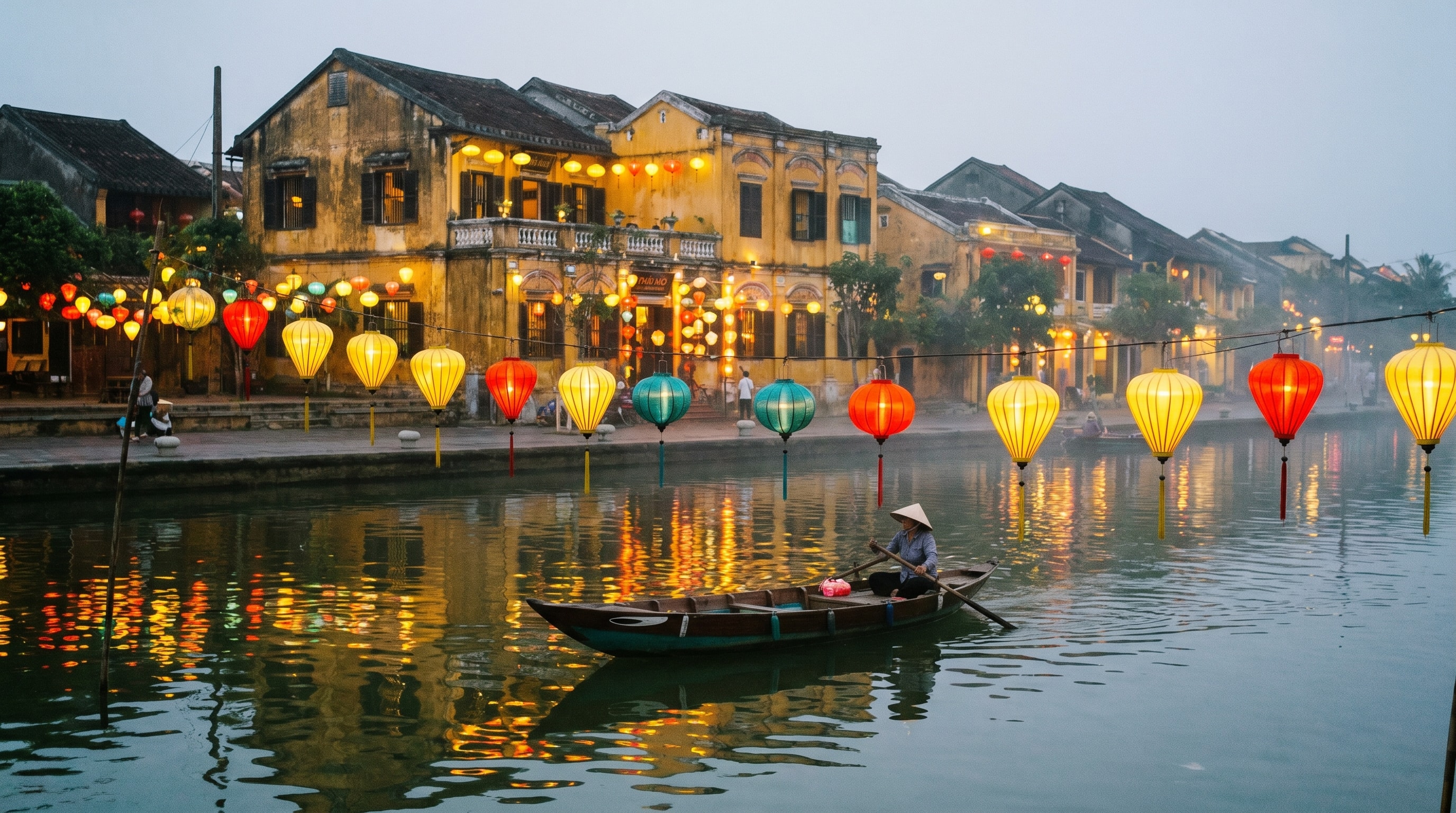
Beyond Tet, Vietnam's festival calendar can shape a trip. The Hoi An Lantern Festival lights the old town on the 14th day of each lunar month — the riverside glows with paper lanterns and the streets go car-free, a magical (and free) night if your dates line up. The Hue Festival (biennial, around April) fills the imperial city with royal re-enactments and arts. Mid-Autumn Festival (around September/October) brings mooncakes and lion dances nationwide, especially charming for families. The Da Nang International Fireworks Festival runs across several weekends in June and July, dovetailing neatly with the central coast's best beach weather.
Sapa & the Northern Highlands
The mountains deserve their own timing note. Sapa and the far north sit higher and cooler than Hanoi, and the rice terraces run a distinct visual calendar: green and lush from June to August, then turning to the famous golden harvest gold in September, before the bare, misty terraces of winter. December to February can bring genuine cold and even rare frost or snow at altitude — beautiful, but pack serious layers. For trekking and the clearest mountain views, target September–November and March–May, avoiding the heavy summer rains that can make trails slippery and views hazy.
What to Pack for Vietnam's Climate Swings
Because you may cross all three climate zones in one trip, pack a range. A cool northern winter (December–February) needs a warm jacket and layers, while the same week the south is in shorts-and-sandals heat. Year-round, bring a compact rain shell — afternoon storms are common in the south and centre — plus breathable clothing, modest covering for temples and the imperial sites, and sturdy shoes for Sapa or the Hue citadel. If your dates touch the central coast in autumn, build flexibility into your plans for possible typhoon disruption. A small umbrella, sunscreen and mosquito repellent round out the kit.
Crowds and Prices by Season
Demand in Vietnam tracks the weather and the holiday calendar. Peak season runs roughly October to April, when international visitors flood in for the cooler, drier conditions — Hanoi, Ha Long Bay and the southern beaches fill up, and hotel rates climb 20–40% over the quiet months. The green shoulder months of May, June and September bring noticeably lower prices and thinner crowds, with the trade-off of summer heat in the north or afternoon showers in the south. The cheapest window of all is the summer wet season (May–August) in the south and centre, when domestic travel dominates and international rates soften. Avoid the Tet week for value: prices spike and availability collapses. For agents and independent travellers alike, booking Ha Long cruises and boutique Hoi An stays four to eight weeks ahead in peak season is wise, as the best properties sell out.
Frequently Asked Questions
What is the best month to visit Vietnam overall?
March, April, October and November are the best months for a whole-country trip, because all three climate zones tend to be dry and pleasant at once. There's no single perfect month — it depends on which regions you visit.
Why does Vietnam have three different climates?
Vietnam stretches over 1,600 km north to south, crossing several latitudes and a long coastline. The North has four seasons including cool winters, the Central coast has a distinct typhoon-prone wet season, and the South is tropical with just dry and wet seasons.
When should I avoid Hoi An and the central coast?
Avoid September to November, especially October, when typhoons and flooding hit the central coast. Hoi An's old town floods most years during this period. Visit the centre between February and August instead.
When is Tet 2026 and should I travel during it?
Tet (Lunar New Year) falls around February 17 in 2026. Many businesses close for about a week, transport books out and prices rise. Travel during Tet only if you plan around it carefully and book far ahead; otherwise avoid the week.
What is the best time to cruise Ha Long Bay?
October to November and March to April. Autumn brings the clearest skies and calmest seas, ideal for an overnight cruise. Avoid the hot, stormy summer months when visibility drops.
Is the rainy season in the south a problem?
Not really. The southern wet season (May–November) brings short, predictable afternoon downpours rather than all-day rain, so mornings stay clear. The dry season (December–April) is still best for Phu Quoc beaches.