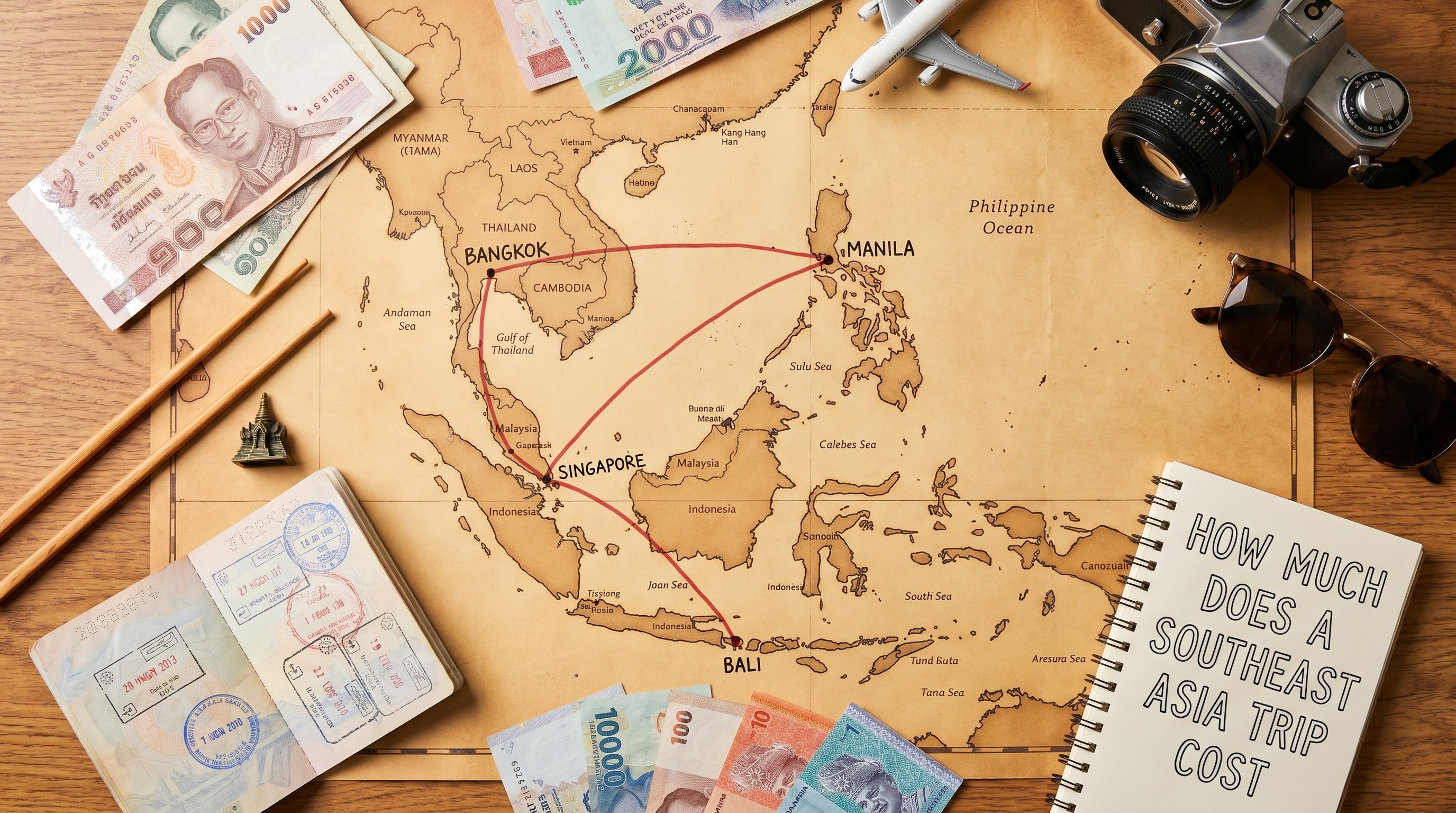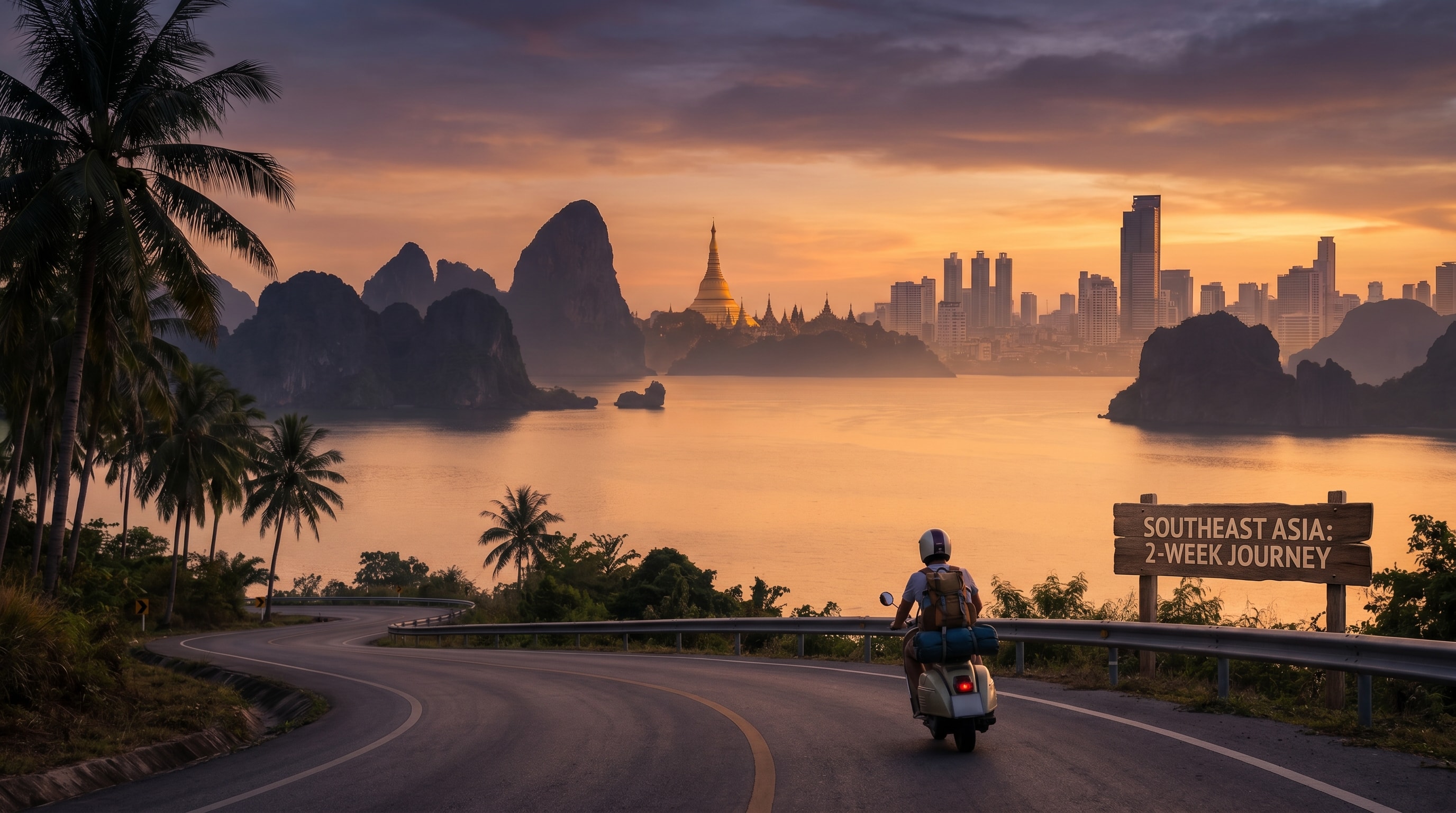
The best 2-week Southeast Asia itinerary for first-timers is Singapore (3 days) → Kuala Lumpur (2 days) → Bangkok (3 days) → Bali (4 days), with two travel days built in. That route covers four bucket-list destinations, keeps flights short and cheap (none over 3.5 hours), and balances cities, culture and beach without backtracking. Land cost runs roughly USD 1,300–1,500 (mid-range) per person excluding international airfare.
Why this order? You start polished and easy in Singapore, ease into Malaysia next door, hit the chaos and food of Bangkok, then collapse onto a beach in Bali for the back half. It flows geographically and emotionally. Below is the full day-by-day plan, the exact flight hops, a budget table by tier, and three solid alternates (a Vietnam loop, a Philippines add-on, and a slower 2-country version).
The 14-Day Route at a Glance
| Days | Destination | Nights | Vibe |
|---|---|---|---|
| 1–3 | Singapore | 3 | Clean, modern, family-friendly |
| 4–5 | Kuala Lumpur | 2 | Culture, value, towers |
| 6–8 | Bangkok | 3 | Temples, street food, nightlife |
| 9–14 | Bali | 5 | Beach, rice terraces, wellness |
That's 13 nights and 14 days. If you only have a hard 14 nights, add one more to Bali or split a night to Ubud. Two of these days are partial travel days, so don't over-schedule them.
Day-by-Day Itinerary
Singapore (Days 1–3)
Day 1: Land, transfer to your hotel near Bugis or Chinatown, and walk Marina Bay at night — the Gardens by the Bay light show at 7:45pm and 8:45pm is free. Day 2: Sentosa and Universal Studios Singapore (allow a full day; tickets are about SGD 88 / USD 65). Day 3: Gardens by the Bay domes, the Singapore Zoo or River Wonders, and Hawker dinner at Maxwell or Lau Pa Sat. For a tighter plan, see our dedicated Singapore itinerary (4 days).
Kuala Lumpur (Days 4–5)
Fly Singapore → KL in the morning (1h flight, ~USD 50–80). Day 4: Petronas Twin Towers, KLCC park, and Bukit Bintang for dinner. Day 5: Batu Caves in the morning (free, go before 9am to beat heat and crowds), then Merdeka Square and the Central Market. KL is the cheapest stop on this route — use it to reset your budget.
Bangkok (Days 6–8)
Fly KL → Bangkok (2h, ~USD 60–100). Day 6: Grand Palace and Wat Pho (reclining Buddha) early, then a long-tail boat through the canals. Day 7: Chatuchak weekend market (if it's a weekend), Wat Arun at sunset, and a rooftop bar. Day 8: A day trip to Ayutthaya's ruins, or shopping at ICONSIAM and a Chao Phraya dinner cruise. Bangkok is where street food shines — pad thai for under USD 2.
Bali (Days 9–14)
Fly Bangkok → Denpasar (4h, ~USD 90–140 — the only flight over 3.5 hours, so budget accordingly). Base 2 nights in Ubud (rice terraces, Monkey Forest, Tegallalang) and 3 nights in the south (Seminyak or Uluwatu beaches, sunset at Tanah Lot or the Kecak fire dance). Bali is your decompression chamber. For the full plan, read our Bali itinerary (7 days) and check the best time to visit Bali.
Flight-Hop Logistics
This is where 2-week SEA trips go wrong — too many long flights eat your time and money. Keep hops short and book budget carriers (AirAsia, Scoot, Jetstar) 6–10 weeks out.
| Hop | Flight Time | Typical Fare (USD) | Notes |
|---|---|---|---|
| Singapore → Kuala Lumpur | 1h | $50–80 | Bus/coach also works (~5h, $15) |
| Kuala Lumpur → Bangkok | 2h | $60–100 | Most frequent route in SEA |
| Bangkok → Bali (Denpasar) | 4h | $90–140 | Often via KL/SIN; book direct if possible |
Total inter-Asia flights: roughly USD 200–320 per person. Fly into Singapore and out of Bali (an "open-jaw" ticket) so you don't backtrack — it usually costs the same as a round-trip and saves a day.
Total Budget by Tier (14 Days, Per Person, Land Only)
Excludes international airfare to/from your home country. Includes hotels (twin-share), the inter-Asia flights above, food, local transport and main attractions.
| Tier | Hotels/night | 14-Day Total (USD) | Style |
|---|---|---|---|
| Budget | $25–45 | $850–1,100 | Hostels/guesthouses, street food, public transport |
| Mid-range | $60–110 | $1,300–1,500 | 3–4 star hotels, mix of dining, private transfers occasionally |
| Luxury | $200–500+ | $3,500–6,000+ | 5-star resorts, fine dining, private guides, villas in Bali |
For deeper numbers, see our Southeast Asia trip cost guide, the Bali trip cost breakdown, and the Singapore trip cost guide.
Alternate Routes
The Vietnam Loop
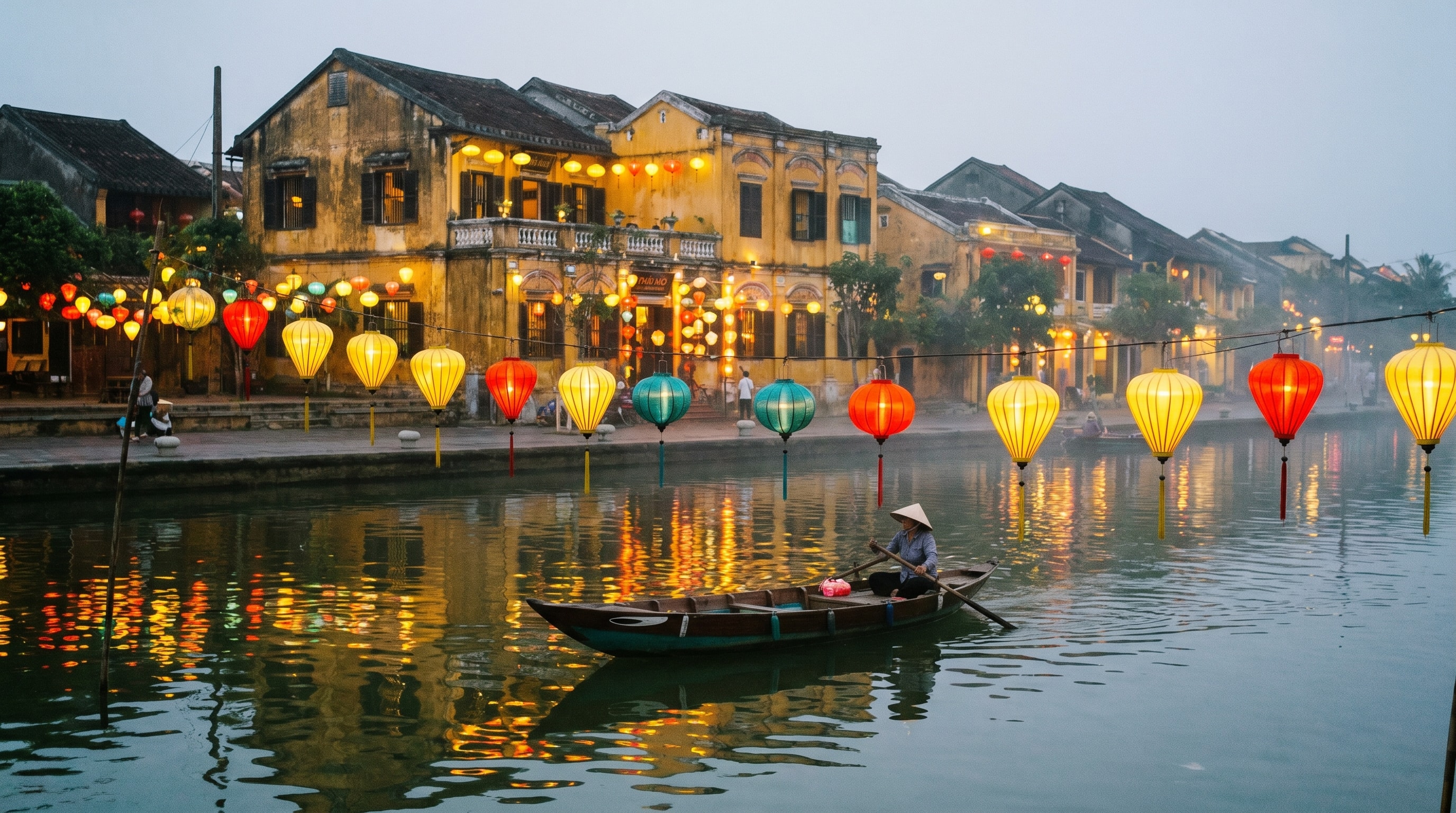
Swap Bali for Vietnam if you prefer culture over beach: Singapore (2) → Bangkok (3) → Hanoi (2) → Ha Long Bay (1) → Hoi An/Da Nang (3) → Ho Chi Minh City (2). Vietnam's three climate zones make timing tricky — read our best time to visit Vietnam guide before locking dates.
The Philippines Add-On
Got 18+ days? Tack on Palawan or Cebu after Bali for world-class diving and islands. Expect a longer flight (Bali → Manila → Palawan, most of a travel day) but the El Nido lagoons are worth it.
The Slower 2-Country Version
If 4 destinations feels rushed (it can be), do Singapore + Malaysia for a week, then Bali for a week. Fewer flights, deeper experiences. Our Singapore-Malaysia combo costing covers that first half in detail.
Packing & Weather Notes
Southeast Asia is hot and humid year-round (28–33°C / 82–91°F). Pack light, breathable clothes, a rain shell, and modest covering (shoulders and knees) for temples — Grand Palace and Batu Caves enforce dress codes. The driest, most reliable window across all four stops is roughly May to September for Singapore/Malaysia/Bali, while Bangkok's coolest, driest months are November to February. There's no perfect month for all four, so see best time to visit Singapore & Malaysia to fine-tune. Bring universal adapters, mosquito repellent, and a reusable water bottle.
For Travel Agents: Selling the 2-Week SEA Multi-Country Package
This itinerary is one of the highest-margin products you can sell — four destinations means four chances to add value on hotels, transfers and attractions. The hard part has always been sourcing net rates and instant tickets across four markets without holding contracts in each country.
DMC Quote solves that. It's a B2B travel portal giving agents net hotel rates across Southeast Asia, instant attraction e-vouchers (Universal Studios, Gardens by the Bay, Bangkok temples passes, Bali day tours), private transfers, and an AI package builder that assembles a client-ready quote in minutes. Free registration is approved in about 24 hours. Explore the B2B travel portal, or jump straight to the Singapore, Malaysia and Bali desks. Register free and quote this route today.
Frequently Asked Questions
Is 2 weeks enough for Southeast Asia?
Two weeks is enough for 3–4 destinations done well, like Singapore, Kuala Lumpur, Bangkok and Bali. It's not enough to "see all of Southeast Asia" — the region has 11 countries. Pick a tight, connected route and resist adding a fifth stop, or you'll spend the trip in airports.
What is the best order for a 2-week Southeast Asia trip?
Singapore → Kuala Lumpur → Bangkok → Bali flows geographically with no backtracking and ends on a beach. Fly into Singapore and out of Bali on an open-jaw ticket so you don't waste a day returning to your start point.
How much does a 2-week Southeast Asia trip cost?
Land-only (excluding international airfare), budget roughly USD 850–1,100 backpacking, USD 1,300–1,500 mid-range, and USD 3,500+ for luxury per person. Inter-Asia flights add about USD 200–320.
What is the best time of year for this route?
There's no single perfect month for all four stops. May–September is driest for Singapore, Malaysia and Bali; November–February is best for Bangkok. Travelling in the shoulder months (May, June, September) is the best compromise and gives lower hotel prices.
Should I book flights or buses between countries?
Fly Bangkok→Bali and KL→Bangkok (too far to drive). Singapore→KL can be a cheap coach (~5h, USD 15) or a 1-hour flight. Book budget-carrier flights 6–10 weeks ahead for the best fares.
Can a travel agent build this as a package?
Yes. On a B2B platform like DMC Quote, an agent sources net hotel rates, instant attraction tickets and transfers across all four destinations from one login and assembles a branded quote with markup — no need for local contracts in each country.