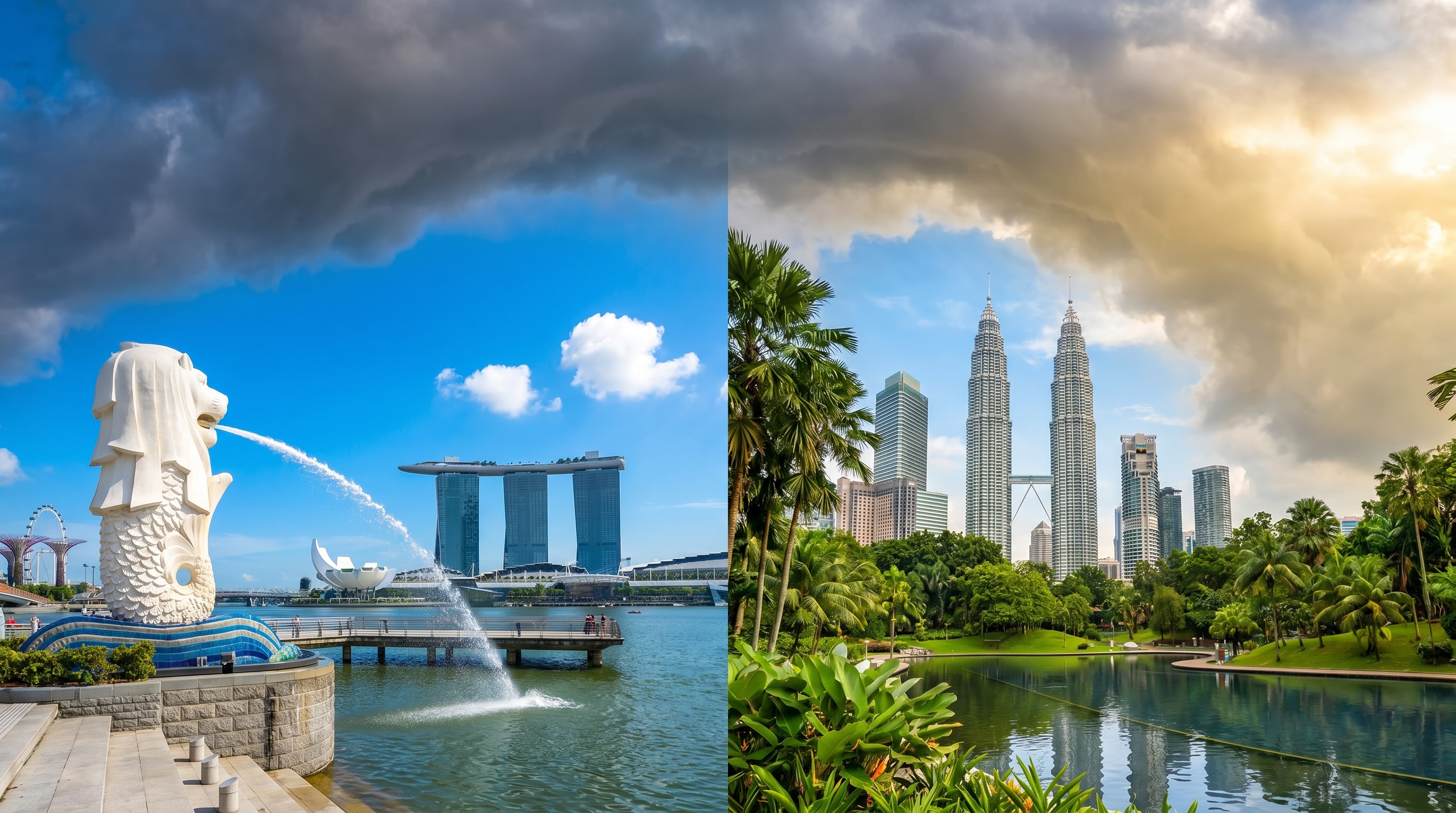
A 7-day Singapore + Malaysia combo package (3 nights Singapore, 3 nights Kuala Lumpur) costs an agent roughly SGD 620 net per person on a 3-star tier, SGD 850 on 4-star, and SGD 1,180 on 5-star — land only, excluding international flights. Those are indicative net costs per person on twin-sharing in 2026; you add your markup on top. This is the most-sold SEA combo for Indian and regional outbound, and below is the day-by-day itinerary, a full costing table by hotel tier in SGD and INR, transfer options, and exactly where you should be adding margin.
The Singapore-Malaysia combo works because it's two world-class cities, three hours apart, with iconic, family-friendly attractions and easy cross-border logistics. Get the costing right and it's one of the most reliable margin generators in your catalogue. Here's how to price and sell it.
The 7-Day Itinerary (3N Singapore + 3N Kuala Lumpur)
| Day | Plan |
|---|---|
| Day 1 | Arrive Singapore. Airport transfer to hotel. Evening free / Clarke Quay riverside. |
| Day 2 | Singapore half-day city tour (Merlion, Marina Bay, Chinatown, Little India). Evening Gardens by the Bay (Supertree light show + Cloud Forest/Flower Dome). |
| Day 3 | Full day Sentosa + Universal Studios Singapore. Optional cable car and SkyHelix. |
| Day 4 | Cross-border to Kuala Lumpur (coach or short flight). Check in. Evening Petronas Twin Towers / KLCC. |
| Day 5 | KL city tour (Batu Caves, National Mosque, Merdeka Square, KL Tower / Menara). |
| Day 6 | Genting Highlands day trip (Awana SkyWay cable car, SkyWorlds theme park / casino, cool-climate escape). |
| Day 7 | Free morning / shopping (Bukit Bintang). Airport transfer, depart. |
This is the proven sequence: front-load Singapore's big-ticket attractions, then shift to KL with Batu Caves and a Genting day trip as the headline experiences. It flows logically and keeps transfer time sensible.
Per-Person Net Costing by Hotel Tier (2026)
Indicative net costs per person on twin-sharing, land-only. Hotels include breakfast. Activities and transfers are shared (SIC) at the 3/4-star tiers and private at 5-star. INR conversions use an approximate SGD 1 = INR 62.
| Component | 3-Star (SGD) | 4-Star (SGD) | 5-Star (SGD) |
|---|---|---|---|
| 3N Singapore hotel + breakfast | 210 | 330 | 510 |
| 3N Kuala Lumpur hotel + breakfast | 90 | 150 | 240 |
| Singapore city tour + Gardens by the Bay | 70 | 80 | 110 |
| Sentosa + Universal Studios Singapore | 120 | 130 | 150 |
| KL city tour + Batu Caves | 40 | 50 | 70 |
| Genting Highlands day trip | 55 | 65 | 90 |
| Airport + cross-border transfers | 35 | 45 | 110 |
| Net cost per person | ~620 | ~850 | ~1,180 |
| ≈ INR per person | ~38,400 | ~52,700 | ~73,200 |
These are net wholesale costs an agent sees on a B2B travel portal — not retail. The public OTA equivalent of the 4-star tier would typically be 18-30% higher, which is the entire room you have to price into. Register free as a travel agent on DMC Quote to pull live rates for these exact components.
Cross-Border Transfer Options: Coach vs Flight
The Singapore-to-KL leg (about 350 km) is where you choose comfort versus cost:
| Option | Time | Indicative net / pax | Best for |
|---|---|---|---|
| Premium coach (SG–KL) | 5–6 hrs | SGD 25–45 | Budget-conscious, scenic, no airport hassle |
| Low-cost flight (SIN–KUL) | ~1 hr + airport time | SGD 60–110 | Time-poor travellers, 5-star clients |
| Private transfer (cross-border) | 4.5–5 hrs | SGD 130–200 (vehicle) | Families wanting door-to-door comfort |
My recommendation: offer the coach as default for 3/4-star packages (it keeps the price competitive) and the flight as a paid upgrade. For honeymoon or premium clients, quote the flight or private transfer by default — they value time over the SGD 50 saving. Either way, book the transfer through the portal so it lands on the same branded voucher set.
Where Agents Add Margin on This Package
- Bundle, don't itemise. Quote one package price. The client can't benchmark a bundle the way they can a single hotel night, so your blended 12-18% markup stays invisible.
- Upsell Universal Studios Express passes and Gardens by the Bay combo tickets — easy 15-20% markup, high perceived value.
- Genting upgrades — SkyWorlds park entry, premium cable car cabins. Small net increase, healthy markup.
- Hotel tier nudging — present 3-star and 4-star side by side; most families pick 4-star, which carries more absolute margin per booking.
- Private transfers for families — parents with kids and luggage happily pay for door-to-door, and the markup on transfers rarely gets questioned.
On the 4-star tier at SGD 850 net per person, a couple is SGD 1,700 net. A 15% blended markup is about SGD 255 (~INR 15,800) margin on one booking — before any upsells. Add Express passes and a private cross-border transfer and you're comfortably past SGD 350 margin per booking.
Quoting This in Minutes Instead of Hours
Building this itinerary by hand — pricing six components across two cities, three hotel tiers, and two transfer options — used to eat an afternoon. With an AI package builder you describe the trip in chat and it assembles the day-by-day itinerary with live hotel rates, transfers and tickets in minutes. You toggle the hotel tier, set your markup, and send a client-ready quote. For a high-velocity seller, that speed is the difference between quoting five leads a day and twenty.
If you also sell the region beyond this combo, our guides to Singapore and Malaysia inventory, plus the regional overview on B2B portals for South East Asia, are worth a read. And if you don't yet have supplier access, here's how to sell these packages without local supplier contracts.
Seasonality: When Prices Move and How to Quote Around It
The net costs above are shoulder-season indicative figures. Both Singapore and Kuala Lumpur have predictable demand swings that move hotel rates by 20–40%, and quoting without accounting for them is how agents accidentally eat their own margin. Rough guide:
| Period | Demand | Rate impact |
|---|---|---|
| Jan–Feb (CNY window) | Very high | +25–40%, book early |
| Mar–May (shoulder) | Moderate | Baseline — best value |
| Jun–Aug (summer / Indian holidays) | High | +15–30% |
| Sep–Oct (shoulder) | Moderate | Baseline |
| Nov–Dec (year-end, F1 in Sept) | High | +20–35%, events spike further |
Two practical rules. First, always quote off a live search for the client's actual dates — never a saved price list, because a Singapore F1 weekend or Chinese New Year can double a hotel overnight. Second, build the seasonality into your conversation: tell a June family they'll save meaningfully by shifting to early September if they're flexible. That advice makes you look like an expert and quietly protects your margin.
Common Costing Mistakes Agents Make on This Combo
- Forgetting the cross-border transfer. Agents price both city stays beautifully and then bolt on the SG–KL leg as an afterthought, eroding margin. Quote it as a line item from the start.
- Under-pricing Universal Studios. USS tickets move with the calendar and Express passes add up. Use live ticket pricing, not last year's number.
- Assuming SIC is fine for everyone. A family of four with kids and luggage on a shared coach to Genting will not enjoy it. Quote private for families and price it confidently.
- Ignoring child pricing rules. Hotel child policies and attraction child rates vary; a "2 adults + 2 kids" quote priced as four adults loses you the deal, and priced as two adults loses you money. Use the portal's actual occupancy pricing.
- Quoting a stale package price. Rates move. Reconfirm before you commit the client.
Add-Ons That Lift the Average Booking Value
Once the core 7-day combo is set, a few well-placed add-ons raise both the client's experience and your absolute margin:
- Singapore Night Safari or River Wonders — easy evening add-on, strong family appeal.
- Marina Bay Sands SkyPark or a Singapore Flyer ride for the photo moment.
- KL Aquaria or i-City as a half-day filler for families with kids.
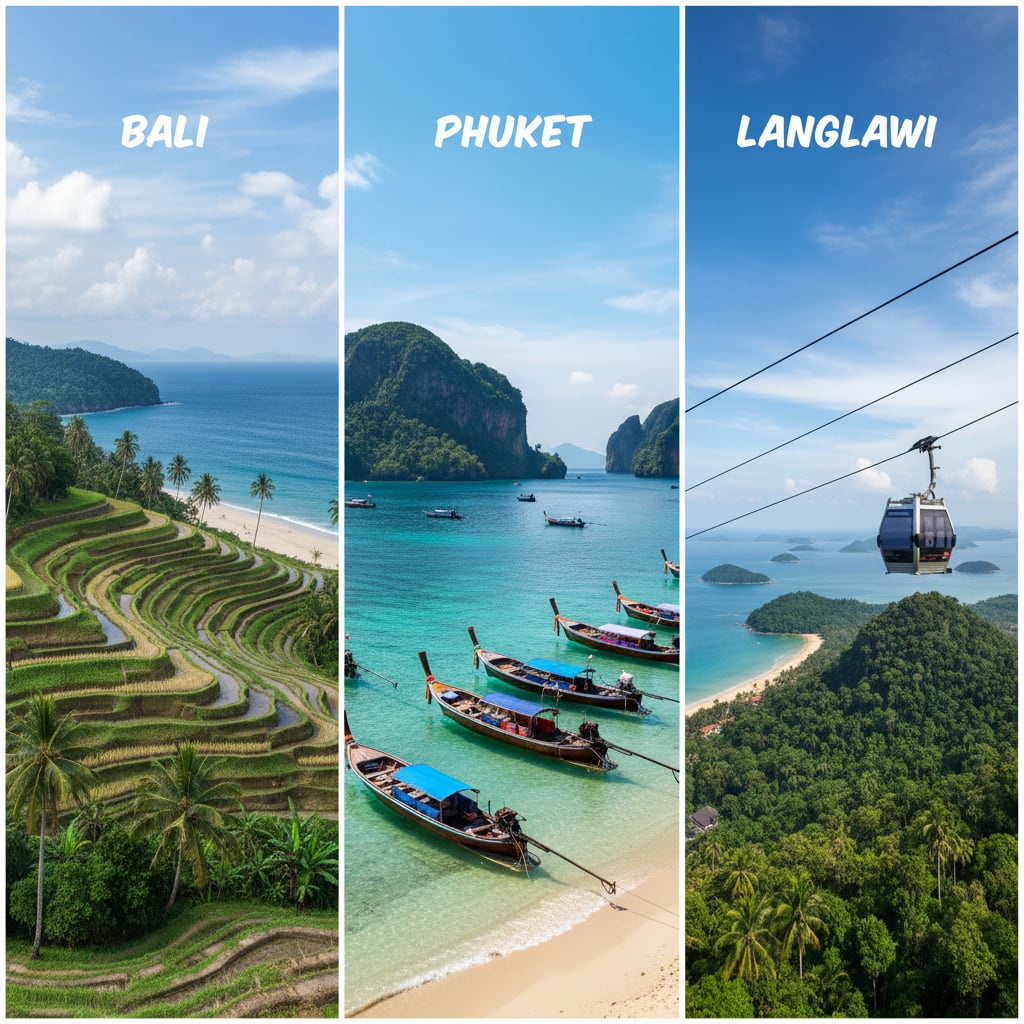
- Langkawi or Penang extension — for clients who want beach time, extend the Malaysia leg. (See our Malaysia inventory for these.)
- Bali extension — the natural upsell into a third country for honeymooners, covered in our Bali agent portal.
Each add-on carries its own markup, and because they're presented as enhancements rather than core cost, clients rarely price-shop them. Three or four thoughtful add-ons can lift a SGD 1,700 booking past SGD 2,200 — with most of the increase flowing to your margin.
Selling This Combo: Positioning That Converts
The 7-day Singapore-Malaysia combo sells itself when you position it right. It isn't "two cities" — it's two completely different experiences in one trip: Singapore's polished, futuristic, garden-city energy, then Kuala Lumpur's bigger, more affordable, culturally rich pace with the cool mountain escape of Genting. For a family it's variety; for a couple it's contrast; for a first-time South East Asia traveller it's the perfect sampler that almost always leads to a repeat booking elsewhere in the region.
Frame your quote around outcomes, not logistics. Instead of "3N hotel, city tour, transfer", lead with "Day 3 is all yours at Universal Studios" and "Day 6 you escape the heat up in Genting's cool air at 1,800 metres". Clients buy the feeling of the trip; the itinerary table just confirms the value. And because you're quoting from a single platform with live rates, you can turn around two or three tier options in minutes when the client asks "what would 5-star cost?" — speed that signals competence and closes deals.
One more positioning lever: the combo is an ideal anchor for upsells. Once a client commits to the core 7 days, extending into Langkawi, Penang or a Bali honeymoon leg is an easy "while you're in the region…" conversation — and each extension carries fresh margin. Build the combo well, and it becomes the front door to your most profitable multi-country itineraries.
Frequently Asked Questions
How much does a 7-day Singapore Malaysia package cost?
For an agent on net wholesale rates in 2026, a 7-day combo (3N Singapore, 3N KL, land only) costs roughly SGD 620 per person on 3-star, SGD 850 on 4-star, and SGD 1,180 on 5-star, on twin-sharing. That's about INR 38,400 / 52,700 / 73,200 respectively. International flights are extra. Retail prices run 18–30% higher than these net costs.
What's the best 7-day Singapore Malaysia itinerary?
A proven sequence is 3 nights Singapore (city tour, Gardens by the Bay, Sentosa + Universal Studios) followed by 3 nights Kuala Lumpur (city tour, Batu Caves, and a Genting Highlands day trip), with the cross-border leg on day 4. It front-loads Singapore's big attractions and keeps transfer time sensible.
Should clients take a coach or flight from Singapore to KL?
A premium coach (5–6 hours, ~SGD 25–45 net) suits budget and mid-range clients and avoids airport hassle. A low-cost flight (~1 hour, SGD 60–110 net) suits time-poor or premium travellers. For families, a private cross-border transfer offers door-to-door comfort at SGD 130–200 per vehicle. Offer the coach as default and the flight as a paid upgrade.
How much margin can an agent make on this package?
On the 4-star tier (about SGD 1,700 net per couple), a 15% blended markup yields roughly SGD 255 (~INR 15,800) gross margin per booking before upsells. Adding Universal Studios Express passes, Genting upgrades and private transfers comfortably pushes margin past SGD 350 per booking.
Do I need separate suppliers for Singapore and Malaysia?
No. A B2B travel portal like DMC Quote provides net hotel rates, attraction tickets and transfers for both Singapore and Malaysia (KL, Genting and more) from one login, with instant e-vouchers and no supplier contracts, so you can build the whole combo in a single workflow.
Can I sell this package without contracts or minimum volume?
Yes. Register on a B2B portal, get approved within 24 hours, and book each component at net rates with no contracts, deposits or minimum booking volume. You set your own markup on the bundled package price.
Price this combo at live 2026 rates today. Register free as a travel agent on DMC Quote to access net Singapore and Malaysia inventory — hotels, USS and Genting tickets, and cross-border transfers — all on one platform.