Asia's river cruise market represents a sophisticated, high-margin segment that travel agents often overlook in favor of ocean cruising. Yet river cruises command premium pricing ($300-$800 per person per day versus $150-$350 for ocean cruises), attract affluent demographics with strong repeat booking patterns, and generate commission rates typically 2-4 percentage points higher than ocean cruise equivalents. For agents seeking to elevate their cruise portfolio and client base, Asia river cruising presents exceptional opportunities.
The Asia River Cruise Market Landscape
The Asia river cruise industry has experienced remarkable growth, with capacity increasing approximately 18% annually since 2018. Three major waterways dominate the market: the Mekong River (Vietnam and Cambodia), Irrawaddy River (Myanmar), and Yangtze River (China), collectively hosting approximately 85 purpose-built river cruise vessels carrying 250,000+ passengers annually.
Unlike ocean cruising's mass-market orientation, river cruising skews distinctly upscale. The average river cruise passenger is 58 years old, college-educated, with household income exceeding $125,000. These demographics demonstrate strong willingness to pay for curated experiences, cultural immersion, and personalized service—exactly the value proposition travel agents deliver.
For context on positioning: A 7-night Mekong River cruise typically ranges $2,800-$6,500 per person (versus $1,200-$3,200 for comparable Southeast Asia ocean cruises). Commission structures average 12-18% (versus 10-14% ocean cruise average). A single river cruise booking generates comparable revenue to 2-3 ocean cruise bookings while requiring similar servicing effort.
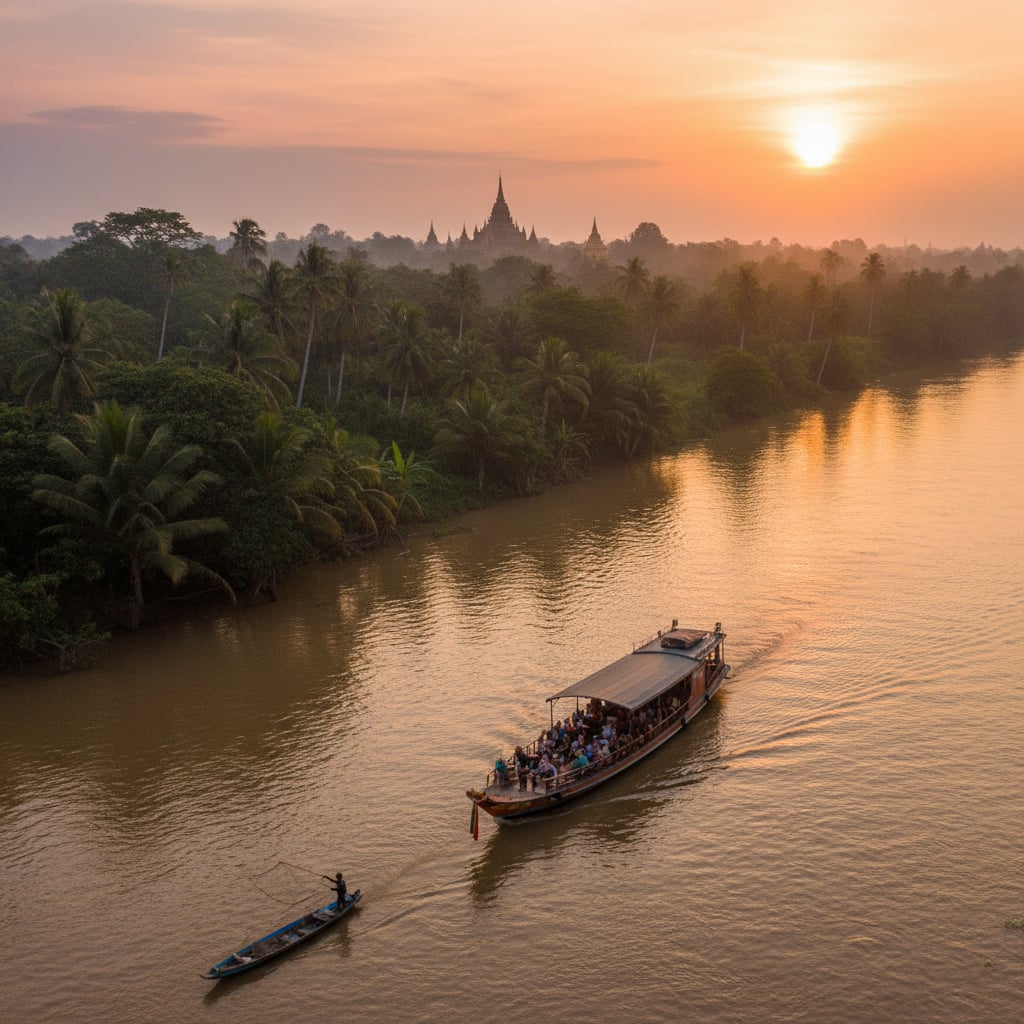
Mekong River Cruises: The Most Accessible Entry Point
The Mekong River flowing through Vietnam and Cambodia offers agents the most straightforward entry into Asia river cruising, combining strong demand, established infrastructure, and manageable operational complexity.
Route Options and Characteristics
Classic Mekong (7-8 nights): Siem Reap, Cambodia to Ho Chi Minh City (Saigon), Vietnam or reverse. This signature routing includes Angkor Wat exploration (UNESCO World Heritage Site), Phnom Penh city touring (Royal Palace, Killing Fields), Mekong Delta village visits, and Vietnamese cultural experiences. Operates year-round with optimal conditions October-March. Passenger capacity: 40-80 per vessel.
Upper Mekong (10-14 nights): Extended itineraries from Northern Thailand through Laos to Cambodia. These longer journeys visit remote villages, Buddhist monasteries, and the Golden Triangle region. Limited vessel operations (3-4 ships) create exclusivity and premium pricing. Optimal season: November-February.
Mekong Delta Intensive (3-4 nights): Short programs focused exclusively on Vietnamese Mekong Delta, operating Ho Chi Minh City roundtrip. Popular with time-constrained travelers or as extensions to Vietnam touring programs. More frequent departure schedule (2-3 weekly versus weekly for classic routes).
Major Mekong River Cruise Lines
AmaWaterways (AmaDara, AmaLotus): Premium American operator with strong North American agent relationships. Commission structure 15-18%, including volume bonuses. Pricing $3,200-$5,800 per person for 7-night classic Mekong. All-inclusive model (excursions, beverages, gratuities included) simplifies client value proposition. Strong pre/post land packages to Bangkok and Hanoi.
Scenic (Scenic Spirit): Ultra-luxury Australian operator with "truly all-inclusive" positioning including premium spirits, butler service, and exclusive shore experiences. Commission 14-17%. Pricing $5,200-$8,900 per person. Attracts highest-income demographic with minimal price sensitivity.
Avalon Waterways (Avalon Siem Reap, Avalon Saigon): Contemporary premium brand owned by Globus family. Commission 12-15%. Pricing $2,800-$4,900 per person. Strong value positioning within premium segment. Suite-focused vessel design (80% accommodations with balconies) appeals to couples.
Pandaw River Cruises: British colonial-style vessels emphasizing heritage and expedition atmosphere. Commission 12-14%. Pricing $2,600-$4,200 per person. Attracts adventure-oriented travelers and repeat cruisers seeking authentic experiences versus resort-style vessels. Extensive itinerary portfolio including upper Mekong routes.
Uniworld Boutique River Cruises (Mekong Jewel): Luxury positioning with elaborate interior design and all-inclusive beverage programs. Commission 15-17%. Pricing $4,400-$7,200 per person. Red Carnation Hotels ownership appeals to luxury hotel-oriented clientele.
Mekong Cruise Selling Strategies
Successful Mekong cruise sales leverage several key positioning strategies:
Angkor Wat Integration: Angkor Archaeological Park ranks among world's most sought-after cultural sites. Positioning Mekong cruises as the premium way to experience Angkor while including unique Mekong Delta access differentiates from land-only Cambodia programs. Most cruise lines include 2-3 days Siem Reap hotel stay and comprehensive Angkor touring. This bundle approach typically costs less than assembling components separately while commanding professional service fees.
Cultural Immersion Emphasis: River cruising's intimate scale (40-80 passengers versus 2,000-4,000 ocean cruise) enables authentic cultural encounters: village home visits, monk blessings, market tours with chefs, traditional performance onboard. These experiences resonate with culturally-curious travelers frustrated by mass tourism.
Vietnam Extension Opportunities: Most Mekong cruises begin/end in Siem Reap or Ho Chi Minh City, creating natural extension opportunities. Pre-cruise Hanoi and Halong Bay (3-4 days) or post-cruise beach resort stays (Phu Quoc, Nha Trang) increase total booking value 40-70%. Commission earnings on land extensions match or exceed cruise commissions due to higher margins on hotels and tours.
Irrawaddy River Cruises: Premium Positioning and Political Considerations
The Irrawaddy River in Myanmar (formerly Burma) offers one of Asia's most compelling but complex river cruise products. Political instability following 2021's military coup has significantly impacted operations, with several cruise lines suspending Myanmar programs. However, selective operations continue, and agents with Myanmar expertise can serve travelers specifically interested in this destination.
Route Characteristics
Classic Irrawaddy (7-11 nights): Yangon to Mandalay or Bagan to Mandalay routings showcase Myanmar's Buddhist heritage. Highlights include Shwedagon Pagoda (Yangon), Bagan's temple plains (2,000+ pagodas), Mandalay's royal palace, and village artisan workshops. The Irrawaddy's seasonal water levels create itinerary variations: high water season (July-October) enables longer routes; low water (February-May) requires shorter programs with more overland components.
Upper Irrawaddy Expedition (10-15 nights): Extended journeys from Bhamo near Chinese border to Mandalay traverse remote regions with limited tourist infrastructure. These expedition-style cruises appeal to adventurous, well-traveled demographics seeking undiscovered destinations.
Major Irrawaddy Operators
Belmond Road to Mandalay: Luxury vessel (82 passengers) operated by LVMH-owned Belmond. Commission 12-15%. Pricing $3,800-$7,400 per person for 7-night programs. Colonial elegance design aesthetic appeals to heritage-conscious luxury travelers.
Pandaw Cruises: Multiple vessels on Irrawaddy with most extensive itinerary portfolio. Commission 12-14%. Pricing $2,400-$4,800 per person. Expedition-style operations with more adventurous atmosphere than luxury competitors.
Sanctuary Retreats (Sanctuary Ananda): Boutique luxury vessel (21 cabins) with intimate scale. Commission 13-16%. Pricing $4,200-$6,900 per person. All-balcony configuration and high crew-to-guest ratio appeal to privacy-seeking affluent travelers.
Political Considerations and Agent Risk Management
Myanmar's ongoing political challenges require careful client consultation and risk management:
Transparent Communication: Agents must clearly communicate current conditions, including occasional internet restrictions, ATM limitations, and unpredictable infrastructure. Positioning Myanmar as "destination for adventurous, flexible travelers" manages expectations while attracting appropriate clientele.
Travel Insurance Requirements: Comprehensive travel insurance with trip cancellation and interruption coverage is essential. Political unrest typically qualifies for coverage if purchased before triggering events. Agent should require insurance as booking condition for Myanmar programs.
Flexible Deposits and Cancellation Terms: Negotiate favorable cancellation terms with suppliers given Myanmar's uncertainty. Some operators offer modified deposit schedules or enhanced flexibility for Myanmar bookings specifically.
Alternative Destination Planning: Maintain expertise in Mekong or Yangtze cruises as alternative suggestions if clients express Myanmar concerns. Being able to pivot to comparable experiences demonstrates professional destination knowledge.
Yangtze River Cruises: High Volume, Unique Operational Model
The Yangtze River in China hosts the world's largest river cruise fleet, with 50+ vessels carrying over 500,000 passengers annually. However, operational models differ significantly from Western river cruising expectations, requiring agent education and proper client matching.
Route Characteristics
Three Gorges Cruise (4-5 nights): Chongqing to Yichang (or reverse) showcasing Yangtze's dramatic Three Gorges section, Three Gorges Dam (world's largest hydroelectric project), and cultural sites like Shibaozhai Pagoda and Fengdu Ghost City. This represents 85% of Yangtze cruise inventory with vessels ranging from 100-400 passengers.
Extended Yangtze (7-11 nights): Programs combining Three Gorges cruising with Shanghai, Beijing, Xi'an (Terracotta Warriors), and other Chinese highlights. These comprehensive China tours with Yangtze cruise component appeal to first-time China visitors seeking overview experiences.
Yangtze Cruise Market Segmentation
The Yangtze cruise market divides into three distinct tiers with dramatically different products and commission structures:
Domestic Chinese Market Vessels (1-2 star): Basic accommodations serving primarily Chinese domestic tourists. Pricing $150-$350 per person for 4-night cruise. Limited English-language services. Generally unsuitable for Western travelers. Minimal agent opportunities as most distribution occurs through Chinese domestic channels.
International Standard (3-4 star): Mid-market vessels with English-speaking staff, Western meal options, and international service standards. Pricing $600-$1,200 per person for 4-night cruise. Commission 10-12%. Operators include Victoria Cruises, Century Cruises, and President Cruises. Appropriate for budget-conscious travelers with realistic expectations about Chinese tourism infrastructure.
Luxury/Premium (4-5 star): Western-operated or joint-venture vessels meeting international luxury standards. Pricing $1,400-$3,800 per person for 4-night cruise. Commission 12-16%. Primary operators: Sanctuary Yangzi Explorer, Yangtze Gold series, and select Century Legend/Paragon voyages. These vessels attract quality-conscious travelers expecting Western luxury standards.
Major Yangtze Operators (International Market)
Viking River Cruises (Viking Emerald, Viking Century Sky): Western luxury operator with established agent relationships. Commission 14-16%. Pricing $2,200-$4,200 per person for 7-night programs (cruise + Shanghai extension). All-inclusive model and European hospitality standards. Strong air/cruise packages simplify booking process.
Century Cruises (Century Legend, Century Paragon): Joint-venture operation with modern vessels and Western management systems. Commission 11-14%. Pricing $800-$1,600 per person for 4-night Three Gorges cruise. Strong value proposition within international-standard segment.
Sanctuary Retreats (Sanctuary Yangzi Explorer): Ultra-luxury boutique vessel (62 passengers) with highest luxury positioning on Yangtze. Commission 13-15%. Pricing $3,400-$5,800 per person for 4-night cruise. All-balcony suites, butler service, and premium dining appeal to luxury travelers.
China Cruise Complexity and Agent Value Proposition
Yangtze River cruises present operational complexities that enhance agent value proposition:
Visa Requirements: Most nationalities require Chinese visas obtained advance through consular services. Visa application assistance (document preparation, photo requirements, application review) justifies agent professional fees while reducing client stress. Some agents partner with visa expediting services earning referral commissions.
Domestic Air Arrangements: Three Gorges cruises typically require internal Chinese flights (Beijing-Chongqing, Shanghai-Yichang, etc.). Chinese domestic air ticketing through international GDS systems can be challenging, with schedule changes and Chinese-language confirmations. Agent coordination of air/cruise packages provides significant value.
Multi-City Itineraries: Most clients combine Yangtze cruise with Beijing (Great Wall, Forbidden City), Xi'an (Terracotta Warriors), and Shanghai touring. Comprehensive China programs spanning 10-14 days with professional tour management command $4,500-$8,500 per person pricing. Commission earnings on complete China programs ($500-$1,200 per person) far exceed cruise-only bookings.
Language and Cultural Barriers: Even on international-standard vessels, language limitations exist. Agents providing pre-departure briefings on Chinese customs, dining etiquette, and practical tips (VPN requirements for Google/Facebook access, mobile payment systems, etc.) significantly enhance client comfort and satisfaction.
Comparative Analysis: Which River Cruise to Recommend?
Matching clients with appropriate Asia river cruises requires understanding demographic profiles and travel priorities:
Mekong River: Best for first-time Asia travelers, cultural enthusiasts, photography buffs, and couples seeking romantic experiences. Moderate activity levels with manageable heat/humidity. Strong cuisine experiences appeal to food-oriented travelers. Angkor Wat component attracts bucket-list travelers. Price points accessible to upper-middle-income demographics ($3,000-$6,000 per person total trip cost).
Irrawaddy River: Suited for adventurous, well-traveled clients with previous Asia experience. Appeals to those seeking less-touristed destinations and accepting of infrastructure limitations. Buddhism enthusiasts and archaeological/historical travelers gravitate toward Myanmar. Higher-income requirement ($4,500-$8,500 per person total trip cost) and flexibility essential.
Yangtze River: Appropriate for first-time China visitors seeking comprehensive overview. Engineering enthusiasts interested in Three Gorges Dam. Travelers comfortable with large-scale tourism and accepting of Chinese service standards. Must be packaged with multi-city China touring for optimal satisfaction. Widest price range ($3,000-$9,000 per person total trip cost) accommodates varied budgets.
Seasonal Considerations and Booking Windows
Mekong River:
- Peak Season (November-February): Optimal weather with comfortable temperatures and minimal rain. Highest demand requires 9-12 months advance booking for preferred departure dates. Pricing at full rates with limited promotional discounts.
- Shoulder Season (March-April, October): Excellent conditions with reduced crowds and 10-20% lower pricing. Best value period for price-conscious clients. 6-8 months advance booking recommended.
- Low Season (May-September): Hot, humid conditions with afternoon thunderstorms common. Pricing discounts 25-40% versus peak season. Attracts budget-focused travelers and those with inflexible scheduling. 3-6 months advance booking sufficient.
Irrawaddy River:
- High Water (July-October): Enables full-length itineraries with deeper vessel access. However, monsoon season brings afternoon rains. Pricing moderate with 10-15% discounts versus peak season.
- Peak Season (November-February): Pleasant weather, optimal water levels, and maximum itinerary access. Book 10-14 months ahead for luxury vessels with limited capacity.
- Low Water (March-June): Itinerary modifications common as water levels decline. More overland touring replaces river segments. Pricing discounts 20-35%. Suitable for flexible travelers prioritizing value.
Yangtze River:
- Peak Season (April-May, September-October): Mild weather with spring blooms or autumn colors. Highest demand from international travelers. Book 8-12 months ahead for luxury vessels, 5-7 months for standard vessels.
- Summer (June-August): Hot, humid conditions but school holidays drive Chinese domestic demand. International traveler pricing discounted 15-25% while Chinese domestic pricing increases.
- Winter (November-March): Cool to cold temperatures with occasional fog. Reduced international demand creates promotional pricing 25-40% below peak. Suitable for budget-conscious travelers and those avoiding crowds.
Commission Structures and Revenue Optimization
River cruise commission structures typically exceed ocean cruise equivalents with additional revenue opportunities:
Base Commissions: 12-18% depending on cruise line and agent tier status. Luxury operators (Scenic, Uniworld, Sanctuary) generally pay higher rates than premium (AmaWaterways, Avalon) or standard (Century, Pandaw) operators.
Volume Bonuses: Progressive commission increases based on annual bookings: 8-15 passengers = +1%; 16-30 passengers = +2%; 31+ passengers = +3-4%. More achievable than ocean cruise volume due to smaller required passenger counts.
Early Booking Commissions: Additional 1-2% for bookings made 12-18 months prior to departure. Luxury river cruise lines heavily incentivize advance bookings to fill limited inventory.
Land Package Commissions: Pre/post cruise land programs typically commission at 15-20% (versus 12-18% for cruise component). Strong motivation to sell comprehensive packages rather than cruise-only arrangements.
Travel Insurance: Essential for international river cruises with commissions 10-15% of premium. Given typical premiums of $250-$450 per person for Asia cruises, insurance adds $25-$65 per person commission.
Shore Excursion Sales: Limited applicability as most Asia river cruises include shore excursions. However, optional premium experiences (private Angkor Wat photography tours, premium cooking classes, hot air balloon rides) commission at 15-20%.
Marketing Strategies for River Cruise Sales
Educational Events: River cruising remains unfamiliar to many travelers. Hosting informational presentations (in-person or virtual) positions agents as experts while generating qualified leads. Partner with cruise lines for co-branded events with supplier-provided materials and promotional offers.
River vs. Ocean Positioning: Clearly articulate river cruising advantages: intimate ship scale, cultural immersion, no formal nights, included excursions, and "unpack once" convenience. Avoid direct price comparisons with ocean cruises; instead emphasize experience differentiation and all-inclusive value.
Demographic Targeting: Focus marketing on 55+ age groups with established travel experience, cultural interests, and higher income levels. This demographic demonstrates strong river cruise appeal and lower price sensitivity.
Past Traveler Outreach: River cruise clients demonstrate high repeat booking rates (40-55% versus 20-30% for ocean cruises). Systematic follow-up 6-8 months post-cruise with alternative river cruise suggestions leverages strong satisfaction and established trust.
Niche Positioning: Rather than general river cruise promotion, focus on specific themes: photography cruises, culinary experiences, Buddhist heritage touring, or small group adventures. Niche positioning attracts motivated buyers with clear purchase intent.
Operational Considerations and Client Education
River cruise operations differ from ocean cruising in ways requiring client education:
Vessel Scale: River cruise ships (40-200 passengers) lack casino facilities, large entertainment venues, and extensive dining options typical of ocean vessels. Frame this as benefit (intimate atmosphere, personalized service) rather than limitation.
Active Touring: Shore excursions often involve walking on uneven surfaces, climbing temple stairs, or navigating village paths. Assess client physical capabilities and recommend appropriate itineraries. Some cruise lines offer "gentle walkers" alternative excursions.
Climate Realities: Southeast Asia and Southern China feature tropical/subtropical climates with heat and humidity. Prepare clients with appropriate clothing suggestions (breathable fabrics, sun protection, comfortable walking shoes) and hydration reminders.
Limited Onboard Amenities: River vessels typically feature one restaurant, one lounge/bar, small fitness facilities, and limited spa services. Clients expecting resort-level amenities require expectation management.
Inclusive Pricing Models: Most Asia river cruises include shore excursions, beverages (varying by cruise line), and gratuities. Clearly communicate what's included versus optional to prevent surprise costs and budget concerns.
Technology and Booking Tools
Supplier Websites: Most river cruise lines provide agent portals with real-time availability, deck plans, booking engines, and marketing materials. Direct booking typically processes faster than GDS systems for river cruises.
GDS Availability: Limited river cruise content in traditional GDS systems (Sabre, Amadeus) compared to ocean cruises. Agents require direct supplier relationships or consortium access for efficient booking.
Virtual Ship Tours: 360-degree cabin tours and virtual ship walkthroughs help clients visualize experiences and justify premium pricing. Leverage supplier-provided VR content during consultations.
Itinerary Mapping Tools: Visual itinerary maps showing daily port positions, distances traveled, and excursion locations help clients understand river cruise geography and pacing.
Conclusion: Positioning for River Cruise Success
Asia river cruising represents a sophisticated market segment rewarding agents who invest in destination knowledge, supplier relationships, and consultative selling skills. The combination of premium pricing, higher commission rates, and affluent demographics creates exceptional revenue opportunities compared to equivalent effort in mass-market ocean cruising.
Success requires moving beyond transactional booking to destination expertise. Agents positioned as Asia river cruise specialists command professional fees, attract higher-income clients, and build sustainable competitive advantages against online competitors.
Start with Mekong River cruises, the most accessible entry point with strong demand and manageable complexity. Develop expertise in 2-3 preferred cruise lines rather than attempting to master all operators. Build systematic follow-up processes to convert first-time river cruisers into repeat clients exploring other rivers.
The most profitable agents integrate river cruises into comprehensive Asia vacation packages, combining cruise components with pre/post extensions, land touring, and hotel arrangements. This comprehensive approach maximizes revenue per client while delivering superior experiences that generate referrals and repeat business.
For supplier connections, destination expertise, and operational support for Asia river cruise programs, contact DMC Quote to discuss partnership opportunities tailored to your agency's cruise specialization goals.