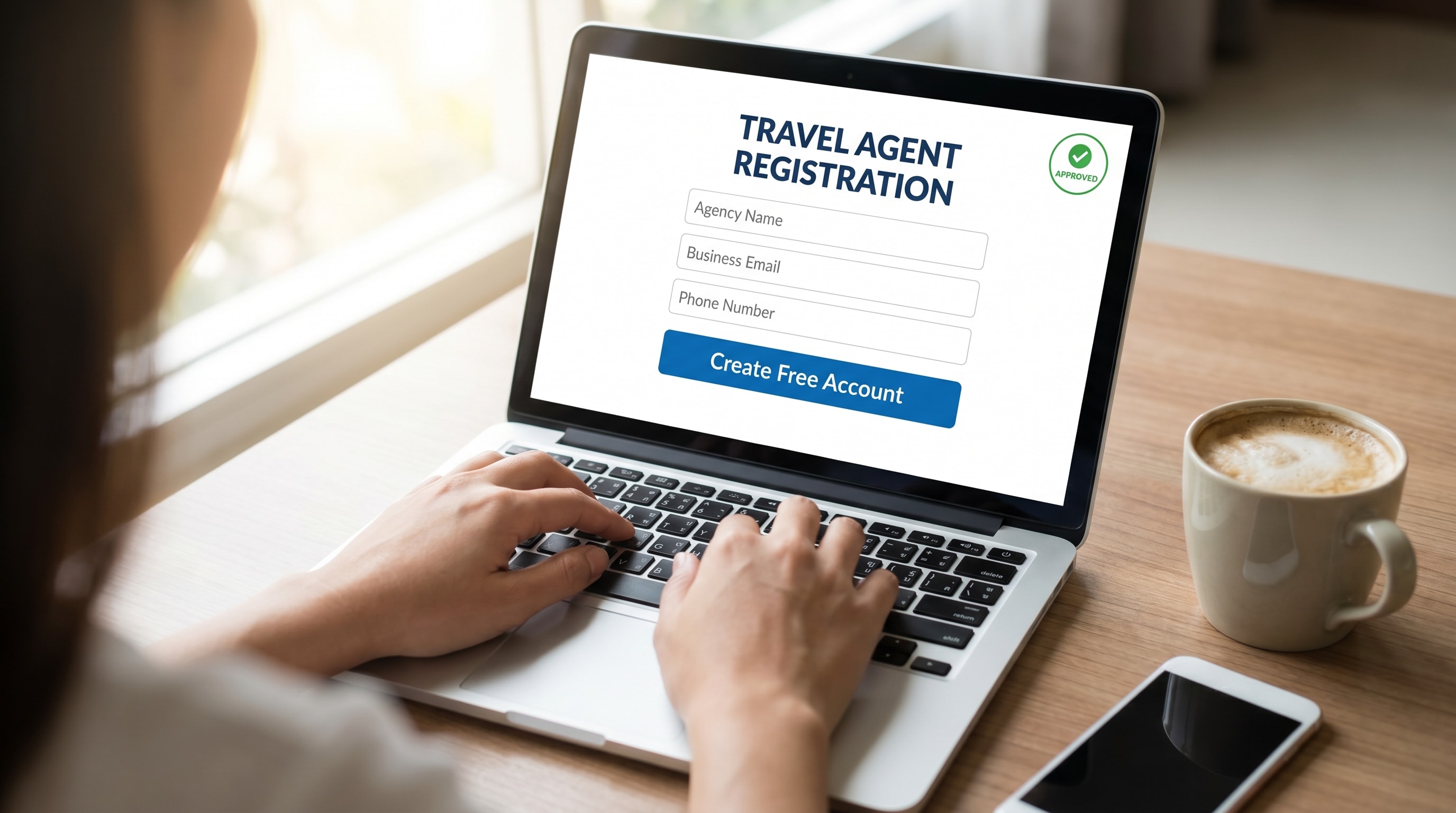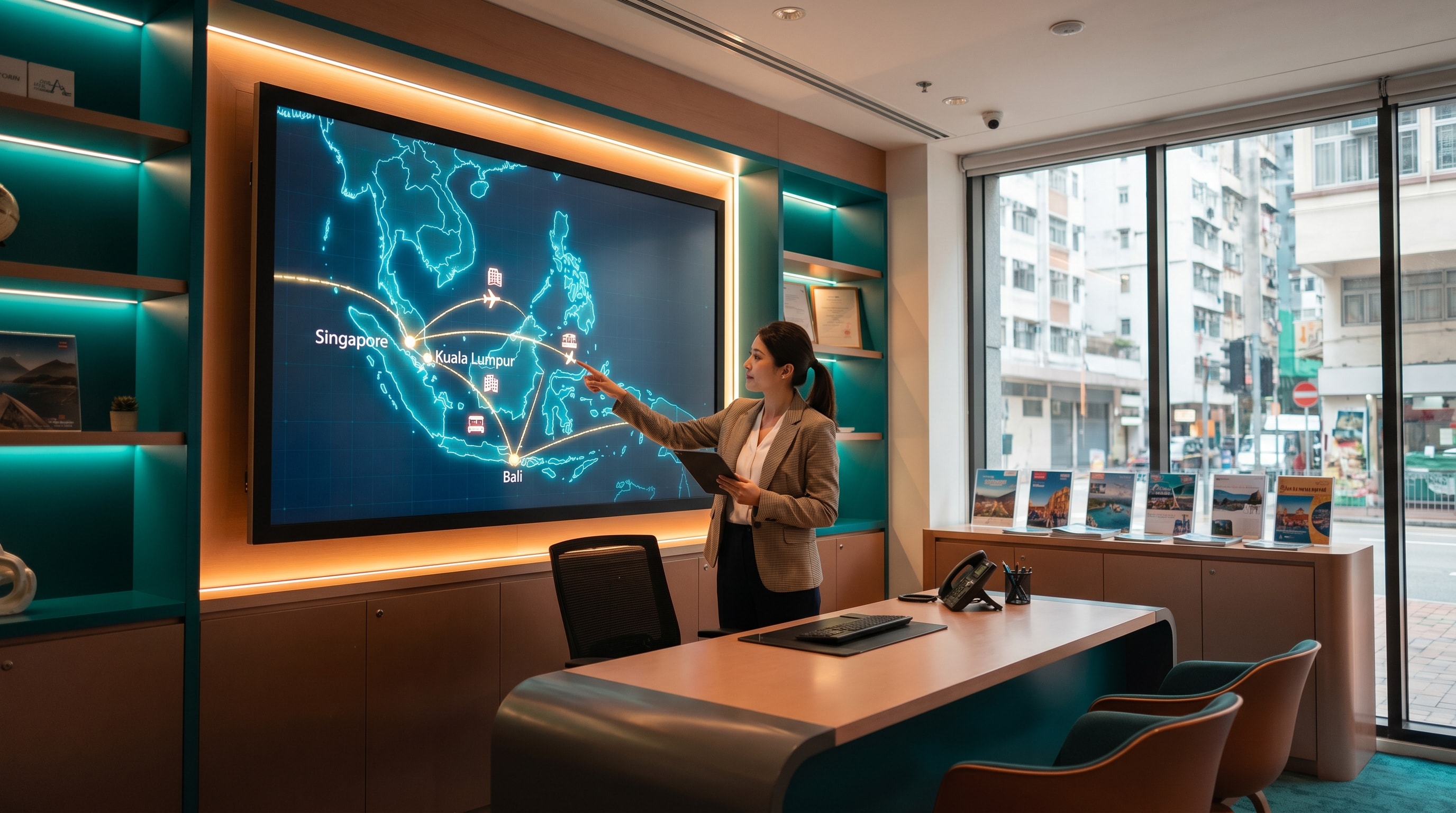
You can sell Singapore, Malaysia and Bali packages without signing a single local supplier contract by sourcing your inventory through a B2B travel portal instead of contracting DMCs directly. Register on the portal, get approved, and you instantly see net wholesale hotel rates, attraction tickets, transfers and packages — set your own markup, book, and the platform handles fulfilment. No deposits, no minimum volumes, no rate-contract negotiations.
This is how most agencies actually operate in 2026, and it's the single biggest reason a one-person agency in Pune can quote the same Bali honeymoon as a 40-person operation in Mumbai. The contracts and supplier relationships are pooled at the platform level. You just sell. Here's the full picture — the old way, the new way, and the margin math that decides whether this is worth it for you.
The Old Way: Contract Every Supplier Yourself
For decades, getting international inventory meant becoming a contracting operation. To offer a Singapore-Malaysia-Bali product the traditional way, you'd need:
- A Singapore DMC contract for hotels and Sentosa/USS/Gardens by the Bay tickets.
- A separate Malaysia DMC for KL hotels, Batu Caves and Genting.
- A Bali ground handler for villas, Uluwatu, and Nusa Penida day trips.
- Transfer companies in each destination, or you'd rely on the DMC's transport at marked-up rates.
And here's what those contracts asked of a new agency:
- Deposits or advance deposits to hold rates or allotment.
- Minimum volume commitments — "book 100 room-nights a quarter or rates revert".
- Credit risk on you — you often pay the DMC before your client pays you.
- Net rates gated by track record — no history, no good rates. Classic chicken-and-egg.
For an established high-volume operator, direct contracting can squeeze out an extra point or two of margin. For everyone else — and definitely for any agency under a few crore in turnover — it's slow, capital-heavy, and risky.
The New Way: One B2B Portal, Whole-Region Inventory
A B2B travel portal aggregates the supplier relationships so you don't have to. You register once, get approved (DMC Quote approves agents within 24 hours), and you see live inventory across the whole region from one login:
- Net wholesale hotel rates across Singapore, Malaysia (KL, Langkawi, Genting, Penang, Johor Bahru), Bali/Indonesia, Thailand and Vietnam.
- Attraction tickets with instant e-vouchers — Universal Studios Singapore, Gardens by the Bay, Genting SkyWorlds, Bali day tours and more.
- Private and SIC transfers — including cross-border options.
- Ready-made and custom packages, plus an AI package builder that produces day-by-day quotes in minutes.
No contracts. No deposits to the platform to unlock rates. No minimum booking volume. You set your own markup and the portal fulfils the booking under your branding. That's the core promise of our B2B travel portal, and it's why agents who never contracted a DMC in their life are selling multi-country SEA itineraries. Register free as a travel agent on DMC Quote to see the inventory yourself.
What "Inventory Access" Actually Looks Like
People imagine a static price list. It isn't. When you log in and search, say, a 4-star Singapore hotel for two adults 45 days out, you get live rates, room types, meal plans, and cancellation terms — the same data the platform's backend pulls in real time. You can:
- Search a city and dates, filter by star tier and area.
- See the net rate (your cost), add your markup, and the client-facing price updates.
- Add attractions and transfers to build a full package.
- Confirm and instantly download an e-voucher carrying your agency branding.
For attractions, "real" inventory means it confirms instantly with a defined time and inclusions — not "submit a request, we'll respond in 24 hours". That distinction is one of the tests in our guide on how to choose a B2B travel portal, and it matters because your client wants a confirmed Universal Studios ticket, not a maybe.
The Margin Math: A Real Singapore-Malaysia-Bali Example
Let's price a 7-night couple's itinerary (3N Singapore, 2N Kuala Lumpur, 2N Bali) at a 4-star tier, land-only (no flights), to show where your money is. Figures are indicative net costs per couple in SGD, then your markup.
| Component | Net cost (SGD) | Your price @ 15% (SGD) |
|---|---|---|
| 3N Singapore 4★ + breakfast | 540 | 621 |
| 2N Kuala Lumpur 4★ + breakfast | 240 | 276 |
| 2N Bali 4★ + breakfast | 300 | 345 |
| USS + Gardens by the Bay tickets (2 pax) | 180 | 207 |
| Batu Caves + Genting day trip (2 pax) | 140 | 161 |
| Bali Uluwatu + Nusa Penida day tours (2 pax) | 160 | 184 |
| All airport + cross-border transfers | 220 | 253 |
| Total | 1,780 | 2,047 |
That's roughly SGD 267 gross margin (~INR 16,500) on one couple, on one package, at a conservative 15% blended markup. Push the markup to 18-20% on a honeymoon client who's not price-shopping and the margin climbs further. You carried zero contract risk, paid no deposit to unlock those rates, and committed to no volume. That's the whole argument in one table.
Where Agents Add the Most Margin
- Activities and transfers — clients rarely benchmark these, so 15-20% markups stick easily.
- Bundling — a "package price" hides individual component costs, so your margin is invisible to the client. Selling the same hotels à la carte invites comparison; bundling protects your markup.
- Upgrades — pool villas in Bali, club rooms in Singapore. Net cost rises modestly, your markup rises proportionally, and the client perceives value.
- Speed — quoting in minutes lets you charge for convenience. A client who gets a polished itinerary fast doesn't shop around.
Do You Ever Still Need Direct Contracts?
Sometimes — if you run a fixed group departure of 200 pax to one resort, a direct negotiated contract can beat portal rates on that one block. But for everyday FIT (free independent traveller) leisure business, B2B portal inventory wins on flexibility, breadth and zero risk. Most agencies use the portal for 90%+ of bookings and only contract directly for occasional high-volume groups.
Cash Flow: The Hidden Advantage of the Portal Model
People focus on rates and inventory, but the quiet win of the B2B portal model is cash flow. With direct DMC contracts you frequently pre-fund allotment or pay deposits to hold rates — capital that sits dead until guests actually book. With a portal, you fund a booking only when you make it. There's no idle deposit parked with five different suppliers across three countries.
That changes the economics of a small agency completely. Instead of needing lakhs locked up as supplier security before you've sold anything, you keep a modest wallet balance and top up as bookings come in. Your capital works on demand, not in advance. For an agency under a few crore in turnover, that flexibility is worth more than the extra one or two margin points a high-volume direct contract might theoretically deliver.
Multi-Country Itineraries Without Multi-Country Headaches
The hardest packages to assemble the old way are multi-country ones — precisely the ones clients want most. A Singapore-Malaysia-Bali trip the traditional way means coordinating three ground handlers, three sets of payment terms, three cancellation policies, and three voucher formats. If one DMC is slow to confirm the Bali leg, the whole quote stalls.
Through one portal, the entire multi-country itinerary lives in a single workflow: one login, one wallet, one consistent cancellation logic, and one branded voucher set for the whole trip. You confirm Singapore hotels, KL transfers and Bali tours in the same session and the guest receives a coherent set of documents. This operational simplicity is exactly why agents who'd never attempt a three-country itinerary by hand sell them comfortably on a portal. For a worked example, see our 7-day Singapore Malaysia costing guide.
What About Reliability and Confirmations?
A fair question agents ask: if I'm not the one with the DMC relationship, can I trust the confirmation? Yes — provided the inventory is genuinely live and bookable. The test is simple: when you book an attraction, does it return an instant e-voucher with a defined date, time and inclusions, or a "request submitted, we'll confirm in 24 hours" holding message? Real inventory confirms instantly. Theatre inventory makes you wait.
On a serious platform, hotel confirmations and attraction e-vouchers are issued immediately and carry your agency branding, so the guest never sees the backend supplier and you own the relationship. That's the operational backbone that lets you sell with confidence without holding a single contract yourself. We break down how to test a platform for this in how to choose a B2B travel portal.
A Quick Word on Region Coverage
The contract-free model only helps if the portal actually covers the destinations you sell. For South East Asia outbound — by far the biggest leisure market for Indian and regional agents — make sure your platform has real depth across Singapore, Malaysia (including KL, Langkawi, Genting, Penang and Johor Bahru), Bali and wider Indonesia, Thailand and Vietnam. Thin inventory in your top three cities is the one thing that breaks the model, so test it on day one. Our India agent portal and South East Asia overview show what proper regional depth looks like.
Frequently Asked Questions
How do travel agents get international tour packages without contracts?
They source inventory through a B2B travel portal that has already aggregated DMC and supplier relationships. The agent registers, gets approved, and accesses net wholesale hotel rates, attraction tickets, transfers and ready-made packages — with no individual contracts, deposits or minimum volumes. The agent adds a markup and the platform fulfils the booking.
Is it cheaper to contract DMCs directly or use a B2B portal?
For most agencies, a B2B portal is more profitable overall because it eliminates deposits, volume commitments and capital risk while still offering net wholesale rates. Direct contracts can occasionally beat portal pricing on very high-volume single-resort group blocks, but for everyday FIT leisure business the portal model wins on flexibility and breadth.
What inventory can I sell through a B2B portal for South East Asia?
Net wholesale hotels, attraction tickets with instant e-vouchers, private and SIC transfers (including cross-border), and ready-made or custom packages across Singapore, Malaysia, Bali/Indonesia, Thailand and Vietnam. With DMC Quote you also get an AI package builder that creates day-by-day quotes in minutes.
How much margin can I make selling international packages?
Typical blended markups run 12–18% on full packages, with 8–15% on hotels and 10–20% on activities and transfers. On a 7-night Singapore-Malaysia-Bali couple's package costing around SGD 1,780 net, a 15% markup yields roughly SGD 267 (about INR 16,500) gross margin on a single booking, with no contract risk.
Do I need to pay a deposit to access net rates on a B2B portal?
No. On DMC Quote, registration is free and there is no deposit required to unlock net rates and no minimum booking volume. You fund individual bookings as you make them, set your own markup, and keep the spread.
Want to see live Singapore, Malaysia and Bali rates for yourself? Register free as a travel agent on DMC Quote — approval within 24 hours, no contracts, no deposits, no minimum volume.