Best Time to Visit South Korea
Cherry blossoms, autumn fire, monsoon heat, and ski-season snow - a season-by-season guide to timing Korea trips for your clients in 2026
The Short Answer
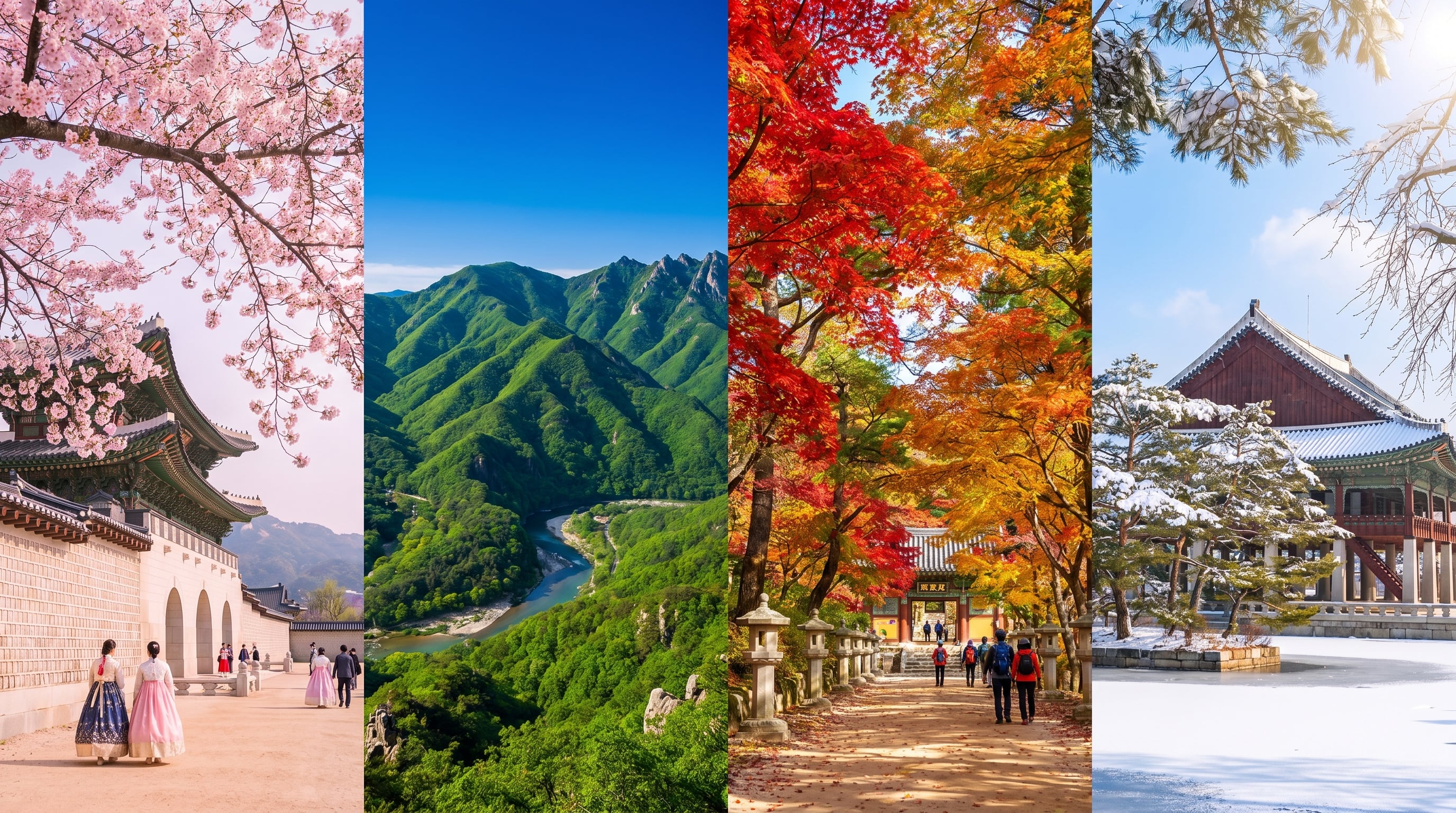
The best time to visit South Korea is spring (late March to mid-May) for cherry blossoms and autumn (late September to early November) for foliage. Both bring mild, dry 10-22C weather and Korea's most photogenic scenery - but also the highest prices and biggest crowds.
That's the headline most clients want. But "best" depends entirely on what they're after. A couple chasing cherry blossom photos has a completely different ideal window than a family wanting Jeju beaches or a ski group heading to Pyeongchang. Korea's four seasons are genuinely distinct - more so than most of Southeast Asia experiences - so getting the timing right makes or breaks a trip.
Below I've broken down each season honestly, including the parts that travel brochures skip (yes, July is wet and miserable in stretches). Use it to match the right month to the right client.
Spring (March-May): Cherry Blossom Season
Spring is Korea at its most beautiful, and it's no accident this is peak booking season. Temperatures climb from chilly March mornings into pleasant 15-22C afternoons by May. The air is clear, the parks fill with blossoms, and the whole country seems to exhale after a hard winter.
Cherry blossoms (beotkkot) are the main event. They bloom south to north: Jeju and Busan first (around March 25-30), then Gwangju and Daegu, reaching Seoul in early April. Peak bloom in Seoul usually lands April 5-12, but the window is brutally short - a week of full bloom, then a single rainy day can strip the trees bare. Tell clients to build flexibility into spring trips and don't promise blossoms on an exact date.
Best blossom spots: Jinhae (the country's biggest festival, early April), Seokchon Lake in Seoul, the Han River parks, Gyeongju's royal tombs, and Yeouido. By late April the blossoms give way to azaleas, forsythia, and green hills - still gorgeous, just less Instagram-famous.
Summer (June-August): Hot, Humid & Wet
Let's be honest - summer is the toughest season for sightseeing. June starts pleasant enough, but by July the jangma monsoon arrives, dumping heavy rain for roughly three to four weeks. August is hot and sticky, with Seoul regularly hitting 30-33C and humidity that makes it feel worse. Occasional typhoons swing up from the south late in the season.
So why come? Because it's the low season for foreign visitors, which means cheaper hotels and flights. And summer is when Korea's beaches and water parks come alive. Busan's Haeundae, Jeju's coves, and inland resorts like Caribbean Bay get packed with locals escaping the heat. If your clients want a beach-and-city combo on a budget, summer works - just set expectations about the rain.
Practical summer tips: build indoor backups (museums, jjimjilbang spas, COEX, department stores - Korea does air conditioning seriously), schedule outdoor activity for mornings, and keep itineraries flexible around monsoon downpours. Jeju and the south coast are slightly drier than Seoul in deep summer.
Autumn (September-November): Foliage Season
Plenty of Korea regulars argue autumn beats spring, and they have a point. The humidity vanishes, skies turn a deep clear blue, and from mid-October the mountains erupt in red and gold. Daytime temperatures of 15-22C are about as comfortable as Korea gets.
Autumn foliage (danpung) moves the opposite direction to blossoms - north to south. It starts in Seoraksan National Park in early-to-mid October, sweeps down through Naejangsan (famous for its maple tunnel), and reaches Seoul and the south by late October into early November. Peak colour in Seoul is usually the last week of October to the first week of November.
Early September still carries summer warmth and the Chuseok holiday (watch the dates), so the sweet spot is really October. Gyeongju, Seoraksan, Naejangsan, and Seoul's palace grounds are all spectacular. This is prime season for hiking-inclined clients and photographers.
Winter (December-February): Cold, Crisp & Snowy
Korean winters are properly cold - Seoul routinely drops to -10C and Siberian winds make it feel colder. But it's mostly dry and sunny, snow blankets the palaces beautifully, and crowds thin out. For clients who don't mind bundling up, winter has real charm and lower prices outside the holiday weeks.
Ski season is the big winter draw. Gangwon Province - host of the 2018 Pyeongchang Winter Olympics - has resorts like Yongpyong, High1, and Vivaldi Park running from mid-December to late February. January delivers the most reliable snow, though resorts make plenty of their own. These resorts are within day-trip or short-transfer range of Seoul, which makes packaging easy.
Winter also means festivals: the Hwacheon Sancheoneo ice fishing festival (January), illuminations, and indoor escapes to jjimjilbang spas. Just warn clients to pack genuine winter gear - thermal layers, proper coats, gloves. Singapore-weight jackets won't cut it here.
Month-by-Month Weather Guide (Seoul)
Quick reference for Seoul. Busan and Jeju run a few degrees milder; the Gangwon mountains run colder and snowier.
| Month | Avg High / Low | What to Expect |
|---|---|---|
| January | 2C / -6C | Coldest month, dry, ski season peak |
| February | 5C / -3C | Cold, late snow, Seollal crowds |
| March | 10C / 0C | Warming up, first southern blossoms |
| April | 18C / 7C | Cherry blossom peak in Seoul, ideal |
| May | 23C / 13C | Mild, green, low rain - excellent |
| June | 27C / 18C | Warm, humidity building, pre-monsoon |
| July | 29C / 22C | Monsoon, heaviest rain of the year |
| August | 31C / 23C | Hot, humid, typhoon risk, beaches busy |
| September | 27C / 17C | Cooling, clearing, Chuseok crowds |
| October | 20C / 9C | Foliage, clear skies - excellent |
| November | 12C / 2C | Late foliage in south, getting cold |
| December | 4C / -4C | Cold, festive, early ski season |
Korean Holidays to Plan Around
Two holidays can wreck an otherwise well-timed trip if you book over them blindly:
Seollal (Lunar New Year)
Late January or February (date shifts yearly). The entire country travels home. KTX and intercity buses sell out weeks ahead and prices spike. Many restaurants and small shops close for 3-4 days. Palaces and some attractions stay open and are quieter - a small silver lining.
Chuseok (Korean Thanksgiving)
September or October (follows the lunar calendar). Same story - mass internal travel, sold-out transport, and closures. It often overlaps the early autumn window, so check the exact dates before booking foliage trips for that period.
Other public holidays (Children's Day in May, Liberation Day in August, Hangeul Day in October) cause busier domestic tourism but rarely the same level of disruption. Build your agent calendar around Seollal and Chuseok specifically.
Pricing, Crowds & The Best Value Windows
Here's the agent's-eye view of when money goes furthest:
April & October
Blossoms and foliage drive peak demand. Hotels and flights at their highest, popular spots crowded. Book early or pay more.
May, Sep & Dec
Great weather (May/Sep) or festive appeal (Dec) without the absolute peak surcharge. Strong value-to-experience balance.
Jul-Aug & mid-Jan
Low foreign-visitor season. Cheapest airfares and hotel rates - if clients accept summer rain or winter cold.
For agents working with net rates, the value windows are where margins stretch furthest while still delivering a genuinely good trip. A late-summer Jeju beach package or a January ski-and-Seoul combo can come in dramatically cheaper than the same itinerary in April. Wholesale Korea hotel rates let you protect margin even in peak windows.
Frequently Asked Questions
The best times are spring (late March to mid-May) for cherry blossoms and autumn (late September to early November) for foliage. Both offer mild, dry weather of 10-22C and the country's most photogenic scenery. These are also the busiest and priciest seasons, so book early.
Blossoms bloom from late March on Jeju and the southern coast (Busan around March 25), reaching Seoul in early April with peak bloom around April 5-12. Full bloom lasts only 7-10 days and shifts a few days each year, so build flexibility into spring itineraries.
Autumn colours begin in the northern mountains (Seoraksan) in early-to-mid October and reach Seoul and the south by late October to early November. Peak foliage in Seoul is usually the last week of October through the first week of November.
Seoul has four distinct seasons: spring 10-20C, summer hot and humid at 25-33C with July monsoon rains, autumn crisp at 10-22C, and winter cold and dry, often dropping to -10C with snow from December to February.
Summer (June-August) is hot, humid, and includes the jangma monsoon in July. It is low season for foreign visitors, so hotels are cheaper. It suits beach trips to Busan and Jeju and water parks, but expect afternoon downpours and high humidity.
Ski season runs from mid-December to late February in Gangwon Province resorts like Yongpyong and High1, the 2018 Winter Olympics region. January is the most reliable month for snow, with resorts using extensive snowmaking.
The cheapest periods are mid-summer (late June to August, excluding peak holiday weeks) and deep winter outside the Christmas-New Year and Lunar New Year holidays, roughly mid-January to early February. Airfares and hotel rates fall well below spring and autumn peaks.
Avoid Seollal (Lunar New Year, late January or February) and Chuseok (Korean Thanksgiving, September or October). During these periods the country travels home, intercity transport sells out, KTX prices surge, and many small businesses close for several days.
Time Korea Trips Perfectly for Your Clients
Lock in wholesale rates for any season - blossoms, foliage, beaches, or ski. DMC Quote connects you directly with verified Korea partners.