Table of Contents
Key Regulator
DTS + SECP
IATA optional for ticketing
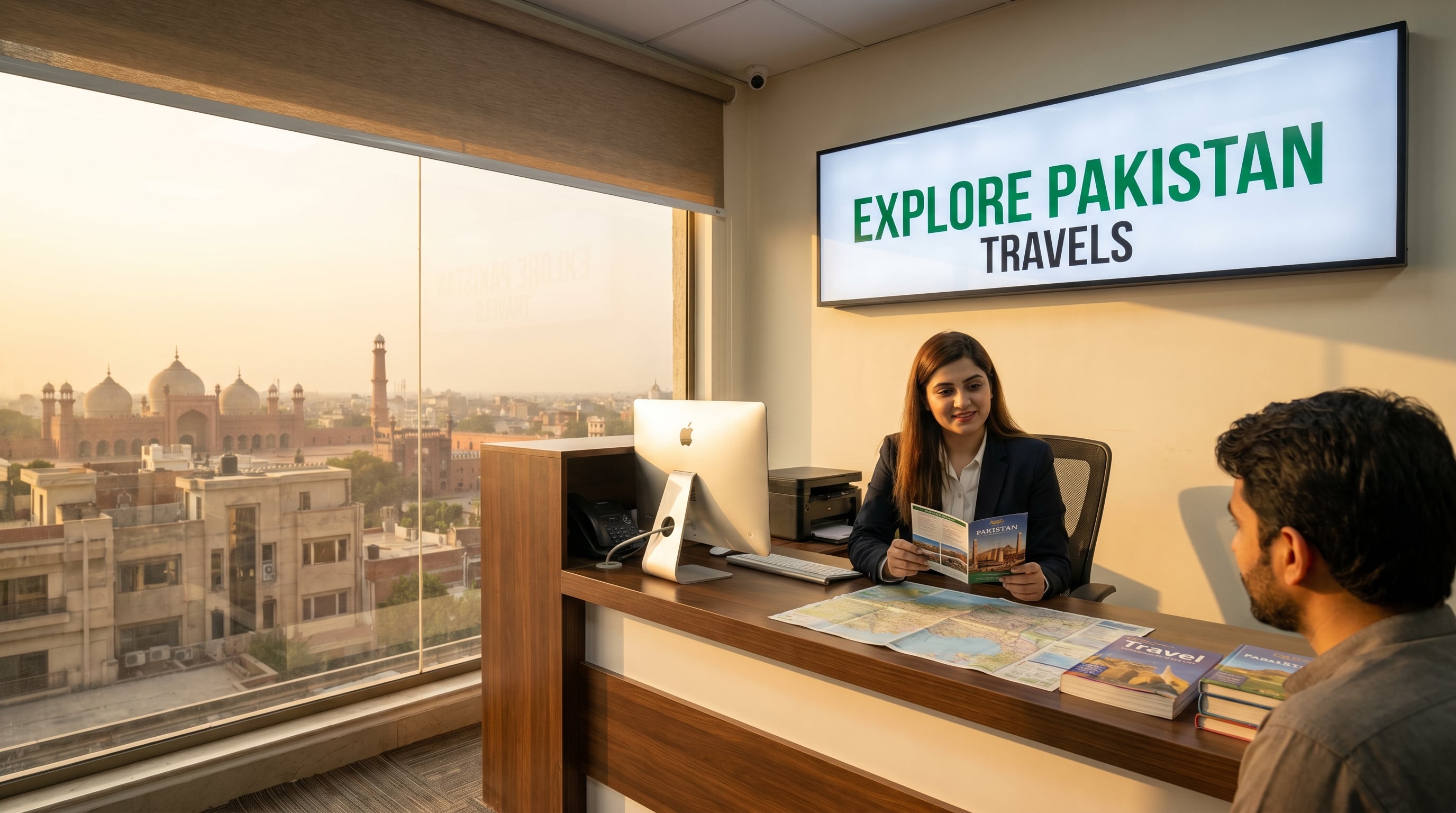
To start a travel agency in Pakistan, register your business with the SECP, get an NTN from the FBR, lease a commercial office, and enroll under the Department of Tourist Services (DTS). IATA accreditation is optional, you can sell through consolidators and B2B platforms instead, and connect to wholesale suppliers to compete from day one.
Pakistan's travel market is one of the most underrated opportunities in South Asia. With a population north of 240 million, a massive outbound religious-travel segment, and a fast-growing middle class hungry for international holidays, the demand is enormous, and a lot of it is still served by outdated, ticket-only agencies.
That's the gap. The agencies winning in Pakistan today aren't the ones just issuing airline tickets at razor-thin margins. They're the ones packaging Umrah trips, building outbound holidays to Dubai and Turkey, handling corporate accounts, and adding real value travelers can't get from a booking app. The regulatory path is manageable, the costs are reasonable, and the upside is genuine.
But there's a catch most beginners miss: the money isn't in tickets. Airline commissions in Pakistan have been squeezed for years. The real profit is in packaged products, hotels, tours, transfers, and complete itineraries where you control the markup. And that's exactly where having access to wholesale net rates changes everything for a new agency.
What You'll Learn in This Guide
- How to register your travel business with the SECP and FBR
- What DTS enrollment is and why it matters
- Whether you actually need IATA accreditation
- Realistic startup costs in PKR, with and without IATA
- The most profitable niches in the Pakistani market
- How to access wholesale net rates with no minimum volume
- How to win clients in Lahore, Karachi, and beyond
Pakistan Travel Market Overview & Opportunity
Let me give you the honest lay of the land before you spend a single rupee. Pakistan's travel industry is large, fragmented, and ripe for operators who do things properly.
240M+
Population base
Millions
Umrah & Hajj pilgrims/yr
Growing
Outbound leisure demand
Karachi
Largest agency hub
Why Pakistan Is a Strong Market
- Religious travel is enormous: Umrah and Hajj generate consistent, high-volume demand year after year. Pakistanis are among the largest pilgrim populations globally, and this segment is relatively recession-resistant, families prioritize it regardless of the economy.
- Outbound leisure is booming: A growing middle class wants holidays. Dubai, Turkey, Malaysia, Thailand, Azerbaijan, and the Maldives are hot destinations for Pakistani travelers, and packaged trips to these destinations carry healthy margins.
- The diaspora effect: Millions of overseas Pakistanis travel home and abroad, creating demand for agencies that understand both ends of the journey.
- Corporate and business travel: Karachi, Lahore, and Islamabad have significant corporate travel needs, recurring revenue that's stickier than one-off leisure bookings.
- The market is underserved by quality: Many existing agencies are old-school ticket shops. There's real room for professional, service-oriented agencies that package properly and respond fast.
The Package Opportunity
The smartest Pakistani agencies have shifted away from competing on ticket prices, that's a losing game. Instead they build complete packages: flights plus hotels plus transfers plus tours, sold at a bundled price where the client can't easily compare the components. This is where margins live, and it's exactly where wholesale net-rate inventory from a B2B platform gives a new agency the products to compete.
Licenses and the DTS: What You Actually Need
Pakistan's regulatory framework for travel agencies involves a few moving parts. Let me break them down clearly, and note upfront that rules can vary by province since tourism has been partly devolved, so always confirm current requirements with the relevant authorities.
The Core Requirements
| Requirement | What It Is | Mandatory? |
|---|---|---|
| Business Registration (SECP) | Register as a sole proprietorship, partnership (AOP), or private limited company | Yes |
| NTN (FBR) | National Tax Number for tax compliance and sales tax registration | Yes |
| DTS Enrollment | Enrollment under the Department of Tourist Services travel agency rules | Yes (sector requirement) |
| Commercial Office | A physical office in a recognised business location | Generally required |
| IATA Accreditation | For issuing airline tickets directly via BSP | Optional |
| Hajj/Umrah Approval | Separate Ministry of Religious Affairs approval for pilgrimage operations | Only if doing Hajj/Umrah |
Understanding the DTS
The Department of Tourist Services administers the travel agency rules in Pakistan. Travel agents are expected to enroll and operate in compliance with these regulations, which cover registration, professional conduct, and consumer protection. Think of DTS enrollment as the sector-specific recognition that turns "a company that happens to sell travel" into "a recognised travel agency."
Because tourism regulation has been partly devolved to the provinces, the exact process and any provincial tourism department requirements can differ between Punjab, Sindh, KP, and Balochistan. If you're setting up in Lahore versus Karachi, confirm the current procedure with both federal (DTS) and the relevant provincial tourism authority. This is the single most important compliance step to get right, so consult a local professional rather than relying on outdated online information.
Important: Hajj and Umrah operations are tightly regulated separately by the Ministry of Religious Affairs, with quota allocations and approved-operator lists. Don't assume your DTS enrollment alone lets you run pilgrimage packages, that segment has its own approval process and you must comply with it. Many agencies partner with approved Hajj/Umrah operators rather than seeking direct approval initially.
Do You Need IATA Accreditation?
This is the question that trips up most new agency owners in Pakistan. The short answer: probably not at the start. Here's the honest reasoning.
What IATA Accreditation Gives You
IATA accreditation lets you issue airline tickets directly through the Billing and Settlement Plan (BSP). It gives you a direct relationship with airlines and the ability to ticket without going through an intermediary. For high-volume ticketing agencies, it's valuable.
What It Costs You
IATA accreditation comes with real burdens: a substantial bank guarantee, audited financial statements, compliance with strict BSP rules, and ongoing financial scrutiny. For a brand-new agency, tying up a large bank guarantee before you have ticket volume is a heavy and often unnecessary commitment.
The Practical Alternative
Most new Pakistani agencies operate perfectly well without IATA by:
- Selling through consolidators: IATA-accredited consolidators ticket on your behalf for a fee, you still serve the client, they handle the ticketing plumbing.
- Working as a sub-agent: Issue tickets under an established IATA agency's accreditation while you build volume.
- Focusing on packages over tickets: Since the real margin is in packaged hotels, tours, and transfers, you can build a thriving agency where tickets are a small, outsourced part of the offering.
- Using B2B platforms: Access wholesale hotels, tours, and transfers directly, no IATA needed, and combine them with consolidator-issued flights.
Don't Chase IATA Too Early
A common and costly mistake: new owners pursue IATA accreditation immediately because it feels like the "real" credential. The bank guarantee alone can lock up capital you desperately need for working capital and marketing. Build ticket volume first through consolidators, prove your model, then pursue IATA when the economics clearly justify it. Plenty of profitable Pakistani agencies never get IATA at all.
Step-by-Step Registration Process
Here's the practical sequence from decision to operating agency. Timelines assume a non-IATA setup; add several weeks to months if pursuing IATA.
Phase 1: Business Registration (Week 1-2)
- Choose your structure: Sole proprietorship is simplest and cheapest. A private limited company via SECP offers liability protection and looks more credible to suppliers and corporate clients.
- Register with SECP: For a private limited company, reserve your name and file incorporation documents through SECP's online portal.
- Obtain your NTN: Register with the FBR for a National Tax Number. Register for sales tax if applicable.
- Open a business bank account: In the company's name. Keep business and personal funds strictly separate.
Timeline: 1-2 weeks
Phase 2: Office Setup (Week 2-4)
- Lease commercial premises: A physical office in a recognised business area is generally expected for DTS enrollment and essential for IATA if you pursue it. Lahore, Karachi, and Islamabad have established commercial zones for travel businesses.
- Set up the office: Reception, desks, computers, internet, and clear company signage. Appearance matters for credibility and any inspections.
- Lease in the company name: Not your personal name, keep it clean for compliance.
Phase 3: DTS Enrollment (Week 3-8)
- Prepare documentation: Company registration, NTN, office lease, and any other documents required by the current DTS rules.
- Apply for DTS enrollment: Submit your application under the travel agency rules. Confirm the exact procedure with federal and provincial authorities.
- Comply with conditions: Meet any consumer-protection, conduct, or financial requirements specified.
- Receive recognition: Once enrolled, your agency is a recognised, compliant travel business.
Phase 4: Supplier & Launch Setup (Week 6+)
- Consolidator relationship: Set up ticketing through an IATA consolidator if not pursuing your own IATA.
- B2B platform registration: Sign up with DMC Quote for wholesale hotels, tours, and transfers.
- Hajj/Umrah partnership: If targeting religious travel, partner with an approved operator.
- Technology: Website, CRM, accounting software, payment collection.
Startup Costs and How You Get Paid
Let me give you realistic numbers in PKR. These are indicative and vary widely by city and ambition, but they'll keep your planning grounded.
Estimated Startup Costs (Non-IATA Agency)
| Item | Cost (PKR) | Notes |
|---|---|---|
| Company registration (SECP) | 20,000-80,000 | Lower for sole prop, higher for Pvt Ltd |
| NTN & legal/professional fees | 20,000-100,000 | Lawyer/consultant for setup |
| Office deposit & rent (initial) | 150,000-500,000 | Location dependent |
| Office furnishing & equipment | 150,000-400,000 | Desks, computers, signage |
| DTS enrollment & compliance | Varies | Confirm current fees with authorities |
| Website & technology | 50,000-200,000 | Site, CRM, accounting tools |
| Working capital (3-6 months) | 400,000-1,500,000 | Rent, salaries, supplier deposits |
| Realistic Total (Non-IATA) | PKR 800,000-1,500,000+ | IATA adds substantial bank guarantee |
Adding IATA accreditation typically pushes total setup well past PKR 3,000,000 once the bank guarantee and financial requirements are included.
How Pakistani Agencies Make Money
- Ticket commissions & service fees: Thin margins on airline tickets, supplemented by service charges. Reliable but not where the profit is.
- Package markups: Buy hotels, tours, and transfers at wholesale net rates and add your margin. This is the profit engine.
- Umrah & Hajj packages: High-volume, high-trust segment with solid margins for approved operators or partners.
- Visa processing fees: Assisting with visa applications for popular destinations.
- Corporate travel management: Recurring revenue from business accounts.
The margin truth: If you build your agency around airline tickets, you'll fight for scraps against every other ticket shop. If you build it around packages, where you buy at net rates and sell at a bundled price, you control your margins and your destiny. This single strategic choice separates struggling agencies from profitable ones in Pakistan.
Most Profitable Niches in Pakistan
General "travel agency" is crowded. Specializing is how a new agency carves out profitable territory. Here are the strongest niches in the Pakistani market.
- Umrah & Hajj packages: The largest and most consistent segment. Requires proper approvals or partnership with approved operators, but the demand is reliable and families plan around it regardless of the economy.
- Outbound leisure to popular destinations: Dubai, Turkey, Malaysia, Thailand, Azerbaijan, Maldives, and Saudi Arabia for leisure. Packaged tours to these destinations carry strong margins and clear client demand. Our Dubai destination guide shows the kind of product depth available.
- Corporate & business travel: Manage travel for companies in Karachi, Lahore, and Islamabad. Recurring revenue, larger transactions, and sticky relationships.
- Honeymoon & destination weddings: High-emotion, high-value bookings, see our destination wedding services.
- Group & family tours: Multi-generational and extended-family travel is huge in Pakistani culture. One group booking is worth many individuals.
- Inbound & domestic tourism: Northern Pakistan, Hunza, Skardu, and Swat are booming for domestic and adventure tourism, an underserved, growing niche.
Choose a niche where you have connections, knowledge, or genuine interest. A Lahore agency with strong Umrah relationships should lean into that; a Karachi agency near the corporate district might own business travel.
Finding Suppliers and Wholesale Inventory
The hardest part of launching is solving the inventory problem: you need products to sell, but suppliers want volume before they give you good rates. Here's how new Pakistani agencies solve it.
Your Sourcing Options
- B2B booking platforms: The fastest route. Register and instantly access wholesale hotels, tours, transfers, and packages worldwide, no individual contracts, no volume commitments.
- Consolidators for flights: Handle ticketing without your own IATA accreditation.
- DMCs in destination markets: Ground-handling experts for tours and groups in places like the UAE, Turkey, and Southeast Asia. Learn about DMC partnerships.
- Approved Hajj/Umrah operators: Partner with them to offer pilgrimage packages without seeking direct approval initially.
Why B2B Platforms Are a Game-Changer
For a new agency in Lahore or Karachi, a B2B platform means you can quote a complete Dubai or Turkey package within minutes, at competitive net rates you mark up yourself, without having spent months building hotel contracts. You compete with established agencies from week one. See our B2B pricing guide and white-label portal options for agencies that want a branded booking site.
How DMC Quote Helps New Pakistani Agencies
Building supplier relationships from scratch is the biggest hurdle for a new agency. A B2B platform removes it. Here's specifically what DMC Quote provides to an agency starting out in Pakistan.
Wholesale Hotels
Net-rate hotels across the UAE, Turkey, Malaysia, Thailand, Saudi Arabia, and beyond, exactly the destinations Pakistani travelers want, with margins you control.
Tours & Activities
Pre-contracted tours and attractions so you can build complete packages, not just flight-and-hotel, the products that win outbound clients.
Transfers
Airport and intercity transfers at pre-negotiated rates, the details that make your packages seamless and professional.
No Minimum Volume
Start selling immediately. No room-night commitments, no subscription fees, no targets a new agency can't hit.
Why This Matters for a New Agency
- Compete from day one: Quote competitive package rates immediately instead of waiting months for supplier contracts.
- Set your own margins: Net rates let you decide markup based on client and trip, far better than thin ticket commissions.
- Focus on selling: Spend time winning clients, not negotiating with hotels abroad.
- One platform, many destinations: Build Dubai, Turkey, and Southeast Asia packages from a single login.
Ready to Access Wholesale Inventory?
Free registration. No subscription fees. No minimum volume. Start booking immediately.
Register Free AccountMarketing and Getting Clients in Pakistan
Getting licensed is the easy part. Filling your pipeline is the real work. Here's what actually drives bookings in the Pakistani market.
Digital Marketing That Works Here
- Facebook & Instagram: Pakistan's most active social platforms for travel. Post package deals, client trips, and destination content. Facebook groups for Umrah and outbound travel are goldmines.
- WhatsApp Business: The dominant communication and sales channel in Pakistan. Broadcast offers, share itineraries, and close bookings, all on WhatsApp. Essential, not optional.
- Google & local SEO: Rank for searches like "Umrah package Lahore," "Dubai tour from Karachi," and "travel agency near me."
- TikTok & YouTube: Short destination videos and package showcases reach younger travelers effectively.
Offline Channels Still Matter
- Word of mouth & referrals: Trust is everything in Pakistani business. A happy client tells their whole extended family. Treat every booking as a referral opportunity.
- Community & mosque networks: For Umrah and Hajj, community relationships and trusted recommendations drive most bookings.
- Corporate outreach: Direct relationships with company admin and HR departments for business travel accounts.
- Local partnerships: Wedding planners, event organizers, and educational consultants who refer travel.
Trust Is Your Currency
In Pakistan, travelers are wary of being cheated, scam agencies have burned many. Your single biggest competitive advantage is being demonstrably trustworthy: clear pricing, written confirmations, prompt responses, and visible reviews. Build that reputation and referrals will carry your business further than any ad budget.
Common Mistakes to Avoid
After watching agencies rise and fail in Pakistan, these are the patterns that sink newcomers. Avoid them and you're ahead of most.
- Competing only on ticket price: A race to the bottom you can't win. Build packages where you control the margin.
- Chasing IATA too early: Locking up a bank guarantee before you have ticket volume starves your working capital. Use consolidators first.
- Ignoring DTS compliance: Operating without proper enrollment risks penalties and reputation damage. Confirm and meet current requirements.
- Mishandling client money: Never spend a client's payment before the supplier is paid. This destroys trust and businesses instantly.
- Treating WhatsApp as optional: It's the primary sales channel in Pakistan. Slow WhatsApp responses lose bookings.
- Over-investing in office, under-investing in marketing: A fancy office doesn't book trips. Marketing and follow-up do.
- Skipping written confirmations: Verbal deals breed disputes. Confirm every supplier booking and client agreement in writing.
Frequently Asked Questions
Starting a travel agency in Pakistan typically costs PKR 800,000 to PKR 3,000,000 depending on scope. A basic non-IATA agency can launch for PKR 800,000 to 1,500,000, covering company registration, office setup, DTS enrollment, technology, and working capital. Adding IATA accreditation increases costs significantly due to the bank guarantee and financial requirements, often pushing total setup past PKR 3,000,000. The biggest variables are office location, whether you pursue IATA, and your working capital reserve.
You need to register your business with the SECP (or as a sole proprietorship/AOP) and obtain a National Tax Number (NTN) from the FBR. Travel agents are regulated under the Department of Tourist Services (DTS) and the travel agency rules, so DTS enrollment is the key sector-specific requirement. To issue airline tickets directly you also need IATA accreditation (optional). For Hajj and Umrah operations, separate approval from the Ministry of Religious Affairs is required.
No, IATA accreditation is not mandatory. Many agencies operate without it by selling through consolidators, sub-agents, and B2B platforms that provide access to airline and travel inventory. IATA requires a substantial bank guarantee, financial statements, and BSP compliance, so it usually makes sense only once you have steady ticket volume. New agencies commonly start without IATA and add it later as they scale, or never get it at all if they focus on packages.
The Department of Tourist Services (DTS) is the federal body that administers the travel agency rules in Pakistan. Travel agents are required to enroll and comply with DTS regulations covering registration, conduct, and consumer protection. DTS enrollment establishes your agency as a recognised, compliant travel business. Because tourism regulation has been partly devolved to provinces, requirements can vary, so always confirm current rules with the relevant federal and provincial authorities before applying.
Yes, travel agencies can be very profitable in Pakistan, especially those focused on Umrah and Hajj packages, outbound leisure to destinations like Dubai, Turkey, Malaysia, and Thailand, and corporate travel. Margins typically run 8-15 percent on flight-related sales and 15-30 percent on packages and customized tours. The religious travel segment alone moves millions of pilgrims annually. Profitability depends heavily on your niche, supplier rates, and ability to add value beyond ticket issuance.
For formal DTS enrollment and IATA accreditation, a commercial office is generally expected, so a fully home-based registered agency is difficult. However, many people start as sub-agents or work under an established agency's accreditation while building a client base, which needs minimal premises. A practical route is to begin as a sub-agent or consultant, use B2B platforms for inventory, then formalize with your own office and DTS enrollment as revenue grows.
Karachi and Lahore are the strongest markets due to population, business activity, and high outbound and religious travel demand. Islamabad and Rawalpindi are excellent for corporate and diplomatic travel. Faisalabad, Multan, and Peshawar have growing, underserved markets with less competition. The best choice depends on your network and niche, Karachi for scale and corporate travel, Lahore for a balanced consumer and religious-travel market, and smaller cities for less competition.
Business registration with the SECP takes about 1-2 weeks, and obtaining an NTN is quick. Office setup and DTS enrollment generally take a few weeks to a couple of months depending on documentation and provincial procedures. If you pursue IATA accreditation, add several more weeks to months for the financial review and bank guarantee. A realistic end-to-end timeline for a non-IATA agency is roughly 1-3 months from decision to operation.
Ready to Start Your Pakistan Travel Agency?
Join thousands of travel agents using DMC Quote to access wholesale rates for hotels, tours, and transfers across Dubai, Turkey, Southeast Asia, and beyond. Free registration, no subscription fees, no minimum volume, the inventory engine your new agency needs.
Questions? Call us at +65 8948 0242
Related Guides
How to Start a Home Based Travel Agency
Launch a travel business from home with no office, host agency vs independent, tools, and getting clients.
How to Start a Travel Agency in Bangladesh
Licensing, costs, and market strategy for launching a travel agency in Bangladesh.
Pakistan B2B Travel Portal
Access wholesale inventory for Pakistani agents through DMC Quote's B2B platform.
Wholesale Travel Rates
Understand how net rates work and how to use them to set profitable package markups.