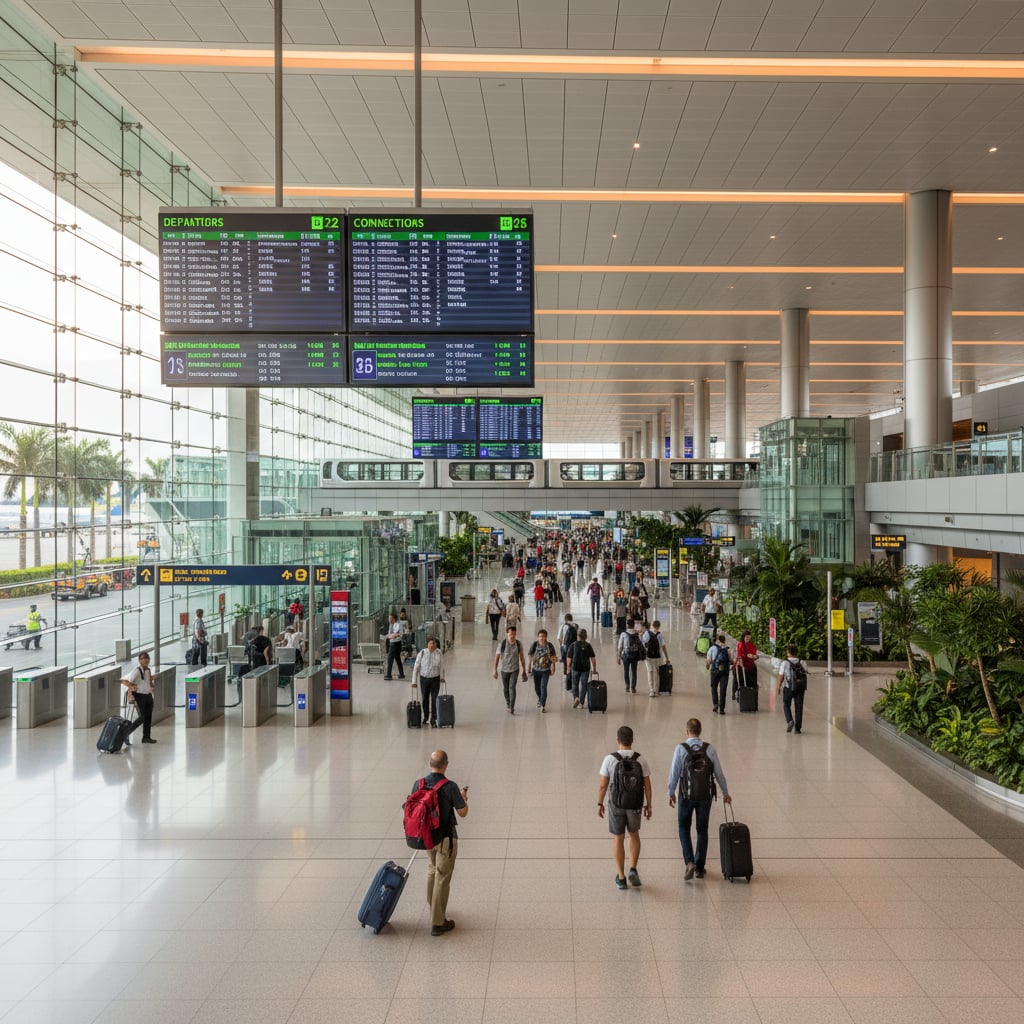
Airport connections can make or break international itineraries. A smooth transit through a major hub saves time and stress, while a complicated connection with tight timing can cause missed flights and ruined travel plans. As a travel agent, understanding the intricacies of major transit airports helps you create better itineraries, set realistic expectations, and guide clients through complex journeys. This comprehensive guide covers essential information about the world's major connection hubs.
Understanding Minimum Connection Times
Minimum Connection Time (MCT) is the shortest time airlines allow between connecting flights at specific airports. However, airline-published MCTs often don't reflect real-world conditions, especially for international connections requiring immigration, customs, and security rescreening.
MCT Categories:
- Domestic to Domestic: Typically 30-60 minutes (shortest connection time)
- International to Domestic: 60-120 minutes (requires immigration and customs clearance)
- International to International: 60-90 minutes (often in same terminal, no immigration)
- Domestic to International: 60-90 minutes (requires international security screening)
Reality vs. Published MCTs: While airlines might allow 60-minute international connections, this assumes perfect conditions: on-time arrival, efficient immigration, no checked baggage issues, and close gate proximity. Build in buffer time beyond minimum requirements, especially for important connections.
Recommended Buffer Times:
- Domestic connections: Add 30 minutes to MCT
- International connections (same terminal): Add 45-60 minutes to MCT
- International connections (terminal change): Add 90-120 minutes to MCT
- Connections involving U.S. entry: Add 2-3 hours to MCT
- First-time travelers or those with mobility issues: Add extra time
Major Asian Transit Hubs
Singapore Changi Airport (SIN): Consistently rated the world's best airport, Changi is remarkably efficient and transit-friendly. The airport has four terminals connected by Skytrain.
Terminal Layout:
- Terminal 1: Full-service carriers (Lufthansa, Air France, British Airways)
- Terminal 2: Singapore Airlines regional flights, some Asian carriers
- Terminal 3: Singapore Airlines long-haul, Star Alliance partners
- Terminal 4: Budget and regional carriers (Cathay Pacific, AirAsia, etc.)
Transit Tips: Immigration is fast and efficient. Most international-to-international connections don't require clearing immigration. Inter-terminal transfers via Skytrain take 5-10 minutes. The airport offers free Singapore tours for layovers over 5.5 hours. Recommend minimum 90 minutes for international-to-international connections, 2.5 hours if changing terminals.
Amenities: Free WiFi, sleeping areas, shower facilities, movie theaters, butterfly garden, rooftop cactus garden, swimming pool, and numerous restaurants across all price ranges.
Dubai International Airport (DXB): One of the world's busiest international airports and primary hub for Emirates Airlines. The airport has three terminals with Terminal 3 dedicated to Emirates.
Terminal Layout:
- Terminal 1: International airlines (most non-Emirates carriers)
- Terminal 2: Budget carriers and regional flights
- Terminal 3: Exclusively Emirates (divided into Concourses A, B, C)
Transit Tips: Terminal 1 and Terminal 3 are not connected airside - passengers must exit, take shuttle bus, and clear security again (45-60 minute process). Emirates-to-Emirates connections in Terminal 3 are seamless. Security screening can be slow during peak hours. Recommend minimum 2 hours for Emirates-to-Emirates, 3+ hours for inter-terminal connections.
Common Issues: Long walks between gates in Terminal 3 (up to 20 minutes). Immigration queues can be extensive during peak arrival times. Terminal change requirements catch many passengers unprepared.
Hong Kong International Airport (HKG): Efficient, modern hub serving as base for Cathay Pacific and many Asian carriers. Currently operating with COVID-era modifications but gradually returning to full capacity.
Transit Tips: Single terminal with two concourses (North and South) connected by underground train. Most international connections don't require immigration clearance. Excellent signage in English and Chinese. Recommend minimum 90 minutes for international-to-international connections.
Amenities: IMAX theater, aviation discovery center, extensive shopping, shower facilities, and numerous lounges. Free WiFi throughout.
Incheon International Airport (ICN): Seoul's main airport and hub for Korean Air and Asiana Airlines. Known for efficiency, cleanliness, and passenger amenities.
Transit Tips: Two terminals connected by shuttle train (5 minutes). Immigration is very efficient. Most international connections are seamless. Free transit tours available for layovers over 3 hours. Recommend minimum 90 minutes for same-terminal connections, 2 hours for terminal change.
Unique Features: Korean culture museum, free shower facilities, sleeping areas, 24/7 medical center, and traditional Korean food court. Ice skating rink in Terminal 1.
Bangkok Suvarnabhumi Airport (BKK): Thailand's main international gateway, serving as hub for Thai Airways and many regional carriers.
Transit Tips: Single terminal but very long concourses requiring significant walking or shuttle train use. Immigration can be slow, especially during peak afternoon arrival times. Fast track services available for premium passengers. Recommend minimum 2 hours for international connections, 2.5 hours during peak periods.
Common Issues: Long immigration queues (30-60 minutes possible). Walking distances can be extensive. Congestion during peak hours.
Middle Eastern Hub Airports
Doha Hamad International Airport (DOH): Qatar Airways hub and one of the world's newest major airports. Single terminal with excellent design and amenities.
Transit Tips: Efficient security screening. Most international-to-international connections don't require immigration. Central location makes gate-to-gate movement relatively quick. Recommend minimum 90 minutes for connections.
Amenities: Luxury shopping, fine dining, airport hotel with day rooms, free WiFi, extensive lounges, and children's play areas. Squash courts and swimming pool in transit hotel.
Abu Dhabi International Airport (AUH): Etihad Airways hub undergoing major expansion and modernization. New Midfield Terminal opened in 2019.
Transit Tips: Modern efficient terminal with good connectivity. Free shuttle bus to Abu Dhabi city for long layovers. Recommend minimum 90 minutes for Etihad-to-Etihad connections.
European Transit Hubs
Amsterdam Schiphol Airport (AMS): Major European hub known for efficiency but can be congested during peak hours.
Transit Tips: Single terminal with multiple piers connected by walking and underground passages. Schengen to non-Schengen connections require security rescreening. Immigration can be slow during peak times. Recommend minimum 75 minutes for intra-Europe connections, 2 hours for intercontinental connections.
Common Issues: Security screening capacity limited during peak morning hours (6-9am). Long walks between gates in different piers. Can be confusing for first-time users.
Frankfurt Airport (FRA): Germany's largest airport and Lufthansa's main hub. Efficient but sprawling.
Transit Tips: Two terminals connected by Skyline train. Terminal 1 is massive with multiple concourses requiring significant transit time. Recommend minimum 60 minutes for Schengen-to-Schengen, 90 minutes for international-to-international, 2 hours for complex connections.
Common Issues: Immigration can be slow for non-EU passport holders. Terminal 1 concourse changes require time. German efficiency means flights depart on time - late arrivals rarely hold connections.
London Heathrow (LHR): Europe's busiest airport with five terminals, many requiring bus transfers.
Transit Tips: Terminals 2 and 3 are walking distance. Terminal 5 (British Airways hub) is separate and requires bus transfer. Terminals 4 and 5 require bus transfers from other terminals. International-to-international connections often require security rescreening. Recommend minimum 2 hours for same-terminal, 2.5-3 hours for terminal changes.
Common Issues: Frequent delays, congestion, and complex layouts. Immigration can take 45-90 minutes for non-UK/EU travelers. Terminal transfers are time-consuming.
Paris Charles de Gaulle (CDG): Major European hub notorious for complicated layout and long connection times.
Transit Tips: Three terminals with multiple satellites. Terminal 2 has seven sub-terminals (2A through 2G). Some connections require shuttle trains or buses. Confusing signage. Immigration can be slow. Recommend minimum 2 hours for international connections, 2.5-3 hours for complex inter-terminal connections.
Common Issues: Frequently cited as one of the most confusing airports globally. Language barriers with staff. Frequent delays and strikes. Avoid tight connections at CDG.
North American Transit Hubs
U.S. Airport Transit Considerations: International passengers entering the United States must clear immigration and customs at their first U.S. port of entry, even if just connecting to another domestic or international flight. This is different from most other countries.
U.S. Transit Process:
- Arrive at first U.S. airport
- Clear immigration (CBP - Customs and Border Protection)
- Collect checked baggage
- Clear customs inspection
- Recheck baggage for connecting flight
- Clear TSA security screening again
- Proceed to departure gate for connecting flight
This process requires minimum 2-3 hours even under ideal conditions. Recommend 3-4 hours for international-to-domestic connections, especially at busy airports during peak hours.
Los Angeles (LAX): Notoriously difficult for connections. Nine separate terminals mostly not connected airside.
Transit Issues: Terminal changes often require exiting security, taking shuttle buses, and reclearance through security. International arrivals at Tom Bradley International Terminal require significant walking. Recommend minimum 3 hours for international-to-domestic connections, 4 hours if changing terminals.
San Francisco (SFO): Better connected than LAX but still challenging for international connections.
Transit Tips: International Terminal connected to domestic terminals via AirTrain. Immigration can be very slow (60-90 minutes possible). Recommend minimum 3 hours for international-to-domestic connections.
Toronto Pearson (YYZ): Canada's busiest airport and a common transit point for U.S.-bound travelers.
Transit Tips: U.S. preclearance available - passengers clear U.S. immigration in Toronto before departure, arriving in U.S. as "domestic" passengers. This is convenient but requires extra time before departure. International-to-international connections are efficient. Recommend 2.5 hours for connections with U.S. preclearance, 2 hours for other international connections.
Transit Visa Requirements
Even when not leaving the airport, some countries require transit visas for certain nationalities:
Countries Commonly Requiring Transit Visas:
- United States: Most travelers require ESTA or visa even for transit (some exceptions for certain countries with transit without visa programs)
- Canada: Many nationalities require transit visa or eTA even for airport connections
- United Kingdom: Some nationalities require Direct Airside Transit Visa (DATV) even without entering UK
- Australia: Transit visa or ETA required for most connections, even without leaving airport
- China: 24-hour visa-free transit available in many cities; 72/144-hour visa-free transit available in major cities for specific nationalities
Always verify transit visa requirements based on client nationality and itinerary. Transit visa requirements change frequently.
Luggage Considerations for Connections
Through-Checked Baggage: Most itineraries on single tickets or airline partners allow through-checked baggage directly to final destination. Verify this at check-in and confirm luggage tags show final destination.
Exception - U.S. Connections: Even with through-checked baggage, passengers must collect bags at first U.S. entry point, clear customs, then recheck bags. This is universal for international-to-domestic U.S. connections.
Separate Tickets: If clients book separate tickets (even on same airline), baggage typically isn't through-checked. Clients must collect baggage, exit to public area, check in again for next flight. This requires much longer connection times and appropriate visas to enter the country.
Interline Agreements: Some airlines have baggage agreements allowing through-checking even on separate tickets. Verify with airlines before booking. Don't assume this exists.
Special Assistance During Connections
Mobility Assistance: Passengers requiring wheelchairs or mobility assistance should request this when booking. Airports provide wheelchair services between gates during connections. However, services can be slow at busy airports - add extra time for connections.
Unaccompanied Minors: Children traveling alone are escorted between gates by airline staff. Airlines charge fees for this service and have specific age requirements and procedures. Recommend longer connection times for unaccompanied minors.
Transfer Desks: Many major hubs have dedicated transfer desks for passengers with tight connections or complications. Staff can help with rebooking, gate information, or expedited services.
What to Do When Connections Are Missed
Despite best planning, connections are sometimes missed due to delays. Advise clients on procedures:
If on Single Ticket: Airlines are responsible for rebooking passengers on next available flight at no additional cost if the missed connection was due to airline delay. Head directly to airline service desk or transfer desk.
If on Separate Tickets: Airlines have no obligation to assist. Clients are responsible for booking new flights at their own expense. This is why separate ticket bookings for tight connections are risky.
Travel Insurance: Trip delay coverage in travel insurance may reimburse additional accommodation, meals, and alternative transportation costs if connections are missed due to covered reasons (weather, airline delays). Clients need documentation from airlines.
Creating Connection-Friendly Itineraries
Best Practices:
- Use major hubs known for efficiency (Singapore, Incheon, Doha) when possible
- Avoid airports with complicated layouts or frequent delays (LAX, CDG, LHR) for tight connections
- Book morning departures for connections - afternoon/evening flights more likely to experience cascading delays
- Keep connections on same alliance or partner airlines for smoother transfers
- Avoid terminal changes when possible
- Build in buffer time beyond minimum connection times
- Consider overnight connections for complex international itineraries
- Book through tickets rather than separate tickets when possible
Red Flag Connections to Avoid:
- Any U.S. connection under 3 hours for international arrivals
- LAX terminal changes under 4 hours
- London Heathrow terminal changes under 2.5 hours
- Paris CDG connections under 2 hours
- Any connection during peak hours at chronically delayed airports
- Last flight of the day connections (no alternatives if missed)
Hub-Specific Client Guidance
Create hub-specific quick guides for clients with key information:
- Terminal layout and connection procedures
- Immigration/customs requirements
- Approximate time needed for connection process
- WiFi access information
- Lounge locations (if applicable)
- Food options for different budgets
- Facilities (showers, sleeping areas, prayer rooms)
- Emergency contact numbers
Provide these guides with travel documents so clients know what to expect at each connection point.
Visit dmcquote.com for detailed airport transit guides and connection planning resources, or access your agent portal for downloadable hub-specific client guides. For questions about complex itinerary connections, contact our routing specialists.
Understanding airport transit procedures transforms you from a ticket seller to a true travel expert. Clients appreciate agents who consider connection logistics and create stress-free itineraries. Your knowledge of global airport hubs demonstrates professional competence and builds client confidence in your planning abilities.