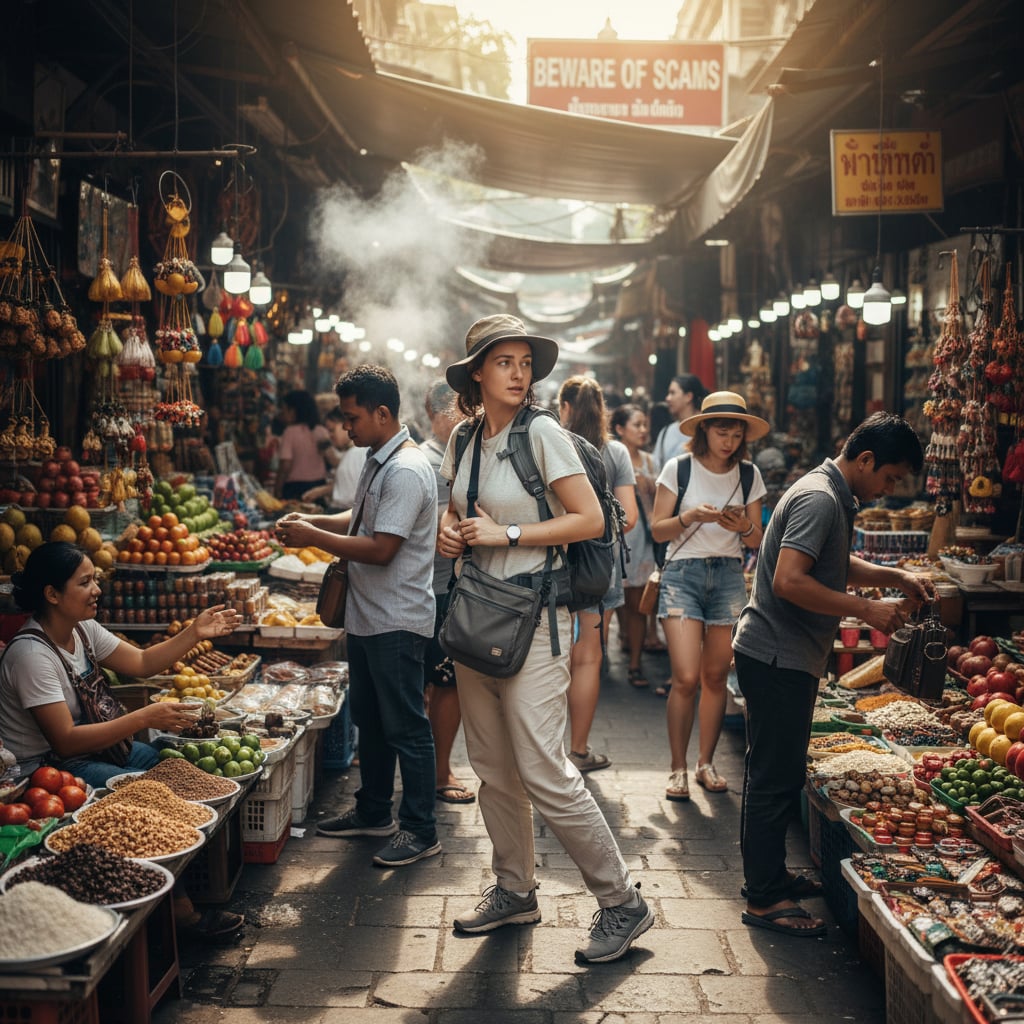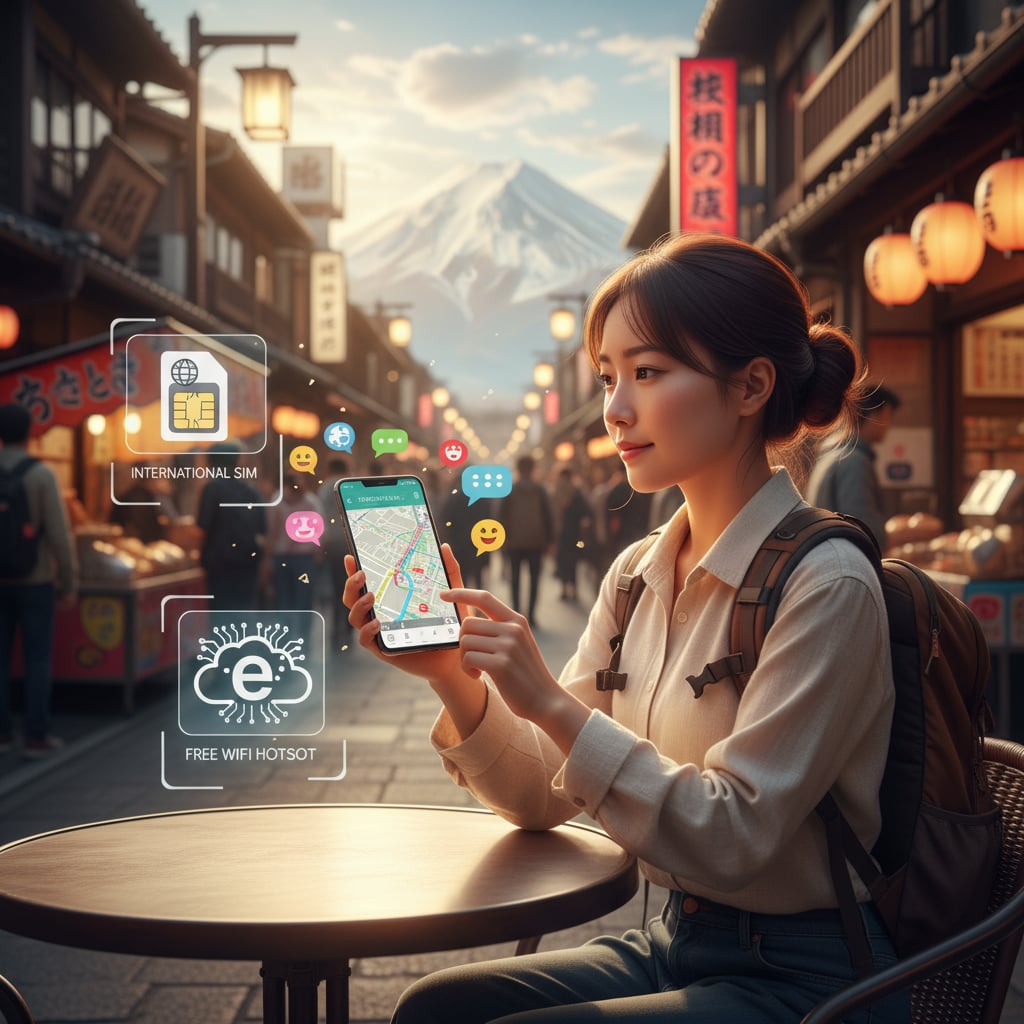
Staying connected while traveling internationally is no longer a luxury but a necessity. From navigating unfamiliar cities with GPS to communicating with hotels and tour operators, accessing travel documents, and maintaining contact with family back home, reliable mobile connectivity is essential for modern travelers. As a travel agent, guiding clients through connectivity options helps them choose the most cost-effective and practical solutions for their specific trips. This comprehensive guide covers all international communication options.
Understanding International Connectivity Options
Travelers have five primary options for staying connected internationally, each with distinct advantages and disadvantages:
1. International Roaming: Using home country mobile service in foreign countries through roaming agreements between carriers.
2. Local SIM Cards: Purchasing prepaid SIM cards from carriers in destination countries.
3. eSIM Digital Plans: Downloading digital SIM profiles to compatible phones without physical SIM cards.
4. Portable WiFi Hotspots: Renting or purchasing mobile WiFi devices that create personal internet networks.
5. WiFi-Only Strategy: Relying solely on hotel, café, and public WiFi networks.
The optimal choice depends on destination, trip duration, data needs, number of countries visited, phone compatibility, and budget.
International Roaming: Convenience at a Cost
International roaming allows travelers to use their home phone number and existing plan abroad through carrier partnerships.
How Roaming Works: When phones connect to foreign networks, home carriers charge roaming fees for calls, texts, and data usage. Fees vary dramatically by carrier and destination.
Traditional Roaming Costs (Without Special Plans):
- Data: $10-20 per megabyte (MB) - a single photo could cost $50-100!
- Phone calls: $1-5 per minute
- Text messages: $0.50-1.50 per message
- Receiving calls: $1-3 per minute
These rates are prohibitively expensive. A few hours of normal phone use could generate thousands in charges.
Modern International Roaming Plans: Most carriers now offer international plans that significantly reduce costs:
U.S. Carriers:
- T-Mobile: Magenta plans include unlimited international data and texting in 210+ countries at no extra cost (data speeds capped at 2G/3G). Calls are $0.25/minute. This is exceptional value for frequent travelers.
- Verizon: TravelPass charges $10/day in 210+ countries when phone is used (calls, texts, and data use your regular plan allowances). If phone isn't used, no charges apply. Good for short trips.
- AT&T: International Day Pass is $10/day in 210+ countries with usage from regular plan. Passport plan offers discounted rates in specific country packages.
- Google Fi: Designed for travelers. Flat-rate international data and texting in 200+ countries at no extra cost. Calls are $0.20/minute. Excellent for digital nomads and frequent travelers.
Canadian Carriers:
- Rogers, Bell, Telus offer Roam Like Home or similar programs
- Typically $7-12 CAD per day in popular destinations
- Use regular plan allowances while abroad
European Carriers: EU regulations allow free roaming across EU member states. European travelers can use domestic plans throughout the EU without additional charges (fair use policies apply).
When Roaming Makes Sense:
- Short trips (1-5 days) where daily fees are manageable
- Need to maintain home phone number accessibility
- Visiting countries with expensive local SIM options
- Minimal data usage needs
- Premium carriers with good international plans (T-Mobile, Google Fi)
When to Avoid Roaming:
- Extended trips where daily fees accumulate significantly
- Heavy data users (streaming, video calls, social media)
- Budget-conscious travelers
- Carriers with expensive roaming rates
- Remote destinations with poor roaming network coverage
Critical Roaming Advice: Always contact carriers before international travel to understand exact costs and activate international features. Never assume roaming is enabled or affordable without verification. Disable data roaming in phone settings and manually enable only when needed to prevent bill shock from automatic updates and background app usage.
Local SIM Cards: Maximum Value for Extended Stays
Purchasing local prepaid SIM cards in destination countries offers the best value for data and calls, especially for trips longer than a week.
How Local SIMs Work: Travelers purchase prepaid SIM cards from local carriers, insert them into unlocked phones (replacing home SIM), and receive local phone numbers with data, call, and text allowances. This provides full-speed local network access at local prices.
Requirements for Using Local SIMs:
- Unlocked phone: Most critical requirement. Phones must be carrier-unlocked to accept foreign SIM cards. Contact home carrier to unlock before travel (usually requires account in good standing and phone fully paid off).
- Compatible phone: Verify phone supports frequency bands used in destination countries. Most modern smartphones are multi-band compatible, but some budget devices may have limitations.
- Passport: Many countries require passport registration when purchasing SIM cards for security reasons.
- Physical SIM slot: Some newer phones (iPhone 14+ in U.S.) have no physical SIM slot, only eSIM capability.
Where to Buy Local SIMs:
- Airport kiosks (Best for convenience): Available immediately upon arrival. Slightly more expensive but staff can help with installation and activation. Operating hours may be limited to flight arrival times.
- Carrier stores in cities: Better prices than airports. Wider plan options. Staff assistance available. Requires travel to store location.
- Convenience stores: 7-Eleven (Thailand, many Asian countries), FamilyMart, and similar chains sell prepaid SIMs. Cheapest option but may require self-activation and language skills.
- Online pre-order: Some companies allow advance purchase with delivery to hotels or airport pickup. Guarantees availability and saves time.
Typical Local SIM Costs and Data Allowances:
- Thailand: 7-day tourist SIM with 10-15GB data, unlimited domestic calls: $10-15
- Vietnam: 30-day plan with 60GB data: $8-12
- India: 28-day plan with 1-2GB/day, unlimited calls: $5-10 (foreigners may face challenges due to registration requirements)
- Japan: 7-day unlimited data SIM: $20-30 (more expensive than Southeast Asia)
- Europe: Regional SIMs covering multiple EU countries, 30-day plans with 12-20GB: $30-40
- Australia: 28-day plan with 40GB data: $25-35
Multi-Country SIM Options: Regional SIM cards work across multiple countries in specific areas:
- Europe: Three, Orange Holiday, Vodafone Traveller SIMs work across EU countries
- Southeast Asia: Some providers offer regional plans covering Thailand, Vietnam, Cambodia, Singapore, Malaysia
- Caribbean: LIME and Digicel offer regional coverage
These cost more than single-country SIMs but less than buying separate SIMs in each country.
Local SIM Advantages:
- Lowest cost per gigabyte of data
- Full-speed local network access
- Local phone number for calling hotels, restaurants, tour operators
- No daily fees or surprise charges
- Can be topped up if needed
Local SIM Disadvantages:
- Different phone number in each country (family can't reach you on regular number)
- Need to safely store home SIM card
- Setup time required upon arrival
- Language barriers in some countries
- Won't work in locked phones
- Some countries have complex registration requirements
Important Notes for India: India has strict SIM registration requirements. Tourists technically can purchase SIMs but activation can take 24-48 hours and require local address verification. Many travelers struggle with this process. Consider eSIM or roaming for India instead.
eSIM Technology: The Future of Travel Connectivity
eSIM (embedded SIM) is digital SIM technology built into newer smartphones. Instead of physical cards, users download digital SIM profiles through apps or QR codes.
How eSIM Works: Compatible phones have embedded SIM chips. Users purchase eSIM plans from providers, receive QR codes or app downloads, activate profiles digitally, and connect to networks - all without physical SIM cards.
eSIM-Compatible Phones:
- iPhone XS, XR, 11, 12, 13, 14, 15 and newer (iPhone 14+ U.S. models are eSIM-only)
- Google Pixel 3, 4, 5, 6, 7, 8 and newer
- Samsung Galaxy S20, S21, S22, S23, S24 and newer (most variants)
- Samsung Galaxy Z Flip, Z Fold series
- Most recent flagship phones from major manufacturers
- Check with manufacturer - not all variants support eSIM
Popular eSIM Providers:
- Airalo: Largest eSIM marketplace. Plans for 200+ countries and regions. Data-only plans from $4.50 for 1GB. User-friendly app. Excellent for first-time eSIM users.
- Holafly: Unlimited data plans in many countries. More expensive but good for heavy data users. Plans from $19 for 5 days.
- Nomad: Competitive pricing. Regional and global plans available. Strong coverage in Asia and Europe.
- Ubigi: Partnerships with major carriers globally. Reliable service. Plans from $5 for 500MB.
- GigSky: Established provider. Good coverage in premium destinations. Higher prices but reliable.
eSIM Pricing Examples:
- Thailand 7 days, 10GB data: $10-15
- Europe 30 days, 20GB data: $25-35
- Global 7 days, 5GB data: $20-30
- Japan 15 days, unlimited data: $35-45
- Multi-country Asia 30 days, 10GB: $30-40
eSIM Advantages:
- Purchase and activate before departure from home
- No need to find SIM vendors upon arrival
- Keep home SIM active simultaneously (dual SIM functionality)
- Receive calls on home number while using eSIM data
- Instantly switch between plans and countries
- No physical cards to lose or store
- Add multiple eSIM profiles to one device
- Perfect for multi-country trips
eSIM Disadvantages:
- Generally more expensive than local SIMs (but more convenient)
- Requires eSIM-compatible phone
- Usually data-only (no voice calling - use apps like WhatsApp)
- Some providers have usage restrictions or speed caps
- Requires internet connection to purchase and activate initially
When eSIM is Ideal:
- Multi-country trips where buying multiple SIMs is inconvenient
- Short-to-medium trips (1-3 weeks)
- Travelers who want convenience over absolute lowest cost
- Need to maintain accessibility on home number
- Phones without physical SIM slots (newer iPhones)
- First-time international travelers who want simple setup
Portable WiFi Hotspots: Shared Connectivity
Portable WiFi devices (also called pocket WiFi or MiFi) create personal WiFi networks that multiple devices can connect to simultaneously.
How Portable WiFi Works: Small battery-powered devices contain SIM cards and create WiFi networks. Users connect phones, tablets, laptops to the device. Multiple people can share one hotspot.
Rental Services:
- Skyroam/Solis: Global coverage, daily rates or monthly plans. Unlimited data in many countries. Device rental or purchase options.
- TravelWifi: Airport pickup/drop-off. Popular in Asian countries. $8-15/day typical rates.
- XOXO WiFi: Japan specialist but expanding to other countries. Strong coverage and speeds in Japan.
- Local rental companies: Available at many Asian airports. Often cheapest option for single-country travel.
Typical Costs:
- Japan: $8-12/day unlimited data
- Korea: $7-10/day unlimited data
- Thailand: $5-8/day with data caps
- Europe: $10-15/day unlimited data
- Global plans: $9-15/day for multiple countries
Weekly and monthly rates often available at discounts.
Portable WiFi Advantages:
- Share connection among multiple people (cost-effective for families/groups)
- Connect laptops and tablets without cellular capability
- Keep home SIM in phone unchanged
- Maintain home phone number while having internet
- Reliable speeds often better than public WiFi
- No phone compatibility requirements
Portable WiFi Disadvantages:
- Another device to carry, charge, and manage
- Can be expensive for solo travelers
- Limited battery life (4-8 hours typically) requires charging
- Everyone must stay within WiFi range of device
- Rental devices require pickup/drop-off coordination
- Late return fees, damage fees, lost device fees can be expensive
When Portable WiFi Makes Sense:
- Families or groups traveling together
- Need to connect laptops or tablets
- Countries where local SIMs are restricted or expensive
- Business travelers needing reliable connectivity for multiple devices
- Phones that are locked or incompatible with local networks
WiFi-Only Strategy: Budget Approach with Limitations
Some travelers rely solely on hotel, café, and public WiFi networks to avoid connectivity costs entirely.
WiFi-Only Advantages:
- Zero additional cost
- WiFi increasingly available at hotels, cafés, restaurants, airports
- Sufficient for basic needs if planned carefully
WiFi-Only Disadvantages:
- No GPS/maps while walking or exploring
- Cannot call taxis or communicate while out
- Cannot access reservations or tickets without WiFi
- Public WiFi security risks
- Inconsistent availability and reliability
- Cannot be reached in emergencies
- Severely limits spontaneity and flexibility
Making WiFi-Only Work:
- Download offline maps before leaving WiFi (Google Maps, Maps.me)
- Screenshot important reservations, tickets, addresses
- Download entertainment for flights and transit
- Use messaging apps (WhatsApp, Telegram) when WiFi available
- Plan each day while at hotel WiFi
- Use VPN for security on public networks
- Inform family of communication limitations
WiFi-only is viable for budget travelers in WiFi-rich destinations (most of Europe, East Asia) who plan carefully. Not recommended for first-time travelers, families, or those visiting areas with limited WiFi infrastructure.
Making Voice Calls Internationally
Traditional phone calls are often unnecessary with modern messaging apps, but understanding options is important.
VoIP Apps (Best Option): Voice over IP applications use internet connections for calls:
- WhatsApp: Most popular globally. Voice and video calls over WiFi or data. Free. End-to-end encrypted.
- FaceTime (Apple): Works between Apple devices. Audio and video. Free over WiFi/data.
- Skype: Traditional VoIP leader. Can call regular phone numbers for small fees.
- Telegram: Growing popularity. Voice calls, video calls, messaging. Free.
- Facebook Messenger: Widely used. Voice and video calls. Free.
These require internet connectivity (WiFi or mobile data) but are free for app-to-app calls. Call quality depends on connection speed.
Calling Regular Phone Numbers: When calling businesses, hotels, or landlines that don't use messaging apps:
- Use local SIM for cheapest local calls
- Skype credit or Google Voice for international calls (pennies per minute)
- Hotel phones (ask about charges first - often expensive)
- International roaming (expensive but convenient)
Receiving Calls on Home Number: Options for staying reachable:
- International roaming with home SIM
- Dual SIM phones (eSIM for data, physical SIM for calls)
- Call forwarding to VoIP numbers
- Google Voice (U.S. only) forwarding
Data Usage Estimation
Help clients choose appropriate data plans by estimating usage:
Approximate Data Usage:
- Maps navigation: 5-20MB per hour
- Web browsing: 50-200MB per hour
- Social media: 100-300MB per hour
- Messaging apps (text only): 1-5MB per day
- Email checking: 10-50MB per day
- Music streaming: 40-150MB per hour
- Video streaming (SD): 300-700MB per hour
- Video streaming (HD): 1-3GB per hour
- Video calls: 200-500MB per hour
Typical Traveler Profiles:
- Light user: 1-3GB/week (maps, messaging, light browsing)
- Moderate user: 3-7GB/week (social media, photo uploads, regular browsing)
- Heavy user: 7-15GB/week (video streaming, video calls, constant connectivity)
- Extreme user: 15GB+/week (working remotely, extensive streaming)
Data Saving Tips:
- Download maps, entertainment, guides on hotel WiFi
- Disable auto-play videos on social media
- Limit photo/video uploads to WiFi
- Use WiFi for video calls and streaming
- Disable background app refresh
- Use data-saving modes in apps
- Monitor usage through phone settings
Communication Recommendations by Trip Type
Short trips (1-7 days):
- Best: International roaming with daily plans (if available) or eSIM
- Alternative: Portable WiFi for groups, local SIM for solo travelers
Medium trips (1-3 weeks), single country:
- Best: Local SIM card or eSIM
- Alternative: Portable WiFi for families
Long trips (3+ weeks), single country:
- Best: Local SIM card (most economical)
- Alternative: eSIM with data top-ups
Multi-country trips:
- Best: eSIM with regional or global plans
- Alternative: T-Mobile or Google Fi roaming, regional SIM cards
Digital nomads/remote workers:
- Best: Google Fi or T-Mobile for seamless global connectivity
- Alternative: Local SIMs in each location for best speeds/value
Families/groups:
- Best: Portable WiFi hotspot shared by all
- Alternative: eSIM or local SIM for each person
Visit dmcquote.com for destination-specific connectivity guides and provider recommendations, or access your agent portal for downloadable communication planning tools. For questions about connectivity options for specific itineraries, contact our travel technology specialists.
Comprehensive communication guidance demonstrates your technical knowledge and helps clients make informed decisions about staying connected abroad. Well-connected travelers navigate more confidently, access important information easily, and maintain peace of mind through family contact. Your expertise in this practical area adds significant value to your travel planning services.