Money management is one of the most practical aspects of international travel that clients need guidance on. From deciding how much cash to carry to choosing the best credit cards and understanding exchange rates, proper financial planning prevents stress and saves significant money. As a travel agent, providing comprehensive currency advice demonstrates your expertise and helps clients avoid costly mistakes. This detailed guide covers everything about travel money management.
Pre-Departure Money Preparation
Advise clients to prepare their financial strategy weeks before departure, not at the last minute at airport exchange counters.
Notify Banks and Credit Card Companies: This is the single most important pre-trip financial task. Call or use apps/websites to notify banks of travel dates and destinations. Without notification, fraud detection systems may freeze accounts when foreign transactions appear, leaving clients stranded without access to funds.
What to tell banks:
- All travel dates including departure and return
- All countries being visited (including connection countries)
- All cities if traveling within large countries
- Request 24/7 international contact numbers for emergencies
- Verify international ATM withdrawal limits and fees
- Confirm credit card foreign transaction fees
Research Destination Currency: Understand basic information about destination currencies:
- Current exchange rate to home currency
- Common denominations (bills and coins)
- Whether credit cards are widely accepted or cash is essential
- ATM availability and reliability
- Tipping customs and typical amounts
Order Small Amount of Destination Currency: If possible, obtain $50-100 equivalent of destination currency before departure. This covers immediate needs upon arrival: taxi, snacks, tips, or emergencies if ATMs are unavailable. However, don't exchange large amounts before departure as rates at home banks are typically unfavorable.
Cash vs. Cards: Finding the Right Balance
The optimal strategy combines multiple payment methods for flexibility and security.
When Cash is Essential:
- Street food and small local restaurants
- Markets and small shops
- Taxis and tuk-tuks in many countries
- Tips for hotel staff, guides, drivers
- Entrance fees to smaller attractions
- Rural areas with limited card infrastructure
- Backup for card payment failures
Recommended Cash Amounts by Destination Type:
- Developed countries (Japan, Singapore, Western Europe): Minimal cash needed - $50-100/day for incidentals. Cards widely accepted.
- Southeast Asia (Thailand, Vietnam, Cambodia): $50-150/day in cash for most expenses. Cards accepted at hotels and larger restaurants.
- South Asia (India, Nepal, Sri Lanka): $100-200/day in cash. Card acceptance improving but cash still dominant.
- Remote/rural destinations: Carry enough cash for entire duration as ATMs may be unavailable or unreliable.
When to Use Credit Cards:
- Hotel accommodation (often required for reservations)
- Airline ticket purchases
- Car rentals (usually require credit cards)
- Larger purchases for fraud protection
- Chain restaurants and established retailers
- Online bookings and advance payments
When to Use Debit Cards:
- ATM withdrawals for local currency
- Daily expenses when credit cards aren't ideal
- Controlling spending (limited to account balance)
Choosing the Best Travel Credit Cards
Not all credit cards are equal for international travel. Help clients select appropriate cards before trips.
Foreign Transaction Fees: Most credit cards charge 2.5-3% fees on all foreign currency transactions. This adds up significantly - $3,000 in expenses incurs $75-90 in fees. Premium travel cards waive foreign transaction fees, saving substantial money on international trips.
Recommended Travel Card Features:
- Zero foreign transaction fees (most important)
- No annual fee or rewards that justify annual fees
- Chip-and-PIN technology (EMV chip standard globally)
- Travel rewards, miles, or cashback
- Travel insurance benefits (trip cancellation, baggage, rental car)
- Airport lounge access (premium cards)
- No preset spending limits for large purchases
- 24/7 fraud protection and customer service
Popular Travel Credit Cards: Examples include Chase Sapphire Preferred/Reserve, Capital One Venture, American Express Gold/Platinum, Citi Premier. Research current offerings as benefits change frequently.
Chip-and-PIN vs. Chip-and-Signature: Most U.S. cards use chip-and-signature while European and Asian systems use chip-and-PIN. U.S. cards work in most situations, but some automated kiosks (train tickets, parking, gas stations) in Europe may reject signature-based cards. Knowing PIN for credit cards prevents issues at automated machines.
ATM Strategy for International Travel
ATM withdrawals typically offer the best exchange rates for obtaining local currency. However, fees and strategies matter significantly.
ATM Fees Breakdown:
- Foreign ATM fee: Your bank charges $3-5 per withdrawal for using non-network ATMs abroad
- International transaction fee: 1-3% of withdrawal amount
- ATM owner fee: Foreign bank operating the ATM charges $2-6 per transaction
- Dynamic currency conversion fee: Additional 3-7% if you choose to be charged in home currency instead of local currency (avoid this!)
Total fees can reach 10-15% per transaction if not careful. A $100 withdrawal might incur $10-15 in fees.
Minimizing ATM Fees:
- Use banks that reimburse international ATM fees (Charles Schwab, Fidelity, some credit unions)
- Withdraw larger amounts less frequently to minimize per-transaction fees
- Always choose to be charged in local currency, not home currency
- Use bank-operated ATMs inside branches during business hours when possible (more secure, better exchange rates)
- Avoid independent ATM operators in tourist areas (highest fees)
- Know your daily withdrawal limits and plan accordingly
ATM Safety Tips:
- Use ATMs inside banks or hotels rather than on streets
- Check for card skimming devices before inserting card
- Cover PIN entry with your hand
- Be aware of surroundings and people watching
- Count money in a secure location, not at the ATM
- Don't accept "help" from strangers at ATMs
- If card is captured by ATM, contact bank immediately
Countries with ATM Challenges:
- Cuba: Limited ATM availability, many don't accept foreign cards. Bring cash.
- Myanmar: ATMs now available but can be unreliable. Bring backup cash.
- Rural areas worldwide: ATMs may be non-existent. Plan ahead.
- India: ATM limits can be low (₹10,000-20,000 per transaction). May need multiple withdrawals.
Currency Exchange Strategy
Where and how clients exchange money significantly impacts how much local currency they receive.
Exchange Options Ranked from Best to Worst:
1. ATM withdrawals (Best): Generally offer wholesale exchange rates with minimal markup (1-3% total fees if done correctly). Most cost-effective for most travelers.
2. Local bank exchange counters: Slightly worse rates than ATMs but reasonable. Require visiting during business hours. Safe and legitimate.
3. Authorized currency exchange offices: Rates vary widely. Compare rates and fees before exchanging. Avoid exchanging large amounts. Check for hidden commissions.
4. Hotel exchange desks: Convenient but expensive. Typical rates are 5-10% worse than ATMs. Use only for small amounts in emergencies.
5. Airport exchange counters (Worst): Most expensive option. Rates can be 10-15% worse than ATMs. Exchange only minimal amounts needed for immediate use (taxi to hotel). Never exchange significant sums at airports.
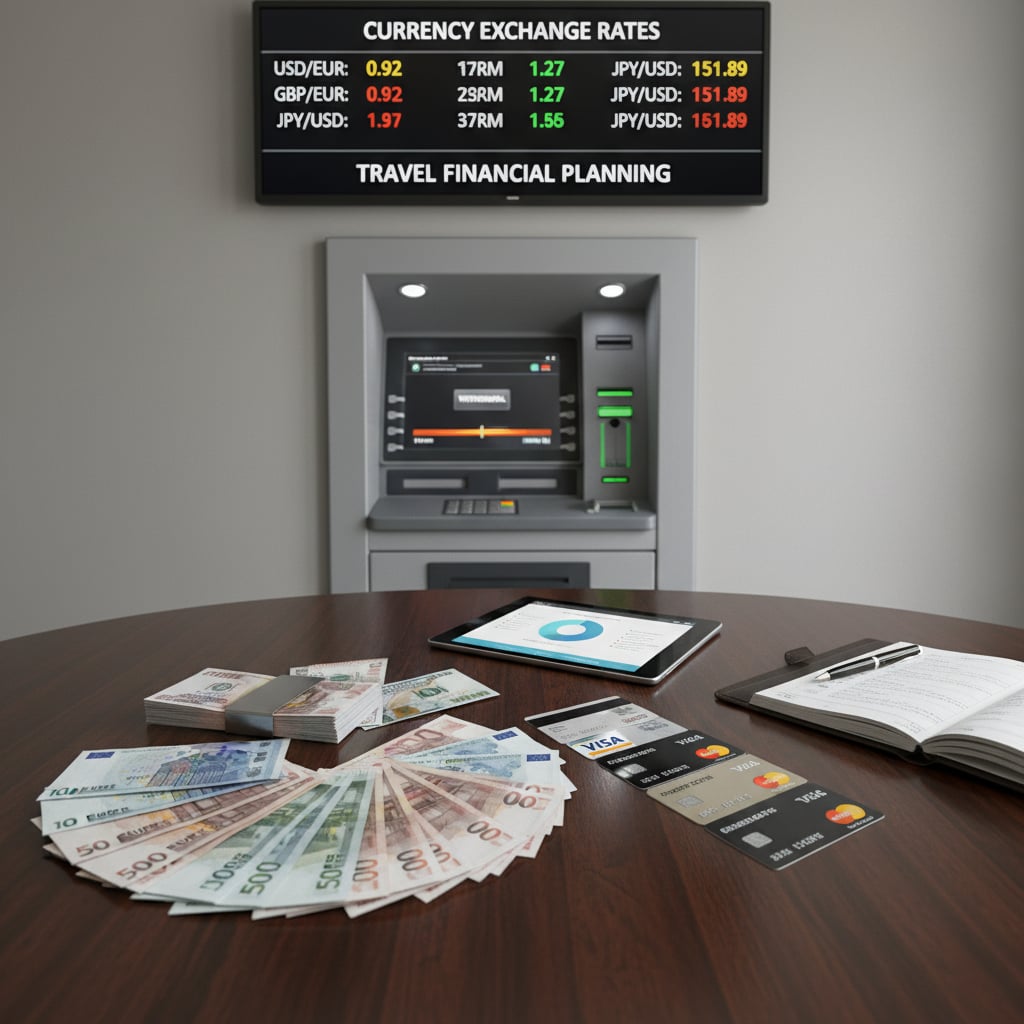
Understanding Exchange Rates: Exchange rate displays show "buy" and "sell" rates from the exchange office's perspective:
- Buy rate: What they pay you for your currency (lower number - worse for you)
- Sell rate: What they charge you for foreign currency (higher number - worse for you)
- The spread (difference between rates) is their profit margin
- Wider spreads = worse deals for customers
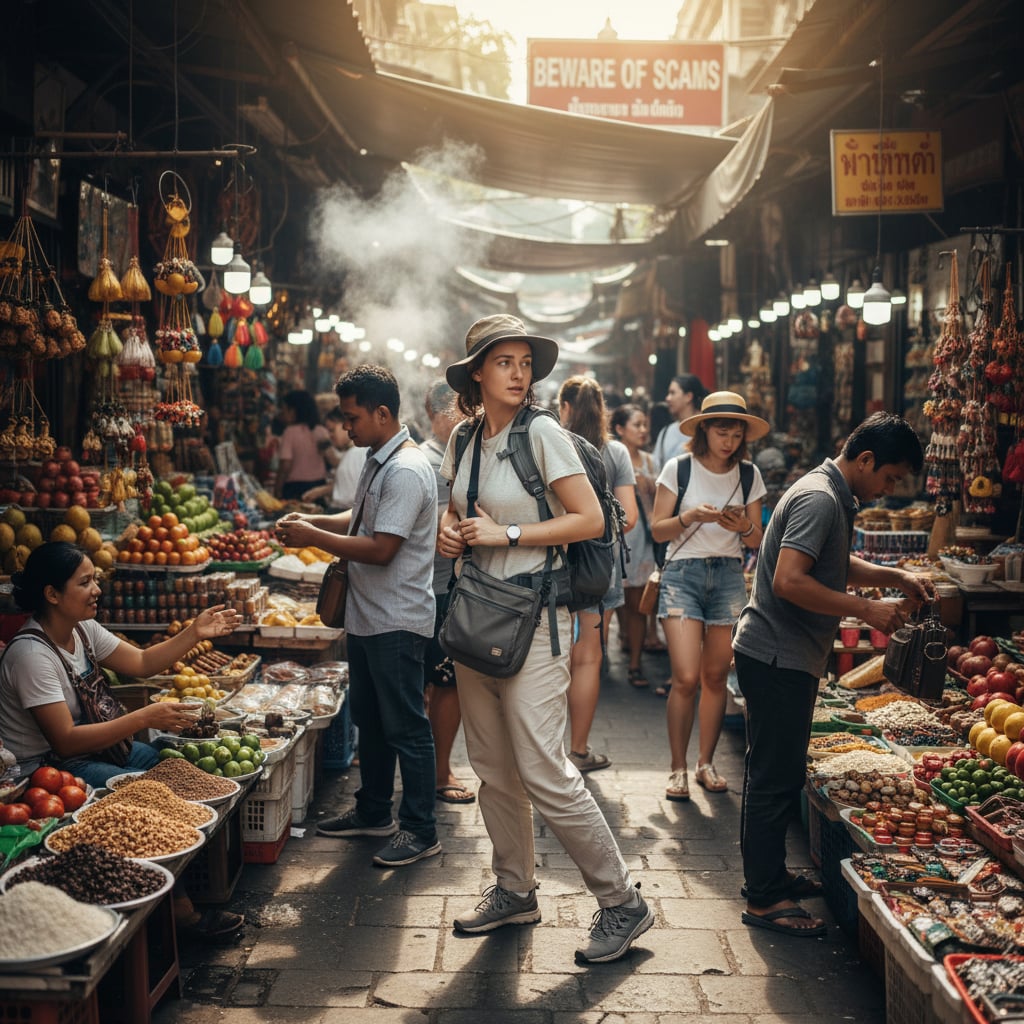
Red Flags for Exchange Scams:
- Rates significantly better than nearby competitors (likely a scam)
- Hidden commission fees not mentioned until after exchange
- Pressure to exchange immediately without time to calculate
- Confusing calculations or unwillingness to explain fees
- No receipt provided for transaction
- Unmarked offices or street exchangers
Commission Traps: Some exchange offices advertise "0% commission" but build fees into terrible exchange rates. Always ask: "What is the total amount I will receive after all fees?" Calculate this against current market rates using xe.com or similar apps.
Dynamic Currency Conversion (DCC) - Always Decline
Dynamic Currency Conversion is a practice where merchants or ATMs offer to charge your card in your home currency instead of local currency. This seems convenient but is extremely expensive.
How DCC Works: At checkout or ATM, you're asked "Would you like to be charged in USD (your home currency) or Thai Baht (local currency)?" Choosing your home currency seems familiar and safe, but:
- The merchant/ATM sets the exchange rate (not your bank)
- They use rates 3-7% worse than market rates
- You still pay your bank's foreign transaction fee
- You pay double fees and get terrible exchange rates
Always Choose Local Currency: When presented with currency choice options, always select the local currency. Let your bank handle the conversion at much better rates.
Example: $100 restaurant bill in Thailand:
- Choosing THB (local currency): Bank converts at market rate, total cost ~$100-101
- Choosing USD (DCC): Merchant converts at inflated rate, total cost ~$107-110
This 7-10% difference applies to every transaction, adding hundreds of dollars in unnecessary costs over a trip.
Digital Payment Methods
Mobile payment systems are increasingly common internationally, though adoption varies by region.
Apple Pay / Google Pay: Widely accepted in developed countries (Europe, Japan, Singapore, Australia, Canada). Less common in developing nations. Functions like contactless credit cards. No additional fees beyond underlying card fees.
Region-Specific Apps:
- WeChat Pay / Alipay (China): Dominant payment methods. However, linking foreign credit cards is difficult. Most useful for long-term visitors or residents.
- Paytm (India): Popular digital wallet. Requires Indian phone number and bank account for full functionality.
- GrabPay (Southeast Asia): Can be linked to credit cards for ride-sharing and food delivery payments.
- PayPal: Accepted by some international merchants but often incurs poor exchange rates and fees.
For typical tourist trips, traditional cards remain more practical than region-specific digital payment systems.
Money Safety and Security
Carrying Cash Safely:
- Use money belts or hidden pouches under clothing for large amounts
- Keep daily spending money in accessible wallet or pocket
- Never flash large amounts of cash in public
- Store cash in multiple locations (some in hotel safe, some in money belt, some in wallet)
- Don't keep all cards together - separate locations prevent total loss
- Use hotel safes for extra cash, backup cards, and passport
Card Security:
- Carry cards in RFID-blocking wallets or sleeves to prevent electronic pickpocketing
- Keep cards in sight during transactions
- Don't let restaurant staff take cards away - they should bring payment terminals to table
- Regularly check bank apps for unauthorized transactions
- Set up fraud alerts for real-time transaction notifications
Emergency Backup Plan:
- Carry at least 2 different credit cards from different banks
- Carry at least 1 debit card
- Keep emergency cash ($200-300) in hotel safe
- Store card numbers and international contact numbers separately from cards
- Have access to emergency funds from family/friends back home if needed
- Know how to wire money through Western Union, MoneyGram, or Wise
Budgeting and Tracking Expenses
Help clients create realistic budgets and track spending effectively.
Daily Budget Categories:
- Accommodation: Often largest expense but often pre-paid
- Food: $20-30/day budget travel, $50-100/day mid-range, $100+/day luxury
- Transportation: Local taxis, trains, buses, ride-sharing
- Activities: Entrance fees, tours, experiences
- Shopping: Souvenirs, gifts, personal items
- Miscellaneous: Tips, snacks, emergencies (add 20% buffer)
Expense Tracking Apps: Recommend apps like Trail Wallet, Tripcoin, or Splitwise for group travel. These apps:
- Track spending in multiple currencies
- Convert to home currency automatically
- Categorize expenses
- Show daily averages and budget status
- Help groups split shared expenses
Tipping Customs by Region
Tipping expectations vary dramatically worldwide. Educate clients to avoid cultural mistakes and financial confusion.
United States / Canada: 15-20% standard for restaurants, $1-2 per drink at bars, $2-5 per bag for porters, 15-20% for taxi drivers. Tipping expected and forms significant portion of service workers' income.
Europe: 5-10% for good service in restaurants (often service charge included). Round up taxi fares. €1-2 per bag for porters. Tipping less aggressive than U.S.
Japan: No tipping culture. Tipping can be considered offensive. Exceptional service is expected as standard. Leave money on table or attempt to tip may cause confusion or offense.
Southeast Asia: Tipping appreciated but not always expected. 10% for good service in tourist areas. Small tips (20-50 baht in Thailand, 20,000-50,000 VND in Vietnam) for tour guides, drivers. Often a few dollars makes significant difference to service workers.
Middle East: Tipping expected in tourist areas, similar to Western standards. 10-15% for restaurants, small tips for hotel staff, tour guides.
Australia / New Zealand: Tipping not expected. Minimum wages are higher and service charges typically included. Tipping for exceptional service is appreciated but optional.
Visit dmcquote.com for country-specific currency guides and money management resources, or access your agent portal for downloadable client money management checklists. For questions about financial preparation for specific destinations, contact our travel planning team.
Comprehensive money management advice demonstrates your expertise beyond simple bookings and helps clients avoid costly mistakes. Well-prepared travelers maximize their budgets, avoid scams, and enjoy stress-free financial experiences abroad. Your guidance in this practical area builds client trust and positions you as an indispensable travel resource.