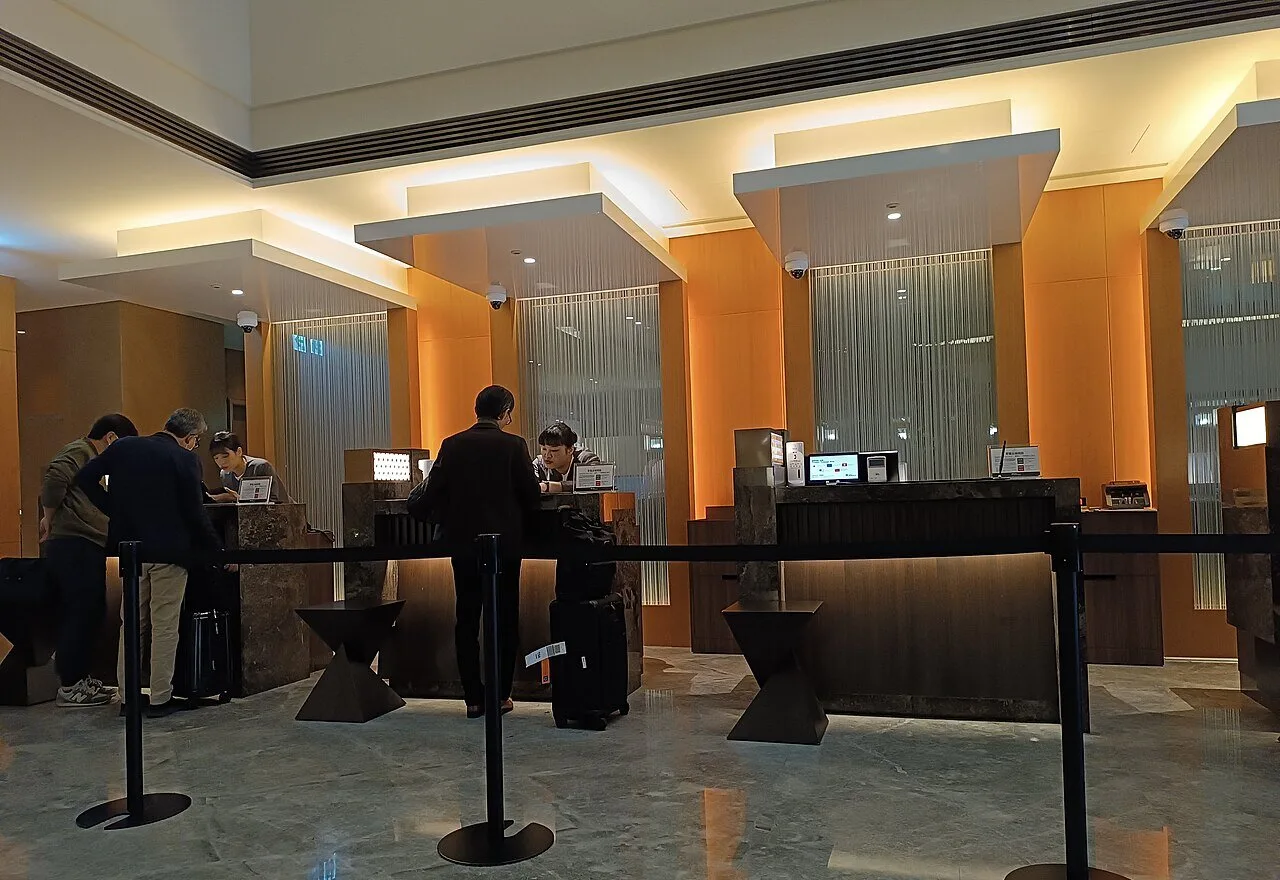
It's 11.10pm in Patong. Your clients have been on the road for 14 hours, the children are asleep on the suitcases, and the receptionist is scrolling through the screen for the third time. Nothing under the surname. Nothing under the first name either.
If you book hotels through wholesale channels, you'll get this call sooner or later. Most of the time the booking exists and the room is there; the hotel simply cannot see it yet, or it is filed somewhere the front desk doesn't look. Sometimes the problem is real and there is no room at all. The first 10 minutes decide which of those you're dealing with, and whether your clients sleep in that hotel tonight.
We run the 24/7 line printed on every DMC Quote hotel voucher, so we write this from the support side. It covers what you should say at the desk, why reservations go missing in the first place, what a hotel confirmation number actually proves, and the reconfirmation routine that stops most of these calls before they start.
Key Takeaways
- Most "no booking found" calls you get are a search problem, not a missing room. Ask the desk to search by the hotel confirmation number, the wholesaler name and the arrival list for tonight before anything else.
- A hotel confirmation number (HCN) is the hotel's own reference. A supplier reference only proves to you that the booking exists somewhere further up the chain.
- Don't let your clients travel on a voucher whose status still reads "On Request", or whose confirmation field still says "Pending" the day before arrival.
- Reconfirm 72 hours and 24 hours before arrival. It takes you about 5 minutes and catches mapping errors, unsent bookings and name mix-ups.
- If the hotel is overbooked, your client is usually offered a comparable room nearby plus transport, paid by the hotel. That comes from hotel policy rather than a universal law, so make sure you get it in writing.
What to do in the first 10 minutes at the front desk
Your client is at the counter and the clock is running. Keep them calm, keep the receptionist on your side, and work through this list with them in order. Skipping straight to raised voices rarely helps, and it uses up goodwill you may need in an hour.
- Put the voucher on the counter. Printed or on a phone, it does not matter. The receptionist needs the hotel name, your travel dates, the room type and, above all, the confirmation number if you have one.
- Ask for a search by confirmation number, not by name. Front-desk systems default to surname searches. If the hotel issued its own number, typing it in takes the receptionist straight to the record, even when the name on file is misspelt.
- Ask for a search under the wholesaler or bedbank name. Plenty of B2B bookings are created in the reseller name, with the guest added as a note or in a second field. The desk may be looking at a list of "travel company" reservations without realising one of them is yours.
- Try the arrival list with no name at all. Ask for every arrival from third-party channels for today. A short list is quick to scan, and misspelt names jump out.
- Check your client is at the right property. Ask them to read the address on the voucher aloud. Hotel groups often run two or three properties with near-identical names in one area (a Patong, a Kata and a Karon branch sharing one brand name is not unusual in Phuket), and taxi drivers mix them up more often than booking systems do.
- Call the emergency number on the voucher. If the desk still cannot find it after these checks, stop searching and escalate. Put the support line on speaker with the receptionist if you can.
Note the receptionist's name and the time. You'll want both.
The next hour: escalating without losing the room
If the first checks fail, your job changes. You're no longer proving the booking exists. You're securing a bed for tonight while your supplier works out what went wrong, and those two conversations run better in parallel than one after the other.
Ask the hotel to hold a room
Most hotels with free rooms will hold one for 30 to 60 minutes if you explain politely that a confirmed reservation exists through a wholesaler and is being traced. Some will want a card guarantee from your client. If your client agrees, a card imprint (not a charge) buys time without committing anyone to paying twice.
What to say to the receptionist
A calm, specific line works better than "you've lost my booking". Something like: "We have a confirmed reservation for two nights from tonight, booked through a wholesaler, reference HX7K2Q9. Could you check under the travel company name and tonight's third-party arrivals? Our agent is calling your reservations office now." It gives the receptionist three ways to search and tells them someone else is already working on it.
A worked example
Say you booked three nights in Seminyak for a couple from Delhi, landing in Bali on a 9.40pm flight. At 11pm they call you from reception: no booking. You ask for a search by the confirmation number on the voucher, and the desk finds nothing. Under the wholesaler name, nothing. Your clients then ask the duty manager about the sister property 2km up the road, and the manager phones across. It has the booking, under a misspelt surname. That is a mapping problem (cause 3 below), not a lost room. You call our emergency line, we confirm the booking is live at the sister property, and your clients take a 10-minute Grab ride. The next morning you decide with us whether to move them back or stay put.
Get the supplier talking to the hotel
Your portal or wholesaler can reach the hotel reservations team or its connectivity provider, which a night receptionist usually cannot. A reservation stuck between a channel manager and the property management system (PMS) can often be pushed through, or keyed in by hand, once someone with access looks at it for you.
Set a limit on waiting
For a family that has just landed, we'd give it 45 minutes. If nothing is resolved by then, book your clients a room for tonight, at that hotel or nearby, and sort the money out afterwards. Paying twice is recoverable. A family sleeping in a lobby is a client you probably won't see again.
Keep every receipt. If your client pays for a replacement room, keep that receipt, the original voucher, the name of the receptionist and a note of the time. Claims succeed or fail on that paperwork, and nobody remembers the details three weeks later.
Why the hotel can't find the booking
The cause almost always sits in one of seven buckets. Knowing which one applies tells you who can fix it, and how fast.
1. Filed under the wholesaler name
If you book through a bedbank or wholesaler, the booking is often created in the name of the intermediary, with the guest name in a secondary field or a comment. If the night auditor searches by your client's surname, nothing comes back. This is the most common cause and the quickest to fix: ask them to search by confirmation number or by the reseller name.
2. The booking never reached the PMS
Your B2B booking passes through several systems before it lands on a front-desk screen. Typically the supplier sends it by API to the hotel channel manager (SiteMinder or STAAH, for example) or central reservations system (CRS), which passes it on to the PMS the front desk works from, such as Opera, Mews or Cloudbeds. Each hop can fail quietly. Your supplier shows you "confirmed" because the first hop worked, while the PMS never received anything. Smaller contracted hotels may still take bookings by email or extranet, which adds a human step: someone in reservations has to open the email and key it in, and on a Friday afternoon before Songkran or Hari Raya, that step gets missed.
A US local news report described exactly this: a couple arrived with a confirmation from a booking site, and the clerk told them the site had never passed the reservation to the hotel. They paid again on the spot and got their money back only later.
3. The supplier mapped it to the wrong hotel
Every portal and bedbank, ours included, keeps a mapping table linking its own hotel record to the code each supplier uses for the same building. When a link is wrong, your booking goes to a different property, usually a sister hotel with a similar name or the old name of a rebranded one. Vervotech, which sells mapping software, makes a point you should remember: a mapping error at a bedbank does not stay with the bedbank, it spreads to every reseller that buys from it.
This is why step 5 in your desk checklist matters. If the hotel next door has your booking, the fix takes one phone call and a short taxi ride.
4. It was on request and nobody confirmed it
Some rates, especially at directly contracted hotels without a live connection, are sold on request. Your booking goes to the hotel, and the hotel has to accept it. Until it does, you are holding a request, not a room. It's easy to see a voucher and assume the job is done. Check your status line: if it still says "On Request" within 7 days of arrival, chase it that day.
5. The names don't match
Surname and given name swapped. A middle name used as a first name. Arabic, Chinese or Tamil names transliterated two different ways (Mohammed and Muhammad, Al Harbi and Alharbi, or Zhang Wei booked as Wei Zhang). A booking made in the name of whoever paid instead of whoever is checking in. Each of these produces "no booking found" from a desk that searches by exact surname. Book your lead guest exactly as the name appears in their passport, in the order the form asks for.
6. The dates are off by one
Late-night arrivals cause you more trouble than they should. A client landing in Phuket at 1.10am on 15 March needs the room from the night of 14 March, and plenty of bookings get made for the 15th because that's the date printed on the ticket. The hotel then has no arrival for the 14th, and by the time anyone checks the list for the 15th, your client has been in the lobby for an hour. Time zones add another layer when you're in Mumbai (UTC+5:30), the portal runs on Singapore time (UTC+8) and the hotel sits in Phuket (UTC+7).
7. The hotel is overbooked
Sometimes your booking is there and the room isn't. Hotels oversell on purpose to cover no-shows, and on a night when everyone turns up, somebody gets moved. It may be your client. This is the "walking" scenario, and it has its own section below.
Hotel confirmation number vs supplier reference: what each one proves
You'll end up holding several references for one booking, and they do not carry the same weight. Laid out side by side:
| Reference | Who issues it | What it proves | When you need it |
|---|---|---|---|
| Portal or booking reference | The portal you booked on | The booking exists in that system and is paid or on hold | Talking to your portal support team |
| Supplier reference | The bedbank or wholesaler holding the contract | The supplier accepted the booking | When your portal chases the supplier |
| Channel or CRS reference | The hotel's channel manager or central reservations system | The booking reached the hotel distribution layer, not necessarily the front desk | When the hotel reservations team investigates |
| Hotel confirmation number (HCN) | The hotel's own reservations system or PMS | The hotel has the booking on its books | At check-in, and in any dispute at the desk |
Only the hotel confirmation number shows that the hotel itself holds your reservation. Everything else you hold proves the booking exists somewhere above it in the chain. That is why it is the first thing to check before your client flies and the first thing they show the desk on arrival.
Hotel confirmation number example: what to look for on the voucher
There's no standard format, so don't expect one. Each PMS and each chain generates its own, so an HCN can be a plain number, a string of letters and digits, or a chain prefix followed by a number. Some typical shapes you might see (made-up examples, not real bookings):
- a numeric PMS reference such as 40271186
- an alphanumeric reference such as HX7K2Q9
- a chain-style reference with a property code, such as SINAB-118204
- a compound string that joins a connectivity provider code, the booking number and the number the hotel issued, joined with hyphens
For you, the format matters less than what is actually in the field. On our hotel vouchers, the confirmation reference sits beside each room. Where the hotel has issued its own number and the supplier has passed it back, that number prints. Where it has not arrived, the field can carry the supplier confirmation reference instead, and if there is nothing yet at all it reads "Pending".
Two practical points follow. If the desk cannot find the number, ask whether it is a hotel or a supplier reference before anyone panics, and switch to searching by the supplier name. And if the field still says "Pending" the night before arrival, ask us to chase it. A week out, Pending is normal for some properties. The night before, it isn't.
When the hotel is overbooked and your client gets walked
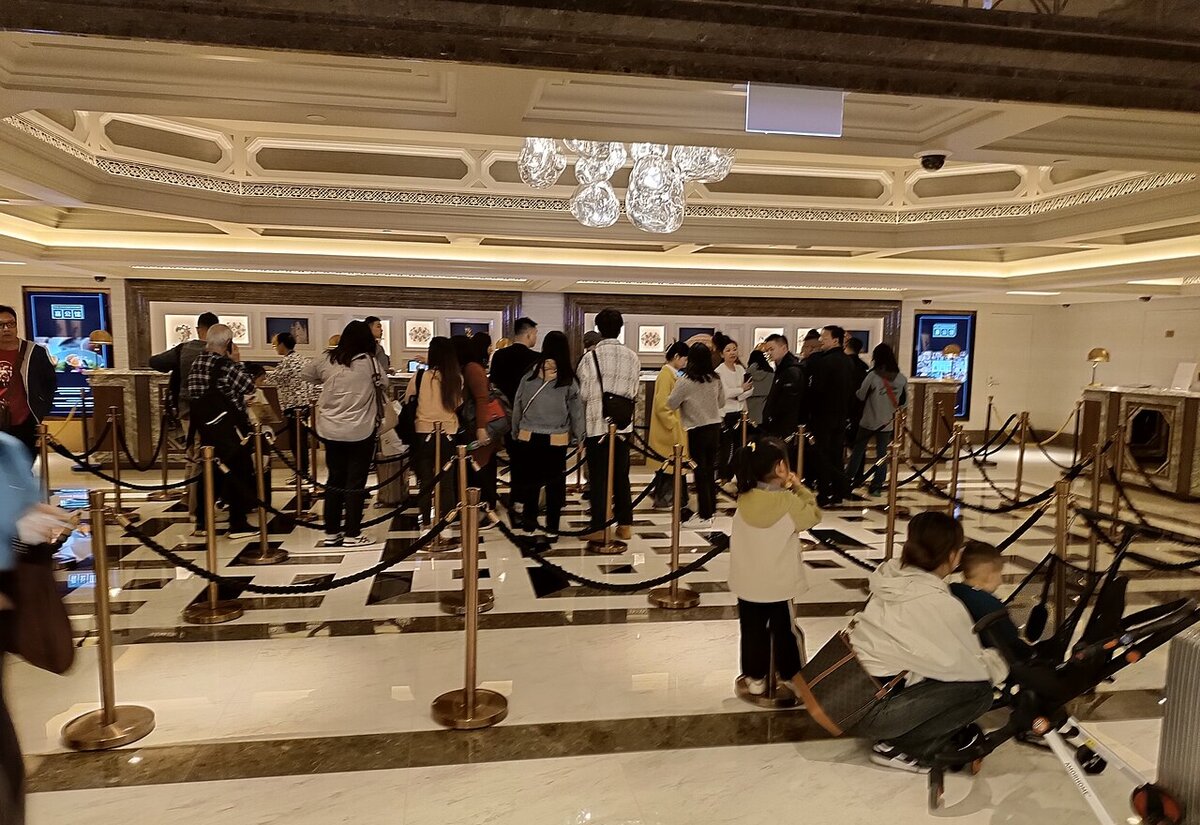
"Walking" a guest means the hotel has sold more rooms than it has, cannot honour your reservation and moves your client to another property. Hotels overbook deliberately because a share of guests never turn up, and an empty room earns nothing.
The usual remedy is set by hotel policy, loyalty programme rules or local consumer law, not by one global standard. In practice, you can usually expect:
- a comparable or better room at a nearby hotel, paid for by the walking hotel for at least the first night (during a big trade fair in Dubai, "nearby" can mean a 25-minute drive)
- transport to the other hotel, and often back again the next day
- any difference in rate covered by the hotel
- sometimes a goodwill gesture, which is entirely discretionary
Terms vary more than you would expect. The UK consumer group Which? looked at how hotel chains handle overbooking and questioned wording in the Travelodge terms that limits the remedy to a refund if no "suitable" room is available nearby. Its broader point is worth borrowing: read what the hotel terms actually promise your client before you assume a replacement room is guaranteed.
For your client, the steps are simple. Don't leave the desk until you know where your clients are going, how they will get there and who is paying. Get it on hotel letterhead or in an email. Then tell your portal straight away, because a walked booking usually has to be cancelled or adjusted upstream so nobody charges your client twice. There is more on the agent side in our guide to handling hotel overbooking as a travel agent.
The pre-arrival reconfirmation checklist
You can catch nearly every cause above before your client leaves home. Reconfirming feels like busywork until the night it saves one of your files. The routine is short enough to paste straight into your own process:
| When | What to check | Who to contact | Red flag |
|---|---|---|---|
| 72 hours before arrival | Confirmation reference present; guest names match passports; dates match the local arrival time of the flight; room type, bed type and meal plan | Your portal, plus the hotel reservations email if you have it | Status still On Request; confirmation still Pending; hotel name or address differs from what your client expects |
| 24 hours before arrival | Hotel can find the booking by confirmation number and by guest name; late arrival noted if landing after midnight; any request (cot, connecting rooms, accessible room) acknowledged | Hotel reservations or front office, by email so you have it in writing | Hotel finds it only under the wholesaler name; request not acknowledged |
| At check-in | Your voucher on the phone and on paper; confirmation number highlighted; emergency number saved | Your client, with you on standby for a late arrival | Desk cannot find it after confirmation-number, wholesaler-name and arrival-list searches |
| After check-out | Extras, mandatory fees or disputes noted while still fresh | Your client first, then your portal if there is a claim | Charges your client didn't expect; a walked night with no paperwork |
Two habits do most of the work for you. Book from the night before whenever your client's flight lands after midnight. And send the 24-hour email yourself instead of trusting that someone upstream already did.
After the trip: claims, refunds and what to keep
If your client paid twice, slept somewhere else or lost a night, the claim normally runs back up the chain: client to you, you to the portal, portal to the supplier, supplier to the hotel. It's slow, and every step asks for evidence. Collect it while you and everyone else still remember what happened:
- the original voucher and booking confirmation
- receipts for any replacement room, taxis or meals, made out to your client
- the name of the receptionist or duty manager, with the time of each conversation
- any email or note from the hotel admitting the booking existed, or that your client was walked
- your own timeline of who you called and when
Be realistic about fault. If you made the booking for the wrong date or in the wrong name, that sits with you, and no hotel will pay for it. If the hotel had the booking and gave the room away, it should cover the cost. Mapping errors and lost connections fall somewhere in between, and who pays depends on where your booking stopped. Ask your supplier to trace that before anyone argues about money.
Patience helps. So does a tidy folder.
How the DMC Quote portal handles missing bookings
We'd much rather prevent these calls than answer them, so we've built a few safeguards into how hotel booking works on our portal. Some help you at the desk. Others just make your reconfirmation routine quicker.
The voucher carries what the desk needs
Every hotel voucher from our portal shows the hotel name, address and phone number, check-in and check-out dates with the weekday, guest names, room type and meal plan, the confirmation reference for each room, a refundable or non-refundable tag, and the cancellation steps with their dates. An "Important Hotel Information" block prints supplier remarks and any mandatory fees payable at the hotel, such as resort fees or city tax. The footer carries a 24/7 emergency line, +65 8948 0242, and [email protected].
Special requests aren't printed on our voucher, and no hotel guarantees them anyway. If a request matters to your client (connecting rooms, a cot, a ground-floor room), confirm it with the hotel by email before travel and forward the reply to your client.
Hotel matching is scored, not guessed
Our portal lists 1.5M+ hotels drawn from several supply sources, so one building often arrives under several different codes. We match them on GPS distance, name similarity, star rating, phone number and postcode. Strong matches link automatically. Borderline ones go to our human review queue instead of being linked on a guess, and weak ones stay as separate records. That is what lets you see one hotel with rates from more than one source side by side, and it is our main defence against the wrong-property problem in cause 3.
On-request bookings show as on request
Some of our directly contracted hotels sell on request. The hotel receives a secure link to confirm or decline, and until it does, both your booking and your voucher show the status as on request. Treat that as unfinished business, and don't let your clients fly on it.
Deadlines are shown early on purpose
Cancellation deadlines in your portal account are shown in Singapore time (SGT), and they are set earlier than the supplier deadline. The buffer gives you room to cancel or pay before the real supplier deadline passes. We send you reminders 24 hours and 6 hours before a deadline, and unpaid holds are released automatically at the buffered deadline. None of that finds a missing booking for you, but it prevents the related mess of a cancellation that arrived a day too late. Our guide to hotel cancellation policies goes through the deadline maths in more detail, and the wallet and credit guide explains how holds and payments work.
If you sell hotels and want these checks working for you, registration is free, with no subscription and no minimum volume. The hotel side of the portal is described on our B2B hotel booking page, and the hotel booking FAQ answers the usual setup questions.
Frequently Asked Questions
What is a hotel confirmation number?
It's the reference that the hotel reservations or property management system gives a booking. It proves the hotel has your reservation on its books, which a portal or supplier reference doesn't. Ask for it before your client travels and put it at the top of whatever they carry to the desk.
Why does the hotel quote a different number from the one on my voucher?
Several systems sit between you and the hotel, and each one issues its own reference, so you may be holding three numbers for one room. Your portal has one, the supplier has one and the hotel PMS creates another. Give the desk the hotel confirmation number if you have it, and if they still cannot find the booking, ask them to search by the supplier name and the arrival date.
What should my client do if the hotel says there's no booking?
Tell them to stay at the desk, show your voucher and ask for searches by confirmation number, by the wholesaler name and through the arrival list for tonight. Check the address on your voucher matches the building. If that fails, call the emergency number on our voucher and ask the hotel to hold a room while it is traced.
Is the hotel obliged to give my client a room if it overbooked?
Usually the hotel arranges and pays for a comparable room nearby for your client, but that comes from hotel policy, loyalty terms or local consumer law rather than one global rule. Read the hotel terms, and get any promise in writing before your client leaves the desk.
How far ahead should I reconfirm a B2B hotel booking?
We suggest checking 72 hours before arrival for the confirmation reference, names, dates and room type, then again 24 hours before by emailing the hotel directly. For arrivals after midnight, make sure your booking starts the night before the flight lands.
Can a booking show as confirmed when the hotel never received it?
Yes. Your supplier can accept a booking while the message to the hotel channel manager or PMS fails further down the line. That is why the hotel confirmation number counts for more than a "confirmed" status from anyone else in the chain.
Who pays if my client has to buy a second room?
It depends on where the failure happened. If the hotel had the booking and gave the room away, the hotel should cover it; if the booking was made in the wrong name or for the wrong date, the cost usually stays with whoever made it. Keep every receipt and the name of the receptionist so your claim can run back up the chain.